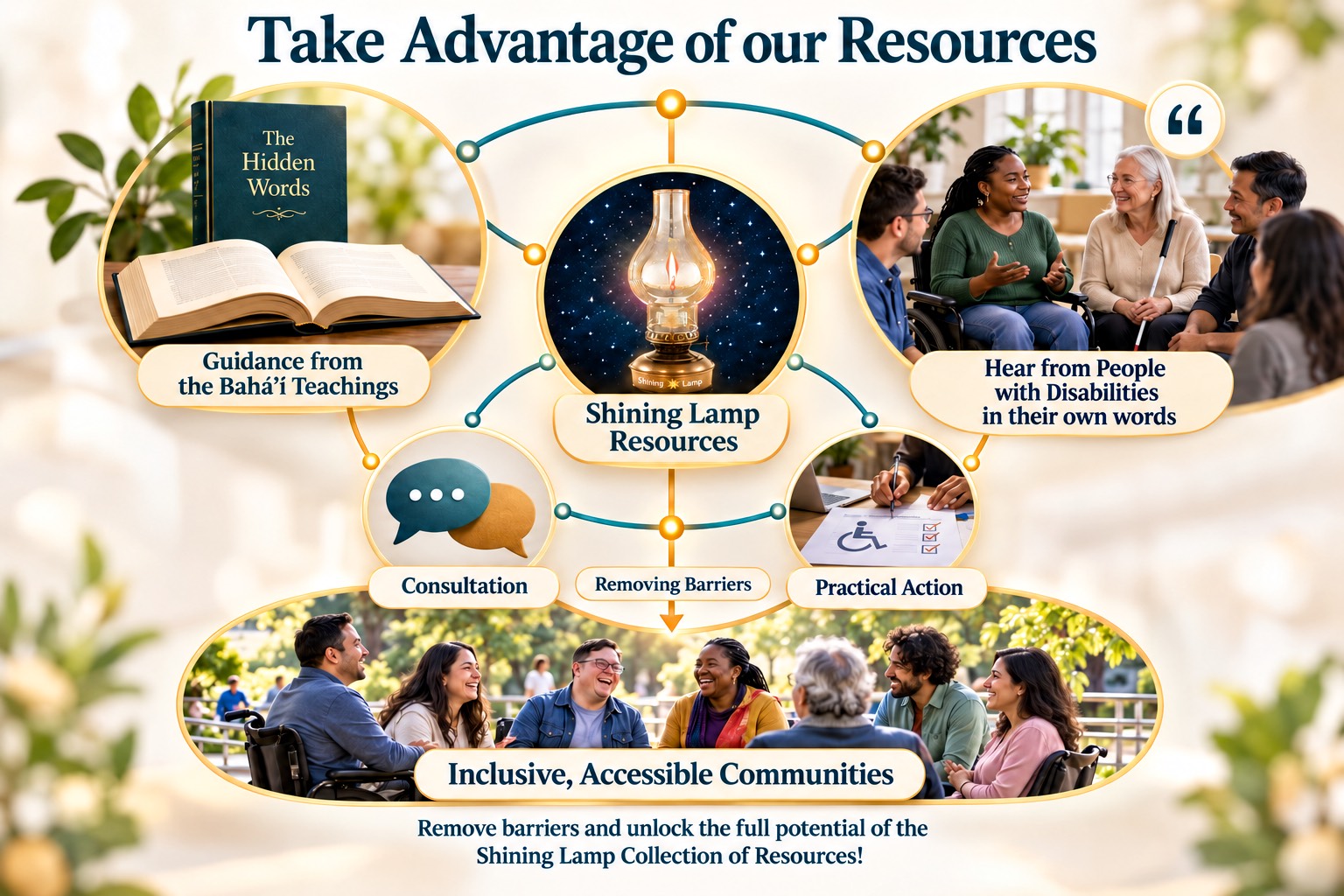
Network graphic connects Bahá’í teachings and people with disabilities speaking in their own words through Shining Lamp Resources. Linked nodes show consultation and practical action toward removing barriers, leading to a diverse group, including wheelchair users, participating together in an inclusive, accessible community.

Resources starting with A

How to find a resource

  • Choose a letter or number to see resources that start with it. The number beside each shows how many there are. Resources starting with A show first.
  • Dimmed letters and numbers have no resources yet.
  • Prefer a keyword? Use the search box above.
  • Use List View for titles only, or Summary View for an image and summary of each resource.
  • Use the page links below the results to see more.
  • (1)
  • # (1)
  • ' (1)
  • 1 (4)
  • 2 (1)
  • 3 (3)
  • 4 (2)
  • 5 (5)
  • 8 (1)
  • A (37)
  • B (23)
  • C (18)
  • D (19)
  • E (7)
  • F (14)
  • G (7)
  • H (23)
  • I (31)
  • J (3)
  • K (1)
  • L (9)
  • M (18)
  • N (9)
  • O (8)
  • P (9)
  • R (11)
  • S (18)
  • T (35)
  • U (2)
  • W (31)
  • Y (2)
  • “ (1)
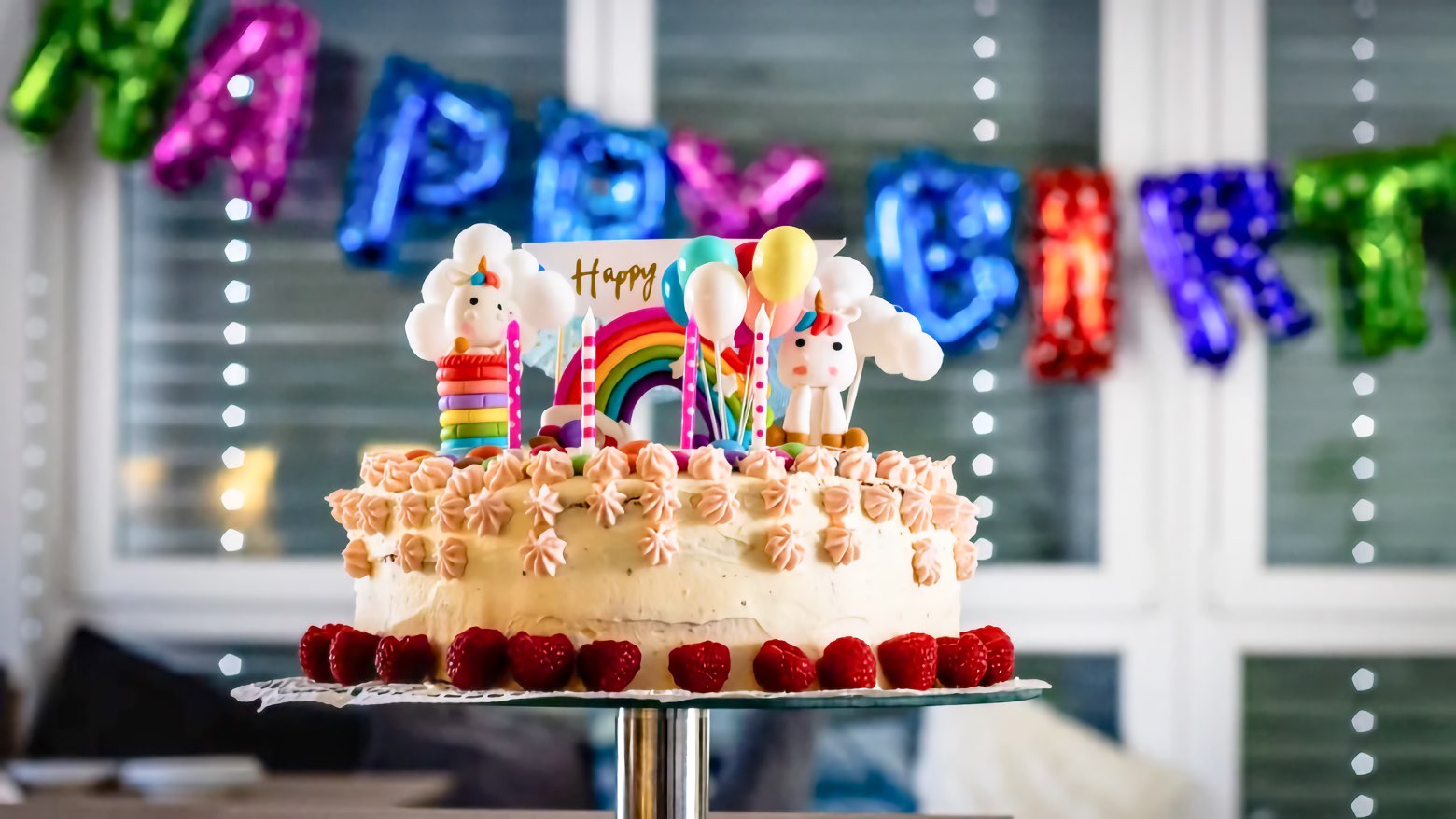
  • A birthday dessert is supposed to carry a person's name. Antonia Sinibaldi ordered the same dessert as her cousin at a New Jersey restaurant on June 20, 2026, and hers arrived carrying the word wheelchair instead. Photo by Aiky82.

    A Birthday Plate Labeled With a Wheelchair Instead of a Name

    A New Jersey restaurant sent a woman her 29th birthday dessert with the word wheelchair written on it in place of her name, after staff used her mobility device to mark the kitchen ticket. Antonia Sinibaldi, who has used a wheelchair since she was two years old, was offered free drinks before she was offered an explanation, and she has said she will not return. Nobody had to intend harm for her to be reduced to her equipment, and that is the everyday shape of ableism. She stated the standard herself: do not bring up my disability.

  • A Brief But Spectacular take on embracing disability pride

    In this Brief But Spectacular segment, Tiffany Yu traces how a childhood car accident reshaped her life and how choosing Disability Pride changed her future. She recalls years of silence and self-doubt, then describes the turning point of speaking directly to her younger self—“look at me now”—as permission to live openly. Yu connects that shift to founding Diversability and to centering disabled identity as a source of strength. Her story offers a concrete path: move from hiding to visibility, from shame to pride, and from isolation to community. Yu names the problem—everyday ableism—and…

  • A complete guide for content creators to start making accessible content

    The guide "A complete guide for content creators to start making accessible content" by Whitney Lewis offers invaluable insights and practical tips for content creators to enhance the accessibility of their digital content. In today's digital landscape, where inclusivity and accessibility are paramount, this guide serves as a comprehensive resource for anyone looking to make their content accessible to People with Disabilities. Content creators wield significant influence over the accessibility of web content. They have the power to either remove barriers for People with Disabilities or…

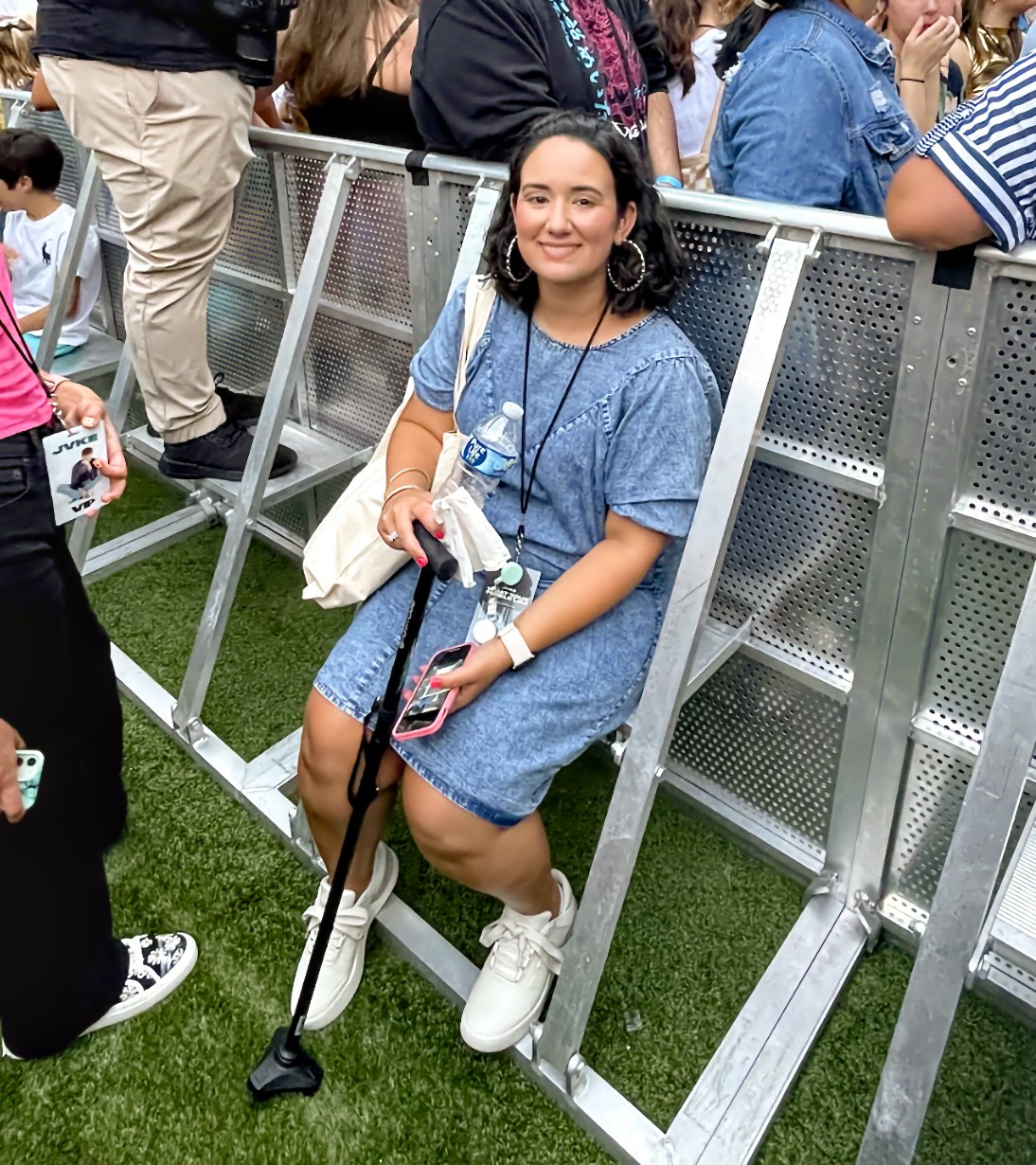
  • Cyntianna C. Ledesma Ortega at the JVKE concert in August 2023, in the seating the venue provided after her repeated calls ahead of the event.

    A Dad Tried To Bully Me Into Giving My Seat To His Kid. Here's What Happened When I Said No

    Seating arranged by phone weeks ahead of a concert turned out to be a metal bench on the far side of a barricade, facing away from the stage, with the standing crowd's elbows level with her head, and when a man from the VIP side put his child on it he demanded to know what made her so special, then watched her the rest of the night to see whether dancing or smiling would disqualify her. Her disability moves along a spectrum and shifts with circumstance, which for years brought dismissal from the people she consulted and doubt from relatives, and none of that changes the fact that asking for what removes a barrier does not depend on anyone else's sympathy. Belonging is the starting condition for People with Disabilities, and any gathering that hands it out as a prize has already built the barrier.

  • “Accessible self-care products are about autonomy.”

    A Gift Guide for Professionals with Disabilities That Puts Self-Care First

    Self-care is foundational to participation, independence and long-term sustainability at work and in school, particularly in environments that still carry unspoken expectations around appearance, presentation and productivity. Societal expectations set uniform appearance standards. Sarah Todd Hammer emphasizes access over novelty, naming concrete options: accessible makeup from Tilt Beauty (ease of use certified by The Arthritis Foundation (AF)), Kizik shoes that are put on and taken off completely hands-free, and the Flaus electric flosser whose vibrations move the floss side-to-side to…

  • A home where access is part of everyday life

    This Brief But Spectacular segment features Micaela Connery reflecting on how a close family relationship led her to focus on homes and neighborhoods that welcome People with Disabilities as full neighbors, framing community as ordinary daily life shared in the same buildings, streets, and routines. She describes The Kelsey’s approach: mixed-income, mixed-ability housing where universal design, inclusive property management, and resident leadership are planned from the start to remove barriers that keep People with Disabilities out of typical apartments and community spaces. The segment…

  • A look at gender gains and gaps in the U.S.

    By Katherine Schaeffer Pew Research Center Delve into the evolving landscape of women's roles in the American workforce and society, where significant gains have been made alongside persistent challenges. Over the past half-century, women have achieved higher labor force participation, greater representation in college-educated roles, and increased presence in lucrative professions. However, gender disparities endure, particularly in top leadership positions across government and business sectors. Explore the nuanced trends shaping women's experiences, from their outnumbering men in…

  • A moment that changed me: I thought deafness was a flaw. Then I met clever, wise, funny Rosie

    Embark on a transformative journey with Sarah Marsh as she recounts a pivotal encounter that altered her perception of deafness in "A moment that changed me: I thought deafness was a flaw. Then I met clever, wise, funny Rosie." In 2001, Sarah's university life took an unexpected turn when she met Rosie, a fellow student who, like her, wore hearing aids. Their initial interaction sparked a deep connection rooted in shared experiences of navigating the barriers to being deaf in a predominantly hearing world. Through Rosie's friendship, Sarah discovered a newfound sense of acceptance and…

  • A Nation of “Haves” and “Have-Nots”?

    Embark on a journey through America's economic landscape with the illuminating article, "A Nation of 'Haves' and 'Have-Nots'," meticulously crafted by Jodie T. Allen and Michael Dimock from the Pew Research Center. Unveiling a profound societal shift over the past two decades, the article delves into how a growing segment of the population perceives America as sharply fragmented between the privileged "haves" and the struggling "have-nots." Through meticulous research and compelling analysis, Allen and Dimock unravel the complex dynamics driving this divide, from widening income inequality to…

  • Representative Kweisi Mfume, Ever Lee Hairston, President Mark A. Riccobono, and Senator Chris Van Hollen gather at the National Federation of the Blind Jernigan Institute to announce legislation designating the Museum of the Blind People’s Movement as a national museum.

    A National Home for Our Stories: Members of Maryland Congressional Delegation Introduce Legislation to Designate the National Museum of the Blind People's Movement

    At the National Federation of the Blind (NFB) Jernigan Institute on December 5, 2025, members of Maryland’s congressional delegation announced legislation introduced in the House of Representatives (H.R. 6467) and the United States Senate (S. 3371) to designate the Museum of the Blind People’s Movement as the National Museum of the Blind People’s Movement. The article frames this as a civil rights moment grounded in “collective action,” insisting that blind people’s central role in advancing civil rights belongs in the nation’s official story—not treated as optional or “undershared.”…

  • A What’s Mine is Yours Jewish adult-learning class meets around a conference table during a session designed for adults who have often been excluded from formal Jewish education.

    A new curriculum brings adults with intellectual disabilities into the heart of Jewish learning

    Raffi Stein-Klotz, 24, is part of an adult Jewish learning series created specifically for people with intellectual and developmental disabilities at Jewish Association for Residential Care (JARC), where he and his housemates study Genesis, learn terms in Hebrew and English, and practice “boker or” and “boker tov.” The article makes clear why this matters: advocates say there are “few if any options” for formal adult Jewish education tailored to them, leaving adults pushed out of the learning that shapes Jewish life—until programs commit to providing “Jewish academic resources for adults with…

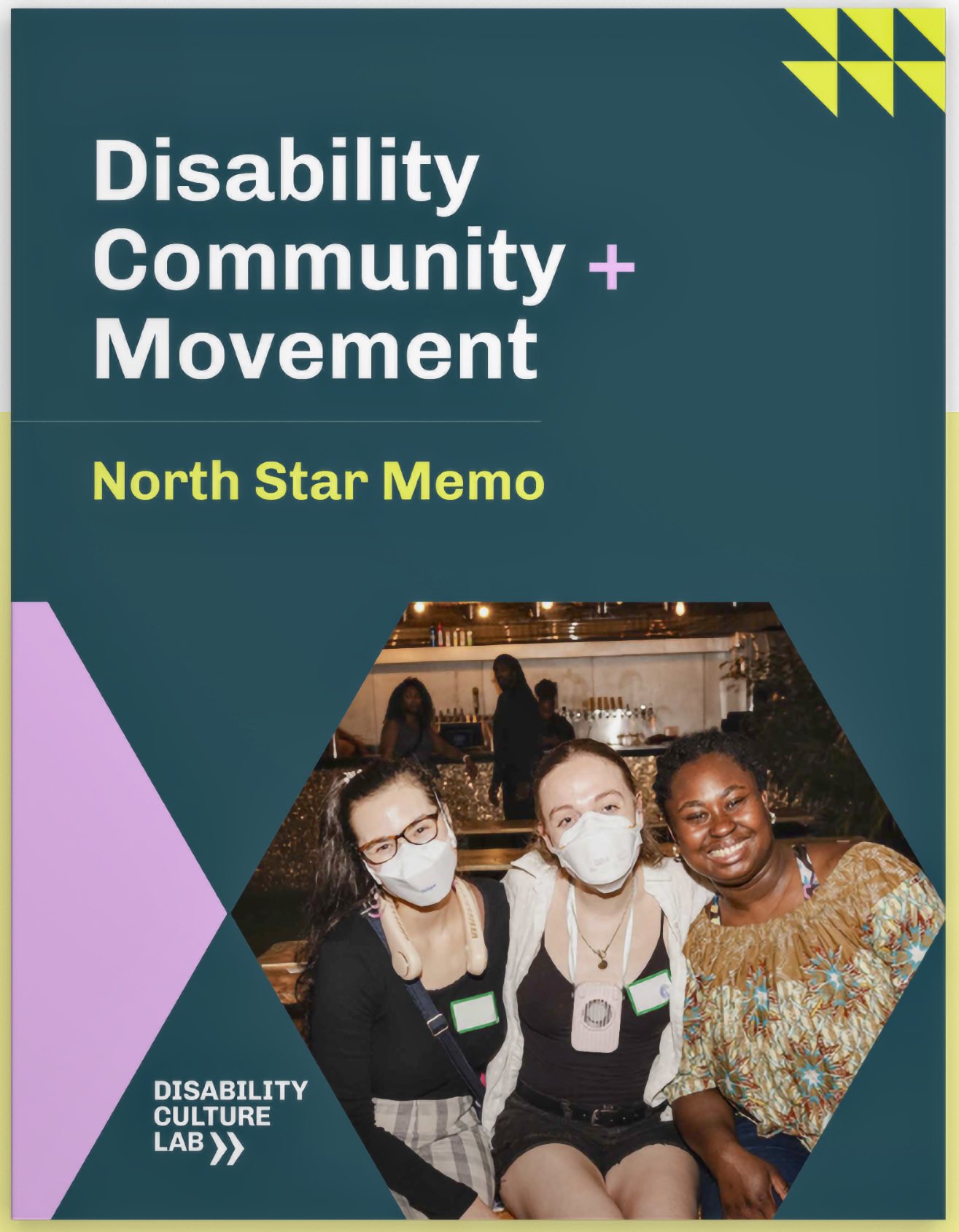
  • Disability Culture Lab released the memo this fall after a year of visioning with close to 50 disabled leaders. It comes in plain language and large type versions alongside the full text.

    A New Disability Memo Has Lessons For Employers, Funders And Policymakers

    The North Star Memo, built over a year by close to 50 disabled leaders and backed by over 20 groups working for disability justice and rights, puts People with Disabilities in charge of imagining the future instead of inviting them in once the decisions are made. It argues that who becomes disabled is shaped by choices made for profit and power, that the weight falls hardest on trans people and on Black and Indigenous women, and that interdependence and care deserve the same standing as roads and broadband. For us, the lesson is to bring disabled people into our planning while it is still taking shape.

  • A Pastor's Paradox: Embracing Marginalization to Spark Change

    Posted by: Ralph Morren In a powerful display of empathy and self-reflection, a pastor undergoes a profound transformation, becoming a homeless Black man to directly experience the harsh realities of marginalization within his own congregation. As he enters the church where he is to be introduced as the new head pastor, he is met with indifference and disdain, with only a handful of individuals extending a simple greeting amidst a sea of apathy. Despite his hunger and need for assistance, his pleas are met with silence, underscoring the prevalent barriers to compassion and understanding.…

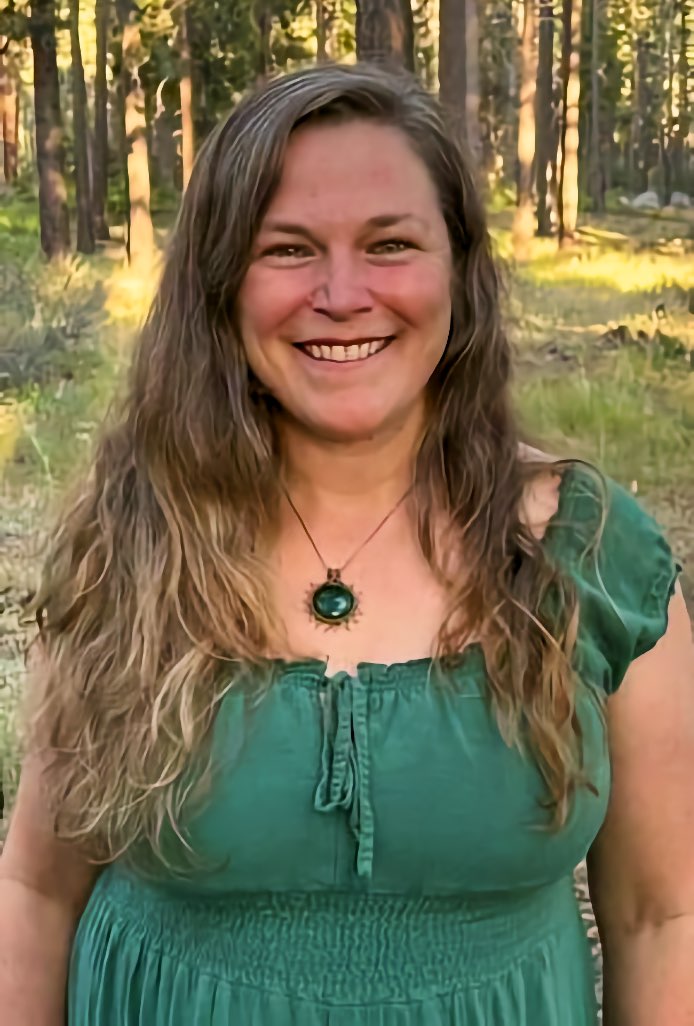
  • Angie Reagan, a Physical Therapist with a Disability, founder of Access Tahoe and Peace Love Tahoe, and community advocate, wrote the opinion piece calling for access to be built into the Lake Tahoe region's future.

    A sustainable Tahoe must be an accessible Tahoe

    .

    An opinion piece on the future of the Lake Tahoe region argues that a place protected for thirty years is still built for a narrow slice of the people who love it, where the beach, the trails, the snow, and the events open only to those who can already reach them and anyone asking for access is told to justify the request. More than one in four adults in the United States is a Person with a Disability, and real access is designed from the first meeting for cognitive, psychiatric, sensory, communication, physical, and non apparent disabilities rather than counted off a list of ramps and parking spaces. The familiar answers about short capacity, short money, and mission scope are choices that hand the work back to the People with Disabilities already shut out, because access is not charity granted when it is convenient. Sustainability that guards water and forests but not the people who love the lake preserves only half of it, and People with Disabilities belong in planning seats, paid consulting roles, and leadership positions before the barrier is ever built.

  • Ruth Madeley, an actor and advocate for Disability representation, is pictured here in a moment of quiet strength. Her quote from the article—“What you have to offer is unique and it’s needed more than you know”—underscores her powerful role in Removing Barriers through visibility and purpose.

    A weakness can become your biggest strength’ – wise words from 26 brilliant disabled women

    This article shines a powerful spotlight on the lived experiences and words of wisdom from 26 brilliant women who are proudly part of the Disability community. Their insights serve as bold affirmations of self-worth, purpose, and identity—reminding us that having a disability is not a limitation but a unique lens through which we contribute to the world. Comedian Rosie Jones captures this beautifully: “Having a disability is not a disadvantage; it’s a different perspective.” These voices are not just personal reflections; they offer a roadmap for Removing Barriers that prevent us from…

  • Ableism 101: What it is, what it looks like, and what we can do to to fix it

    As buzzwords like social justice, equity, and inclusion permeate our collective consciousness, it’s essential for advocates of progress to remember another ‘ism,’ one that is frequently left out of conversations. Ableism. The world wasn’t built with people with disabilities in mind, and because of that, the world we live in is inherently “ableist.” So…what is ableism? Ableism is the discrimination of and social prejudice against people with disabilities based on the belief that typical abilities are superior. At its heart, ableism is rooted in the assumption that disabled people require…

  • About Us

    Welcome to The Shining Lamp This space is about building community. Imagine a community that fosters a genuine sense of belonging Where a diverse membership is warmly embraced. Where people of different Races, Disabilities, Ages, Genders, and Cultures, otherwise marginalized, participate fully and inclusively in all of their community's activities and events. Where children find the encouragement to explore and grow, and older members share their wisdom and experience. Where each person is valued for who they are and have opportunities to contribute. Where the community exemplifies the…

  • Accessibility is critical for the world's disability community

    An estimated 1.6 billion people, roughly 18% of the world’s population, are part of the disability community, and that number grows each year. Yet Microsoft’s Chief Accessibility Officer Jenny Lay-Flurrie says only 2% of websites globally are accessible. As Disability Pride Month comes to an end, GZERO’s Tony Maciulis spoke to her about confronting challenges at work and home while embracing the diversity of different abilities.

  • Sarah Kovac, journalist and disability advocate, types on her laptop using her feet at home. Kovac was born with arthrogryposis, which severely limits the use of her arms and hands, and performs virtually all daily tasks with her feet. (Courtesy of Sarah Kovac)

    Accessibility journalist shares tips to prepare for the ability drift

    Sarah Kovac, a journalist and advocate who lives with arthrogryposis, which severely limits the use of her arms and hands, built a fully independent life using her feet for virtually every daily task and coined the term "ability drift" to describe the reality that physical capability shifts over time through aging, accidents, and temporary circumstances. Through her Consumer Reports collaboration, Kovac brought in journalists with disabilities whose practical adaptive guidance proved valuable across situations far beyond their specific experience, demonstrating that disability community expertise is wisdom that cannot be obtained anywhere else. People with Disabilities have long been spoken at rather than consulted as the actual authorities on their own lives, and Community Builders striving to create Vibrant, Diverse, Inclusive, Accessible Communities must center the lived experience of People with Disabilities as the foundation of every decision about accessibility and inclusion.

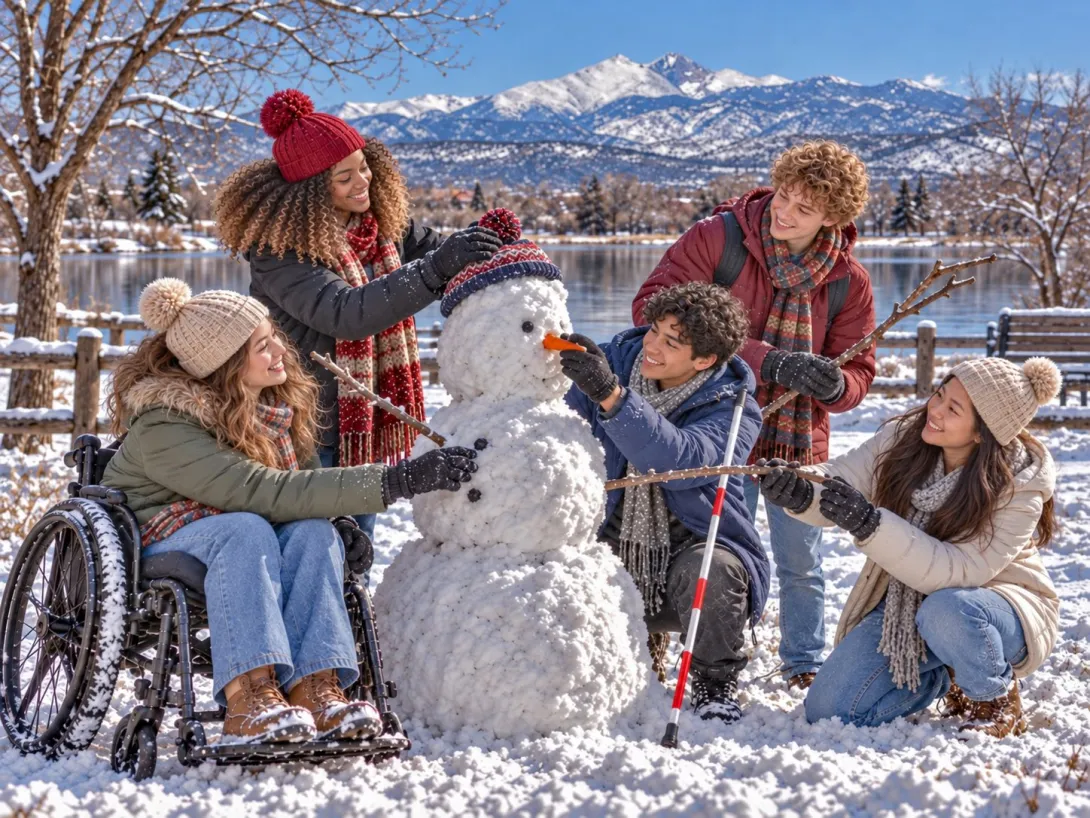
Five diverse young adults in winter clothing work together to decorate a snowman beside a snowy lake, adding a hat, carrot nose, coal buttons, and twig arms. The group includes a blind young man and a young woman who uses a wheelchair, with snow-covered Longs Peak rising prominently in the background.

Consistently ensuring equitable participation of People with Disabilities in community gatherings and events by planning ahead for Accessibility transforms exclusion and discrimination into a culture of inclusion, respect, belonging, and value.

Question: Is this example of inclusive practices the norm in your community? If not, what barriers need to be removed which prevent inclusive and welcoming participation?


"The challenge facing the friends serving at the grassroots is essentially the same in every place. They must be able to read their own reality and ask: what, in light of the possibilities and requirements at hand, would be fitting objectives to pursue in the coming cycle or series of cycles?"  -- December 30, 2021 UHJ to Conference of Counselors Introducing Nine Year Plan


Explore More Compelling Insights:

Learn about topics related to People with Disabilities, Accessibility, Anti-Ableism, Removing Barriers, and the Disability Community? Tap the Explore button to discover something new and intriguing with each tap!