
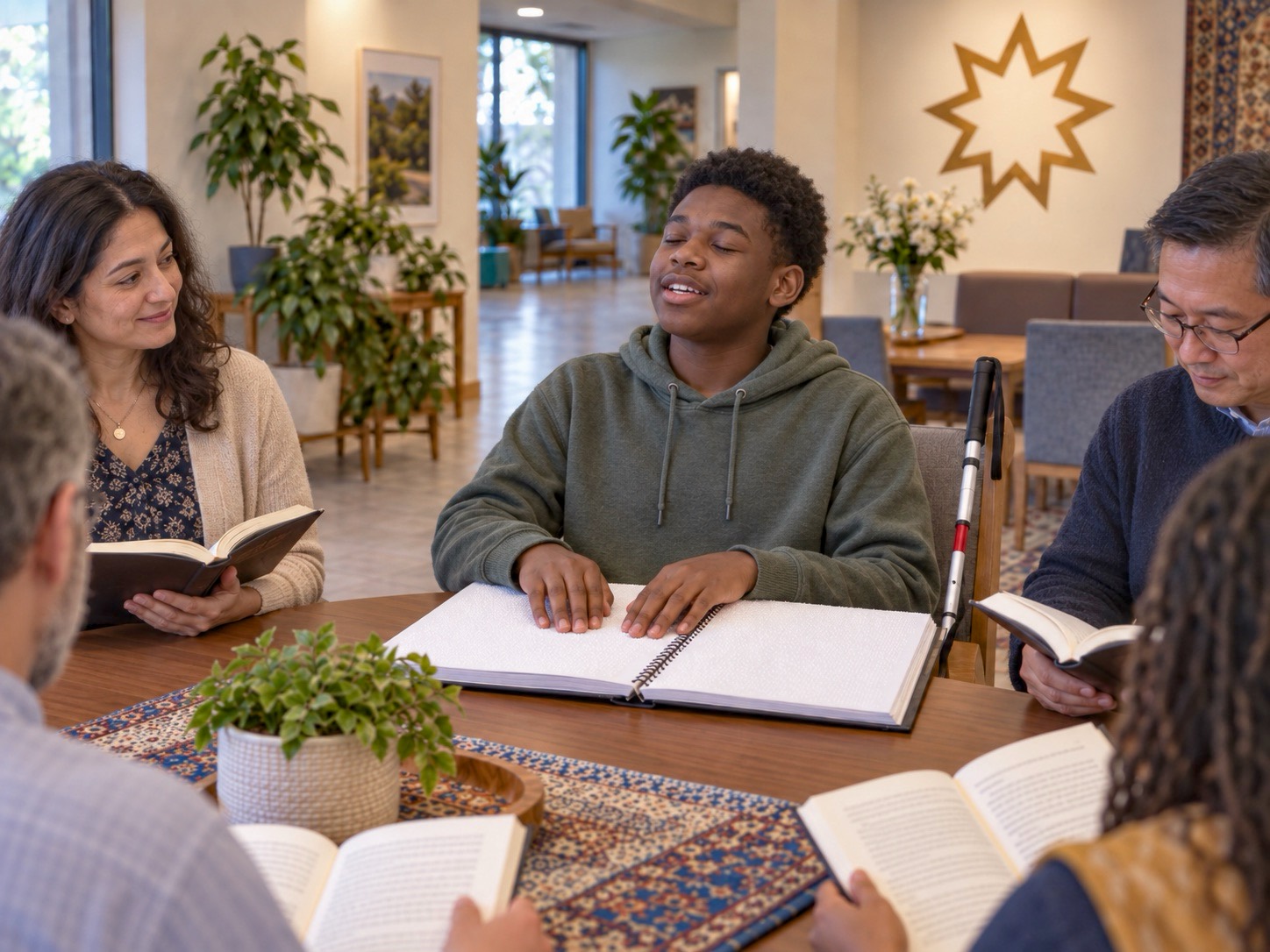
Accessible materials are imperative and should always be prepared in advance so they are available at the same time as everyone else. Braille is fundamental to literacy! However, accessible materials should be provided for Blind or Low Vision participants in their own preferred format.
Question: Is this example of inclusive practices the norm in your community? If not, what barriers need to be removed which prevent inclusive and welcoming participation?
"The challenge facing the friends serving at the grassroots is essentially the same in every place. They must be able to read their own reality and ask: what, in light of the possibilities and requirements at hand, would be fitting objectives to pursue in the coming cycle or series of cycles?" -- December 30, 2021 UHJ to Conference of Counselors Introducing Nine Year Plan
“I have the right to go to Broadway shows and baseball games.” -Grace Indiano, Colorado Adults with Disabilities say they were harassed and threatened with weapon on RTD light rail
Striving to remove barriers that prevent us from building Vibrant, Diverse, Inclusive, Accessible Communities!
Inclusion and Accessibility for People with Disabilities are not products to be purchased or outsourced to others; they are shared responsibilities—owned personally by each of us and enacted both personally and collectively through administrative decisions made in consultation with People with Disabilities.
These core values are fundamental to building vibrant communities and should be responsibly and ethically woven into every stage—from planning to implementation as well as ongoing improvements. Every decision should actively and intentionally incorporate them, ensuring they are never neglected or treated as an afterthought.
Treating accessibility for People with Disabilities as an act of charity, done at our convenience and out of generosity, is a Grave Injustice (Learn Why).
Removing barriers to accessibility should be embraced as a service to humanity, guided by the principles of Unity in Diversity, Inclusion, Equity, and Justice.
Inclusion is the ongoing work of removing barriers that prevent equitable participation for People with Disabilities and other marginalized groups, ensuring a welcoming community by creating a sincere sense of belonging.
Our inclusion and accessibility accomplishments should recognize and respect the inherent and inestimable value of these otherwise marginalized people and groups, ensuring they are fully embraced as essential members of the community we are building—a community that belongs to all of us, equally and without exception.
“In accordance with the divine teachings in this glorious dispensation we should not belittle anyone and call him ignorant, saying: ‘You know not, but I know.’ Rather, we should look upon others with respect.” -‘Abdu’l-Bahá, Selections from the Writings of ‘Abdu’l-Bahá
Special Features:
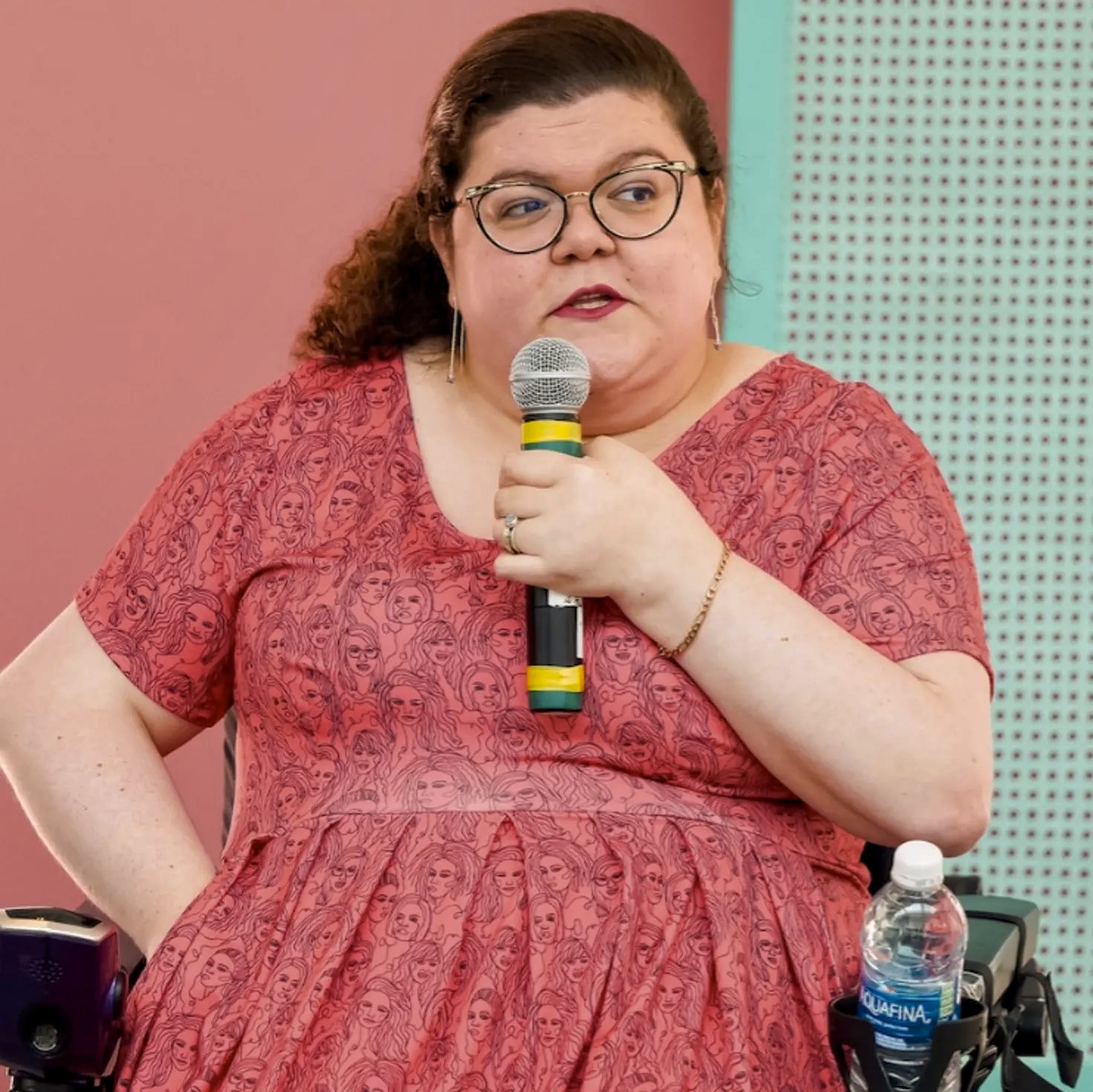


“The blind are able to go, to move, to be, and to compete with all others in society.” -Marc Maurer, White Cane Safety Day: A Symbol of Independence
.
About Us
Welcome to The Shining Lamp
Show/Hide Description
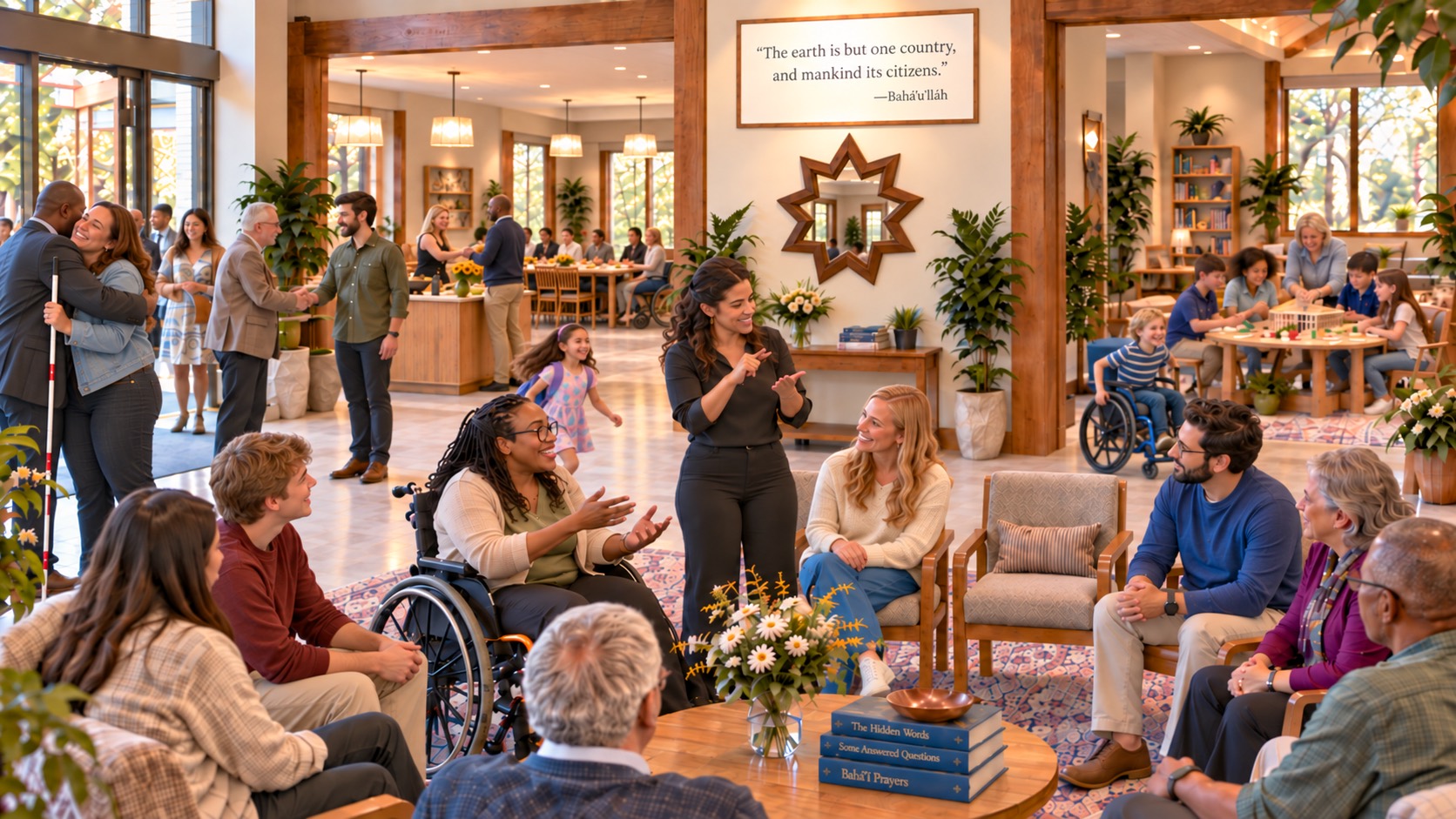
Overview: The scene is a large, bright Bahá'í Community Center with wood beams, plants, rugs, and warm lighting. A diverse group of people represented by different races, ages and disabilities gather across several connected areas joined by a wide, open floor space.
Central wall: A framed quotation reads: "The earth is but one country, and mankind its citizens." It is attributed to Bahá'u'lláh. Below it hangs a large nine pointed wooden star with a mirror at its center where you could see yourself reflected.
Discussion circle (foreground): About nine adults and a couple of youth sit in a circle of chairs around a low wooden table. An smiling Black woman using a manual wheelchair leads the conversation while a standing American Sign Language (ASL) interpreter signs beside her. A chair in the circle is open welcoming you to join in. A stack of books on the table includes The Hidden Words, Some Answered Questions, and Bahá'í Prayers.
Entrance (left): People arrive through tall glass doors and warmly greet each other. A Blind woman with a white cane shares a warm friendly hug with a Black man, others shake hands and smile and talk, and a young girl excitedly runs inside toward the children's area.
Serving and dining area (rear left): A young white woman serves food to a Black man across a wood counter. Farther back, a diverse group of people eat and talk together at a large long community table.
Children's area (right): Children of different ages and races work together at a round table building a detailed model of a community. They are guided by an older woman with grey hair.
This space is about building community.
Imagine a community that fosters a genuine sense of belonging
Where a diverse membership is warmly embraced. Where people of different Races, Disabilities, Ages, Genders, and Cultures, otherwise marginalized, participate fully and inclusively in all of their community's activities and events. Where children find the encouragement to explore and grow, and older members share their wisdom and experience. Where each person is valued for who they are and have opportunities to contribute. Where the community exemplifies the concept of Unity in Diversity.
We strive to remove the barriers that prevent us from building Inclusive, Accessible Communities. We strive to follow the Baha'i Teachings and Best Practices for Inclusive Design, and to learn from the lived experience of marginalized people. These critical strategies belong in our community-building process from the start.
Imagine our community where People with Disabilities are consulted during planning
Where our programs and services are designed and planned ahead of time, guided by People with Disabilities who know where the barriers exist. Where our events are held in accessible places people can reach and enter. Where we provide captioning, American Sign Language interpreters, Assistive Listening Devices, and space for guide dogs. Where our activities and games are built to be inclusive from the outset. Where our materials come in Braille, audio, large print, or electronic format, and are provided in time to be used along with the planned activity. Where images carry meaningful descriptions, videos carry Audio Description, and our communications read as well with a Screen Reader or other Accessible Technology as they do on a phone or a desktop computer. Where nothing is left as a promise for later, because it is all accessible, welcoming and inclusive by design!
Imagine our community where generations meet and multiple cultures are integrated
Where we participate in an interactive presentation, or walk through an exhibition of histories and experiences unlike our own. Where encounters like these foster mutual respect, understanding, and unity. Where marginalized members among us give as well as receive, and find belonging, value, and purpose in that exchange. They build friendships and stronger bonds and remove barriers related to disability, race, culture, age, and class.
Sadly, for many marginalized people, this is not the community they live in.
People in marginalized groups face far greater barriers related to race, disability, gender, age, and culture. Those barriers stand between them and their community's programs, services, events, and materials. There are barriers to information and communications, life activities, and full and equitable participation. This is primarily due to a lack of adequate planning for inclusion and accessibility, and is often influenced by majority dynamics. Sadly, this leaves us with an unbalanced community, far from the one we imagined earlier.
A community needs balanced roles and equitable participation to thrive.
 Inclusive communities are built by removing barriers, and by keeping balance among the three main protagonists: the Individual, the Community, and Institutions. Just as a stool with three legs needs balanced legs to hold itself up, a community needs balanced roles and equitable participation to thrive.
Abdul-Baha centered his work on Unity and Justice.
Abdul-Baha’s life gives us many examples and stories from his travels and engagements. He centered his work on Unity and Justice, and on the inclusion of historically marginalized populations. His focus on this work should guide our Reflection Gatherings and Community Building efforts. As Shoghi Effendi stated:
"If any discrimination is at all to be tolerated, it should be a discrimination not against, but rather in favour of the minority, be it racial or otherwise." -Shoghi Effendi
"For the bedrock of the Bahá’í administrative order is the principle of Unity in Diversity, which has been so strongly and so repeatedly emphasized in the writings of the Cause." -Shoghi Effendi
We strive to prioritize Race Unity, and to end every form of racism through willful anti-racism.
Removing barriers.

Show/Hide Description
Removing Barriers title displayed prominently atop a construction barricade. Subtitles positioned above the barrier indicate various aspects of barriers: Related to Race, Related to Gender, Related to Age, For People with Disabilities, and Related to Culture. Subtitles positioned below the community access barrier list specific areas affected: To Programs, Services, Events, Life Activities, Information and Communications, and Full and Equitable Participation.
Building an Age-Friendly community involves connecting us across ages, through integrated intergenerational activities. It also involves standing with the champions of Age-Friendly programs, services, and inclusive events.
Removing barriers for People with Disabilities means planning ahead and ensuring that all Programs, Services, Events, and Materials are Inclusive and Accessible. It also means ongoing consultation with those who best understand the barriers they face.
Without that planning and consultation, our community remains divided into factions of "haves" and "have nots," perpetuating inequality and undermining unity, justice, and inclusion. Reflecting on Abdul-Baha's teachings, we share the responsibility to uplift all marginalized members of our community and to actively create a default environment of equity, inclusion, and genuine belonging.
“By embracing neurodiversity and disability as natural variations of the human experience, we can unlock the full potential of our society.” -Kim Chua, What NPR readers want you to know about living with a disability
So what can we do specifically to remove barriers?
How can we learn about and remove barriers that prevent us from building Vibrant, Diverse, Inclusive, Accessible Communities?
Let's find out together!

Raise awareness about accessibility
Recognized as a fundamental human right under the United Nations Convention on the Rights of Persons with Disabilities, access to information and the internet is crucial. With over one billion people globally living with disabilities, ensuring accessibility is paramount. Discover the International Accessibility Standards and their role in fostering inclusivity in your on-line publications. Join the cause by watching and sharing these videos to raise awareness and advocate to remove barriers that prevent us from building Diverse, Vibrant, Inclusive, Accessible Communities!
Accessibility: Essential for Some, Useful for All

Learn and Use the International Accessibility Standards
To ensure your communication is accessible and inclusive in emails, meetings, events, videos, newsletters, websites, apps, and other materials produced, published and used, it's vital to follow International Accessibility Standards developed using a comprehensive inclusive process. Thankfully, Accessibility Training offers free and easy-to-learn standards for you to utilize.
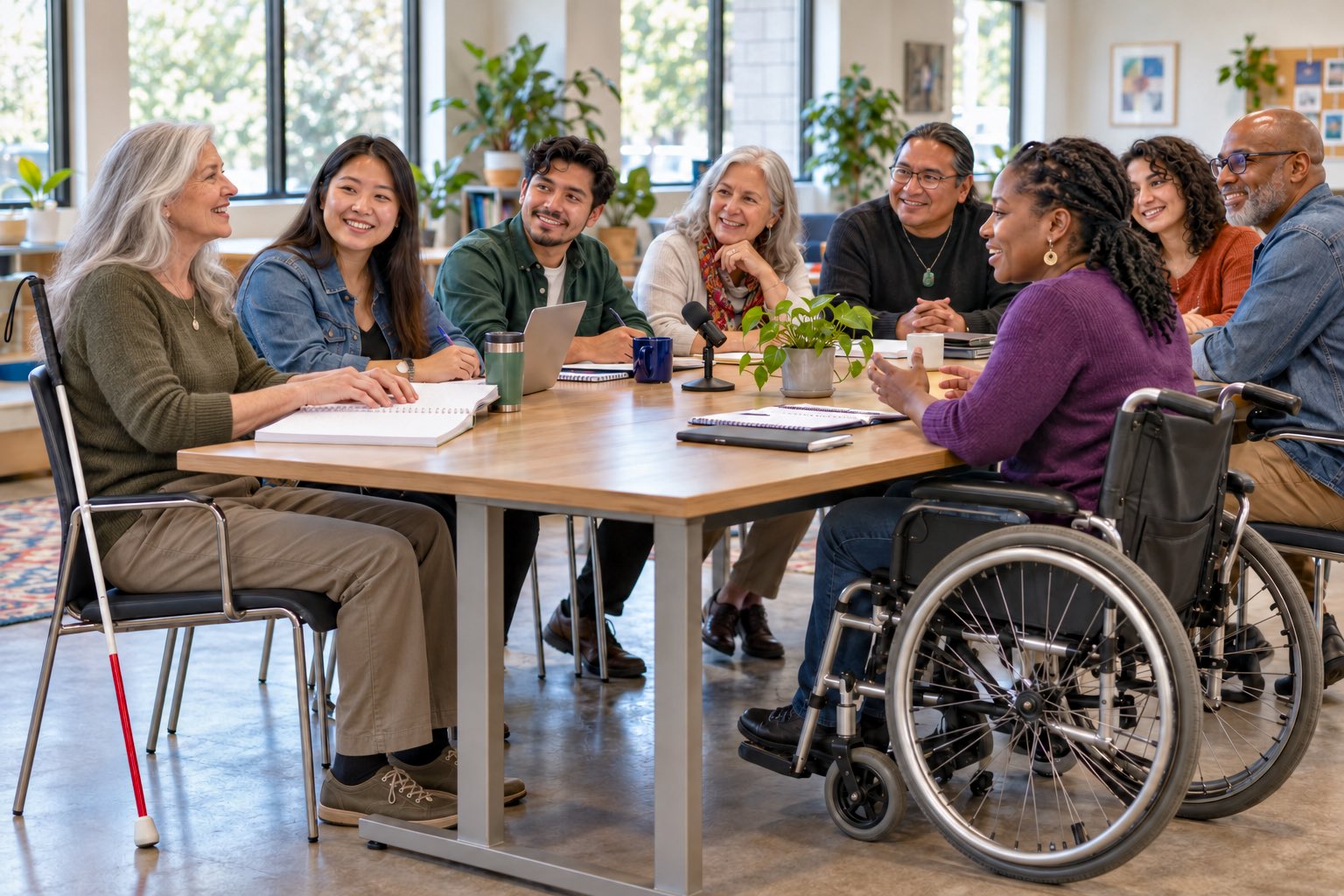
Plan and Host Accessible Events
Abdul-Baha exemplified unity, justice, and inclusion of marginalized people, including those with disabilities. It's crucial for event planners to prioritize accessibility for participants. Removing barriers and establishing just relationships is key to uplifting everyone and building vibrant communities.

Change our Mindset from the Medical Model to the Social Model of Disability
Shifting from the medical to the social model of disability is critical because it emphasizes the need to address systemic barriers and promote inclusivity, rather than solely focusing on fixing individual impairments.

Use ALT Text and Descriptive Images
Boost your image accessibility - learn how to write meaningful ALT text. Learn to tell the difference between simply identifying what's present in the image and offering a clear and concise description of it.

Write Inclusive Accessible Email Messages
Effective communication is crucial in creating diverse, inclusive communities, and email messages are a common tool used for sharing information. If messages aren't inclusive and accessible, they can stifle and harm community building by creating a sense of "otherness" instead of belonging. It is essential to remove these barriers and create truly diverse, vibrant, and inclusive communities.

Learn about and Use Audio Description in Video for Blind and Low Vision Accessibility
To ensure accessibility for those who are Blind or have Low Vision, be sure to use videos with Audio Descriptions for presentations and enable Audio Descriptions during presentations and video creation. This article emphasizes the importance of Audio Descriptions, their role, and how to incorporate them for a more inclusive digital world.

Fix the Unusable Flaws of Print with Online PDF for Accessibility and Inclusive Design.
Fixing the flaws of relying on print publications and online PDFs for accessibility and inclusive design is crucial in today's digital landscape. Traditional PDF formats prioritize designer control over presentation, but an inclusive approach prioritizes user control and accessibility instead. The PDF format, while offering designer control, presents significant barriers for people with disabilities, such as limited customization options and problems for screen reader users. Alternative formats and consultation with people with disabilities are essential steps towards truly useful and inclusive content creation, ensuring that digital environments are accessible and equitable for all users.
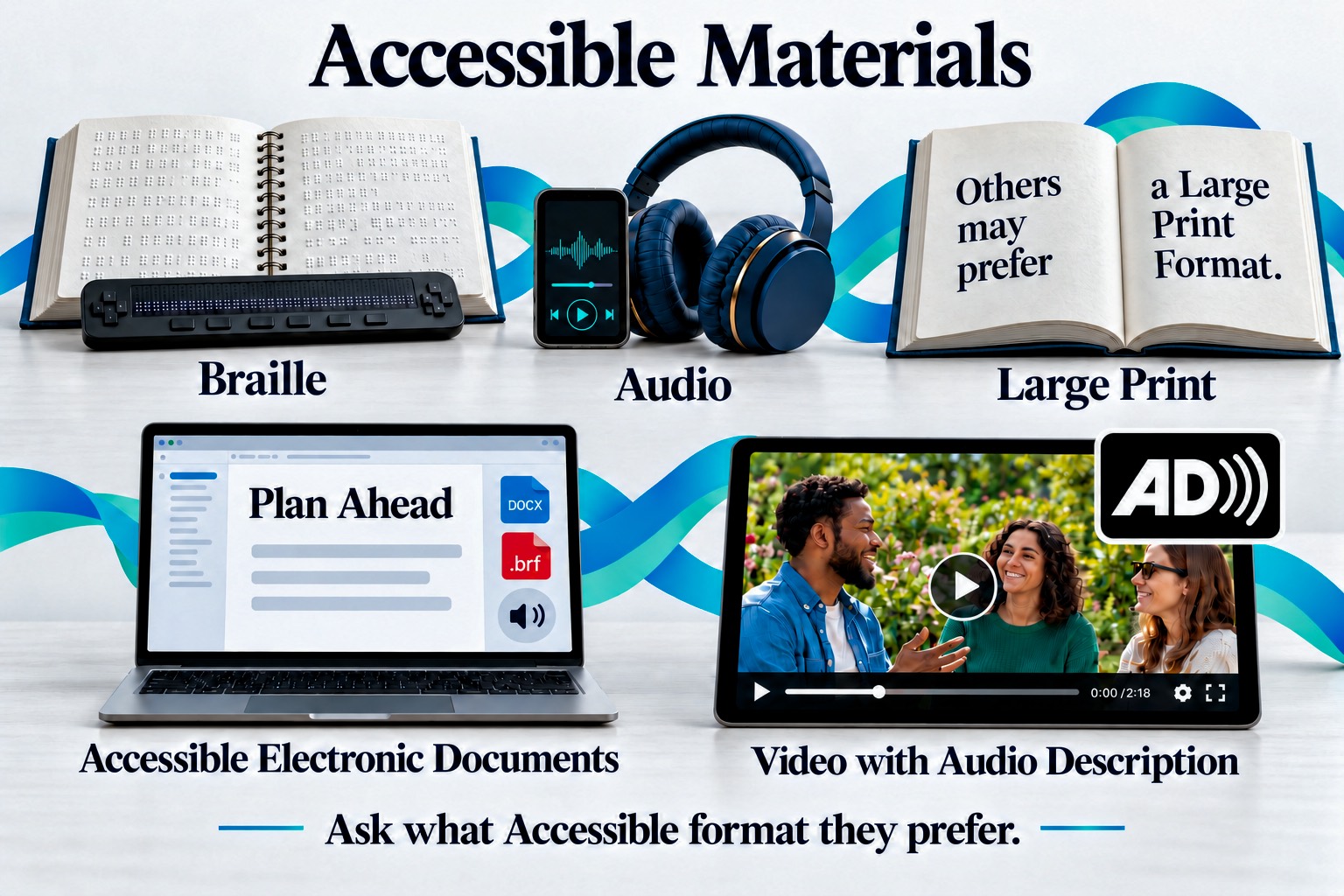
Make Materials Accessible to Your Blind Friends.
Include blind friends in meetings by providing accessible formats like braille, audio, large print, or electronic copies. Check privately for their preferred format which can be obtained easily through a certified transcriber, enabling full participation.

Take Advantage of our Resources
Remove barriers and unlock the full potential of the Shining Lamp Collection of Resources!

Stay informed with our Articles
Discover a world of illuminating insights, understanding and effective ways to take action with the Shining Lamp's online collection of articles.

Keep up to date with What's New!
Stay up-to-date with the latest and most intriguing content on the Shining Lamp website. Explore a variety of captivating articles, videos, and resources that will keep you informed and ready and able to remove barriers. Don't miss out on the opportunity to discover something new and exciting every time you visit the site.
“For an assortment of reasons, blind children are seldom expected to do household chores.” -Julie Deden, Helping Out: How Chores at Home May Pave the Way to Future Employment for Blind Youth
Be an Upholder and Defender of the Victims of Oppression

Take action to remove barriers that prevent us from building inclusive and just communities. Establish equitable relationships among individuals, communities, and institutions of society that uplift all and reject the idea of "othering." Uphold and defend the rights of those who suffer from oppression and be a beacon of hope and compassion.
Remove Barriers

Show/Hide Description
Removing Barriers title displayed prominently atop a construction barricade. Subtitles positioned above the barrier indicate various aspects of barriers: Related to Race, Related to Gender, Related to Age, For People with Disabilities, and Related to Culture. Subtitles positioned below the community access barrier list specific areas affected: To Programs, Services, Events, Life Activities, Information and Communications, and Full and Equitable Participation.
Barriers keep people out of the life of their community: out of programs, services, and events, out of information and conversation, and out of full and equal participation. The barrier is in the environment, the plan, or the attitude, not in the person. Learn the seven most common barriers, why removing them is a matter of justice, who should lead the work, and ten specific steps you can take.
Unity in Diversity

A garden’s beauty comes from its variety. A community’s strength can, too—when people pushed to the margins have a place to belong and contribute. The Bahá’í principle of Unity in Diversity calls us to cherish differences and confront exclusion. Explore how justice, accessibility, and inclusive design can remove barriers for people with disabilities and other marginalized members, opening the way to full participation in community life.
The Baha'i Faith and People with Disabilities

More than 1 in 4 adults (28.7 percent) in the United States have some type of disability. They are our neighbors, coworkers, family members, and friends, and a part of the diversity of the human family. Every gathering, class, and conversation in our communities is an opportunity to welcome them, to learn from them, and to build together. Learn what barriers may be preventing full participation, consult together on the next steps, and take specific steps.
“We’ve had to make due with living in a world that’s rather hostile and not designed for us in the first place.” -Alice Wong, I Know We Can Transform the World: Remembering Disability Rights Activist Alice Wong
Currently Trending on the Shining Lamp:
“As to racial prejudice, the corrosion of which, for well-nigh a century, has bitten into the fiber, and attacked the whole social structure of American society, it should be regarded as constituting the most vital and challenging issue.” -Shoghi Effendi, The Advent of Divine Justice
Explore More Compelling Insights:
Learn about topics related to People with Disabilities, Accessibility, Anti-Ableism, Removing Barriers, and the Disability Community? Tap the Explore button to discover something new and intriguing with each tap!