
Striving to remove barriers that prevent us from building Vibrant, Diverse, Inclusive, Accessible Communities!
By Eli A. Wolff, Contributor and Dr. Mary Hums, Contributer
Educator, Innovator, Advocate
Professor of Sport Administration, University of Louisville
Sep 5, 2017, 09:20 AM EDT
Updated Sep 6, 2017
...
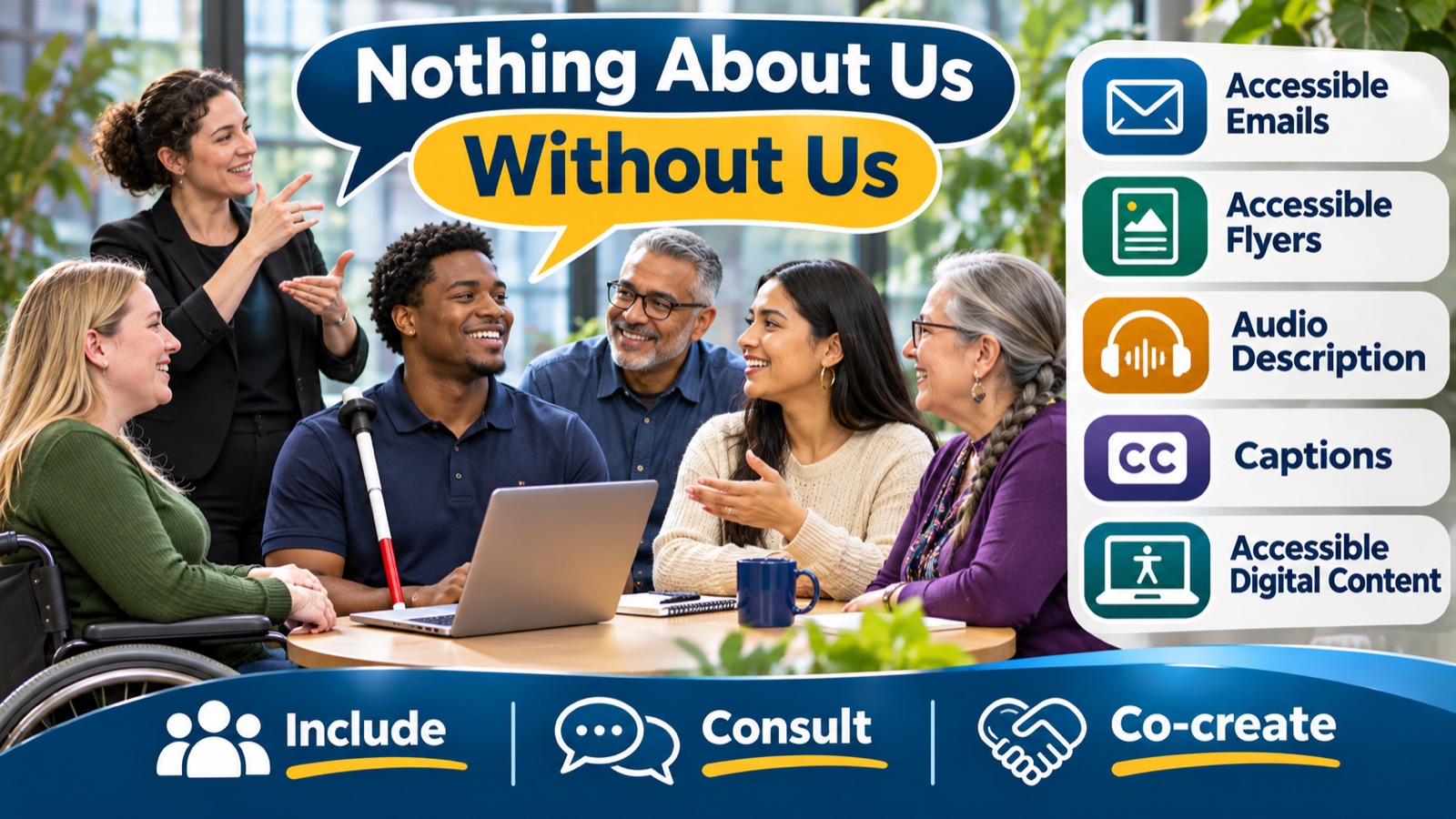
“Nothing about Us Without Us” emphasizes how people with disabilities must be valued as integral and essential contributors to every sector, industry and community including entertainment, fashion, education, sports, medicine, business and law. While people with disabilities need to be leaders of disability-focused organizations, that is not enough. We also need to be front and center in mainstream local, national and international organizations.
For example, in the entertainment industry, people with disabilities need to represent themselves and be visible in movies, TV and advertising. Similarly in the world of sports, people with disabilities need to be leading the Paralympic, Special Olympic, and Deaflympic Movements, but also need to be front and center within the Olympic Movement, professional sport, intercollegiate athletics and youth sports.
The powerful phrase “Nothing About Us Without Us” ignites a vision for people with disabilities that represents pride and power rather than stigma and pity. It shows us that the disability community is an uplifting community that unites us and works for our rights and dignity. The phrase reinforces the possibilities for people with disabilities to be meaningfully included, and if we wish to, seamlessly become leaders in every type of organization and institution. We need to have a valued voice in every facet of daily life.
“Nothing About Us Without Us” moves us to re-define, re-imagine and transform what it means to be a person with a disability in all aspects and all avenues of our global society. It drives a movement that reaches beyond the status quo and demands progress toward equality and justice. Hopefully “Nothing About Us Without Us” will continue to serve as a social justice call to action in mobilizing future generations.
...
We should place People with Disabilities front and center in our mainstream groups and committees, and never only in disability groups. We should make no decision about People with Disabilities without them. Valuing People with Disabilities as leaders and essential contributors in every part of community life would move us toward Vibrant, Diverse, Inclusive, Accessible Communities for People with Disabilities.
READ the FULL Article:
Find examples of upholders and defenders of the victims of oppression by name, group, disability, or topic, and choose one whose example you will put into practice.
Questions for Reflection
- Where in our community do People with Disabilities lead, and where are they only served?
- Are Members with Disabilities front and center in our mainstream groups and committees, and not only in disability groups?
- Who appears in our pictures, videos and announcements, and do People with Disabilities represent themselves in them?
- Eli A. Wolff and Mary Hums write that the phrase brings pride and power in place of stigma and pity. Where do we still speak with pity?
- Which decision about Members with Disabilities have we made without them?
- Which upholder or defender from the people list will we choose, and what will we do first to follow that example?

Also See:
- A New Disability Memo Has Lessons For Employers, Funders And Policymakers
- New Springfield Art Exhibit "The Life I Choose" Centers People with Disabilities
- Ramp Your Voice! Conference 2026 Celebrates Black Disabled Joy, Leadership, And Community
- Changing Perspectives: Why a room full of well-intentioned people with no lived experience isn't enough
- 4 ways to design a disability-friendly future
- Anti-Ableism Fast Facts - Ways to Combat Ableism:
- The Radical Life of the Father of the Independent Living Movement
- Innovate to Elevate: Fostering Excellence in Rehabilitation Services for Blind Youth
- Changing Words, Changing Minds, Changing the World