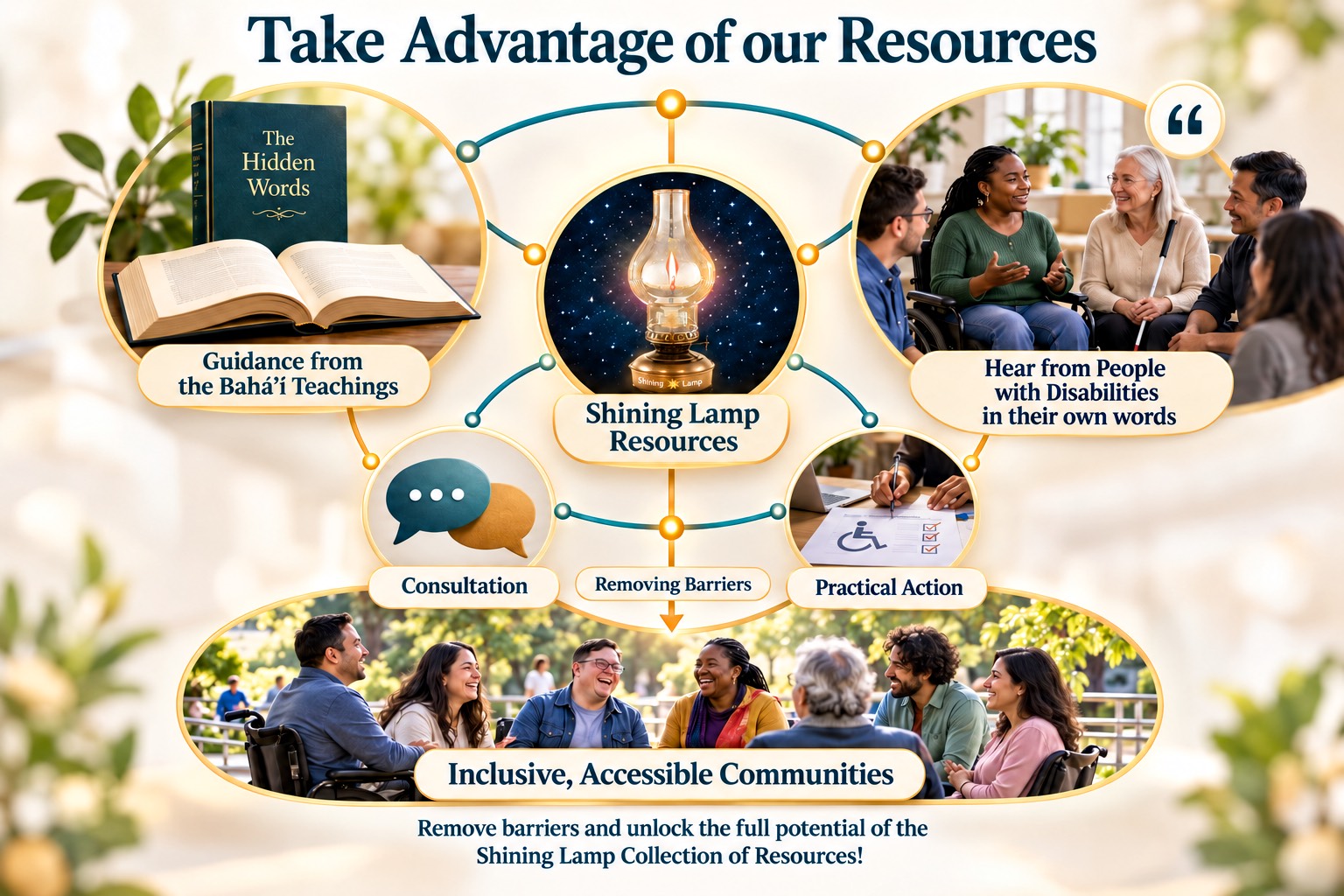
Network graphic connects Bahá’í teachings and people with disabilities speaking in their own words through Shining Lamp Resources. Linked nodes show consultation and practical action toward removing barriers, leading to a diverse group, including wheelchair users, participating together in an inclusive, accessible community.

Resources starting with Y

How to find a resource

  • Choose a letter or number to see resources that start with it. The number beside each shows how many there are. Resources starting with A show first.
  • Dimmed letters and numbers have no resources yet.
  • Prefer a keyword? Use the search box above.
  • Use List View for titles only, or Summary View for an image and summary of each resource.
  • Use the page links below the results to see more.
  • (1)
  • # (1)
  • ' (1)
  • 1 (4)
  • 2 (1)
  • 3 (3)
  • 4 (2)
  • 5 (5)
  • 8 (1)
  • A (37)
  • B (23)
  • C (18)
  • D (19)
  • E (7)
  • F (14)
  • G (7)
  • H (23)
  • I (31)
  • J (3)
  • K (1)
  • L (9)
  • M (18)
  • N (9)
  • O (8)
  • P (9)
  • R (11)
  • S (18)
  • T (35)
  • U (2)
  • W (31)
  • Y (2)
  • “ (1)
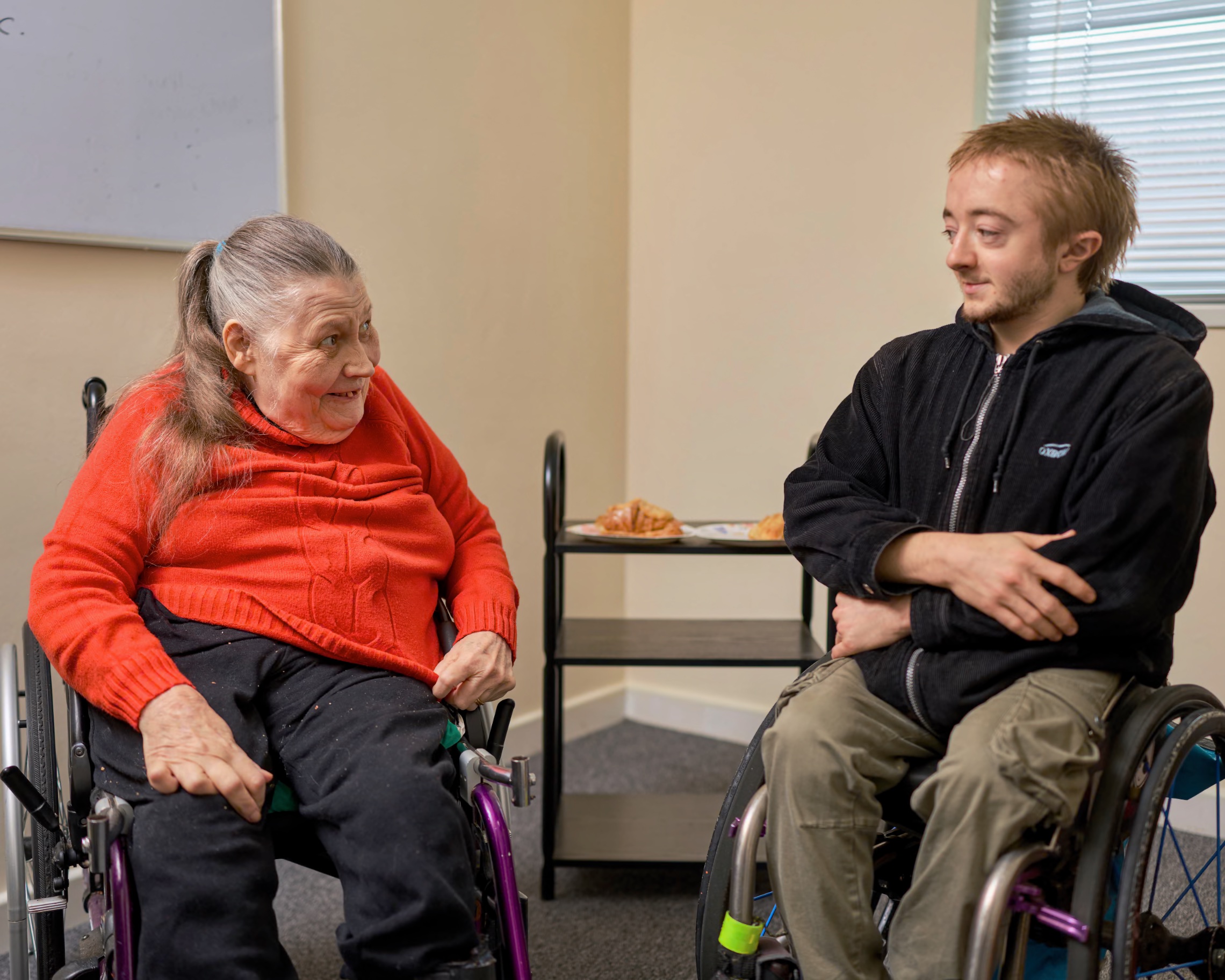
  • Alice Moira (81) and Lochlann O’Higgins (25) describe how exclusionary design and policy still block wheelchair users—step-free gaps, scarce accessible housing, and hostile benefits systems—alongside the community and freedom they claim through sport and swimming.

    You just feel so light!: two wheelchair users – one 81, one 25 – on welfare cuts, housing and the joy of swimming

    Across generations, the through-line is structural: wheelchair users are still navigating spaces designed without wheelchair users in mind. Alice Moira’s childhood chair was wooden and unpushable, and later wooden push-rims left her hands full of splinters; Lochlann O’Higgins still reaches stations with no lift despite modern trip-planning tools. This isn’t about “resilience”—it’s about rights: fix the infrastructure so people aren’t stranded or hurt by designs that exclude People with Disabilities. Housing multiplies the harm. Moira recalls tenants with disabilities effectively trapped in…

  • Abandoned wheelchairs outside the Two Palms Nursing Center in Altadena, Calif., serve as a stark reminder of the systemic barriers faced by People with Disabilities during emergencies. This image underscores the urgent need for inclusive and accessible community planning to prevent further tragedies.

    Your Local Community Isn’t Ready to Evacuate People with Disabilities

    The tragic deaths of People with Disabilities during disasters, such as the Los Angeles wildfires and the 2023 Hawaii wildfires, highlight systemic failures in emergency planning and response. Research shows that People with Disabilities are disproportionately vulnerable due to barriers like limited access to transportation. These preventable tragedies underscore the responsibility of local governments and communities to remove barriers and prioritize inclusive, accessible planning. Read on to discover how community-driven efforts can transform emergency preparedness and save lives. Systemic…


Explore More Compelling Insights:

Learn about topics related to People with Disabilities, Accessibility, Anti-Ableism, Removing Barriers, and the Disability Community? Tap the Explore button to discover something new and intriguing with each tap!