



Explore More Compelling Insights:
Learn about topics related to People with Disabilities, Accessibility, Anti-Ableism, Removing Barriers, and the Disability Community? Tap the Explore button to discover something new and intriguing with each tap!
The op-ed frames fair pay for disabled workers as a matter of respect and belonging, insisting that wages signal whether society sees people as full participants. It calls attention to policies and practices that treat low wages as acceptable when disability is involved, and challenges readers to rethink what dignity in work really means. The piece argues that fair pay is about human and civil rights, not charity. It points toward pay equity and integrated employment as routes to genuine inclusion, urging leaders to measure success by whether People with Disabilities can build stable…
"Congregations are a vital part of many people's lives, often the most important one, if only for social reasons. They serve all geographic and ethnic communities: Latino, African American, Jewish, Muslim, Baha'i, Buddhist and others. While ethnic and racial conceptions about disability certainly differ, minority and oppressed groups tend to share concern about social justice issues and exclusion. Yet the experiences and views of people with disabilities have received limited attention within multicultural movements. This lack of concern is noteworthy because people with disabilities are in…
Federal officials are dismantling the supports that allow People with Disabilities to live among their neighbors instead of inside institutions, while a senior federal health official publicly declared that nonspeaking People with autism would never hold jobs or pay taxes, even as Scripture demands that believers tear down structures built on oppression and act rather than merely feel, and even as thin, dated figures show families walking away from congregations and children shut out or made to feel unwanted. Nobody has to resolve every question before acting, because inclusion and accessibility are shared responsibilities owned personally by each of us and enacted collectively through decisions made in consultation with People with Disabilities, an obligation Community Builders carry from planning through ongoing improvement, and it can begin with a single family and a single conversation.
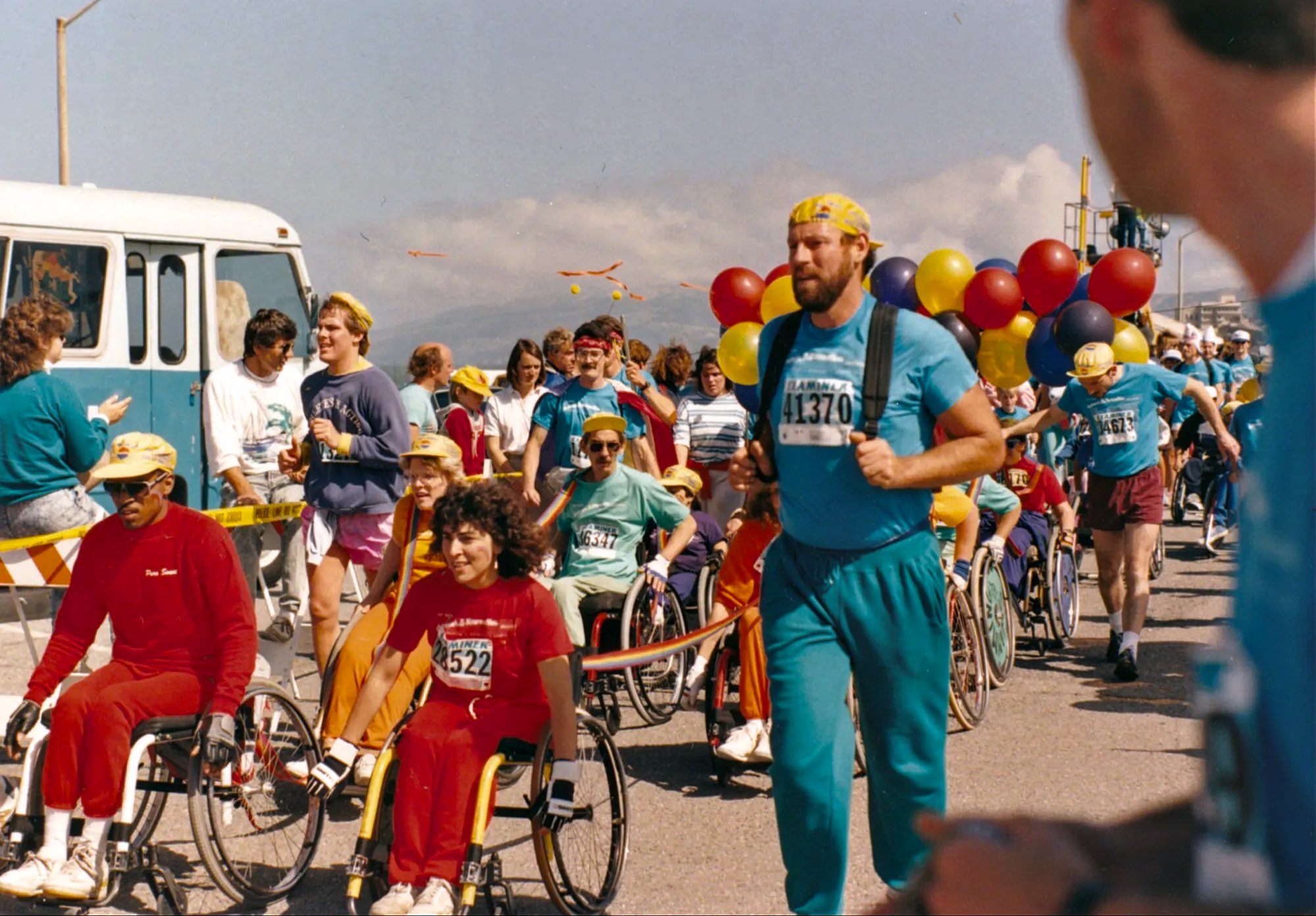
In 1975 a student who used a wheelchair was turned away from a campus swim class, wrote a paper describing recreation run by and for People with Disabilities, and won city funding to build it. Fifty years later the Bay Area Outreach & Recreation Program (BORP) runs about twenty activities a week, more than half its staff are part of the disability community, and its online classes drew over a thousand people from Alaska to Poland once transportation barriers were removed. The lesson holds for the events we plan: interest was never the missing piece, and leadership by People with Disabilities is what turns a program into a place people belong.
In "Fighting the War on ‘Image Poverty’" by Claire Rojstaczer, Chancey Fleet shares her journey from being a beneficiary of the National Library Service for the Blind and Print Disabled (NLS) to becoming an advocate for improving access to information for people who are Blind or Low Vision. Fleet's childhood experiences with NLS ignited her passion for creating meaningful access to information for others, leading her to her current role as the Assistive Technology Coordinator at the Andrew Heiskell Braille and Talking Book Library in New York City. Through innovative programs like the…
Nanette Goodman Michael Morris Kelvin Boston With a Foreword by Donna Walton Donna Walton discusses the triple jeopardy syndrome, which African American women with disabilities face due to race, gender, and disability biases in society, and how it affects their employment stability and financial stability. She emphasizes the need to increase awareness of the intersection of race and poverty on the challenges faced by people of color with disabilities, and encourages social service systems to approach disability and poverty from an integrative paradigmatic model that removes barriers and…
Blind People are entirely capable of serving as full caregivers, as Catherine Samuel, fully blind since birth and director of disability resources at Carnegie Mellon University (CMU), demonstrates through her role managing her mother's financial affairs from several hundred miles away. Using online banking platforms, transaction alerts, and access technology tools including Be My Eyes, Seeing AI, and AIRA, she organized accounts, detected fraud, and protected assets, while her sighted brother managed medical matters nearby. The caregiving range available to Blind People who draw on technology and a lifetime of skills built for navigating the world extends from medical advocacy and medication management to independent pharmacy errands and home meal preparation. The strongest caregiving is always a collaborative effort: each person contributes from their real strengths, and together they build the kind of intentional, shared community that makes genuine belonging possible for People with Disabilities.
The First Peoples Disability Network has launched a national survey to surface everyday problems and priorities from Aboriginal and Torres Strait Islander People with Disabilities, aiming to turn lived experience into practical reforms. Responses will help map barriers in housing, health, education, transport, and justice so reforms start with community voice rather than assumptions; the approach centers cultural safety and disability pride. For Blind/Low Vision participants and others who prefer different formats, the call invites accessible ways to take part so stories are not lost to…
After a workplace accident left her with a disability, a Toronto nurse found herself shut out of decisions about her own care, talked about rather than heard, and repeatedly dismissed when she reported that her pain was worsening. Becoming a person with a disability revealed barriers in healthcare and in daily life that People with Disabilities meet constantly and that those who hold power rarely notice until forced to confront them. She has been clear that People with Disabilities must advocate for themselves far more than others realize, a demand that lands hardest when pain and exhaustion have already taken their toll. When she shared her story online, People with Disabilities found one another and built community around the truth that they are real people who deserve to be heard. Community Builders share that same responsibility and collective obligation to center People with Disabilities in every decision, and to hear People with Disabilities speak for themselves.
The article "Fostering Inclusion: Blindness Doesn’t Define Us" by Cricket Bidleman and Karen Smith shares a heartfelt exploration of the challenges and triumphs faced by Blind People in navigating social interactions and recreational activities. Cricket, as the social media coordinator at the Jernigan Institute, reflects on her journey from childhood, where accessibility was often an afterthought, to finding a supportive community in college. She recounts her experiences with board games, highlighting both the barriers she encountered and the efforts made by friends to create inclusive gaming…
France inducted Deafblind lawyer and author Haben Girma into its Order of Arts and Letters for her advocacy of Braille, a moment she used to answer critics who call the writing system outdated, to describe how a publisher once assumed someone else should voice her own memoir, to recall a Blind teenager in occupied France who turned society's low expectations of him into cover for a resistance movement, and to warn that today's artificial intelligence tools read printed pages easily yet fail on Braille, a matter of priorities that Community Builders share the responsibility to correct.
As a child, the author could not picture a butterfly, a flock of geese, or the shape of a monument. She argues that touch can deliver that knowledge when society commits to removing barriers—especially through raised-line drawings and 3-D models that represent objects we can’t safely handle or physically reach. Public examples such as tactile exhibits and maps show how environments can support exploration instead of blocking it. The piece recounts a three-day Teach-In in Littleton, Colorado, designed to build a corps of instructors who can teach tactile literacy. Led by Ann Cunningham and…
Z’Leah N. Liburd offers powerful reflections from mothers raising Blind and Low Vision children—mothers who have become strong leaders in their homes and communities. These stories illuminate what it truly means to raise Blind and Low Vision children in a world where ableism continues to shape how disability is perceived. Their experiences remind us of the importance of removing barriers that prevent us from building Vibrant, Diverse, Inclusive, Accessible Communities! These mothers share what they have learned—not just about parenting, but about navigating systems, challenging assumptions…
Jennifer Laszlo Mizrahi argues that disability inclusion in Jewish life must shift from “good intentions” to expectation because People with Disabilities and their families have been pushed out of core community spaces. She writes that a beloved family member was excluded from Jewish life because Jewish organizations were “not willing or able” to include people with disabilities, and she adds that many other families experienced the same exclusion. Being “excluded from Jewish schools, camps and other experiences” is a direct denial of belonging that institutions can—and must—stop normalizing.…
Learn about topics related to People with Disabilities, Accessibility, Anti-Ableism, Removing Barriers, and the Disability Community? Tap the Explore button to discover something new and intriguing with each tap!