
Striving to remove barriers that prevent us from building Vibrant, Diverse, Inclusive, Accessible Communities!
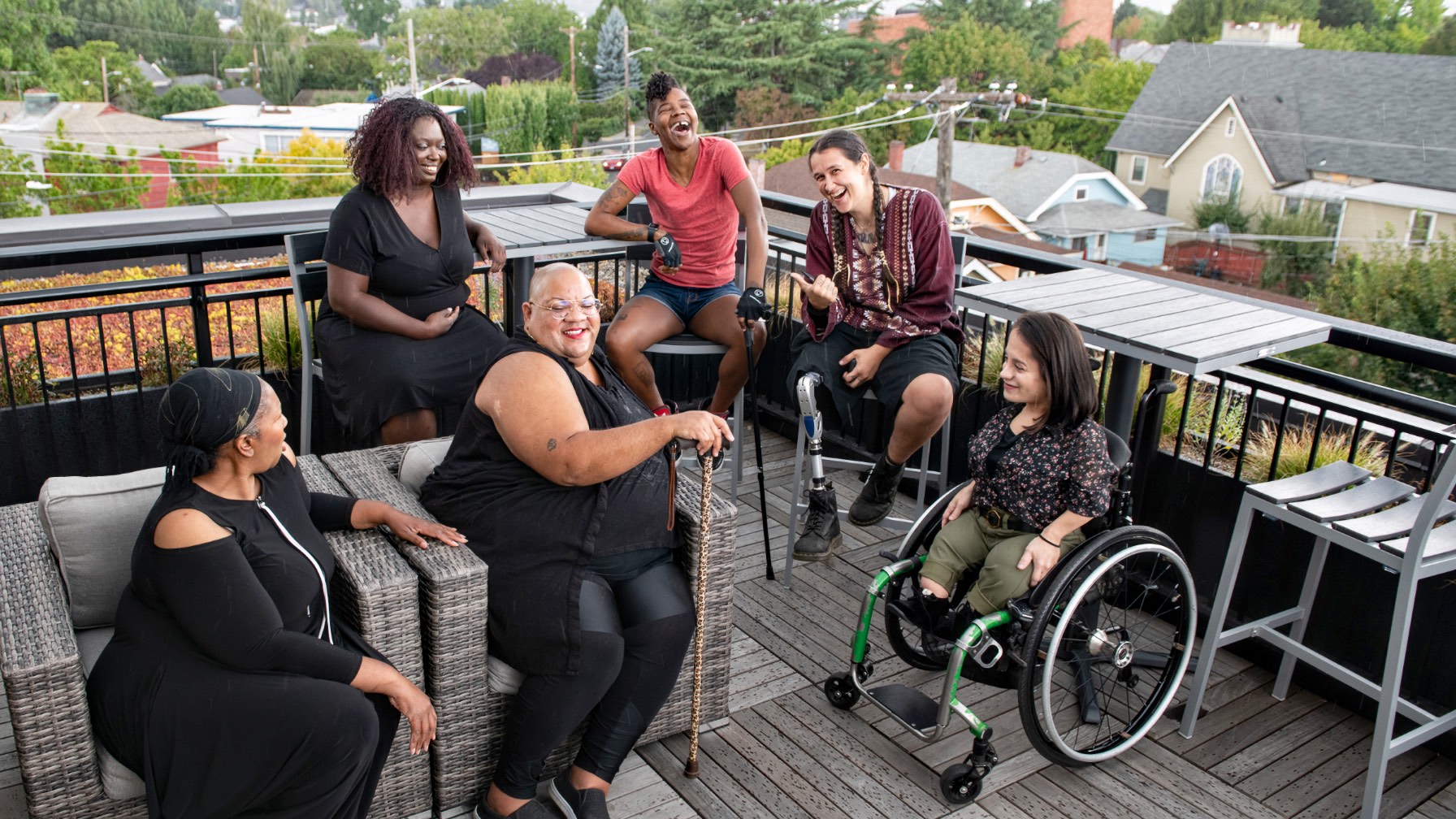
Federal officials are dismantling the supports that allow People with Disabilities to live among their neighbors instead of inside institutions. A memorandum issued on June 18, 2026 puts at risk a protection established in 1999 affirming that People with Disabilities belong in the neighborhoods where they already live, a break from how that protection has been understood for decades across changes in federal leadership. Responsibility for education and rehabilitation programs serving Students with Disabilities is moving to one federal agency while a second absorbs the work of protecting rights, and advocates agree without exception that this split will breed confusion, delay responses, and weaken protection. Officials describe the reshuffling as trimming bureaucracy and coordinating services better. These changes follow public remarks in April 2025 by a senior federal health official who declared that nonspeaking People with autism would never hold jobs or pay taxes and that autism destroys families, deficit framing that clears a path toward further shrinking of the systems People with Disabilities rely on.
Scripture answers this shrinking with a demand rather than a suggestion. A prophet condensed what God expects toward marginalized people into three obligations: pursue justice, love mercy, and walk in humility. The Hebrew term behind that justice reaches past punishing wrongdoers to tearing down structures built on oppression and making certain that people pushed to the edges actually receive what is theirs, paired with a mercy described as unyielding devotion toward another person. Jesus embodied both, and a Greek word captures his visceral reaction to people shut out of society, a reaction that produced action rather than sentiment: he touched them, healed them, and returned them to the heart of communal life. Believers across the centuries, confronting the slave trade and segregation, read this same mandate as requiring them to move against the grain of their era, and the modern church has too often failed to carry that urgency into its own practice.
The record of how congregations treat People with Disabilities is thin, dated, and damning. Roughly 32.3 percent of families that include a person with a disability have walked away from a church. About 46.6 percent of parents stay away from religious gatherings because their child was shut out or made to feel unwanted. Monthly church attendance sits at 45 percent among adults with disabilities and 57 percent among adults who do not have disabilities. A longtime disability rights champion argued that what a community counts is what it acts on, yet congregations have not committed resources to counting any of this, and some hesitate precisely because of what an honest look would reveal. Until congregations measure what is happening inside their own walls, those cracks stay unaddressed and the barriers remain.
Nobody has to resolve every question before acting. The work moves past arranging a fix only when an individual asks for one and toward accessibility designed into the whole of congregational life, treating disability as an ordinary feature of that life rather than something to be fixed or managed. It draws on the gifts of every member, including People with Disabilities, and removes barriers before anyone runs into them, which is essential to a congregation's own vitality and future. Leaders can ground this in the gospel and share stories, members can show leadership what full and meaningful inclusion changes, and it can begin with a single family and a single conversation. Inclusion and accessibility are not products to be purchased or outsourced to others, they are shared responsibilities owned personally by each of us and enacted both personally and collectively through decisions made in consultation with People with Disabilities, and that is precisely the obligation Community Builders carry at every stage, from planning through implementation and ongoing improvement.
Read the Full Article: If the church doesn't rise up for the disabled, who will?.
By: Nadia Ibrahim Mossburg
