
Striving to remove barriers that prevent us from building Vibrant, Diverse, Inclusive, Accessible Communities!
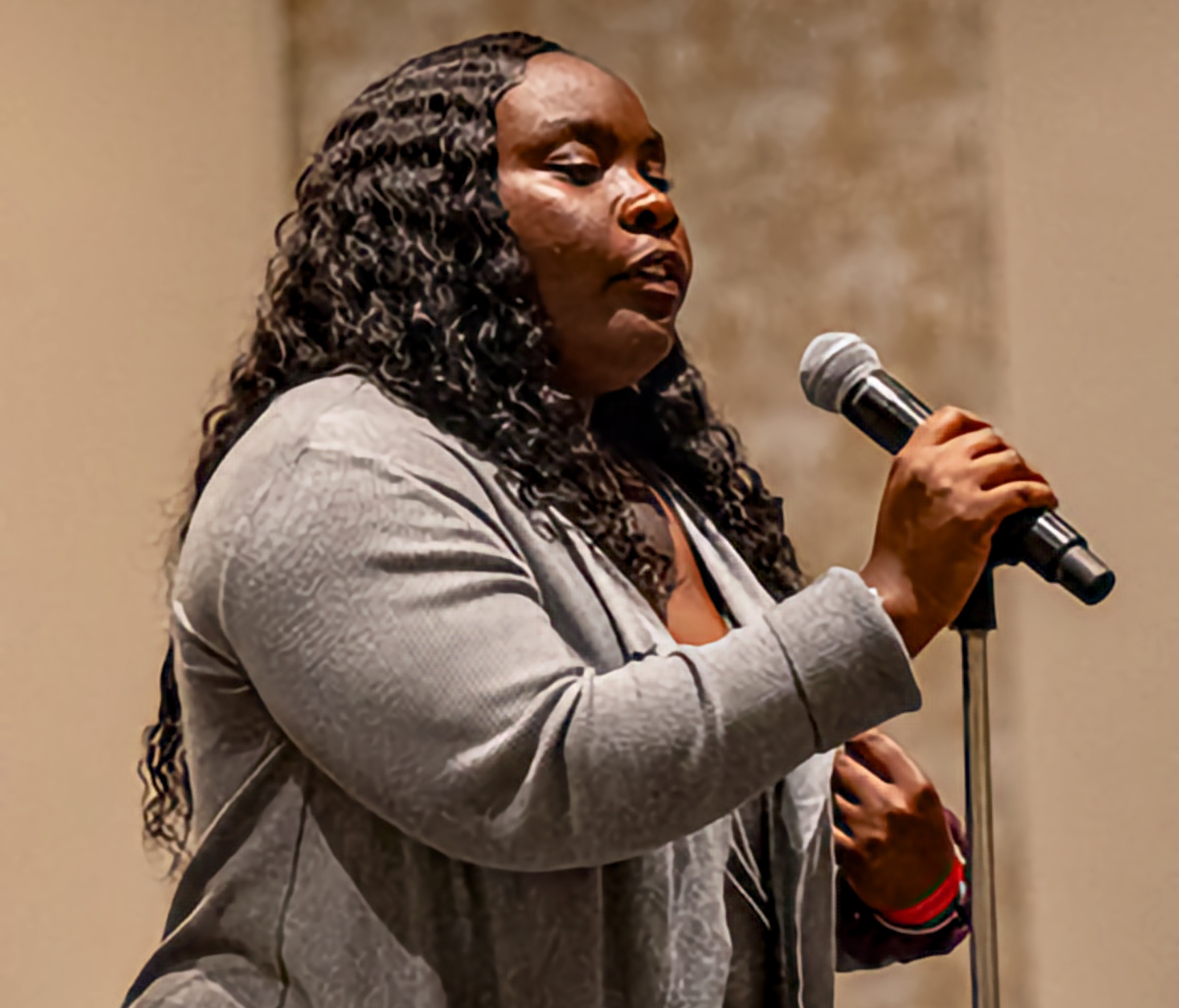
Strangers often ask Blind people how they manage, Z’Leah N. Liburd writes, but they rarely think about the parents. So for Mother’s Day she spoke with four mothers raising children who are Blind or Low Vision, for the Braille Monitor: Jennifer Pascarella, who works with students at the Florida School for the Deaf and the Blind in St. Augustine; Sarah Stolarczyk, who homeschools her son in Punta Gorda, Florida; Candice Miller of upstate New York; and Tamika James of Zephyrhills, Florida, an elementary school teacher. Some of the mothers are Blind themselves. Their stories push back against the pity and low expectations that are part of ableism.
Pascarella and her children and granddaughter all have optic nerve hypoplasia. Within eight hours of her son’s birth she was advocating for him, because his pediatrician would not listen; she found a new one. Ten years later, she says, raising a sighted child would have frightened her more, because she knew what to do with Blind children. Stolarczyk’s son was diagnosed with retinitis pigmentosa at two and a half, then with leukemia six months later, which put blindness in perspective; he has now been free of cancer for more than ten years. James moved her family to the United States mainland so her daughter could have a safe and stable home.
Miller, who is Blind, has two children with retinal colobomas and some usable vision. Her school district pushed large print because it was cheaper and simpler for teachers, and staff told her she wanted Braille only because she knew it. Her children are now behind in reading, read print with their faces close to the page, and know only some Braille. She wishes she had hired a lawyer and pushed more firmly for Braille literacy. Stolarczyk had to pay for orientation and mobility, Braille and technology training herself, because a homeschooled child could not receive those services from the public school.
Blind children rise to the expectations set for them. The mothers measure success in independence. Pascarella asks herself whether her children would be doing something if they had better vision, and she will not let her fear stand in the way of their dreams. Stolarczyk’s son bowls, acts and plays music with sighted friends and has competed in the Braille Challenge and the Abacus Bee. James’s daughter learned independent living skills at the Florida School for the Deaf and the Blind and now leads the Florida Association of Blind Students. All four want the public to understand that Blind children are capable. It is a lesson in learning to imagine what People with Disabilities can do.
We should expect Blind children to succeed, and stop assuming what they cannot do. We should make Braille, orientation and mobility training and accessible materials available to every Blind child, including those who are homeschooled or have some vision. Opening our programs and clubs to Blind children, with materials they can read, would move us toward Vibrant, Diverse, Inclusive, Accessible Communities for People with Disabilities.
Parents who set high expectations raise Blind children who meet them.
Read the Full Article: From Fear to Empowerment: Moms’ Stories of Raising Blind Children.
By: Z’Leah N. Liburd
Learn More
- Inclusive Design
- Where can I get Training in the Foundations of the International Accessibility Standards
Questions for Reflection
- Which of our assumptions about Blind children have we never tested by asking a Blind adult?
- Candice Miller was told she wanted Braille for her children only because she knew it. When have we dismissed a Parent with a Disability’s knowledge?
- Can a homeschooled Blind child in our community get Braille and orientation and mobility training?
- Which of our programs for young people have materials a Blind child can read?
- Who in our community could connect a new parent of a Blind child with Blind adults?

Also See:
- Mom Is Raising Son with Only One Hand After Living with Cerebral Palsy for Decades
- Building the Future for Braille Literacy: A Global Approach
- Mothers With Disabilities Are Often Overlooked in Society
- Imagine how disabled people can, rather than assuming we can’t
- I'm disabled with two kids - cruel people still ask why my husband's with me
- Where can I get Training in the Foundations of the International Accessibility Standards?