




Explore More Compelling Insights:
Learn about topics related to People with Disabilities, Accessibility, Anti-Ableism, Removing Barriers, and the Disability Community? Tap the Explore button to discover something new and intriguing with each tap!
The alien at the center of E.T. The Extraterrestrial was brought to life on set by three performers who could physically occupy the costume: Tamara De Treaux and Pat Bilon, both Little People, and Matthew De Meritt, who was 12 and had been born with no legs and who has moved on his hands his whole life. What is usually presented as a disadvantage he carries turned out to be the exact answer the filmmakers required to put the alien on camera for real, which shows that the barrier has never been his way of moving but the assumptions built around it. Matthew De Meritt is 56 years old today and this is only now reaching a wide audience, which leaves Community Builders with the work of naming and crediting the People with Disabilities whose contributions we already admire.
Berkeleyside’s books column leads with Scot Danforth’s first full biography of a Berkeley organizer whose work helped define disability rights: An Independent Man: Ed Roberts and the Fight for Disability Rights. The piece situates Roberts’ leadership in campus and city history and names his role in building what became widely known as the independent living movement. Danforth traces how a small cohort of UC Berkeley students—often called the Rolling Quads—built services run by and for people with disabilities, pressed university and state officials, and formed coalitions. The column…
In this commentary, Mark Schneider and Ayan Kishore argue that America can unlock the STEM potential of students with disabilities by investing in educational technology, noting persistent underperformance on national assessments and the small share who enter STEM despite comparable interest. They spotlight federally seeded efforts and real products — from teletherapy at scale to AI-enabled tools — alongside Benetech’s Bookshare library that provides audio, large print and Braille, and they describe new work to make complex STEM materials readable aloud. The authors contend that underfunding…
NBC profiles Elana Meyers Taylor as a parent and disability advocate. She and her husband, Nicholas Taylor, raise sons Nico and Noah. “My boys travel with me as much as possible… All season long, six months on the road, they’re with me.” She uses her platform “to grow awareness and show what disability looks like on a day-to-day basis.” “I think the biggest problem we have in this society is that we don’t value those who aren’t able to achieve as much.” She is “a full proponent of everyone having value regardless of what they achieve.” Her roles are public and specific. She served as 2019…
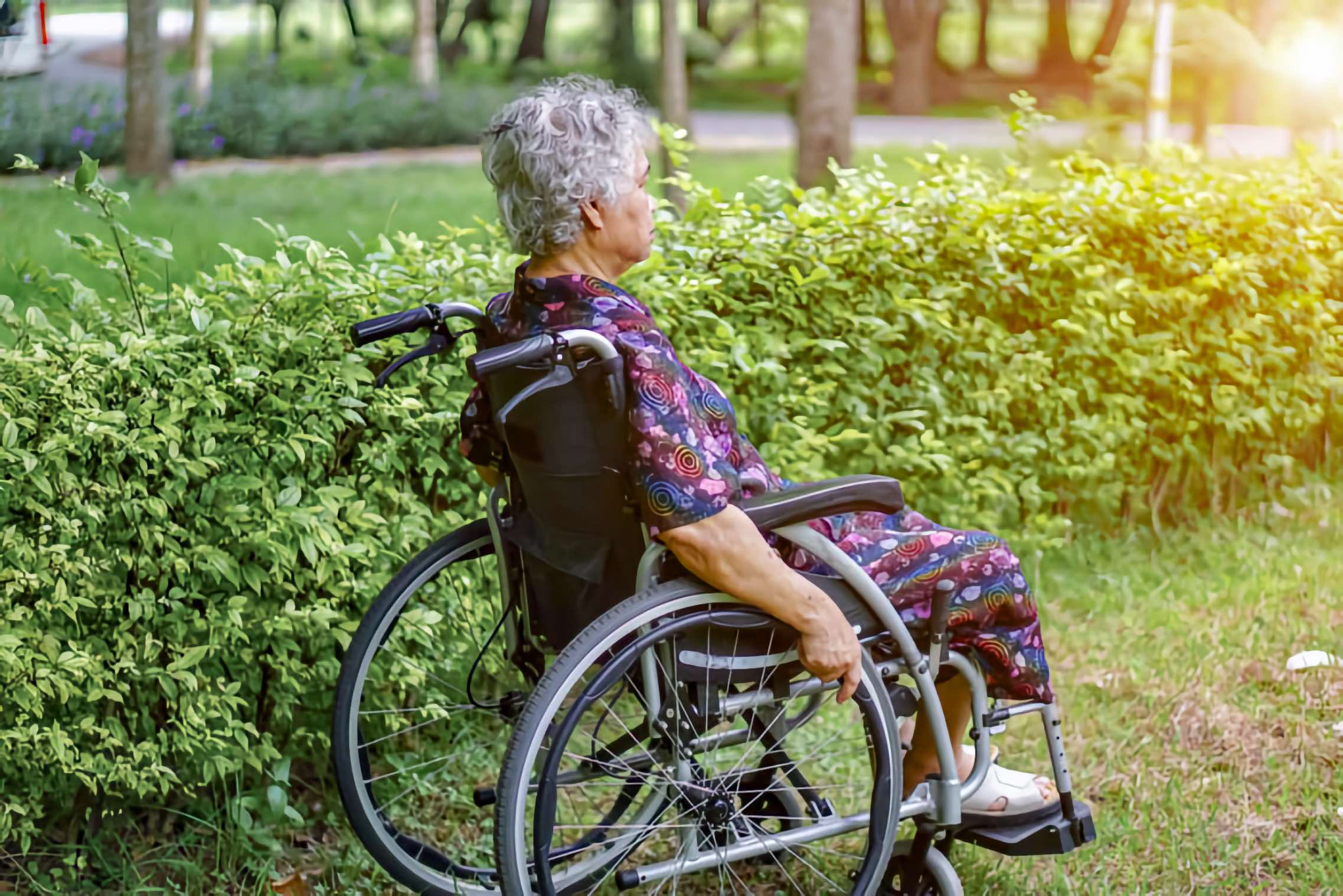
A stranger demanded an older woman's wheelchair for a tired child, doubted her disability on sight, and accused her of faking until she showed her missing leg. Her story is a reminder that a wheelchair is a personal mobility aid, that appearance never settles what someone can do, and that in the programs, services, and communications we plan, a wheelchair stays with its owner.
Audio description (AD) makes live and recorded performances come alive for blind and low-vision audiences. By narrating visual details—actions, settings, costumes, and more—it helps everyone fully experience theater, film, and other art forms. AD is now common in many movie theaters and on certain TV services, and it is gradually expanding into live theater. There, the description is often professionally produced and generally available for any performance once a show has been running for a while. These performances feature pre-recorded AD: individual sound clips carefully cued to match each…
Dr. Cary Supalo's article, "Eureka! It All Matters!" delves into the world of science through the lens of blind people, shedding light on the possibilities and problems they face in pursuing scientific careers. Dr. Supalo, a research chemist and advocate for accessibility in science, emphasizes the fundamental problem-solving nature of science, which extends far beyond laboratory experiments. Through engaging anecdotes from his own journey in chemistry, he highlights the importance of critical thinking skills, adaptability, and innovative problem-solving approaches in scientific endeavors. In…
Learn about topics related to People with Disabilities, Accessibility, Anti-Ableism, Removing Barriers, and the Disability Community? Tap the Explore button to discover something new and intriguing with each tap!