Explore More Compelling Insights:
Learn about topics related to People with Disabilities, Accessibility, Anti-Ableism, Removing Barriers, and the Disability Community? Tap the Explore button to discover something new and intriguing with each tap!

Caption: Baby communicates with her grandparents in sign language . This baby is signing back to her deaf grandparents when they use sign language to communicate with her. Jane McCullough, a six-month-old baby, has captured the hearts of millions by communicating with her deaf grandparents, Michael and Jessica Stultz, in sign language. Having been exposed to American Sign Language (ASL) since birth, Jane's early attempts to babble back to her grandparents in sign language are both heartwarming and remarkable. This adorable interaction was captured on video and has since gone viral on TikTok…
Statement to the fortieth session of the United Nations Sub-Commission on Prevention of Discrimination and Protection of Minorities. Agenda item 7: human rights and disability GENEVA—6 August 1988 Until recently, the disabled have constituted a minority in obscurity. Unlike certain other groups that fall victim to discrimination, the disabled do not comprise a self-contained, close-knit social community. Instead, they populate every social sector, every class, every age group, every ethnic and religious community. And at every level, society has tended to ignore them, believing them incapable…
The Baha'i Service For The Blind offers a number or resources and services: Materials In Braille Audio Books and Talks Large Print Materials A Lending Library The American Bahá'í -- Audio Edition Take advantage of these resources! https://www.bahaiservicefortheblind.org/

This is a collection of Bahá’í Quotes on Disability compiled by Susan Gammage, designed by Tim Freeman: https://bahaiquotes.com/subject/disability
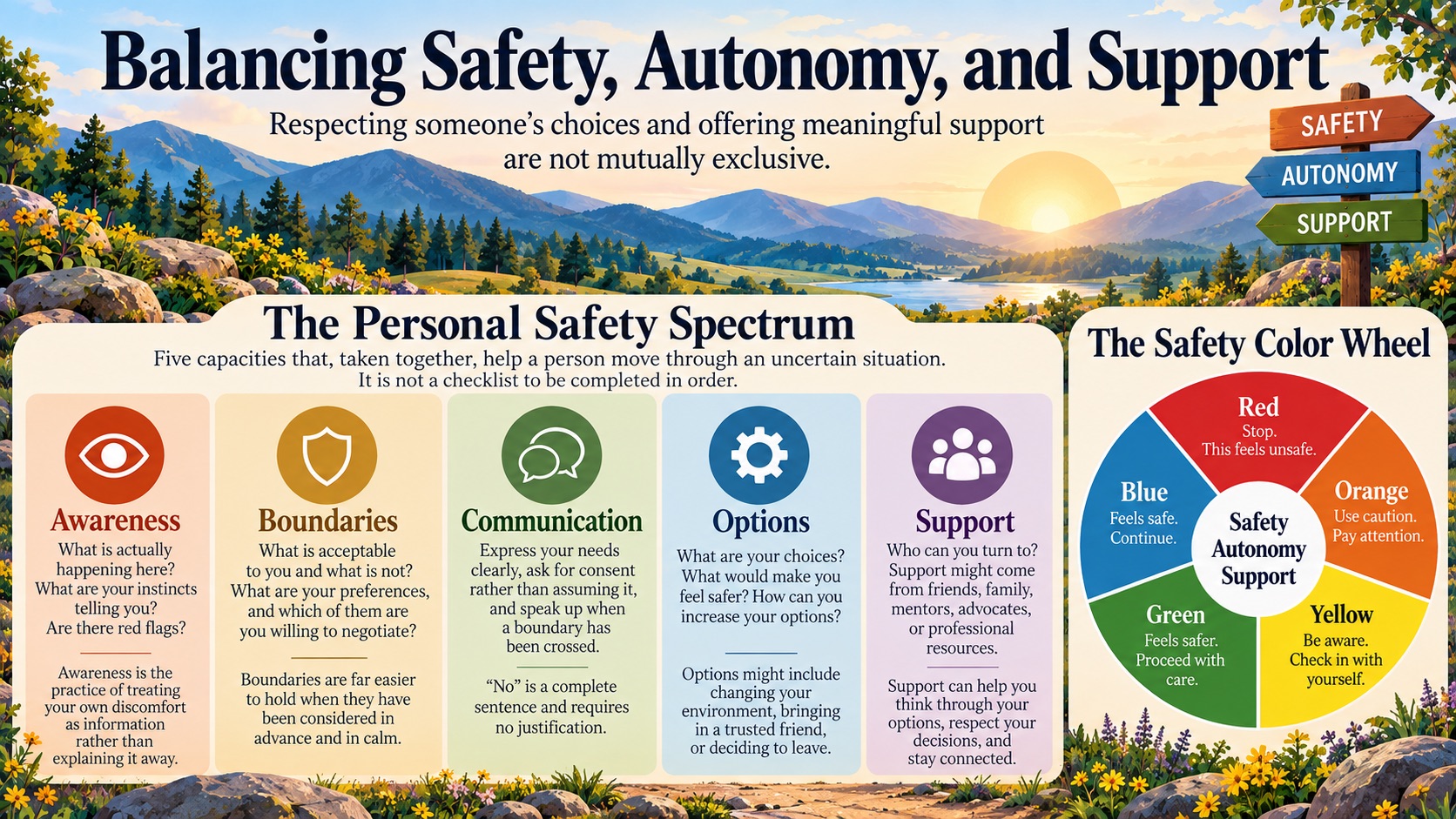
At the 2026 gathering of the National Federation of the Blind (NFB) in Austin, Texas, the NFB Blind Survivors Group gave Blind People two practical tools for personal safety: the Safety Color Wheel and the Personal Safety Spectrum. Participants set blame aside and kept returning to one truth: respecting a person's choices and standing beside her fit together, just as offering an arm respects her and grabbing one does not. Naming trouble early, while it is still yellow or orange, and reaching out to trusted people is strength, not weakness.

Bahá’u’lláh calls each of us to be an upholder and defender of the victim of oppression. This page offers examples of people whose lives show what that looks like, from Ed Roberts and Judy Heumann, who built independent living and won Section 504, to Louise B. Miller, whose 1952 lawsuit opened a school to Black Deaf children. Reflect on the questions, then find people by name, group, disability, or topic, and choose one whose example you will put into practice by standing beside someone who is excluded or treated unjustly.
The inclusive language guide from Be My Eyes asks us to say blind plainly and to describe its users as Blind People and those who have Low Vision, to drop labels built on loss and pity, to say a blind woman in place of person first wording, and to prefer access technology and words like partner and describer. Tone matters as much as terms: tools are alternative techniques, and gushing praise casts a blind person as remarkable instead of ordinary. We should say see and watch to blind people the way we say them to anyone else. Wording that treats a blind person as an equal would make room for Vibrant, Diverse, Inclusive, Accessible Communities for People with Disabilities.

Judy Heumann was a lifelong advocate for the rights of People with Disabilities. Denied a teaching license because she used a wheelchair, she went on to become the first wheelchair user to teach in the state of New York.
A guide from the developmental disabilities center at Kennedy Krieger Institute names ableism as an unfair system so deeply woven into daily life that it passes for normal, and it counts the cost in biased health care, stigma, and barriers to education, jobs, and housing. Its Six P's framework, which runs from the person to policy, points faith communities toward belonging for People with Disabilities, along with their families. The guide describes ableism in its hostile and quiet forms and calls for disability humility, representation in positions of power, and policies that reach past inclusion. We should begin by asking the People with Disabilities around us which barriers they meet in the next program, service, event, or communication we plan.
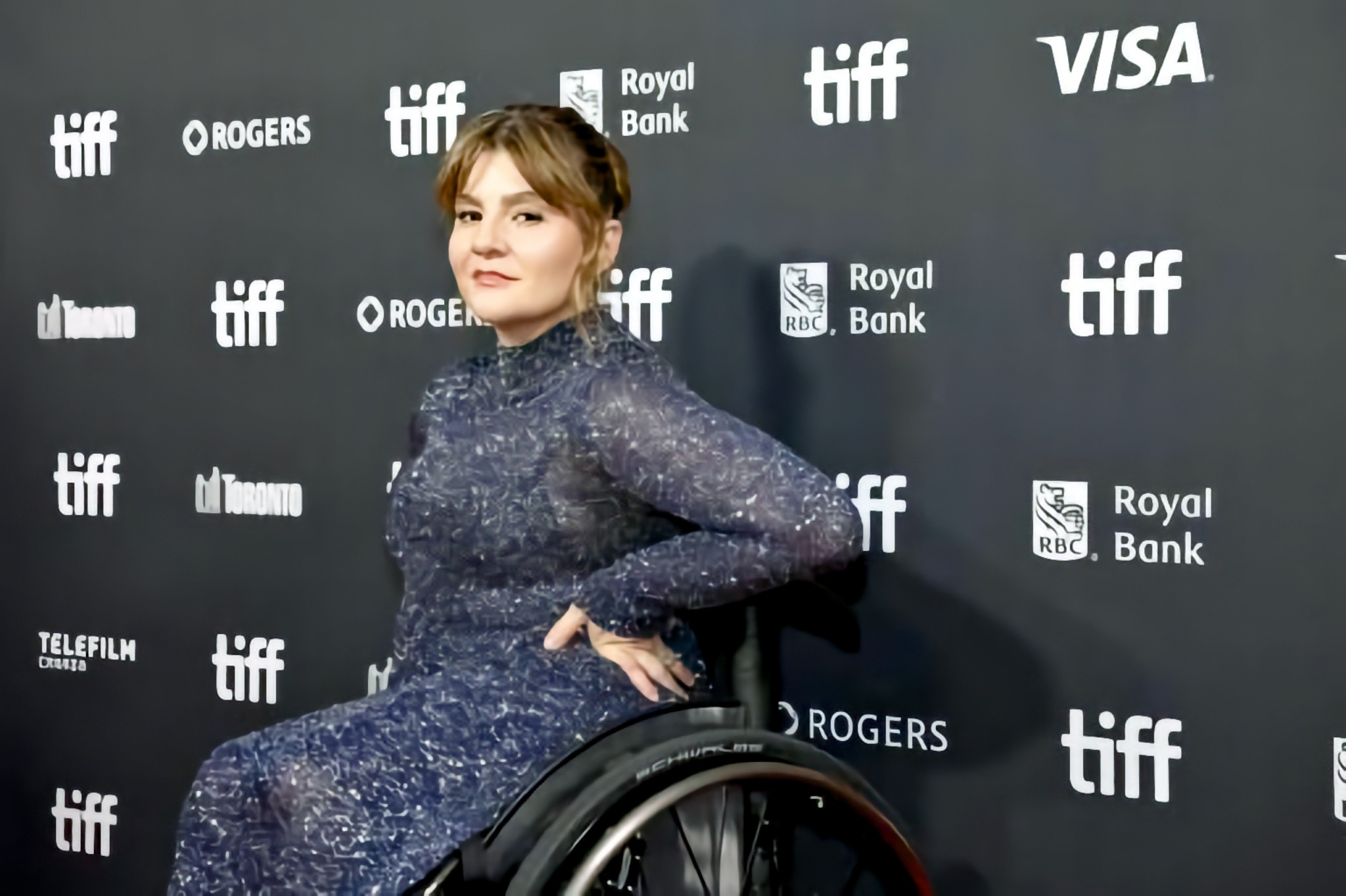
Sian Heder's "Being Heumann," the opening film at the Toronto International Film Festival (TIFF), revisits 1977, when Judy Heumann and People with Disabilities held a California government building for weeks to demand accessibility regulations. Heder says the rights they won are being reversed, and her Apple TV film shows their protest as joyful community as well as struggle. It also shows daily barriers honestly, from rising out of bed to waiting for an attendant. Ruth Madeley, who uses a wheelchair and plays Heumann, once insisted she was fine on sets with no ramp, afraid of looking like a burden, and now tells other actors they can ask. We should have access ready before anyone has to ask.
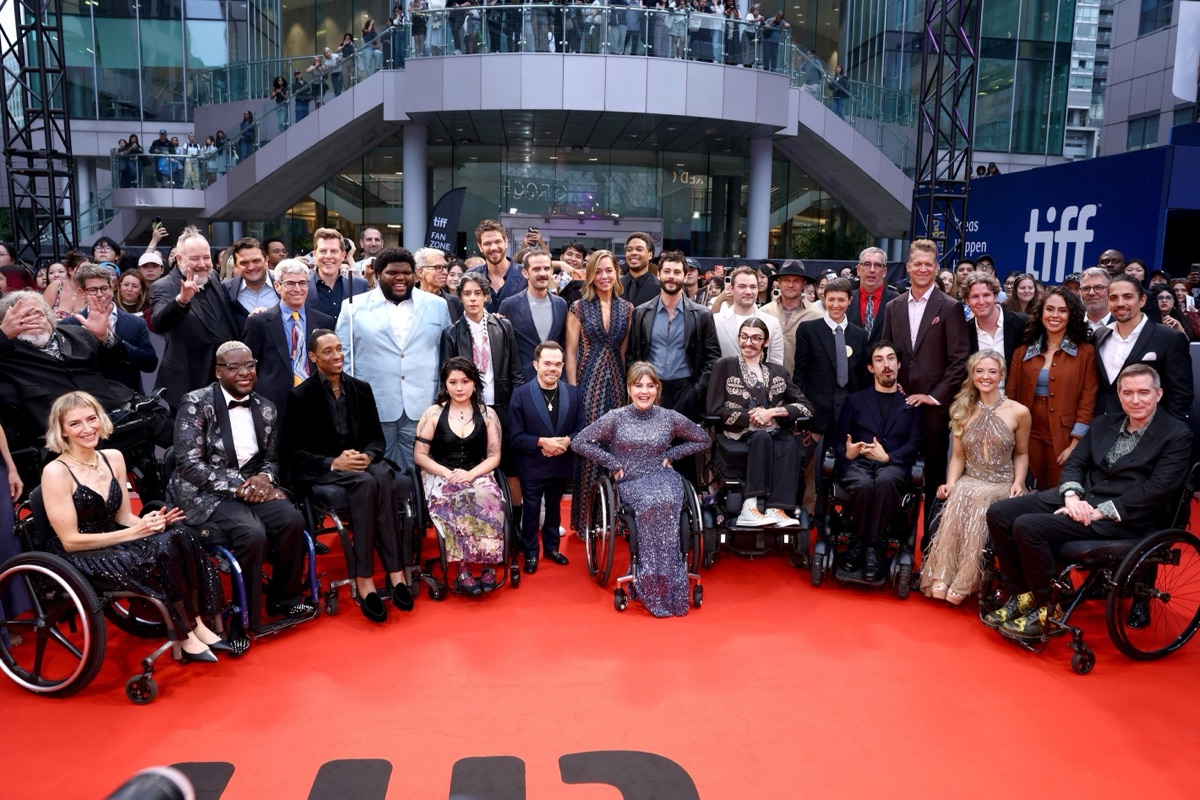
Keely Cat-Wells calls Being Heumann among the most important films on disability, because it shows how a 26 day occupation won Section 504 while the integration rules that protect life at home in the community are now taken out of the federal regulations. The Black Panther Party fed the protesters, and the film asks us to gather, organize, and keep asking for the promise to be kept.
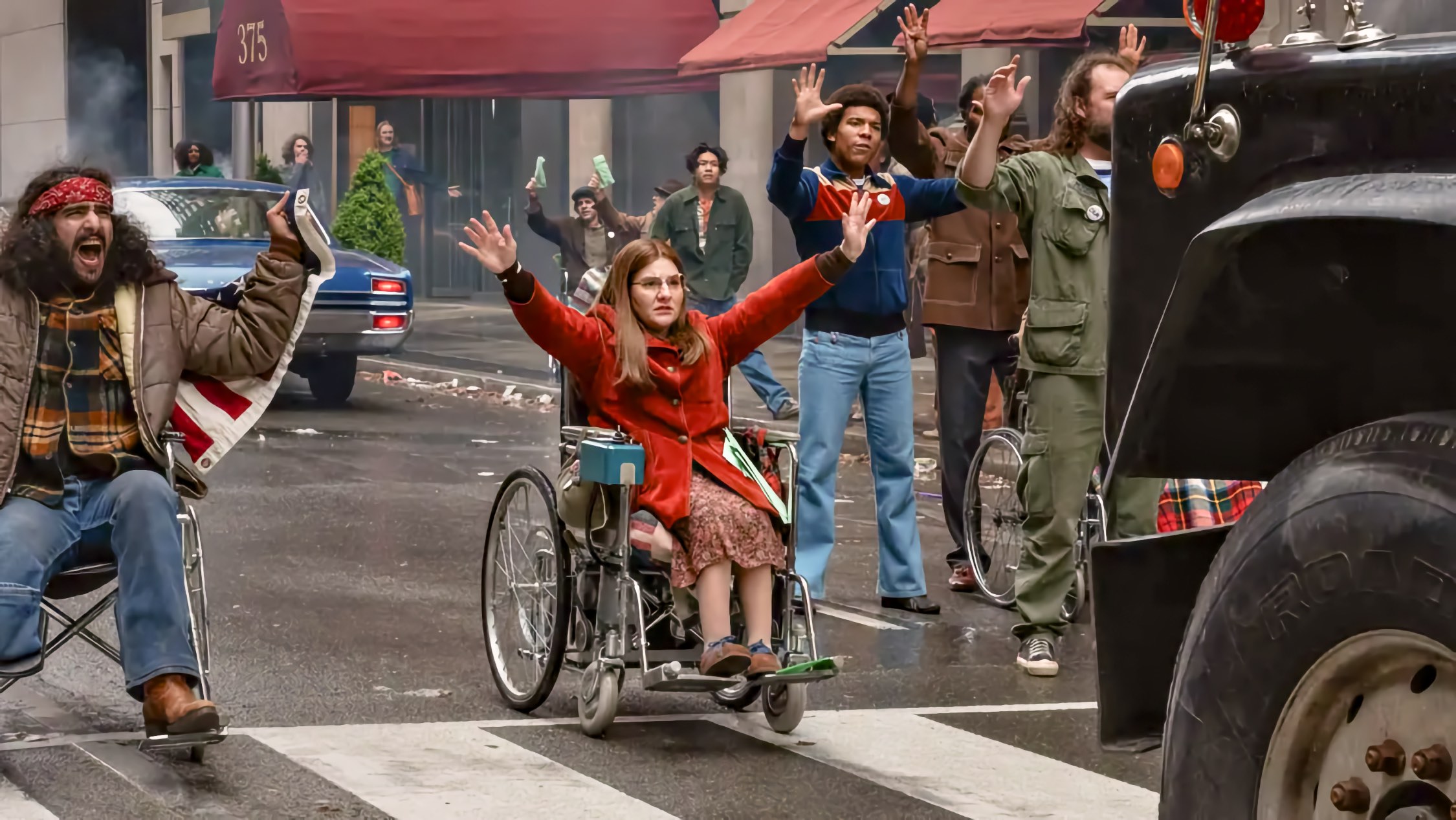
Being Heumann, directed by Siân Heder, brings the 1977 Section 504 protest to the screen, with Ruth Madeley as Judy Heumann and Actors with Disabilities playing her coalition. Four years after Section 504 was signed, the government still had not acted on it. So People who are Blind, People who are Deaf, People who use Wheelchairs, and their allies held a federal office in San Francisco for 26 days. They testified about the schooling and jobs they were denied and about people kept home and unseen. The film arrives as current federal efforts aim to weaken those protections, and it keeps the coalition itself, not its allies, at the center of the win.

The article "Believe It or Not" by Peggy Chong tells the remarkable story of Helen May Martin, a deafblind concert pianist who defied all odds to pursue her passion for music and achieve remarkable success. Born in 1893 in Olathe, Kansas, Helen May faced numerous barriers due to her disabilities. However, with the unwavering support of her parents, she learned to play the piano by feeling the vibrations and went on to become an accomplished musician. Despite the skepticism of many, Helen May embarked on a professional career, captivating audiences across the United States with her…

This piece centers on a conversation about what it takes to action disability inclusion across fashion and beyond, opening with recognition in disability benchmarking and concrete steps that support People with Disabilities and Blind/Low Vision customers. It explores how thinking has shifted from blaming individuals for inaccessible environments to seeing inaccessibility as a shared, solvable problem—one that demands courage to engage and careful word choice; for teams refining vocabulary and tone, see this concise language guide. The discussion names specific problems that exclude People…

Inclusive Books for Children reviewed 2,189 titles for ages 1 to 9 published in the United Kingdom in 2025 and found Black, South Asian, and Middle East and North Africa (MENA) main characters nearly missing, at 47, 30, and three titles. Disabled main characters in picture books fell to two titles, and neither came from an Own Voice creator, a creator who shares the character's identity. An author and the report both ask for everyday stories where identity is present but is not the whole plot, so children can meet heroes like themselves in children's books and creators can tell their own stories.

Marc Maurer argues that courtesy, giving others what we would want ourselves, is a habit that opens opportunity for Blind people and breaks the idea that they have nothing to give.

Abdi Ali-Mumin, a Blind orientation and mobility instructor in Colorado, trained at the Colorado Center for the Blind and now teaches cane travel in the United States and in Kenya, Uganda and South Africa. He writes that independence is a right for Blind People everywhere and that low expectations, not blindness, hold people back.
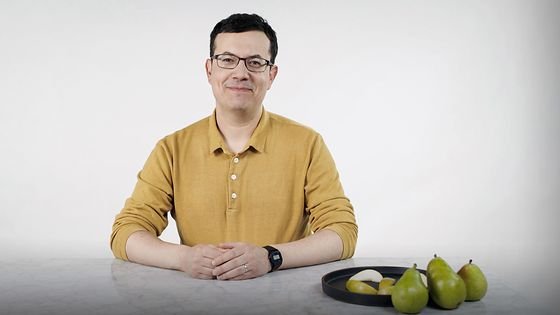
In his TED Talk, writer Andrew Leland, who is going Blind from retinitis pigmentosa, explains that blindness is a spectrum and that most Blind people see something. He shows how the belief that Blind people see nothing feeds suspicion of anyone who uses a white cane and also reads a phone screen.

A Waikiki student has transformed lived experience into storytelling, completing a debut novel that reflects life with cerebral palsy, autism, anxiety, and eosinophilic esophagitis. Written over two years, the book centers access, empathy, and inclusion—and aims to raise awareness about accessibility ahead of its community launch on November 22 at the Gary Holland Community Centre. Her goal is connection: to speak to peers with similar experiences and help parents, teachers, and classmates understand neurodivergent perspectives. Family reflections in the article highlight how the manuscript…
Learn about topics related to People with Disabilities, Accessibility, Anti-Ableism, Removing Barriers, and the Disability Community? Tap the Explore button to discover something new and intriguing with each tap!