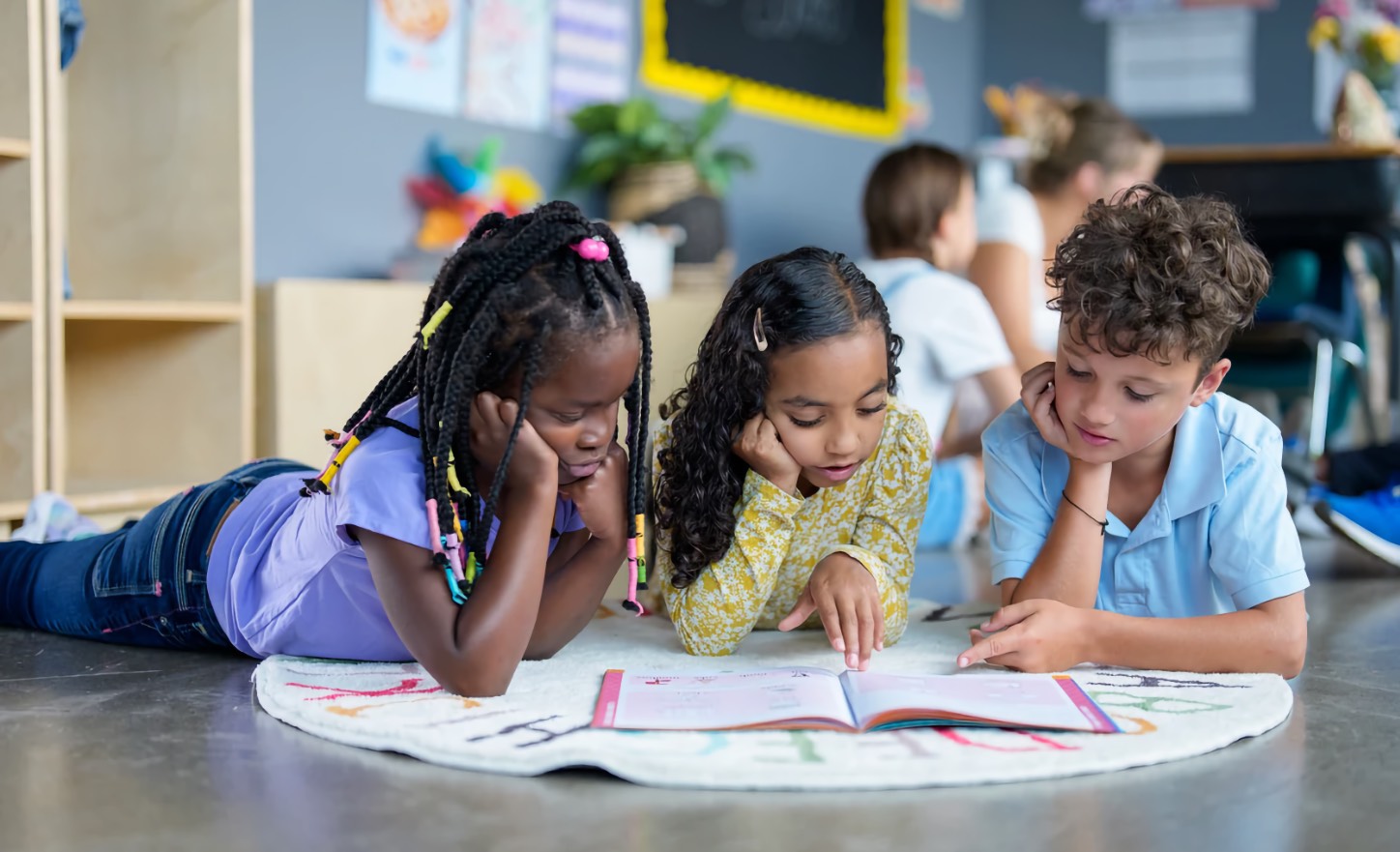
The Excluded Voices 2026 report counted few Black, South Asian, and disabled main characters among children’s books published in the United Kingdom in 2025.
Children's publishing in the United Kingdom is leaving Black, South Asian, and Middle East and North Africa (MENA) children out of the story, and the 2025 count shows it. Inclusive Books for Children reviewed 2,189 traditionally published titles for ages 1 to 9, and only 150 centered a main character drawn from a marginalized group. Black main characters appeared in 47 titles, a 7.8% drop from 2024, even though roughly 8.5% of children in that age range in England and Wales are Black. South Asian main characters led just 30 titles against a population share near 12.4%, and MENA main characters led three, about 0.1% of the sample, for a group that accounts for about 2.2% of children. Altogether, 27% of children belong to a minoritized ethnic group, yet only 5.8% of the books center one. The gap in representation is plain in every one of these numbers.
Dr Stella Louis, who works as an early years consultant and trainer and is also an author, read the report and named what stood out: diversity keeps being the whole point. Festival tales, informational titles, and stories built around a child's difference have a place, but they crowd out what the report calls incidental representation, meaning a character carries an identity that does not drive the plot. Louis asks why a bilingual, disabled, neurodivergent, or South Asian child cannot simply lead an ordinary story about joy, loss, adventure, or friendship. The report ties this to what books do for young readers: stories let children see themselves and the people around them, and a wide range of reading builds empathy and confidence in who they are.
Picture books lost the most ground for disabled children. Titles with a disabled main character fell 60% in 2025, down to just two, and neither came from an Own Voice creator, meaning a creator who lives the identity the main character carries. Fiction for ages 5 to 9 fared little better, with three disabled main characters, one of them with an Own Voice author, the first since 2023. A few numbers moved up from a very low base: neurodivergent main characters in picture books rose from three titles to 13, and baby and toddler books introduced a neurodivergent main character and a disabled main character for the first time, each made by an Own Voice creator. Even so, the report stresses that every gain starts from a very low base.
A child who never meets a hero like themselves learns to look elsewhere for belonging. The fourth finding lands hardest for children with roots in the Middle East and North Africa. All three titles featuring a main character from that region in 2025 were refugee stories, and the author illustrator quoted in the report says the books that did appear were not Own Voice. That author illustrator describes a single story that reduces a people to war and displacement and leaves their cultures and heritage out, and says it shows how often their communities are locked out of telling their own stories. The report asks for a wider range of themes, including everyday tales where heritage is simply present. We picture a community where marginalized members both give and receive, and these titles show the distance we have to cover: children are written about, while creators from their own heritage are not the ones holding the pen.
South Asian, disabled, and bilingual children rarely get to star in an everyday story. When we choose books for the children in our programs, we pick stories where the hero's identity is simply part of the day, and we look for creators who share it. Stories like these are where Vibrant, Diverse, Inclusive, Accessible Communities for People with Disabilities first take shape for our youngest members.
Then the next child who opens one finds a hero like them, and has no reason to look elsewhere.
Learn about topics related to People with Disabilities, Accessibility, Anti-Ableism, Removing Barriers, and the Disability Community? Tap the Explore button to discover something new and intriguing with each tap!