




Explore More Compelling Insights:
Learn about topics related to People with Disabilities, Accessibility, Anti-Ableism, Removing Barriers, and the Disability Community? Tap the Explore button to discover something new and intriguing with each tap!
Caregiving for family and friends is a significant public health problem that deeply affects the quality of life for millions. Caregivers provide essential support to those with chronic illnesses, disabilities, or aging-related conditions, assisting with daily activities, emotional support, and medical management. Informal caregivers, who are usually unpaid family members or friends, offer the majority of long-term care at home. These people often balance caregiving responsibilities with their own personal and professional lives, leading to substantial physical, emotional, and financial…
Kristen Dockendorff’s article centers the rights and expertise of blind and low-vision people by showing how community-led access to technology confronts the barriers that keep Disabled people from information, equipment, and equal participation. At UR Community Tech Center, she and Michelle Puzzo run a support group and—through grant work—make it possible for people to test more than thirty-five devices, from electronic magnifiers to smart glasses, so access is not limited to what institutions decide is “enough.” The point is not charity or “help,” but removing barriers through real choices…
Cape Breton University assistant professor Tammy Bernasky has been nominated for an Accessibility Trailblazer Award, a recognition that highlights leadership in advancing accessibility across campus and the wider community. The article situates Bernasky’s work within disability justice and public scholarship, noting her community collaboration and research that inform practical steps institutions can take to remove barriers and foster inclusion. It emphasizes how these efforts benefit People with Disabilities, including Blind/Low Vision people, by focusing on dismantling discriminatory…
More than one in four American adults, totaling 71 million people as of 2022, report having some form of disability, marking the highest prevalence since data collection began nearly a decade ago, according to the CDC. This figure represents 28.7% of the adult population, up from 24.6% in 2016. The increase is attributed to factors such as an aging population, rising chronic conditions like diabetes and arthritis, and the inclusion of long Covid in the survey for the first time. To understand the full implications of these findings and their impact on our society, it's crucial to delve deeper…
The recent debacle involving Anna Landre, who was unable to collect her Freedom of the City of London award due to a lack of wheelchair access, starkly highlights the egregious injustice and hypocrisy embedded in community practices, in the form of systemic ableism. Despite being honored for her tireless advocacy for People with Disabilities, Landre was denied the basic accessibility necessary for her participation in the award ceremony. This glaring failure not only undermines the recognition given to Anna Landre for her outstanding efforts in advancing accessibility and inclusion for People…
A life-long human rights activist, Catalina Devandas became the first United Nations Special Rapporteur on the rights of persons with disabilities in 2014. In her talk, Catalina will share important lessons she learned about the barriers that she, together with millions of other persons with disabilities face in their lives. She explains how the most difficult barriers are not those in buildings, streets or the physical environment, but those emanating from a system of social values that deem persons with disabilities as less worthy and unable to lead meaningful lives. She also explains how…
Global Accessibility Awareness Day (GAAD) 2024 is a pivotal event dedicated to promoting digital inclusion for People with Disabilities worldwide. Celebrated annually on the third Thursday of May, GAAD encourages crucial conversations and actions to remove barriers in the digital realm. The origins of GAAD trace back to a 2011 blog post by Joe Devon, co-founded with Jennison Asuncion, which has since grown into a global movement aimed at integrating accessibility into technology development. The significance of digital accessibility cannot be overstated, as it ensures that People with…
by Alan S. Gutterman, PhD, JD, DBA, MBA, CPG The article discusses the challenges faced by people with disabilities, particularly at the intersection of age and disability. Approximately 15% of the world's population has some form of disability, and an additional 190 million people experience serious difficulties in functioning normally on a daily basis. The incidence of disability increases significantly as people get older, and rates of disability are higher in developing countries. While the number of persons with disabilities is large, their experiences are diverse, and not all people…
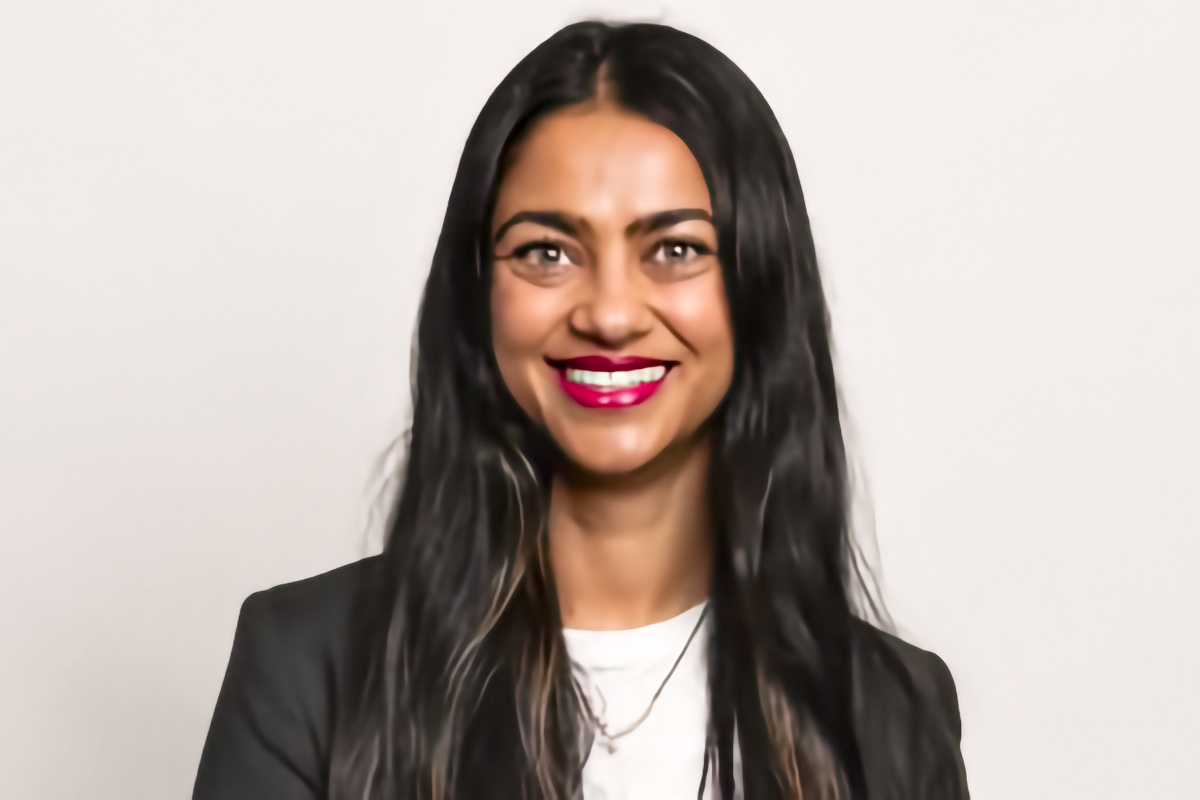
People with Disabilities are one fifth of the Australian population and almost invisible in the advertising and screen media around them, an absence that quietly sets the limits of what they believe is open to them. Priya Addams Williams, who leads the Shift 20 Initiative at the Dylan Alcott Foundation, argues that a team of well intentioned people carrying no lived experience of disability cannot make work that reaches the audiences it targets, and that goodwill has never been a substitute for expertise. The proof runs through the examples she cites, from an Autistic actor playing an Autistic character in a production where that authenticity carried into the people scripting and making the show, to the Autistic Self Advocacy Network (ASAN) being trusted to speak honestly about every element of a doll's design: when the people making the decisions behind the camera share the experience being portrayed, audiences know it. What that asks of the rest of us is unglamorous and entirely achievable, which is to seek out the expertise we lack, say openly that honest input is wanted, and protect the time real co creation takes instead of squeezing it to hit a deadline.
Gary Wunder describes how People who are Blind are harmed by everyday disrespect: a sighted stranger may gush that independent travel is “inspirational,” or insist on doing what blind people can do perfectly well alone. He argues that Language does matter, but empty word-swaps do not stop discrimination—especially when the underlying belief remains that blind people cannot work, marry, or raise children. The real demand is not polite phrasing; it is the full acceptance that People who are Blind are equal participants in society. The article also names the long pattern of exclusion—People who…
Illinois is in a multi-year rollout to ensure companies pay all workers a fair wage. Governor JB Pritzker signed the Dignity in Pay Act last year, requiring companies to pay workers with Disabilities at least minimum wage by 2029, putting an end-date on disability-based pay inequity in Illinois. The state law diverges from the United States Department of Labor’s 14(c) waiver program, which allows employers to pay less than minimum wage to workers whose disabilities, employers argue, limit their productivity. State Representative Theresa Mah, the law’s lead sponsor, rejected that framing at a…
Chris McCausland recounts how losing his sight by early adulthood reshaped his path from software work to stand-up and television, and he argues that his career should be judged on craft and contribution, with representation in media framed as inclusion rather than exception. His core point: success isn’t perfection; it’s the connection you build. Strictly Come Dancing taught him to prioritise joy and rapport over scores, challenging the instinct to hold back work until it feels flawless. He traces milestones that reinforced this stance — a decade on CBeebies, a travel series, a Sky comedy…
Michelle Guadalupe Felix Garcia, a Blind sound engineer from Mexico, has broken new ground in the live events industry by showing how accessible audio technology enables Blind People to participate and even compete. Supported by Clair Global, the Audio Accessibility Alliance (AAA) is an industry think tank focused on fostering conversations and driving change around disability in entertainment technology and live event production. This collaboration highlights the importance of striving to remove barriers that prevent us from building Vibrant, Diverse, Inclusive, Accessible Communities!…
Members of Abby Dew For You, a Douglas County organization serving adults who have intellectual and developmental disabilities, were confronted on a Regional Transportation District (RTD) light rail train on July 24 by a man who opened a box containing a gun and asked them with a dehumanizing slur whether they wanted to buy it, leaving one 24 year old member convinced she would not live through the day. The staff member leading the trip pressed the emergency stop, which halts the train but notifies no police, no paramedics, and no one else able to reach the scene, leaving seventeen adults with disabilities and four staff alone with an armed stranger. The agency answered with falling call statistics while calling itself committed to a transit environment that is secure and welcoming, and the group has now stopped riding the light rail. Community Builders owe these riders more than that, because removing barriers is not a product to be purchased or handed to someone else to deliver and each of us carries it personally and all of us carry it together.
Acrobat tools make it easy to create accessible PDFs and check the accessibility of existing PDFs. You can create PDFs to meet common accessibility standards, such as Web Content Accessibility Guidelines (WCAG) 2.0 and PDF/UA (Universal Access, or ISO 14289). The simple, guided workflow lets you do the following: Make PDFs accessible: A predefined action automates many tasks, checks accessibility, and provides instructions for items that require manual fixes. Quickly find and fix problem areas. Check accessibility: The Full Check/Accessibility Check tool verifies whether the document conforms…
Dr. Mark Esho’s journey after contracting polio at the age of five, which left him partially paralyzed, has provided him with unique insights into business and accessibility. Despite facing severe barriers, he earned an MBA and founded Easy Internet Services and Ability Connect CIC, a social enterprise that equips disabled entrepreneurs with the tools and resources they need to succeed. His story highlights how personal experiences can foster resilience and the importance of removing barriers that prevent People with Disabilities from full participation in business and society. Striving to…
Mark A. Riccobono’s 2025 National Federation of the Blind banquet address, Creativity, Persistence, and Hope: Reclaiming Our Stories through the Organized Blind Movement, is a powerful reflection on how Blind People have reshaped the narrative about blindness through collective action, critical thinking, and storytelling. By examining the history and reappropriation of the parable of the blind men and the elephant, Riccobono demonstrates how Blind People, through shared truth and determination, are reclaiming their role as creators of knowledge—not passive subjects in someone else's tale.…
At VidCon 2025, Peet Montzingo hosted the panel Accessibility for All: Creating Inclusive Spaces Online and IRL, featuring Imani Barbarin, Briel Adams-Wheatley, and Pat Valentine of the Valentine Brothers. The conversation centered on removing barriers to full participation in online and offline creative spaces, and affirming the leadership of People with Disabilities in advocacy and storytelling. The creators reflected on how their lived experiences shape their content and drive efforts toward accessibility and inclusion. Imani Barbarin emphasized how accessibility is rooted in creativity…
Learn about topics related to People with Disabilities, Accessibility, Anti-Ableism, Removing Barriers, and the Disability Community? Tap the Explore button to discover something new and intriguing with each tap!