
Striving to remove barriers that prevent us from building Vibrant, Diverse, Inclusive, Accessible Communities!
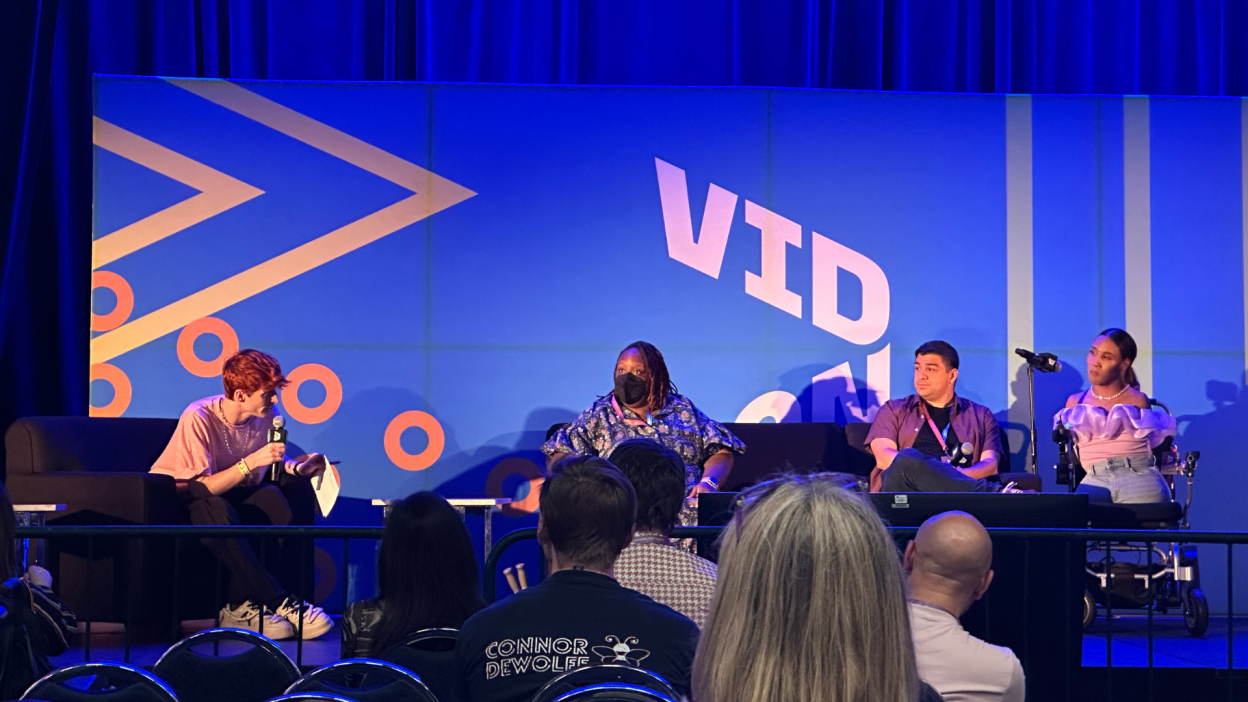
At VidCon 2025, Peet Montzingo hosted the panel Accessibility for All: Creating Inclusive Spaces Online and IRL, featuring Imani Barbarin, Briel Adams-Wheatley, and Pat Valentine of the Valentine Brothers. The conversation centered on removing barriers to full participation in online and offline creative spaces, and affirming the leadership of People with Disabilities in advocacy and storytelling. The creators reflected on how their lived experiences shape their content and drive efforts toward accessibility and inclusion.
Imani Barbarin emphasized how accessibility is rooted in creativity and adaptation:
"I personally view accessibility as imagination and practice. I think that disabled people are some of the most creative people on the planet, because we have to adapt every single day to our environment."
Her perspective reinforces that:
Inclusive Design is most effective when informed directly by People with Disabilities who navigate systemic barriers daily.
Pat Valentine spoke to the importance of community inclusion:
"Being accessible as a community and as society is really just honoring voices, listening to disabled people, and including them in everyday life and everyday conversations."
His remarks point to the need to remove systemic ableism that often sidelines People with Disabilities from shaping the conversations that impact them. The dialogue throughout the panel acknowledged the need to uplift the voices of People with Disabilities, not speak over them.
The panel also addressed how society often invalidates the lived experiences of People with Disabilities. Barbarin stated:
"Disabled people are rarely seen as reliable narrators of their own stories and experiences, and so everybody else becomes an authority upon us, and it makes it so much harder to actually advocate for ourselves against the backdrop of a society that has stolen our voices from us."
Briel Adams-Wheatley offered the view that “everyone has a disability.” Disability is not universal, though. It is specific, and it is shaped by real barriers that keep People with Disabilities out. The panel returned again and again to listening to People with Disabilities instead of speaking for them.
We should listen to People with Disabilities and include them in our everyday life and our everyday conversations. We should trust People with Disabilities as the narrators of their own stories, and never make ourselves the authority on their lives. Practicing accessibility with imagination, every day, would move us toward Vibrant, Diverse, Inclusive, Accessible Communities for People with Disabilities.
Removing barriers begins with believing People with Disabilities about their own lives.
Read the Full Article: Creators talk accessibility and building inclusive spaces at VidCon 2025.
By: Samantha Mangino
Questions for Reflection
- Imani Barbarin calls accessibility imagination and practice. Where does our community practice it, and where do we only talk about it?
- Who tells the stories of People with Disabilities in our community: People with Disabilities, or others on their behalf?
- Pat Valentine speaks of including People with Disabilities in everyday life and everyday conversations. Which of our everyday conversations happen without them?
- When has a Person with a Disability’s account of their own experience been doubted in our hearing, and what did we do?
- Are the images, video and audio we post online accessible to members of our community who have disabilities?
