





Explore More Compelling Insights:
Learn about topics related to People with Disabilities, Accessibility, Anti-Ableism, Removing Barriers, and the Disability Community? Tap the Explore button to discover something new and intriguing with each tap!
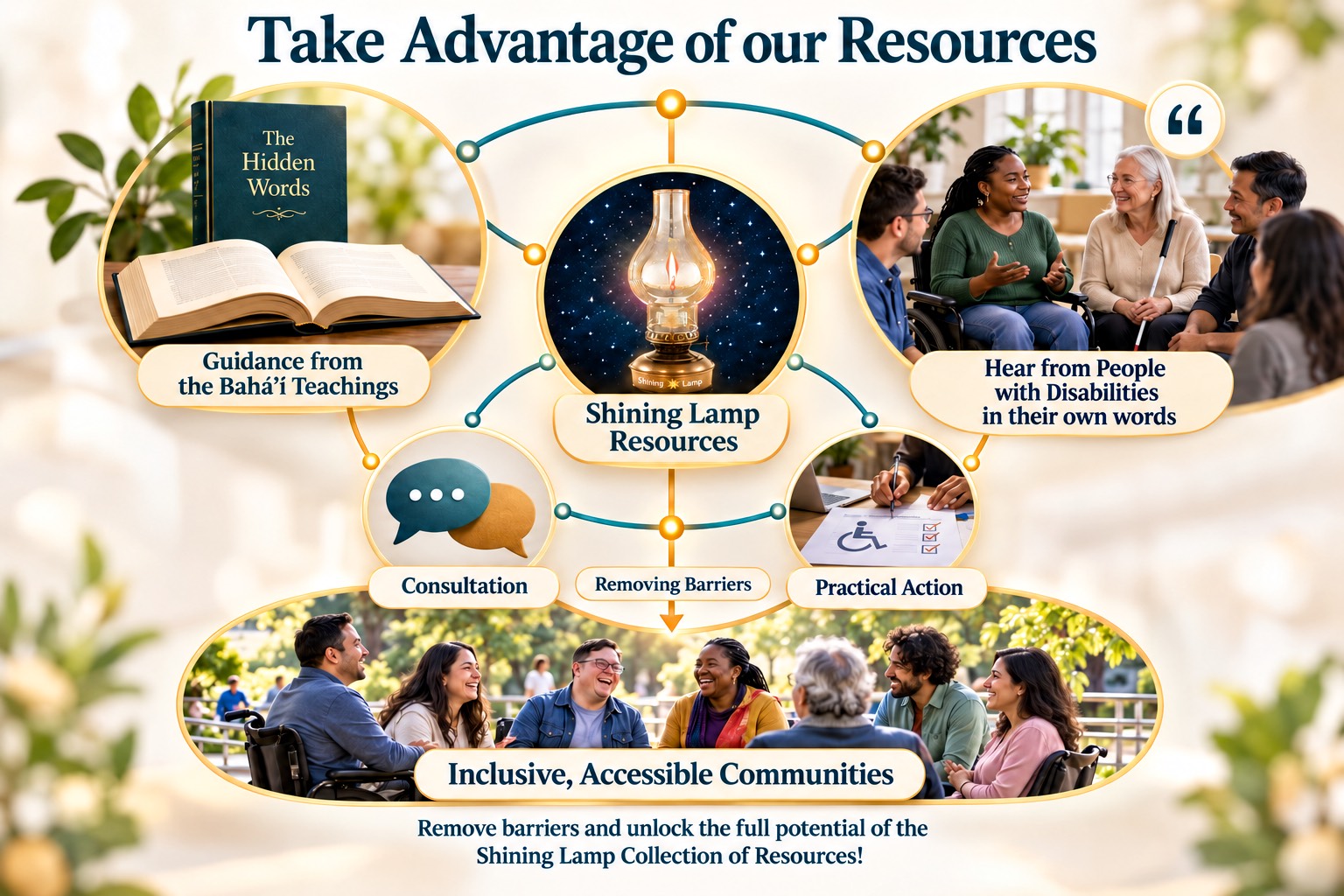
Deaf and Hard of Hearing people have a great deal to contribute to Baha’i activities, and with a few accommodations can more readily take part in them to everyone’s benefit. This is a message championed by the Deaf and Hard of Hearing Task Force for the Baha’i community. Appointed by the National Spiritual Assembly of the Baha’is of the United States, the national governing council, the task force has existed off and on since the 1980s. Today, it has four members—Naledi Raspberry, Tavoria Kellam, Jason Schwartz and Erin Salmon—who, with assistance from people like Austin Vaday, are working to…
Scotland’s Parliament heard renewed criticism of transport provision for people with disabilities after Members of the Scottish Parliament raised concerns that too few accessible taxis are available. The debate, held on the International Day of Persons with Disabilities, highlighted mobility barriers that persist despite longstanding commitments to provide access. Speakers described long waits routinely faced by people who use wheelchairs when trying to book accessible taxis. A Member told the chamber that people with disabilities are forced to wait excessive periods because the supply of…
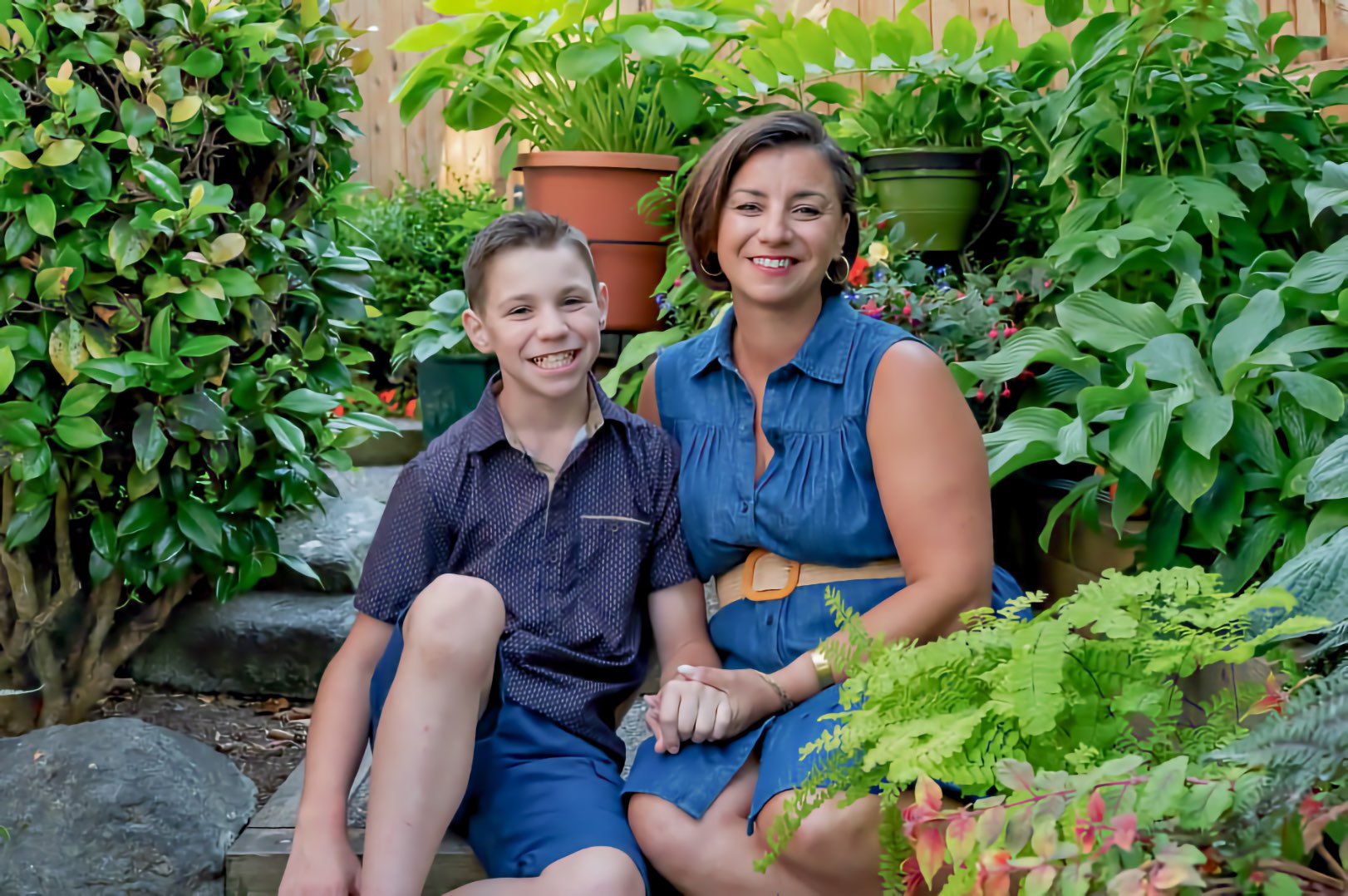
Every Oct. 6, a Delta school marks World Cerebral Palsy Day because one family has spent eight years teaching about 4,000 students and parents what physical diversity means. Royce Sloane, 11, plays sledge hockey with SportAbility, stands a single belt short of black at Tsawwassen Martial Arts, and shows how far a child with a physical disability can go when programs plan for him. Inclusion takes more than a seat in a classroom. It takes resources, equipment, partnership, and understanding.
Listen to the (Audio) version of this Banquet Speech, Orlando, 2024 Mark A. Riccobono powerfully asserts, “The dignity of Blind People is often undermined by outdated attitudes and barriers that do not recognize their full potential.” This perspective highlights how communities frequently fail to uphold the inherent worth of Blind people, treating them as dependent rather than acknowledging their full capabilities and contributions. Dignity may be inherent, but there is an inequality between how it is perceived and experienced in our lives. If we fail to resist second-class treatment, if we…
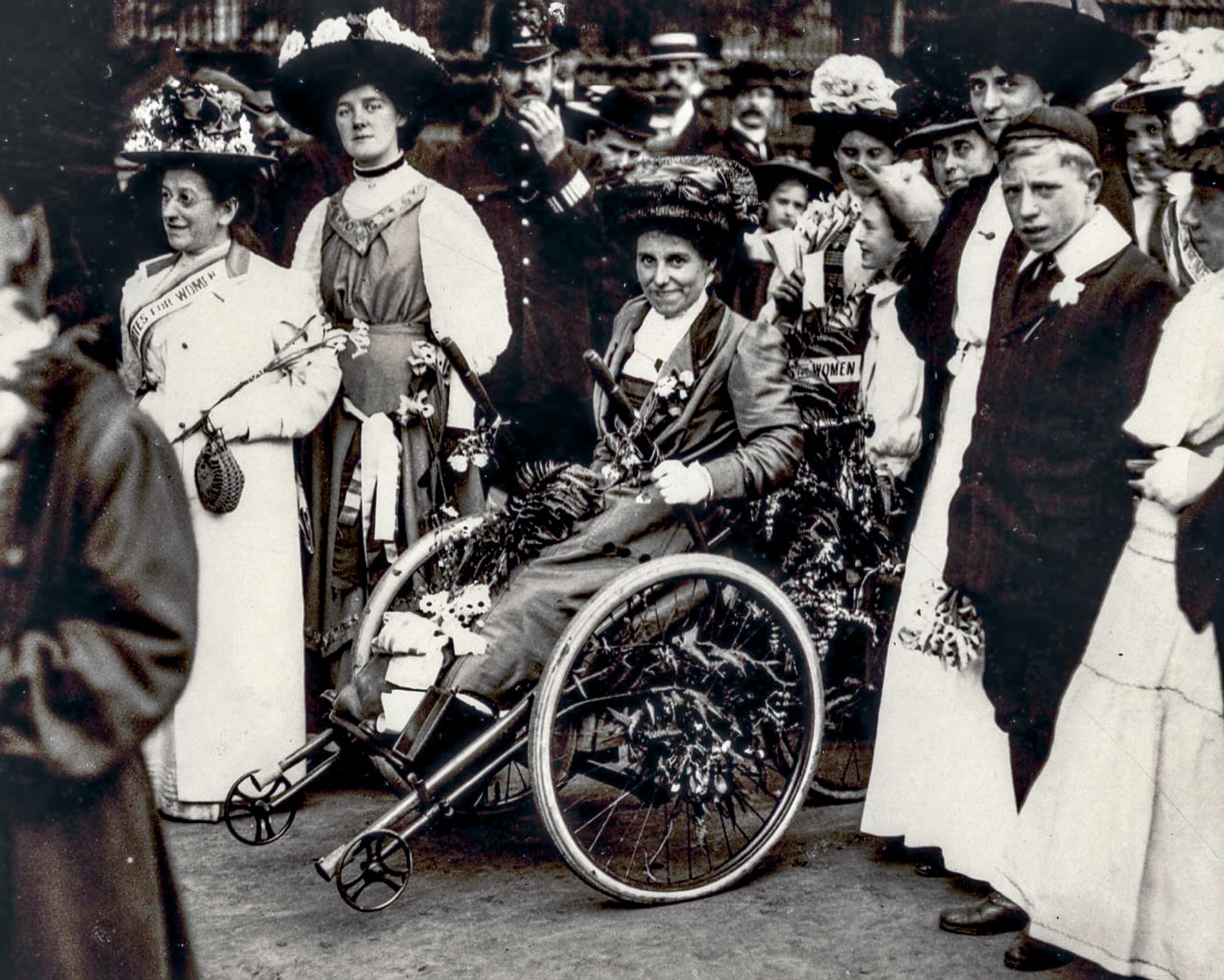
David Turner's new history argues that although public attitudes toward People with Disabilities in Britain have barely improved across centuries, People with Disabilities themselves have repeatedly won progress through their own organized efforts, from a Deaf aristocrat who turned period prejudice about deafness into public fame, to a suffrage campaigner who drove her hand operated tricycle into police lines, to a 1960s campaigner who fought for a disability payment granted on the basis of disability alone, recovering figures whose resistance has too often been erased.
Joni Eareckson Tada opens with Rebecca, an adult with cerebral palsy. Volunteers placed her with children at a family retreat. The error spotlighted something larger than one failure. Too many People with Disabilities are present in a room yet cut off from it. Tada asks communities to treat belonging as a shared responsibility. The article cites a national survey of working-age People with Disabilities in the United States. More than three in ten often lacked companionship. Over a third often felt left out. Nearly four in ten reported feeling isolated. The numbers describe neighbors…
Meredith Englander Polsky’s reflection on 25 years of advocacy with Matan underscores a powerful truth: removing barriers that prevent full participation for People with Disabilities is essential to building vibrant, diverse, inclusive, accessible communities. Jewish life must reflect the full spectrum of humanity, including People with Disabilities—who are also members of other historically excluded groups. While meaningful progress has been made through educator training and inclusive design, too many Jewish institutions still treat accessibility and inclusion as an afterthought, rather…
The article rejects the exclusionary stance of “we don’t do disability,” showing that Jewish institutions already serve people with disabilities wherever they engage in education, social justice, poverty alleviation, community building or Jewish engagement. Framing disability as a niche excludes students, congregants, volunteers, co-workers and loved ones who are already present and entitled to belong. The author names the breadth of disability — visible and invisible, including mental health, neurodivergence, learning disabilities and chronic illness — and shows how exclusion compounds…
The United Nations (UN) Disability Inclusion Strategy frames disability exclusion as a rights failure that institutions must stop normalizing, stating that “when we secure the rights of persons with disabilities,” the world moves closer to the core values and principles of the United Nations Charter. The article positions disability inclusion as a standard across peace and security, human rights, and development, making clear that leaving barriers in place is a structural choice that blocks People with Disabilities from full participation.
The Strategy directly confronts institutional inaction by establishing a policy and an accountability framework with benchmarks to assess progress and accelerate change. It specifies that senior leadership must champion disability inclusion, strategic planning must take People with Disabilities into account, disability-specific policies or strategies must be developed, and expertise must be formally assigned. These requirements exist because exclusion persists when responsibility is vague and consequences are absent.
Alice Wong, an author and organizer who founded the Disability Visibility Project, died at 51 of an infection at the University of California, San Francisco (UCSF), according to activist Sandy Ho; her family remembered her as “a fierce luminary in disability justice.” Wong’s work focused on naming and dismantling ableism while amplifying disabled people and culture through media and community organizing. Born in 1974 to immigrants from Hong Kong and raised near Indianapolis, Wong was diagnosed at birth with muscular dystrophy and described being one of few disabled and Asian American students…
Bob Kafka’s death at 79 is a loss precisely because his life centered rights over charity. A Vietnam veteran with a disability, he organized with ADAPT (American Disabled for Attendant Programs Today), insisting that public life be accessible and using direct action at protests to challenge exclusion named in the article. After paralysis from a 1973 car crash, Kafka and his wife, Stephanie Thomas, prioritized dignity and practical support for People with Disabilities — from helping someone tie shoes or eat to guiding people through new lives — proving that independence and belonging are…
The Americans with Disabilities Act became law 35 years ago. Coloradans reflect on our state's pivotal role and on the progress still to be made. Then, ahead of a special session of the state legislature, a look at a bad budget gap and some bad behavior. Plus, the season three premiere of Systemic, CPR's podcast about changemakers. “They blocked buses in Denver, busted up curbs, crawled up the US. Capitol steps. Activism that led to the Americans with Disabilities Act. 35 years later, it can still be a daily battle. Listen to the Podcast: Disability rights movement sprouted in Colorado -CPR…
When an explosion during a training exercise he had led at Camp Lejeune in February 1944 took the sight of Marine Lieutenant Thomas Hasbrook, ableist assumptions about blind people closed in immediately. Tom himself had absorbed the belief that blindness excluded him from meaningful work and contribution, and he told his wife of eleven months, Mary Jane, to divorce him — for perhaps the hundredth time. Mary Jane refused every time. Rather than accept those barriers, she brought a typewriter to the hospital and taught him to type. His mother began learning Braille herself and taught Tom as she…
by Ellen Stumbo Delve into Ellen Stumbo's thought-provoking piece as she delves into the crucial question: "Do churches care about the less privileged and disabled?" In theory, they do. Christian and religious organizations often spearhead relief efforts globally, offering aid and resources to underprivileged communities worldwide. Yet, on a local scale, churches sometimes overlook people with disabilities, relegating them to the sidelines. Despite having funds set aside for those in need, efforts to reach out to People with Disabilities are lacking. This neglect stems from misconceptions…
By Judith Graham As we reflect on the demographic composition of our current communities and contemplate building Diverse, Vibrant, Inclusive, Accessible Communities, it's essential to acknowledge potential limitations in the diversity of their content or the absence of diverse perspectives. Recognizing the presence of People with Disabilities and the predominant representation of older individuals within our communities, we must confront any inadequacies in the inclusivity of our initiatives. Despite our efforts to engage representatives from various communities, there might be problems in…
By Elizabeth Cooney In a thought-provoking piece titled "Doctors call out ableism in cancer care: 'The biggest barrier is attitude'", the article highlights the pervasive problem of ableism in cancer treatment, revealing how People with Disabilities face significant problems right from the diagnosis stage. It underscores the barriers marginalized individuals encounter due to biased assumptions and outdated practices in medical care. The narrative delves into the intricate problems faced by individuals with disabilities, particularly in navigating the complex landscape of cancer care. Through…
by Nishal Desai PDFs are a common go-to for sharing information online, but their use by public bodies often leads to accessibility barriers. Public sector websites frequently rely on PDFs for presenting information, especially about physical activities. This needs to change to ensure everyone, including People with Disabilities, has equal access to essential information. Moving away from PDFs to more accessible web technologies can help achieve this goal. Using PDFs can limit the reach and effectiveness of information dissemination. They are static, challenging to update, and often not…
In a narrative that challenges entrenched stereotypes about Down syndrome, Sarah's life story exemplifies the importance of removing systemic barriers and embracing inclusive practices in community building efforts. From birth, medical professionals' dire predictions clashed with her parents' steadfast belief in equal opportunities. Despite early health challenges, including multiple heart surgeries, Sarah was nurtured with unwavering love and an unwavering commitment to inclusive education from the start. Sarah's educational journey was marked by encounters with ableism. In high school, an…
Dr. Natalie Shaheen's groundbreaking $1.5 million NSF CAREER grant signifies a pivotal moment in the quest for equitable STEM education. With an unwavering commitment to addressing the entrenched disparities faced by blind and low-vision (BLV) students, Shaheen's initiative aims not only to remove barriers but to empower Blind People in science classrooms like never before. Through innovative research and mentorship, she's leading a charge to redefine the landscape of STEM education, ensuring that Blind and Low Vision students have the opportunity to excel and contribute meaningfully to the…
Learn about topics related to People with Disabilities, Accessibility, Anti-Ableism, Removing Barriers, and the Disability Community? Tap the Explore button to discover something new and intriguing with each tap!