
Striving to remove barriers that prevent us from building Vibrant, Diverse, Inclusive, Accessible Communities!
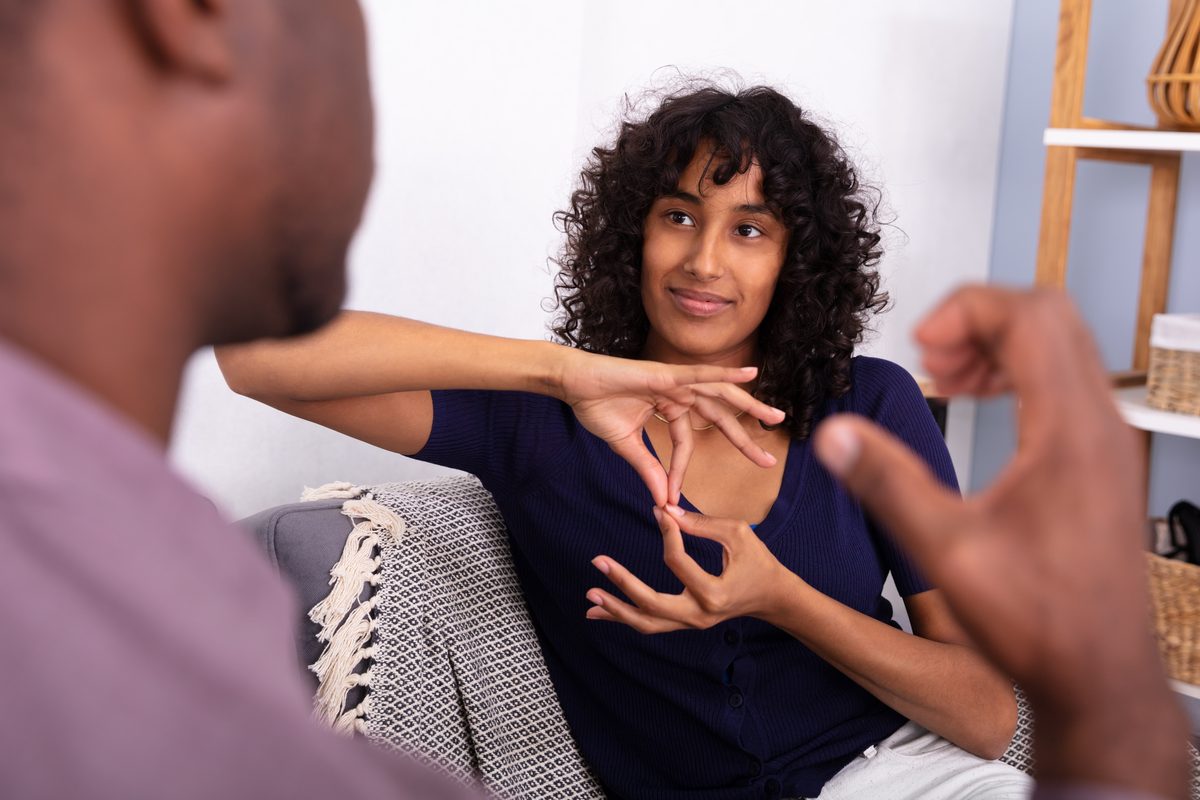
Deaf Baha’is and Baha’is who are Hard of Hearing have much to add to community life, and a national task force works to remove the barriers in their way. The national governing body of Baha’is in the United States appointed the group, which has operated on and off since the 1980s. Today Tavoria Kellam, Erin Salmon, Jason Schwartz, and Naledi Raspberry serve on it, with Austin Vaday working alongside them. Its work reaches two groups. Deaf People belong to a culture with its own language, which in the United States is American Sign Language (ASL), and for many of them English comes second, so ASL interpretation decides whether they can follow a gathering at all. Baha’is who are Hard of Hearing and communicate mainly in English ask for transcripts and closed captions at events.
Being in the room is not the same as belonging in it. Tavoria Kellam, who interprets professionally in New York, reports that the task force learned during the 1990s that Deaf Baha’is usually stayed involved for roughly three months, and that language isolation was named as a reason people drifted away. Naledi Raspberry, a South Florida resident and a retired educator, watched it happen close to home. Akil, her Deaf son, relied on her signing at Baha’i activities. When a holy day celebration ran a fast moving English program, she turned it into signs that carried Baha’u’llah’s message of oneness, then asked why that message so often reaches only hearing people. A person can sit in the room and still be cut off from it. A WhatsApp group and a Facebook page, both named for Deaf people in the community, now link Deaf Baha’is, Baha’is who are Hard of Hearing, and interpreters, and invitations to events travel through both.
The task force put its ideas to work on February 20, when it teamed up with the Baha’i community’s House of Worship, located in Wilmette, Illinois, to hold an online devotional with interpretation and captions. A second online gathering followed in March. The interpretation worked. The three interpreters got the readings early and put dozens of hours into signing them, and Austin Vaday said the result let him take part in his most comfortable language. Schwartz, who interprets professionally in Massachusetts, studied the prayers again and again to grasp their meaning. The captions failed. Zoom’s automatic transcription mangled sacred terms from Arabic and Persian, a result the article labels offensive, so the task force is now searching for a tool that can read Baha’i vocabulary. No library of prayers in ASL exists yet, though the task force envisions one. Erin Salmon, who interprets professionally in Georgia, says captions and interpreters show respect and love toward people who do not share our language.
A door held open means little if the room speaks a language you cannot follow. Austin Vaday is a Deaf Baha’i and a software engineer living in California, and he calls accessibility a shared responsibility. He points out that no single person can carry it alone, and he names an uncaptioned video and a building with no wheelchair ramp as failures a community owns together. Kellam says to begin by asking people what they want and then planning with them, which Schwartz describes as turning a belief in unity into practice. For Deaf People and People who are Hard of Hearing, Kellam suggests a written program at the least, and ideally a person typing the live proceedings, with texts and notes for casual talk. Vaday says ASL interpretation belongs at all public events and at smaller gatherings that include Deaf participants, and he calls interpreter fees an investment in a diverse community. Raspberry adds that communities that count Deaf members among them can learn ASL, starting with signs for the prayers they know by heart. Our position is that Deaf People and People who are Hard of Hearing belong in the planning from the first conversation, yet the task force is still looking for more Deaf People, People who are Hard of Hearing, and interpreters to join it.
Because language isolation limited a typical Deaf Baha’i to roughly three months of involvement, we should ask Deaf People and People who are Hard of Hearing what they want and plan the program with them. Our next gathering should carry a written program, a person typing the proceedings onto a screen, and pen and paper for side conversations, with an ASL interpreter booked for any public event. Planning that starts with Deaf voices would move us toward Vibrant, Diverse, Inclusive, Accessible Communities for People with Disabilities.
When a room is built so that Deaf People can follow it, the open door finally means something.
Read the Full Article: Task force encourages communities to make accessibility a priority.
By: Layli Miron
Questions for Reflection
- At our last gathering, how did each Deaf Baha’i and each Baha’i who is Hard of Hearing follow the program, in what form (American Sign Language (ASL) interpretation, captions, a written program, someone typing the proceedings), and was it arranged before the gathering or only after someone asked?
- When did we last ask Deaf People and People who are Hard of Hearing in our community what they want from our gatherings, what did we hear, and what did we change because of their answers?
- What do we know about how long Deaf friends have stayed involved in our community, and what do their own accounts tell us about what kept them here or pushed them away?
- For our online gatherings, who chose the captioning tool and the interpreters, how does the captioning handle the sacred words and names we use, and who checked it before the gathering began?
- When an uncaptioned video or a venue without a wheelchair ramp comes up in our planning, who notices it, who speaks up, and who acts, and how do we make sure the work is shared and not left to one person?
- Does an ASL interpreter appear in the plan for our public events and for smaller activities with Deaf participants from the first conversation, where does the interpreter’s fee sit in our budget, and who decides?
- What would it look like for our community to learn ASL together, beginning with the signs for prayers we know by heart, and which Deaf friends could we invite to guide that learning?
