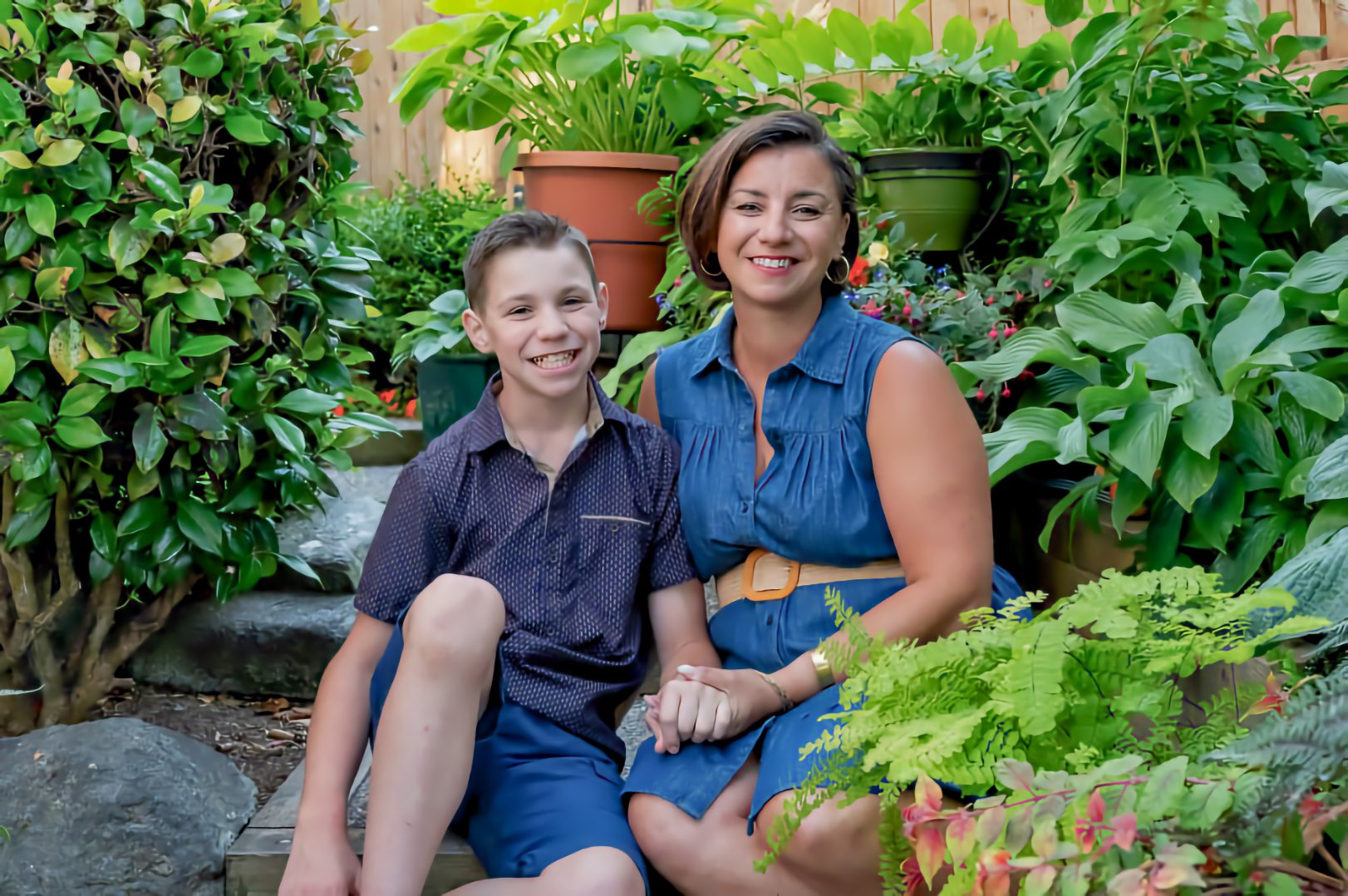
Royce Sloane, 11, and his mother, Natalie Shaw, have spent eight years teaching Delta students and families about cerebral palsy and physical diversity. Photo by Joyce Dodds Photography.
World Cerebral Palsy Day falls on Oct. 6, and in Delta one family has turned it into a tradition for a whole school. Royce Sloane, who is 11, and his mother, Natalie Shaw, have worked with Pebble Hill Elementary for eight years to teach roughly 4,000 students, along with their families, what cerebral palsy is and what physical diversity looks like. Few children in Delta share Royce's diagnosis, so most people have no first hand sense of the barriers and opportunities he meets each day. His family does not stop at telling his story. They are asking for a community where children and adults who have physical disabilities can take part, belong, and reach their goals close to home.
Sports give Royce a team of his own. He plays sledge hockey with SportAbility, a group where children and adults who have physical disabilities compete, make friends, and join a team. Shaw says groups like it are essential for families like hers. Athletes there include people who are paralyzed and people with one leg or none, and on the ice they all compete as equals. In class he uses a laptop and works with an educational assistant, and in both places he does well when the setting is right.
Royce's ambitions reach well past the rink. At Tsawwassen Martial Arts, Laurian and Andrea have shaped an inclusive program with tailored modifications for him, and he stands a single belt short of black. Shaw says the lesson he has learned is that a disability does not have to cap his ambitions. At 11, he is active and determined, and he keeps proving wrong anyone who assumes limits on a child with a physical disability.
Letting a child in is only half the job; the other half is making room to take part. Inclusion is more than a seat in one classroom or a spot in one program. It takes the right resources, equipment, partnership, and understanding so a child with a physical disability can join in beside classmates. We hold that removing barriers starts at the planning stage, with People with Disabilities and their families guiding the work. In one community, a family has led the teaching for eight years, and the school has joined in. We can lift that weight off one family by making the planning our own work.
Before the first day of any program we plan, we should get the equipment and tailored modifications for children with physical disabilities in place. A seat in a classroom or a place in one program is where inclusion begins, so we plan for the friendships and teammates that come next. Then our programs become part of Vibrant, Diverse, Inclusive, Accessible Communities for People with Disabilities, where children with physical disabilities share the same ice as their peers.
Plan the second half before the first day, and the door we open leads somewhere.
“I know I am not the only blind wheelchair user who has been unduly advised to slow down when I knew that I could keep myself perfectly safe with a longer cane.” -Ellana Crew, How to Be a Blind Wheelchair User
Explore More Compelling Insights:
Learn about topics related to People with Disabilities, Accessibility, Anti-Ableism, Removing Barriers, and the Disability Community? Tap the Explore button to discover something new and intriguing with each tap!