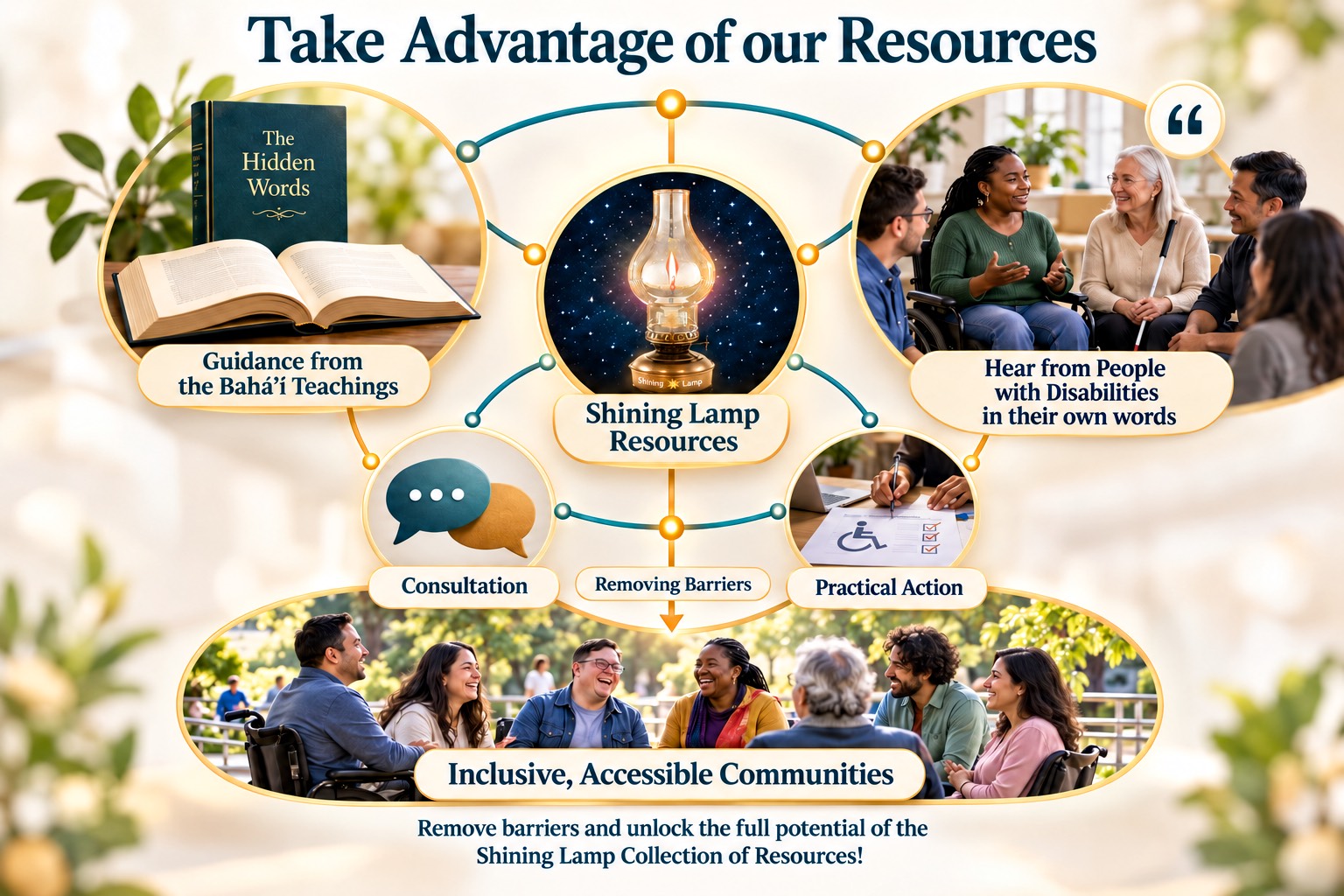
Network graphic connects Bahá’í teachings and people with disabilities speaking in their own words through Shining Lamp Resources. Linked nodes show consultation and practical action toward removing barriers, leading to a diverse group, including wheelchair users, participating together in an inclusive, accessible community.

Resources starting with

How to find a resource

  • Choose a letter or number to see resources that start with it. The number beside each shows how many there are. Resources starting with A show first.
  • Dimmed letters and numbers have no resources yet.
  • Prefer a keyword? Use the search box above.
  • Use List View for titles only, or Summary View for an image and summary of each resource.
  • Use the page links below the results to see more.
  • (1)
  • # (1)
  • ' (1)
  • 1 (4)
  • 2 (1)
  • 3 (3)
  • 4 (2)
  • 5 (5)
  • 8 (1)
  • A (38)
  • B (25)
  • C (18)
  • D (21)
  • E (7)
  • F (14)
  • G (7)
  • H (23)
  • I (33)
  • J (3)
  • K (1)
  • L (9)
  • M (18)
  • N (9)
  • O (8)
  • P (9)
  • R (11)
  • S (18)
  • T (36)
  • U (2)
  • W (32)
  • Y (2)
  • “ (1)
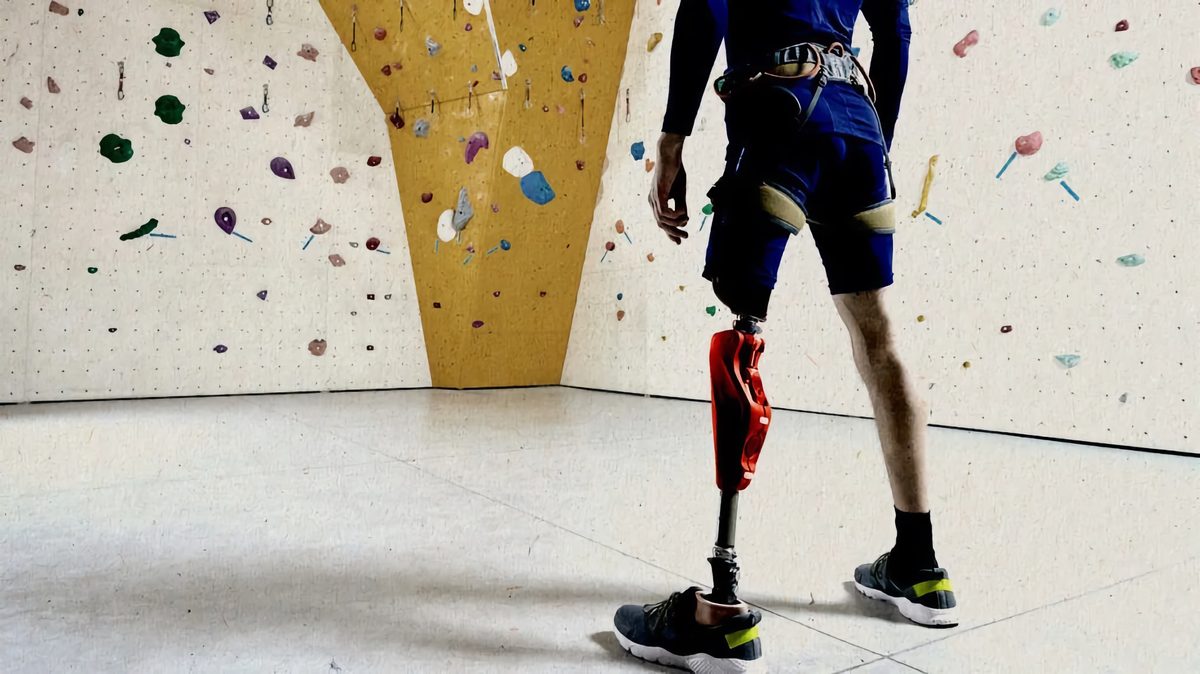
  • A climber with a red prosthetic leg stands in a harness at an indoor climbing wall, seen from behind and from the shoulders down, facing colored holds and a yellow wall section.
    Ableism treats People with Disabilities as worth less than nondisabled people, and each community decides whether the barriers to taking part stay or are removed.

    What is ableism, and what is its impact?

    Ableism rates People with Disabilities as worth less than nondisabled people, even though they are the largest marginalized group, roughly 15% of the world's people. People learn it, often without seeing it, and it works through ableism built into institutions such as medicine and health policy, between people, and inside people who turn its messages on themselves. It shows up as hostility, as rescuing, and as a mix of both, and in health care it puts care out of reach and contributes to illness and deaths that never had to happen. Countering ableism means admitting the harm, hearing People with Disabilities, passing the mic, and pushing for access and representation. We should start with the next program, service, event, or communication in planning.


Explore More Compelling Insights:

Learn about topics related to People with Disabilities, Accessibility, Anti-Ableism, Removing Barriers, and the Disability Community? Tap the Explore button to discover something new and intriguing with each tap!