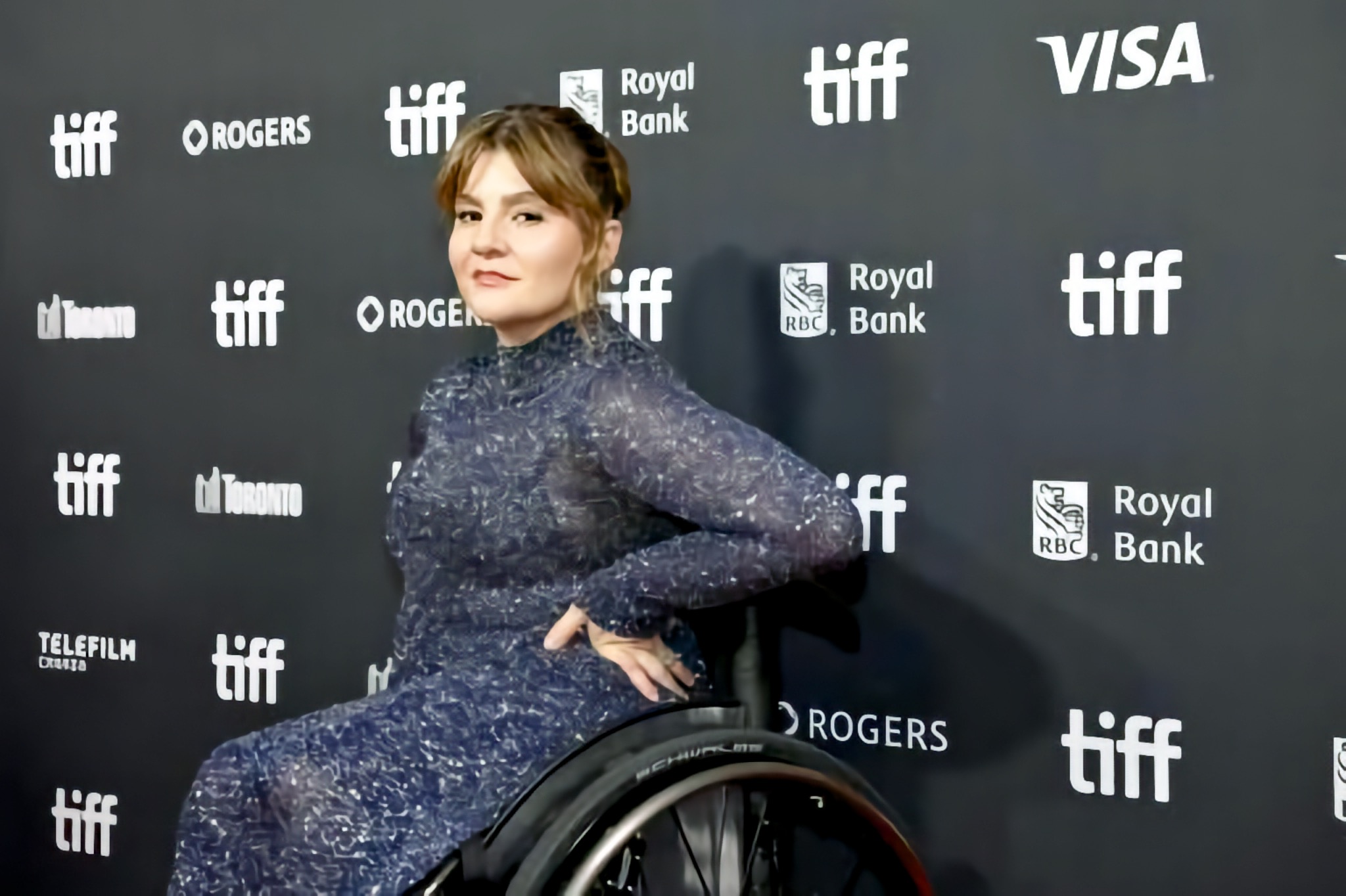
Ruth Madeley, the British actor who has spina bifida and plays disability rights leader Judy Heumann, at the "Being Heumann" premiere at the Toronto International Film Festival on September 10, 2026. Photo: Arturo Holmes.
Sian Heder's "Being Heumann" was the opening film at the Toronto International Film Festival (TIFF). It tells the story of Judy Heumann, widely known as the movement's mother. Ruth Madeley stars as Heumann, with Mark Ruffalo beside her. The film returns to 1977, when Heumann and People with Disabilities of many kinds held a California government building for weeks. They demanded that regulations to expand accessibility be put into action. Heder warns that many of the rights those activists risked their bodies to win are now being reversed. She sees the film as a call to organize, stand firm, and act together again.
The film refuses to paint that fight as pain alone. Heder wanted audiences to feel the joy inside the occupation. She describes protesters who had fun together and a building filled with happiness, where activism became a way to build community. To her, it was a moment when People with Disabilities, long treated as invisible, refused to stay unseen. She believes protest matters just as much today.
Heder wrote the script with Rebekah Taussig after 35 interviews and deep archive research. The Apple TV film centers the point of view of People with Disabilities. It shows the barriers they meet in ordinary moments, like rising from bed or using the bathroom. Heumann slept with eight pillows under her legs. She could not shift her own position overnight. Her freedom to move each morning depended on when her attendant arrived. Heder, an Oscar winner for the CODA (Child of Deaf Adults) screenplay about a family whose parents are Deaf, says those intimate details mattered deeply to her. The film honors the close bonds People with Disabilities can form with the people who provide their care. It portrays Heumann as a whole person, complex and vulnerable.
Asking for a ramp is claiming a right, never imposing a burden. Ruth Madeley, a British actor who has spina bifida and uses a wheelchair, felt the weight of playing a woman who spent decades as an activist and later worked in two presidential administrations. She calls the role a milestone for her career and for an industry casting disability authentically. She says Creatives with Disabilities have long waited to see themselves lead a Hollywood film. Years ago, asking for access made her panic, afraid she would look like a burden. On sets with no ramp or accessible bathroom, she insisted she was fine. On this film, she saw that same fear in other actors and told them they could ask. Exclusion comes from planning choices, never from a person's disability. Access belongs in the plan from the first day. This article shows the gap: when a set had no ramp, the weight of asking fell on the performer instead of on the people who planned it.
An Actor who uses a Wheelchair once said she was fine without a ramp on set, because she feared looking like a burden. Going forward, we should have the ramp and the accessible bathroom ready before anyone has to ask, and we should tell anyone who does ask that asking is fine. Then no one will have to hide a request for a ramp, and our communities can become Vibrant, Diverse, Inclusive, Accessible Communities for People with Disabilities.
When we plan access first, asking is simply a right, never a burden, and our communities grow into Vibrant, Diverse, Inclusive, Accessible Communities for People with Disabilities.
Learn about topics related to People with Disabilities, Accessibility, Anti-Ableism, Removing Barriers, and the Disability Community? Tap the Explore button to discover something new and intriguing with each tap!