
Striving to remove barriers that prevent us from building Vibrant, Diverse, Inclusive, Accessible Communities!
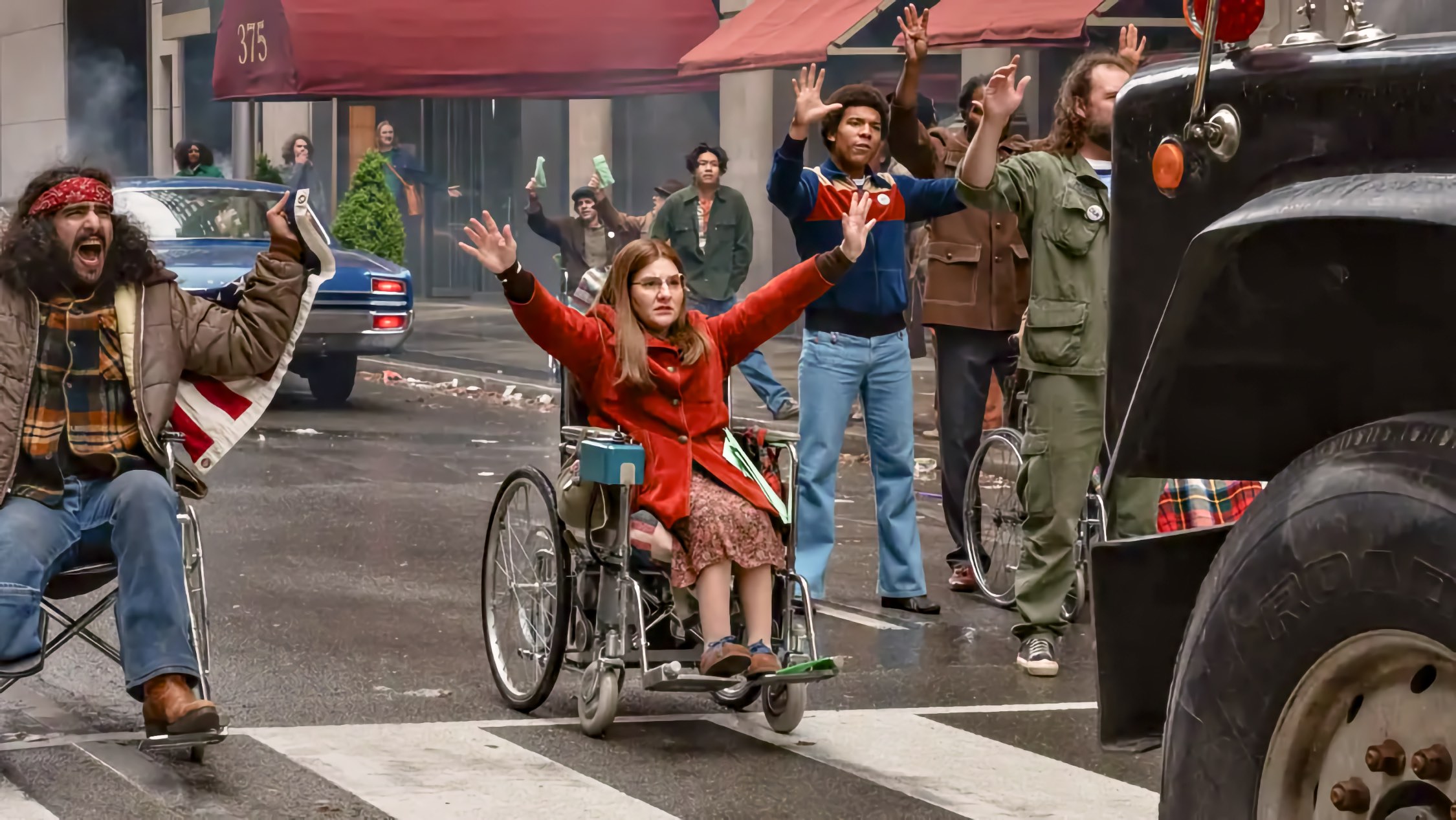
Siân Heder's new film, "Being Heumann," stars dozens of Performers with Disabilities. Ruth Madeley plays disability rights activist Judith Heumann. Every actor playing a protester is a Performer with a Disability. Seven years ago, on her Oscar winning film "CODA" (Child of Deaf Adults), Heder and her crew worked out how to design a home for a family of People who are Deaf as they filmed. This film asked far more of them. Her crew had to build an Accessible set for dozens of Actors with Disabilities. Heder spoke about that work at the Toronto International Film Festival.
Access on this set meant many things at once. The cast included Actors who are Deaf, Actors who are Blind, and many Actors who use Wheelchairs. Each body had its own access requirements. Sometimes one person's requirements worked against another's. Heder said filmmaking and disability can work at odds. Shoots run on tight schedules. Every hour costs money. Crews race the daylight and must clear out of locations. That relentless pace is a barrier for People with Disabilities on a film set.
The film revisits a turning point in disability rights history. Dozens of People with Disabilities occupied federal health offices in San Francisco. They held those offices for four weeks. The Black Panther Party, the Salvation Army, and other organizations stood with them. The protesters demanded signed regulations for Section 504 of the Rehabilitation Act of 1973. Those regulations put the rights of People with Disabilities into action. They became a major step toward the Americans with Disabilities Act (ADA), passed more than a decade later.
The people who meet a barrier know it best. Actors who use Wheelchairs performed in wheelchairs true to the 1970s. That was no simple task. Many cast members believed a vintage wheelchair would work for them. Ten hours into the day, their bodies told them otherwise. We make access decisions with People with Disabilities from the start. This set shows that asking once is not enough. Some barriers show up only after hours of work, and the person meeting them is the first to know.
People who are Deaf, People who are Blind, and People who use Wheelchairs may require different things at the same time, and those requirements can pull against each other. We check in with each person at the start and again hours later, since what works in hour one may not work in hour ten. Even when time means money, we keep those answers first, because that is how we build Vibrant, Diverse, Inclusive, Accessible Communities for People with Disabilities.
When we keep asking the people who meet a barrier, we remove it, and Vibrant, Diverse, Inclusive, Accessible Communities follow.
Read the Full Article: How the ‘Being Heumann’ Crew Built a Set for Its Cast of People with Disabilities on the Fly.
By: Jeremy Fuster
