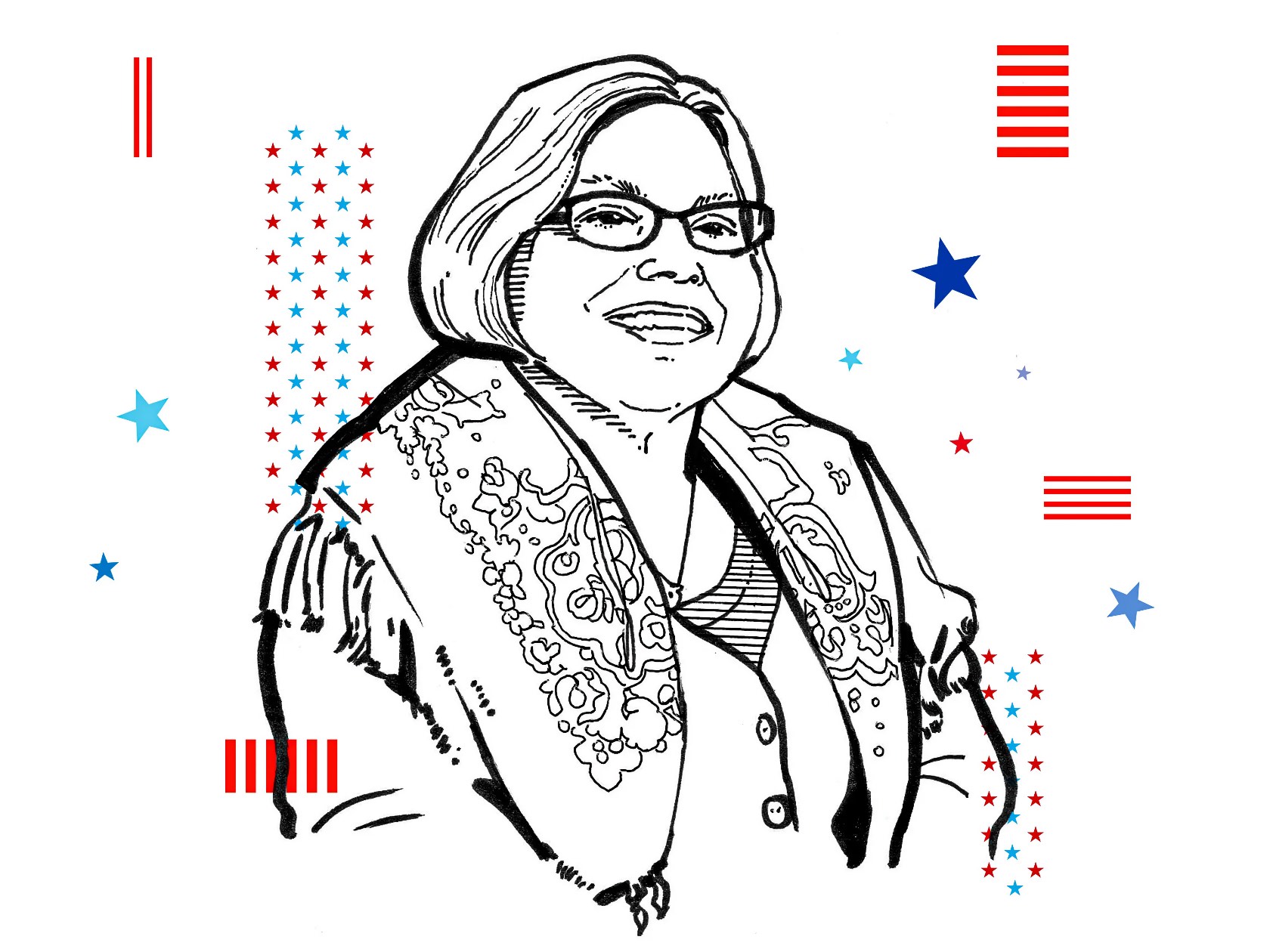
Judy Heumann, disability rights leader and cofounder of Disabled in Action, who led the 1977 San Francisco occupation that forced the federal rules implementing Section 504. Published with the article in The American Prospect.
Polio reached Judy Heumann in 1949, before her second birthday, and she spent the following five decades removing barriers that had closed American public life to People with Disabilities. New York City public schools had never employed a teacher who used a wheelchair until she became one in 1970, and as cofounder and president of Disabled in Action she converted her own exclusion into organized community power. Nathan Tankus, whose aunt Frieda Tankus cofounded that same organization as its vice president and was 22 when complications from a spinal operation ended her life, argues that Heumann's standing as the movement's central figure cannot be separated from the organizers who never lived long enough to see results. Exclusion shortens lives, which is why so few of Heumann's closest colleagues reached their sixties, and her recognition works as representation for ordinary people who fought hard and were never named.
The movement Heumann led borrowed its methods directly from the civil rights movement, and its victories came through confrontation rather than polite request. Members of Disabled in Action brought Manhattan traffic to a standstill during peak evening hours in November 1972 after the Rehabilitation Act was vetoed, and they positioned their wheelchairs in front of city buses to remove the barrier of a transit system with no lifts. That escalation peaked in 1977, when Heumann led a 28 day occupation of a federal Department of Health, Education, and Welfare building in San Francisco after officials refused to write the rules that would put Section 504 of the Rehabilitation Act of 1973 into practice. No takeover of a United States federal building has since lasted longer without violence, and the Black Panthers backed those occupiers without hesitation or reservation, which shows that the first genuine federal step forward for People with Disabilities, and the Americans with Disabilities Act (ADA) that followed in 1990, were won together with Black organizers rather than apart from them.
Those gains are being taken back right now. Federal attacks on diversity, equity and inclusion programs have eliminated the already meager protections People with Disabilities hold, and the simultaneous loss of protections against racial discrimination lands as an equally severe blow, because a movement that modeled itself on the civil rights movement cannot survive without the framework it grew from. Officials are discouraging vaccination and defunding medical research, spreading disablement and death on a mass scale, and Heumann, who was disabled by polio as an infant, would have found that course intolerable. Her brother has said she would be furious at what is being done to the movement she built. When enforceable protections are taken away, People with Disabilities are left holding nothing but the goodwill of whoever happens to be in charge, and Heumann spent her life demonstrating that goodwill has never been enough.
Heumann carried the same fight inside institutions, helping develop what became the Individuals with Disabilities Education Act (IDEA) as a Senate staffer in 1974, serving as deputy director of the Center for Independent Living so People with Disabilities could live in their own homes by choice, and later pressing disability rights onto the global agenda through the United Nations Convention on the Rights of Persons with Disabilities. Yet how precarious all of it remains showed plainly in February 2020, when the Museum of Modern Art premiered a documentary about the disability rights movement and had built no ramp to its stage, not even a temporary one, so Heumann and other wheelchair users were raised by a hand cranked lift at an excruciating pace while the audience waited. Community Builders should read that scene exactly as it stands: exclusion is manufactured by the planning decisions of hosts, never by anyone's disability, and a venue that honors this movement while stranding its honorees below the stage has failed the very people it claims to celebrate. Before booking your next gathering, walk the route a wheelchair user would take to the podium and to the seating, put a request list for accessibility services directly on the invitation, and confirm every requested service is in place before the doors open, because Vibrant, Diverse, Inclusive, Accessible Communities for People with Disabilities are built by planning that removes barriers before the event opens rather than apologizing for them afterward.
“Think ye at all times of rendering some service to every member of the human race. Pay ye no heed to aversion and rejection, to disdain, hostility, injustice: act ye in the opposite way. Be ye sincerely kind, not in appearance only. Let each one of God’s loved ones center his attention on this: to be the Lord’s mercy to man; to be the Lord’s grace. Let him do some good to every person whose path he crosseth, and be of some benefit to him. Let him improve the character of each and all, and reorient the minds of men.” -‘Abdu’l-Bahá, Selections from the Writings of ‘Abdu’l-Bahá
Explore More Compelling Insights:
Learn about topics related to People with Disabilities, Accessibility, Anti-Ableism, Removing Barriers, and the Disability Community? Tap the Explore button to discover something new and intriguing with each tap!