
Striving to remove barriers that prevent us from building Vibrant, Diverse, Inclusive, Accessible Communities!
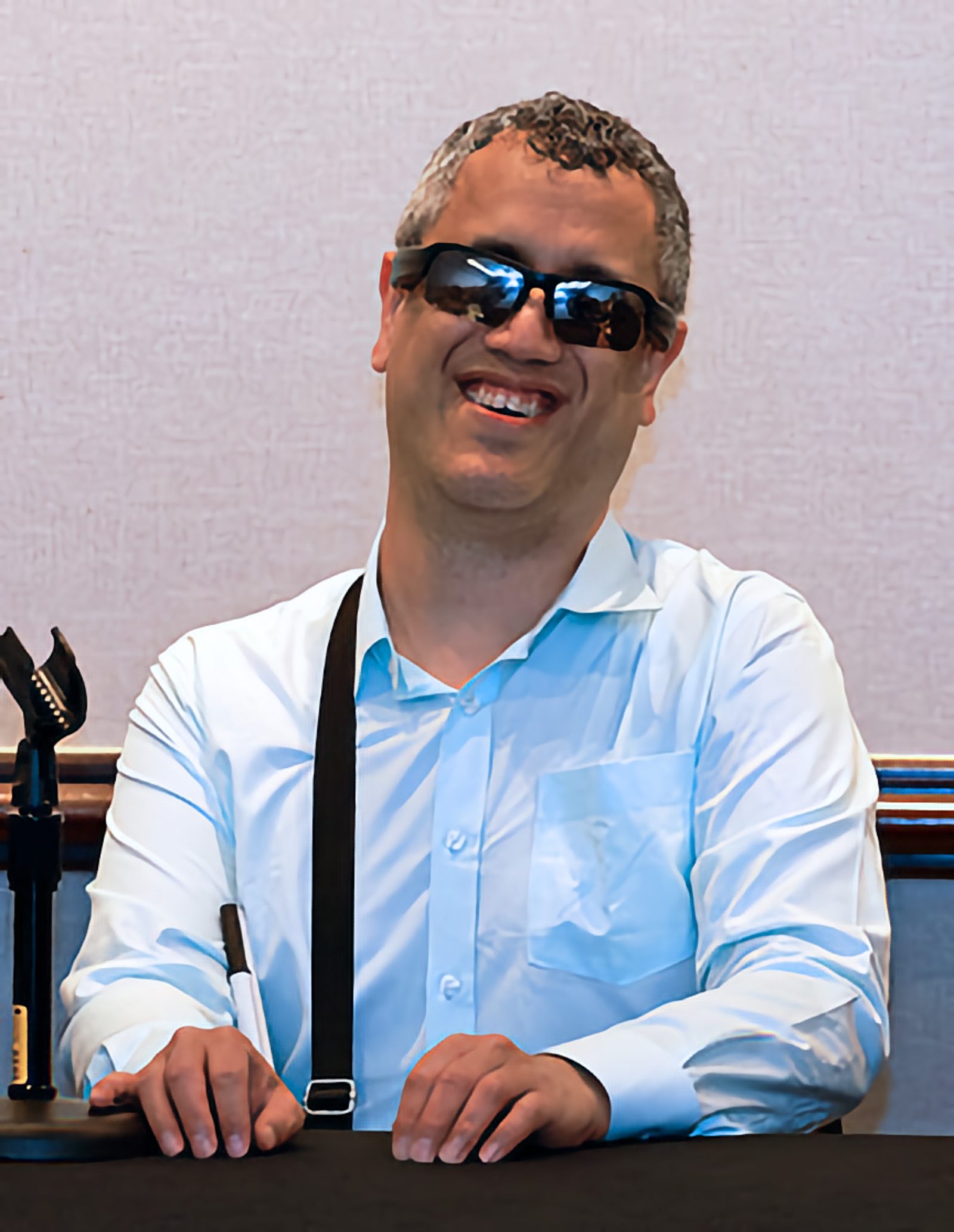
Dr. Cary Supalo is a research chemist, a consultant with Educational Testing Services and the founder of Independence Science, a company whose tools make science measurement equipment accessible to Blind students. In a talk to parents at the 2023 convention of the National Federation of the Blind, reprinted in the Braille Monitor from Future Reflections, he defines science simply as fundamental problem solving: asking questions and finding the answers. Children use that same skill, he says, to find their way from one place to another, bake a cake from scratch or explore plants in the yard.
In graduate research in inorganic chemistry at Penn State University, Supalo worked on catalysts for making hydrogen as an alternative fuel, using lab instruments that no access technology could reach. His answer was to recruit, hire and sometimes fire undergraduate lab technicians, paid in equal thirds by his advisor, the chemistry department and the disability services office, and to keep several on call for experiments that ran at 2 in the morning. He recorded his own observations on electronic notetakers, and he urges Blind students to have their own accessible way to record data, to know which questions to ask and when, and to read a room through the voices in it.
Sighted colleagues expect drawings, he found, so he urges Blind students to learn raised line drawing and later the whiteboard; as an assistant professor of chemistry he drew molecules and equations on the board for students in first year labs and for future teachers. He graded handwritten work with a human reader and later with a grader who applied his answer keys. Teaching, he writes, took time management, the alternative skills of blindness and creative thinking to reach information that was never designed to be accessible.
No child should be told that science is out of reach because they are Blind. Supalo writes that Blind students were long steered away from science as too visual or unsafe. He asks parents to watch for curious questions and a love of math, animals or museums, to enroll their children in enrichment programs, and to arrange hands on museum sessions for groups of Blind students a few weeks ahead. He also asks them to write into each Individualized Education Program the access technology their child uses, including the multiline refreshable Braille displays now arriving, so it is there for schoolwork and standardized tests. Not every child will choose science, he says, and parents who remove the barriers keep that choice open.
We should expect Blind students to study science alongside their classmates, with the tools they use to learn. We should ask the museums and science programs in our area to offer hands on sessions for Blind students. Labs and classrooms open to Blind scientists would move us toward Vibrant, Diverse, Inclusive, Accessible Communities for People with Disabilities.
Good questions make a scientist.
Read the Full Article: Eureka! It All Matters!.
By: Cary Supalo
Questions for Reflection
- Who in our community has told a Blind student that science is too visual or unsafe?
- Do the science museums and programs near us offer hands on sessions for Blind students?
- Does each Blind student we know have the access technology they use written into their Individualized Education Program?
- How do we encourage the curious questions of the Blind children in our lives?
- What would it take for a Blind student in our schools to take full part in a chemistry lab?
