
Explore More Compelling Insights:
Learn about topics related to People with Disabilities, Accessibility, Anti-Ableism, Removing Barriers, and the Disability Community? Tap the Explore button to discover something new and intriguing with each tap!
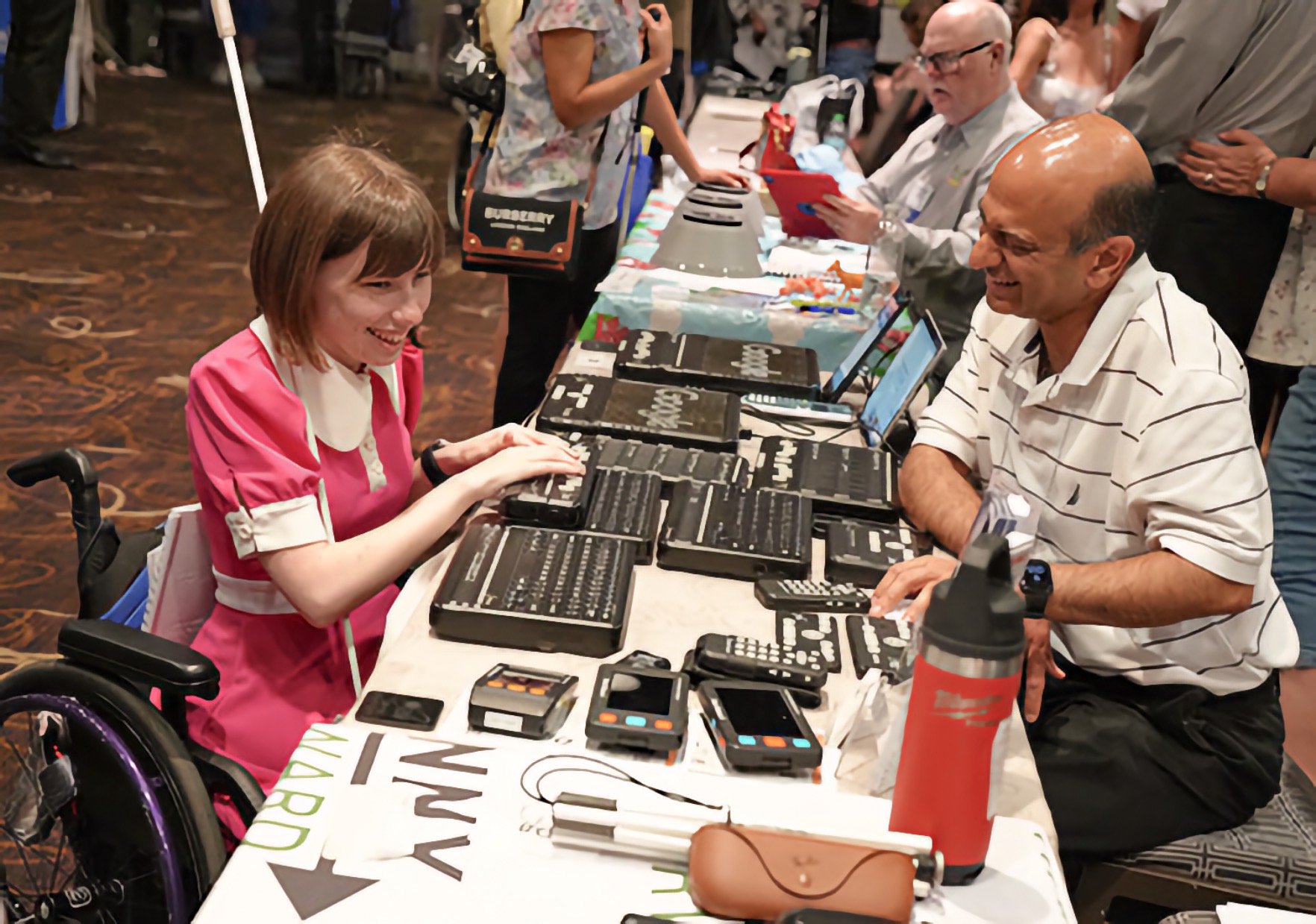
Blind People who use wheelchairs face an information drought on white cane travel from a seated position, a gap that National Federation of the Blind (NFB) member Ellana Crew has spent three years working to close. Cane selection differs from ambulatory practice in every dimension: wheelchair users typically need longer canes, lighter materials, and fixed tips calibrated to their seated position and hand function. For Blind People using manual chairs, several approaches make simultaneous cane and wheelchair use possible, including gripping both the cane and push rim in one hand, using a one arm drive system, or foot propelling. Orientation and Mobility (O&M) instruction systems have left Blind wheelchair users without adequate guidance or have steered them toward power chairs without exploring alternatives. Community Builders must refuse to treat the absence of wheelchair inclusive O&M instruction as someone else's concern: if the formal system will not teach Blind wheelchair users, the community must build and protect the peer networks that will.
Disability can be difficult to talk about sensitively because of how embedded ableism is in our language, biases and perceptions of disability. Conversations about disability are slowly increasing, especially when it comes to ableist language and how disabled people are represented in the media. Disability advocate Talila A. Lewis' working definition of ableism is a "system that places value on people's bodies and minds based on societally constructed ideas of normalcy, intelligence and excellence." NPR spoke to Cara Reedy, the director and founder of the Disabled Journalists Association, and…
by Alex Chen What is an image description? An image description is a written caption that describes the essential information in an image. Image descriptions can define photos, graphics, gifs, and video — basically anything containing visual information. Providing descriptions for imagery and video are required as part of WCAG 2.2 (for digital ADA compliance). It’s sometimes referred to as alt text since the alt attribute is a common place to store them. The alt attribute appears in the HTML code like this: <img src=”link” alt=”text goes here”> While ALT Text and image descriptions are…
ALT text gives Blind People and People with Low Vision the meaning of an image that sighted readers take in at a glance. This guide applies WCAG Success Criterion 1.1.1, which calls for a text alternative that serves the equivalent purpose, to everyday publishing: why a name alone is not enough, which information belongs in the ALT text and which in the caption, how to describe people and their visible diversity with respect, and how to tailor a description to the place an image appears. Worked examples cover photographs, book covers, logos, and mastheads, and reflection questions invite Community Builders to examine their own practice.
Learn about topics related to People with Disabilities, Accessibility, Anti-Ableism, Removing Barriers, and the Disability Community? Tap the Explore button to discover something new and intriguing with each tap!