
Striving to remove barriers that prevent us from building Vibrant, Diverse, Inclusive, Accessible Communities!
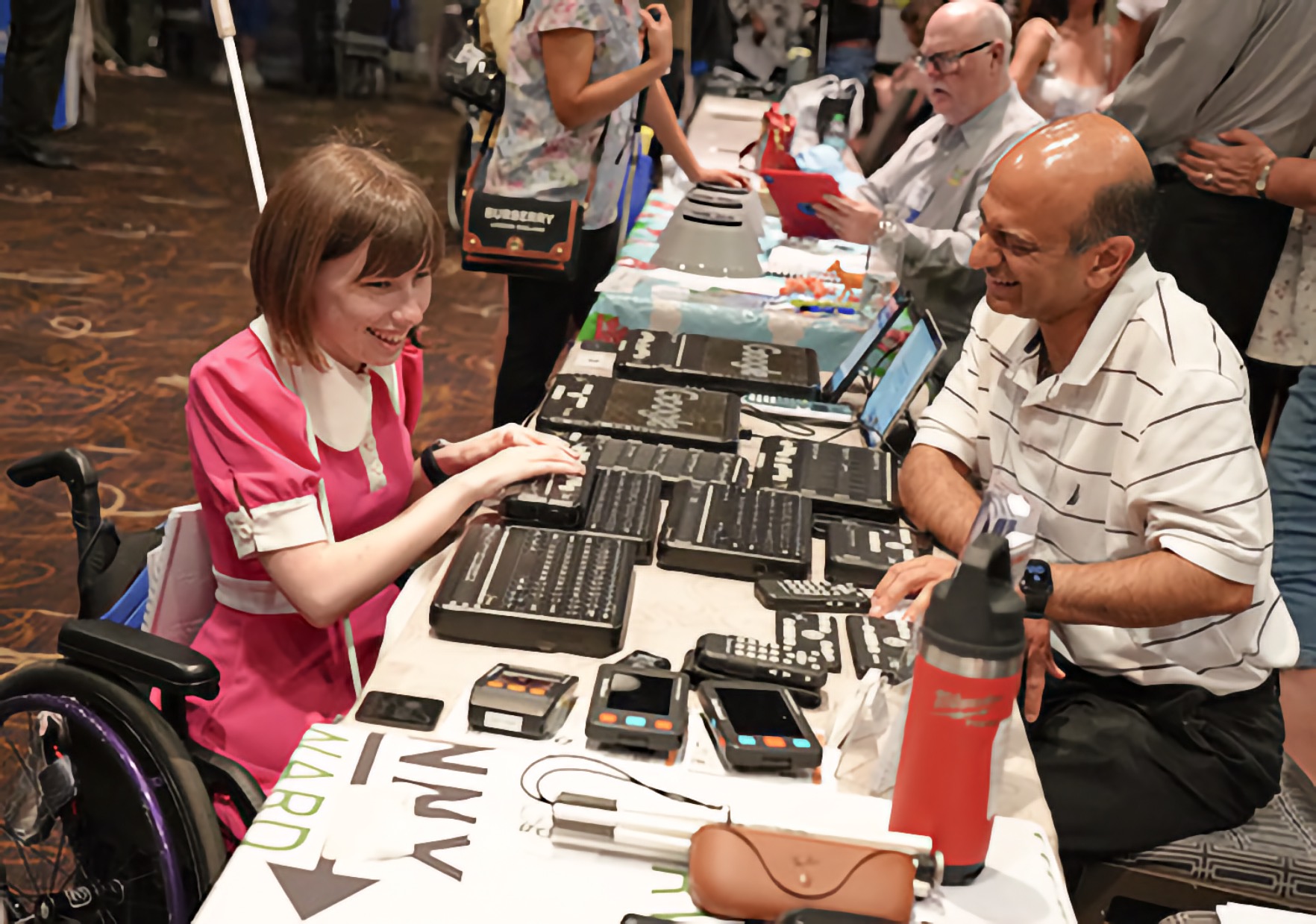
When Ellana Crew began using a wheelchair about three years ago, she was already a skilled cane traveler with hundreds of hours of Structured Discovery training behind her. She searched online forums, combed through National Federation of the Blind (NFB) publication archives, and hunted through video content for any guidance on using a white cane from a wheelchair. She came back with almost nothing every time. The Blind wheelchair users she found online appeared not to use canes. One published document on the topic relied on outdated assumptions. Two NFB articles gave her useful tips but no foundational guide. She had to build her method piece by piece, working with former Orientation and Mobility (O&M) instructors, connecting with other Blind wheelchair users online, and completing five full months of training at the Louisiana Center for the Blind. When the systems meant to serve Blind People fail to provide this foundation, Blind People document and share these strategies for one another, filling a gap the broader O&M system has left open for far too long.
Choosing the right cane for wheelchair use is not the same process as choosing one for walking, and Blind wheelchair users are regularly given advice that does not fit their situation. The most immediate difference is length: because a wheelchair positions the feet farther forward and takes longer to stop than someone on foot, a Blind wheelchair user loses reaction time that a longer cane must compensate for. Crew recommends starting two sizes longer than one's standard walking cane length and adjusting from there, since the exact increase depends on seat height, rolling speed, footplate angle, and the individual's hand function. Cane weight is equally important: because the lower seated position makes weight more noticeable at the tip, a lighter and tapered cane reduces hand strain in ways that matter especially when disabilities already affect hand strength and dexterity. For tips, small and lightweight fixed options, including metal glide tips and ceramic tips, outperform rolling tips for most Blind wheelchair users: rolling tips are significantly heavier, produce less tactile and auditory feedback, and generate a momentum that can cause serious hand pain.
For Blind People who use manual wheelchairs, using a cane alongside a wheelchair takes creativity and deliberate practice, but it is more possible than the broader blindness community has been led to believe. One approach has one hand grip both the cane and the push rim simultaneously, arcing the cane between strokes. This demands close attention to cane arc. Holding the handle off center means extra effort is needed to keep the arc reaching evenly on both sides. A second option is a one arm drive system, which puts both wheel controls on one side of the chair and frees the opposite hand to hold the cane centered in front of the body. The third approach, and the one the author uses most often, is foot propelling: this leaves both hands fully free, gives additional tactile contact with the ground, and allows the cane to stay centered. For those who need more propulsion power, motorized power assist attachments can supplement a manual chair without sacrificing its lighter weight and maneuverability. Across the globe, Blind wheelchair users are regularly directed toward power chairs on the basis of cane use alone, without any opportunity to explore the manual strategies that would serve them far better.
Orientation and Mobility instruction systems have failed Blind wheelchair users on two fronts: many were never offered any guidance on wheelchair compatible cane travel, while others were funneled toward power chairs on the assumption that cane use from a wheelchair was off the table. The author met dozens of Blind wheelchair users who pieced this knowledge together on their own, sat through O&M sessions that never addressed their actual situation, or had been told outright that cane use from their chairs was not possible. The NFB is clear: if formal O&M instruction will not serve Blind wheelchair users, then Blind wheelchair users will teach one another. The peer knowledge Blind wheelchair users are already building for one another is not a workaround. It is what a failing system has forced them to do. Every community has a shared obligation to expect wheelchair inclusive Orientation and Mobility services and to treat the mobility gap facing Blind wheelchair users as a true injustice.
Read the Full Article: How to Be a Blind Wheelchair User.
By: Ellana Crew
