
Striving to remove barriers that prevent us from building Vibrant, Diverse, Inclusive, Accessible Communities!
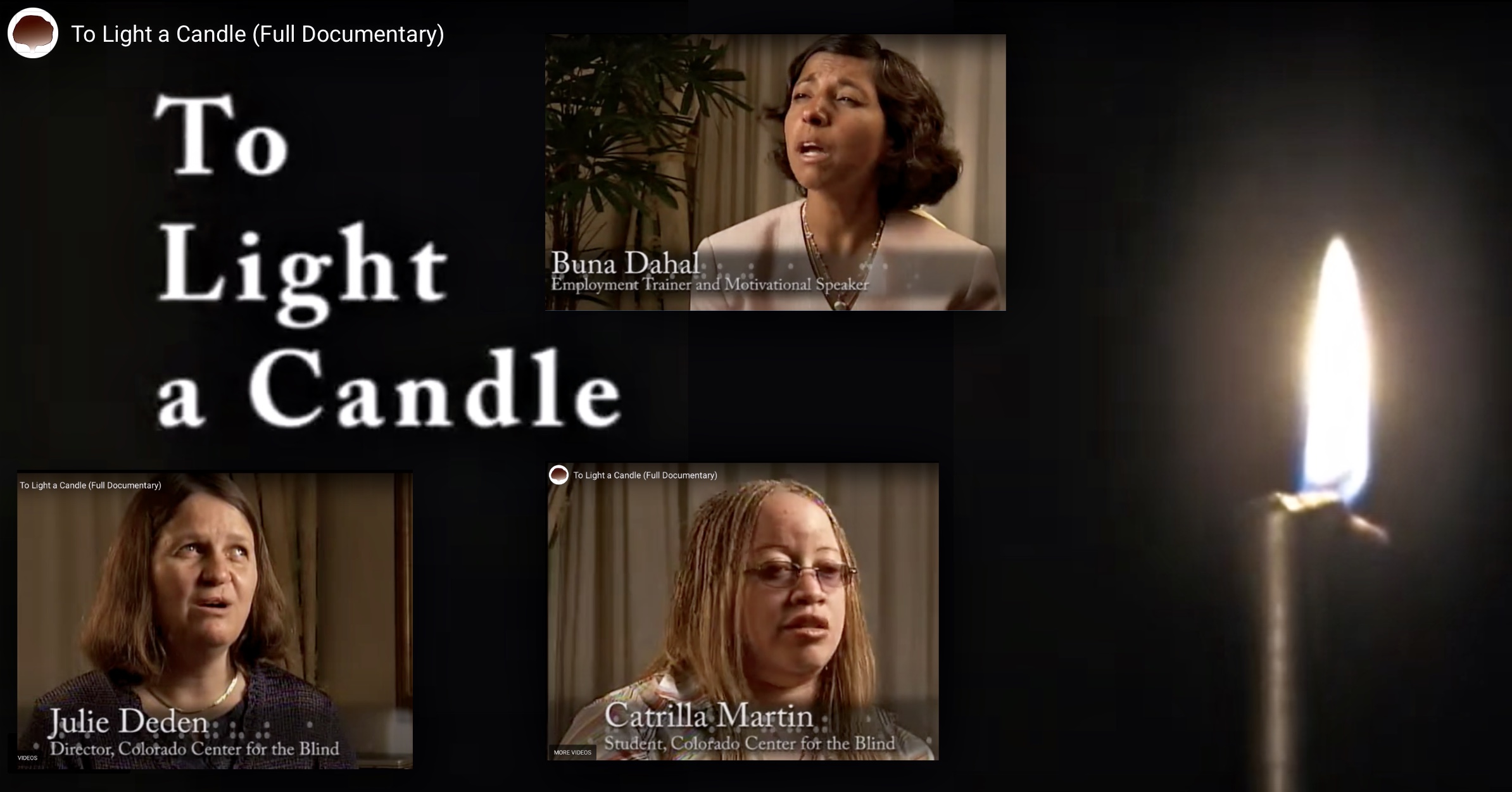
The documentary video, "To Light a Candle", offers a glimpse into the lives of Blind People, highlighting their journeys toward independence and belonging. Through personal stories and experiences, we see how Blind People like Buna Dahal, Julie Deden, and many others confront the barriers imposed by societal misconceptions about blindness. Their stories confront negative stereotypes and illustrate how, in the face of these barriers, they have embraced their identity as Blind People and achieved remarkable success. This film is a powerful testament to the resilience and capabilities of Blind People, reinforcing the importance of creating an environment where Blind People are valued and treated equitably within their communities.
The film also addresses systemic barriers faced by Blind People, such as inadequate accessibility and inclusion and societal attitudes that often lead to exclusion and discrimination. By showcasing these problems and triumphs from real life, "To Light a Candle" serves as a call to action for our community to actively participate in removing these barriers. It urges us to reflect on our role in fostering vibrant, inclusive communities where Blind People can thrive.
Furthermore, the documentary emphasizes the crucial role of community organizations in standing with and lifting up Blind People. It highlights how organizations led by Blind People themselves are essential in breaking down misconceptions and providing vital training and successful role models. This aligns perfectly with our commitment to removing barriers and building inclusive environments.
Watch the full video to gain deeper insights and learn from these stories of determination and achievement. By engaging with "To Light a Candle," you contribute to the ongoing effort to remove barriers and build a Vibrant, Diverse, Inclusive, Accessible Community.
We should learn from Blind people in their own words, and from the organizations they lead. We should remove the misconceptions and barriers that shut Blind people out of training, work and community life. Valuing Blind people as equals in every part of our communities would move us toward Vibrant, Diverse, Inclusive, Accessible Communities for People with Disabilities.
Watch the Full Video: "To Light a Candle"
Questions for Reflection
- What did you learn from the Blind people who speak in To Light a Candle?
- Which misconceptions about blindness have we heard in our own community?
- Do the Blind people in our community have access to training and role models led by Blind people?
- Where do Blind people in our community meet barriers to work and community life?
- How could our community bring the stories in this film to more people?
