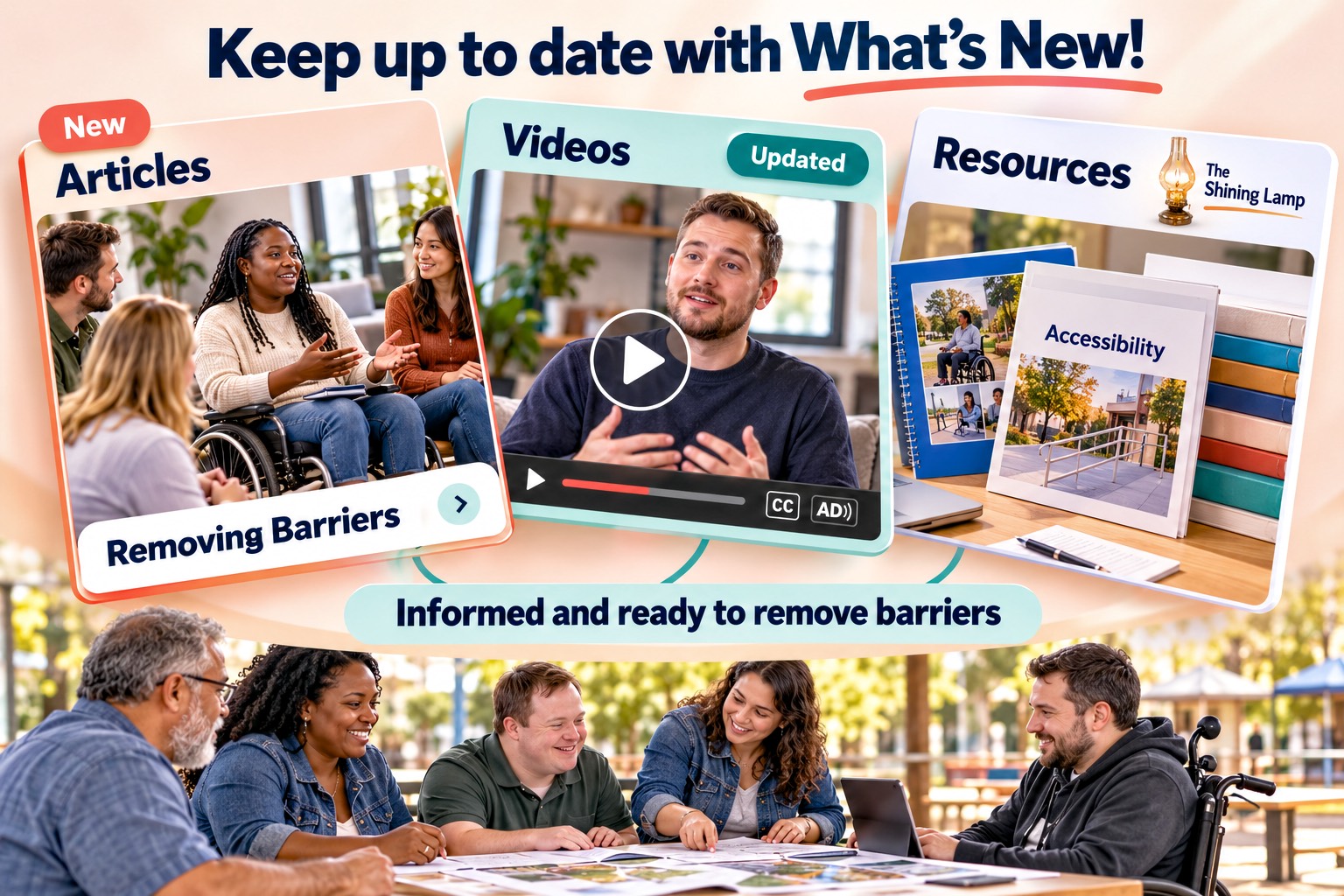



Infographic headed “Keep up to date with What’s New!” features article, video, and resource previews marked “New” and “Updated.” Below, a diverse group, including a wheelchair user, reviews materials together beneath the message “Informed and ready to remove barriers.”

What's New and Updated at The Shining Lamp?

Latest updates

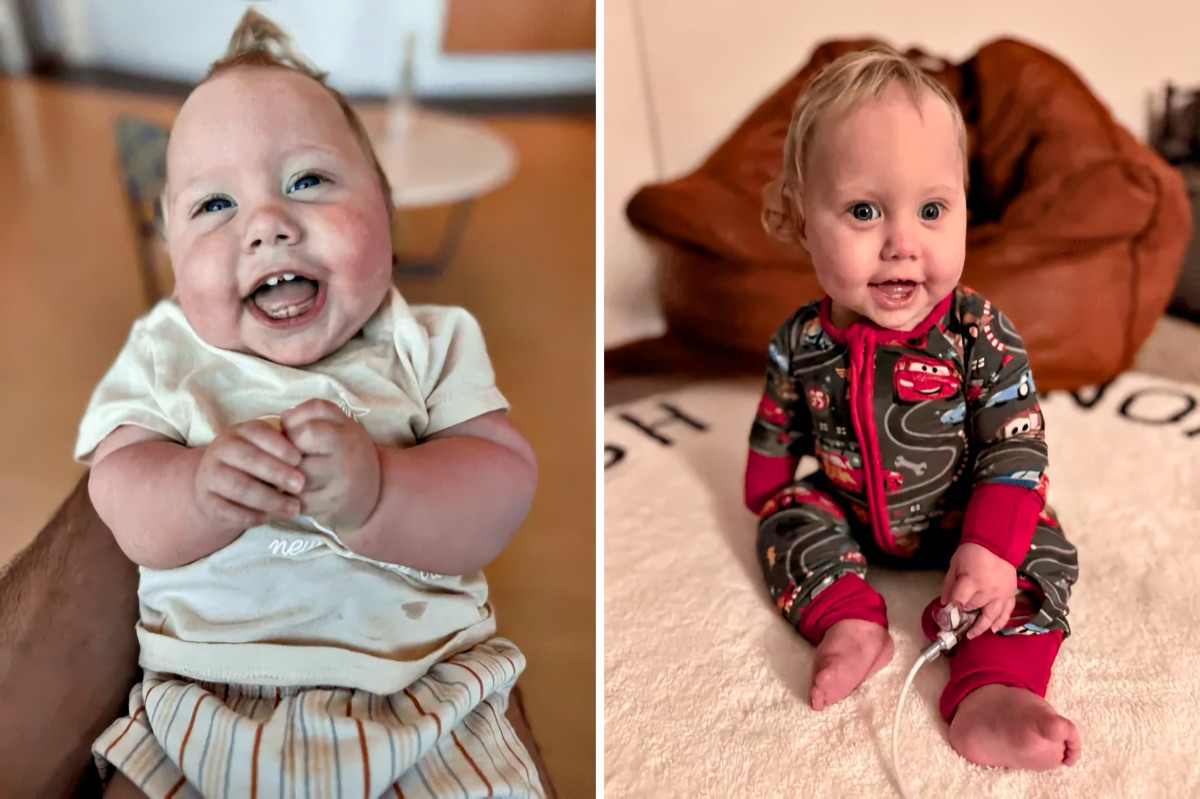
  • Oliver Herring, 16 months old, has ReNU Syndrome, which brings severe delays in development. His father, Chris, answered a boy's slur with a calm lesson about who Oliver is.

    Boy uses offensive term for disabled toddler, dad’s response says it all

    Updated

    A boy of about ten used the R word, an ableist slur, to ask about 16 month old Oliver Herring, who has ReNU Syndrome, a neurodevelopmental disability. His father, Chris, answered calmly, told the boy who Oliver is, and asked him to use another word. The slur still cut deep, and Chris asks parents to talk openly with their children about difference and to let kids ask hard questions. When adults explain disability openly to children, curiosity can grow into welcome. We should answer the next curious child with a calm reply and a better word.

  • A still from Guillermo del Toro’s Frankenstein, a film Kathryn Bromwich says casts only nondisabled performers while Victor grows more disabled as he grows more corrupt. Photograph: Associated Press

    Horror movies have an ableism problem. Isn’t it time we found new ‘monsters’?

    Updated

    Kathryn Bromwich, who loves horror and has a disability, shows how films such as Frankenstein use scarring, prosthetics, wheelchairs, and amputation as signs of a corrupt character, and how celebrated art films drop disabled actors into scenes to deepen the unease. Horror has no use for it: Bring Her Back casts Sora Wong, who has limited vision, as a funny, smart character the audience stands with. Disabled people hold just 2% of the film and television workforce, so she calls for disabled creators telling their own stories. We would start with the stories in our next program, service, event, or communication.

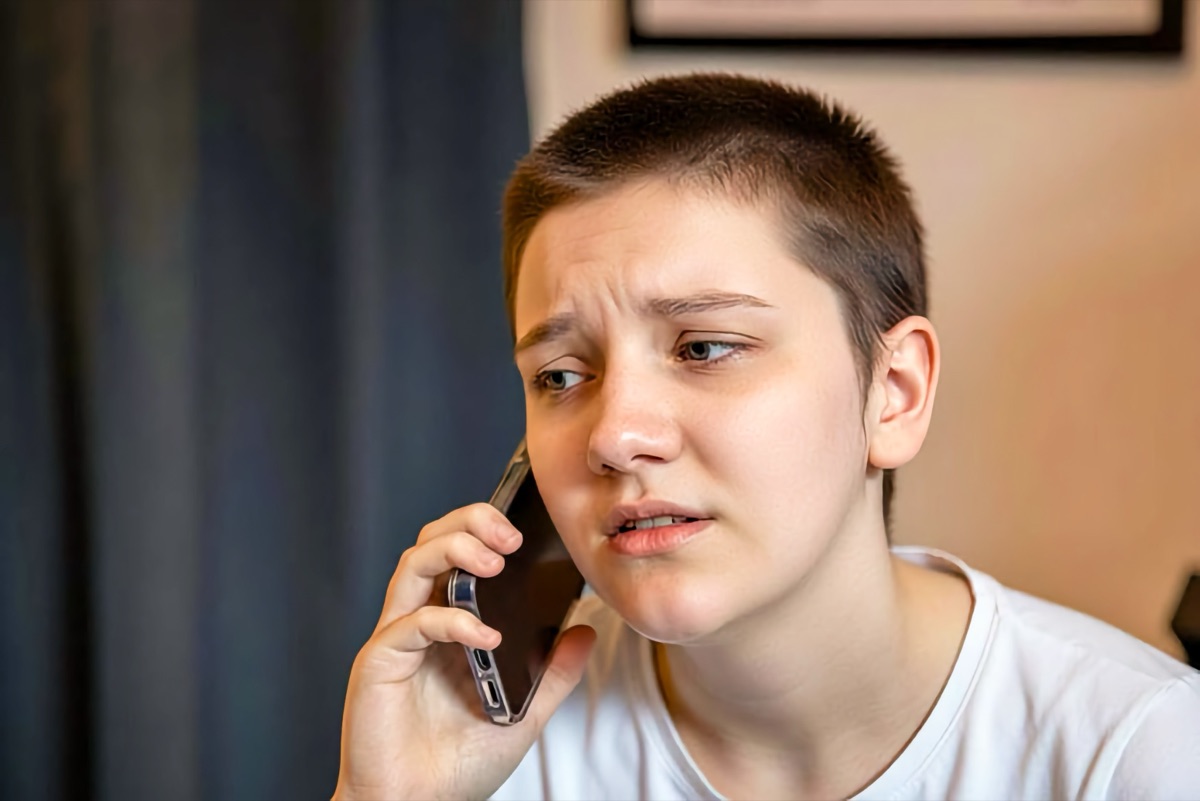
  • Stock photo, not the teen in the story. A report about blocked aisles turned into an accusation of shoplifting, with a wheelchair offered as the only evidence.

    Store Employee Accuses Wheelchair User Of Stealing, Her Ableist Logic Ends Up Costing Her The Job

    Updated

    A teenage wheelchair user emailed a store about product displays blocking the aisles and got a shoplifting accusation back, tied to a branch the teen had never visited, with a wheelchair seen that week as the only evidence. The apology was a ten dollar credit, and the employee lost her job. With about 27 percent of American adults having a disability, treating one wheelchair as a description of a person is ableist logic, not evidence. A person who reports a barrier is showing us what to remove, and the barrier is what should go. We should start with the next program, service, event, or communication in planning.

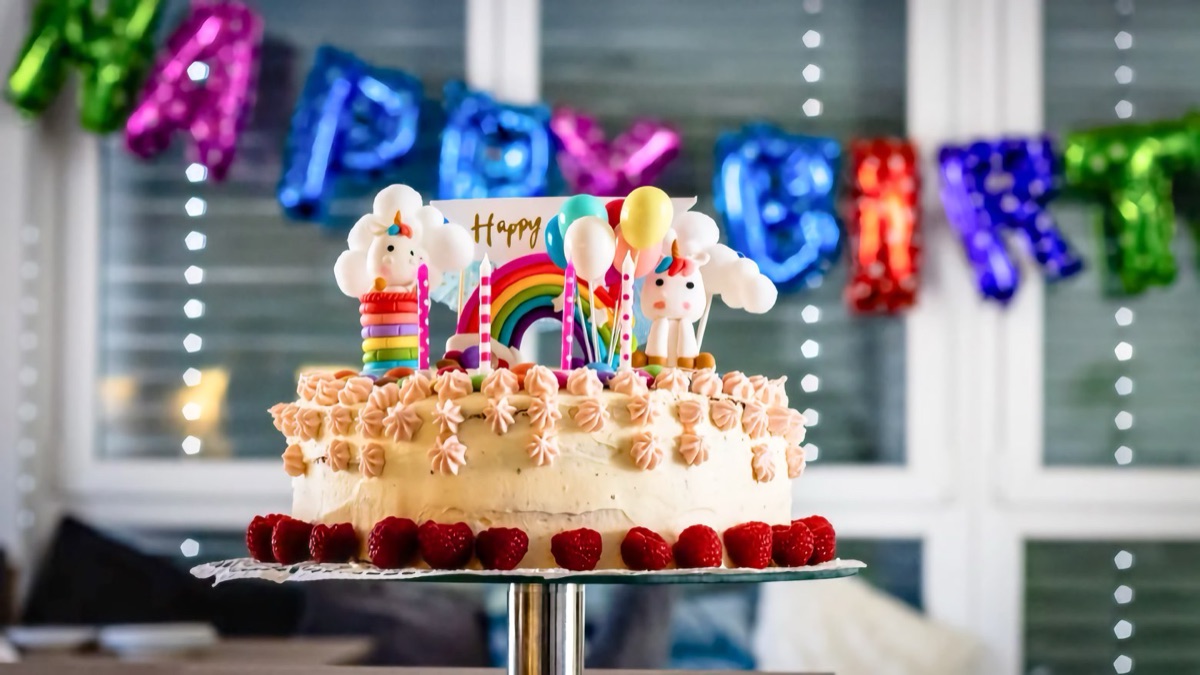
  • Stock photo, not the actual dessert. Antonia Sinibaldi’s 29th birthday plate on June 20, 2026 carried the word wheelchair where her name should have been. Image by Aiky82 on Pixabay.

    A Birthday Plate Labeled With a Wheelchair Instead of a Name

    Updated

    On her 29th birthday, Antonia Sinibaldi was served a dessert with “Happy Birthday Wheelchair!” written where her name belonged. Staff had used the word on a ticket to find her table, and the restaurant said no disrespect was meant, yet the ticket had already reduced a guest to a wheelchair. Sinibaldi writes publicly about accessibility and her own spinal cord injury, and she will not go back. We should lead with a person’s name on any notation we write, and keep a detail about a wheelchair beside the name, never in its place.

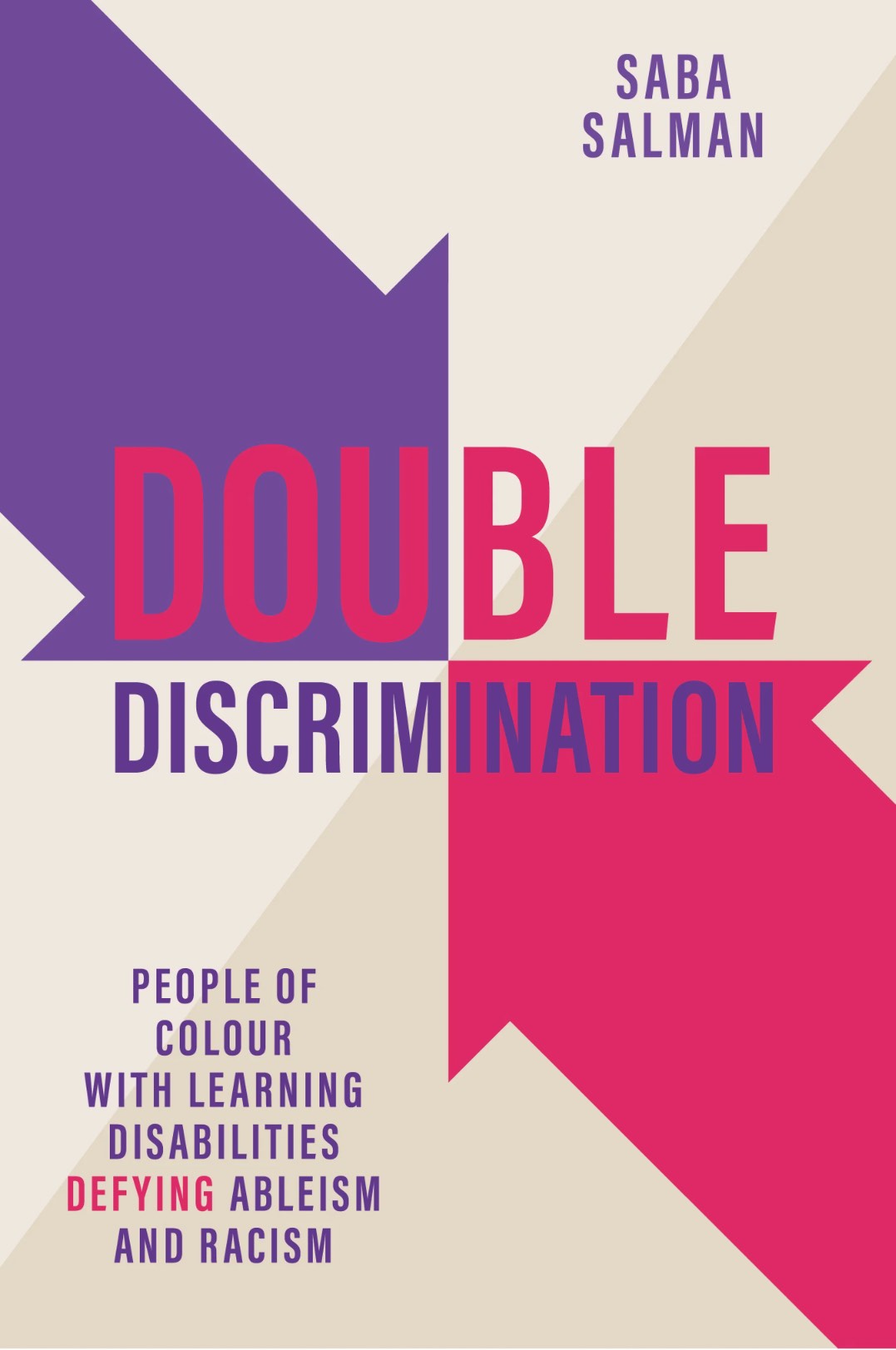
  • Journalist Saba Salman of Worthing wrote this book for her youngest sister Raana, who is British, South Asian, and has a Learning Disability. Jessica Kingsley Publishers published it, and Salman says its answers come from public sector organisations, charities, activists and families.

    Living at the intersection of race and disability

    Updated

    Journalist Saba Salman wrote Double Discrimination for her youngest sister Raana, who is British, South Asian, and has a Learning Disability, and whom people rarely picture as both disabled and a Person of Colour. Her reporting shows that people facing racism and ableism together are skipped by the social justice ideas meant to counter bias, and that inequalities in housing, work, health and schooling are shocking in scale. The book closes on the defiance and optimism found among public sector organisations, charities, activists and families. We should plan every program, service, event, and communication with someone like Raana in view.

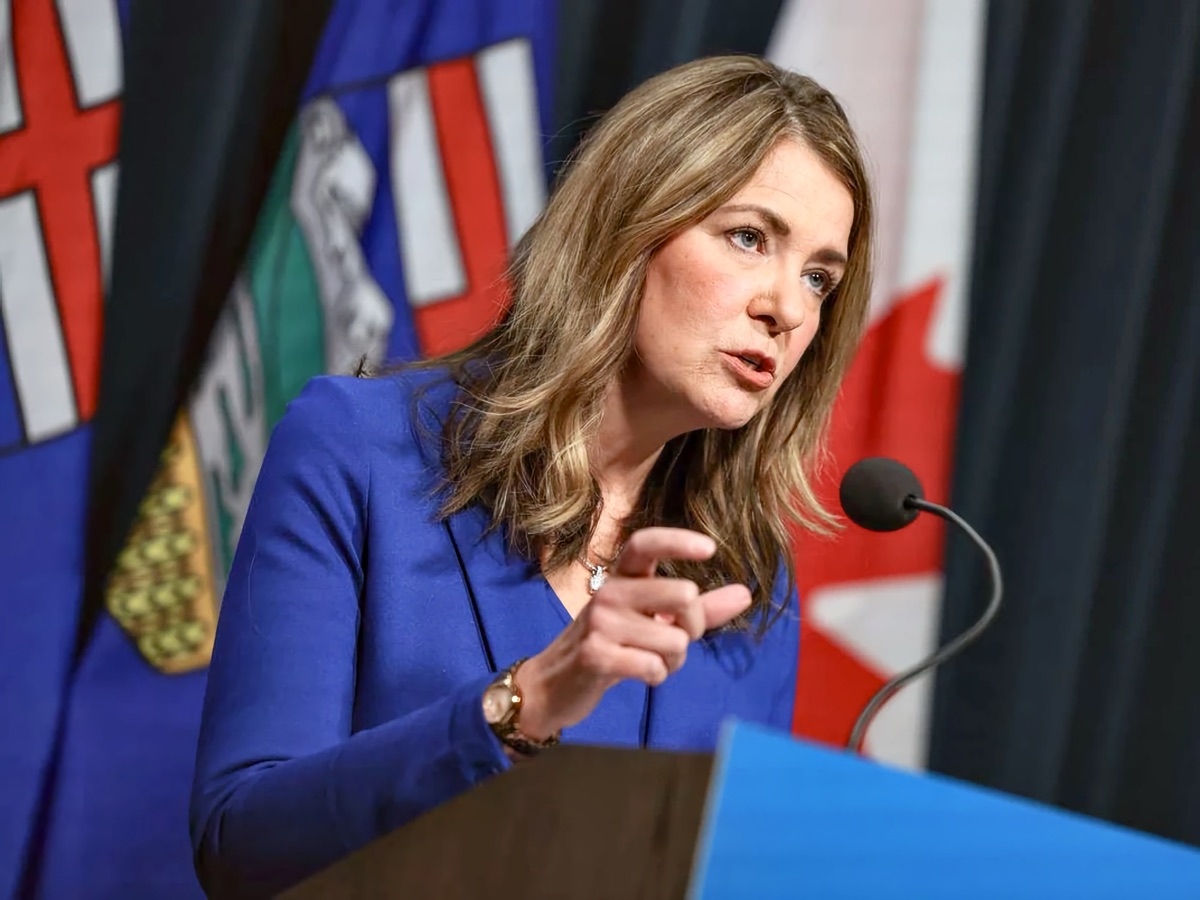
  • Alberta Premier Danielle Smith. Her remark that inclusion can be earned, and also lost, drew this response from two scholars in Community Rehabilitation and Disability Studies at the University of Calgary.

    Inclusion Is Not Something You Earn

    Updated

    Two University of Calgary scholars answer a premier's remark that people can earn their way into inclusion, and out of it again, with a plain rule: inclusion is the floor beneath a just society, never a reward. Treating it as conditional gives People with Disabilities a standing that is provisional, ties worth to productivity, and repeats practices where access is withdrawn until people prove their worthiness. The United Nations disability rights convention and Canada's national charter point the other way, and Students with Disabilities already meet bullying and exclusion at high rates. The authors ask why the systems that produce exclusion exist and which barriers we have been unwilling to remove. We should start with the next program, service, event, or communication in planning.

  • Steph Sandy with her husband Richard, 38, and their children Libby, 11, and Bertie, 9. Strangers keep asking how Steph, 42, a dancer and choreographer in Coventry, England, can be a mum, and her dance Mother Like No Other answers them.

    I'm disabled with two kids - cruel people still ask why my husband's with me

    Updated

    Steph Sandy, a mother with cerebral palsy and wheelchair user who makes dance for a living, meets strangers who ask how she can be a mum and why her husband is with her. A doctor answered her pregnancy question with doubt, a hospital referred her family for assessment without a word to them, and a carer barged ahead of her to grab her baby, which she turned into the dance Mother Like No Other. Her family also found stadium seating planned without a child beside a wheelchair user in mind. We should plan our next program, service, event, or communication so a disabled parent and her children sit together.

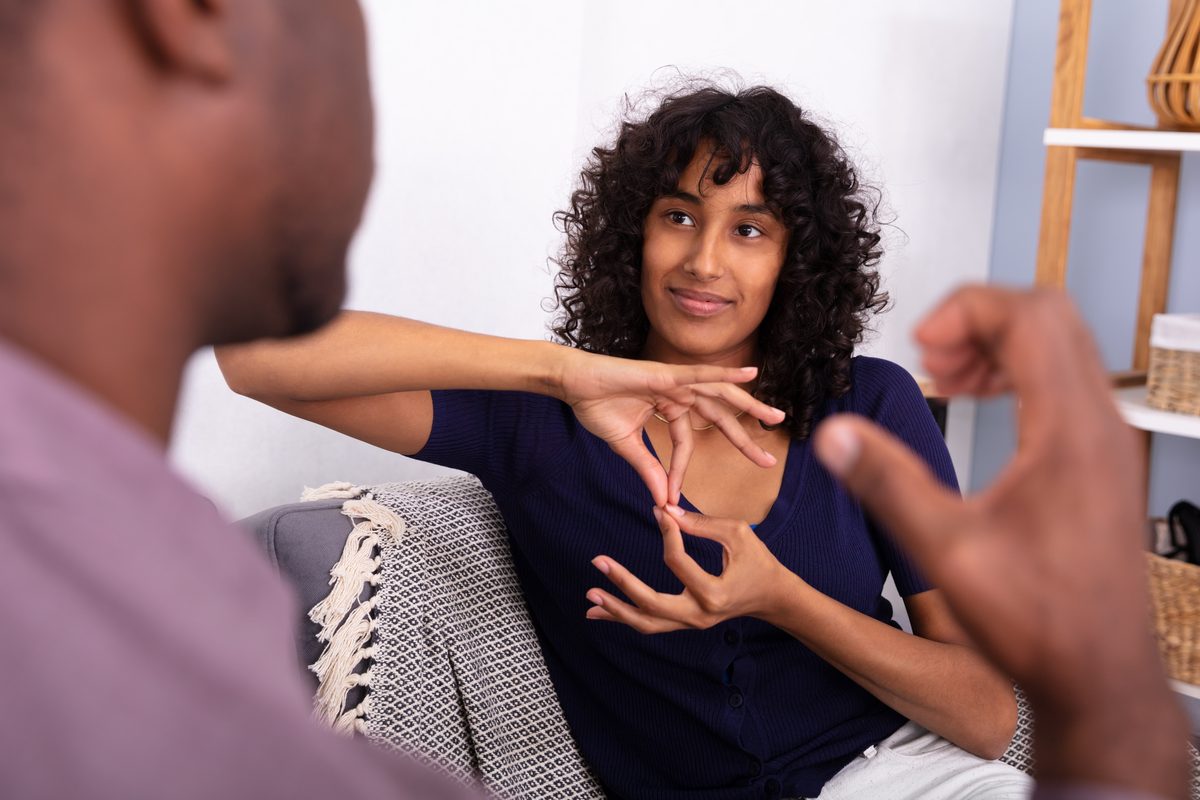
  • A 2021 article by Layli Miron reports that a national task force connects Deaf Baha’is with American Sign Language interpreters and designs events with captions. This photo appears in the article. Image: bahai.us.

    Deaf and Hard of Hearing Task Force for the Baha’i community.

    Updated

    A national task force is pressing Baha’i communities to plan gatherings with Deaf Baha’is and Baha’is who are Hard of Hearing from the first conversation. Back in the 1990s the group saw that Deaf Baha’is usually stayed involved for roughly three months, and at an online devotional Zoom’s automatic captions mangled sacred words from Arabic and Persian, while interpreters who sign in American Sign Language (ASL) carried the readings well. We should ask Deaf People and People who are Hard of Hearing what they want before we plan our next program, service, or event.

  • A 2007 Pew Research Center report by Jodie T. Allen and Michael Dimock found that Americans who view their country as divided into two economic classes grew from 26 percent in 1988 to 48 percent in 2007. This illustration appears at the top of the report. Image: Pew Research Center.

    A Nation of “Haves” and “Have-Nots”?

    Updated

    Jodie T. Allen and Michael Dimock of the Pew Research Center report that Americans now divide evenly, 48 percent to 48 percent, on whether the country has two economic classes, where only 26 percent saw a split in 1988. The share counting themselves with the “have nots” doubled to 34 percent, and Black adults are far likelier than white adults to see the divide, 67 percent to 45 percent. We should plan our next program, service, or event expecting that money is tight for many of the people who might join us.

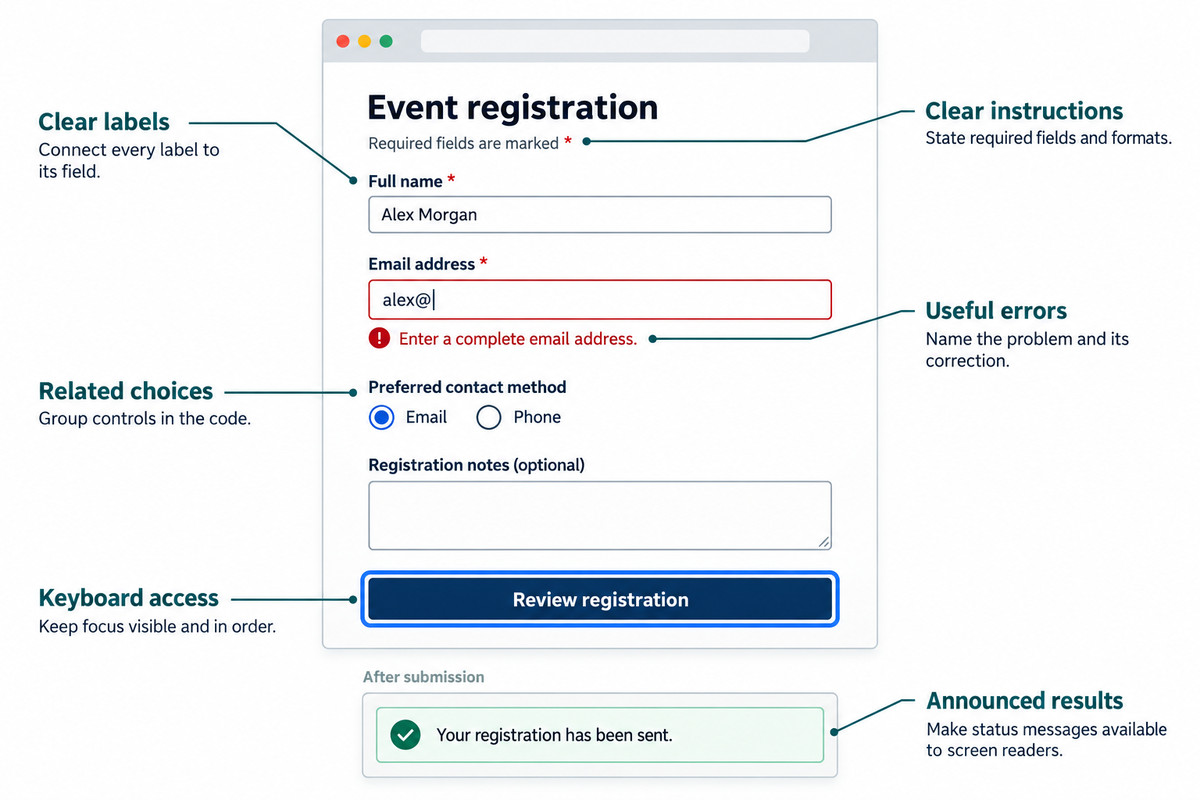
  • A sample form with one field in error and the message shown after a successful send. Each callout points to the part of the form it applies to.

    Accessible Forms

    Updated

    A form whose error messages give no way to fix the mistake, whose keyboard focus cannot be seen, or whose sign in demands a puzzle shuts People with Disabilities out of sign ups, registrations, and feedback. This page lists the Level AA success criteria of the Web Content Accessibility Guidelines (WCAG), version 2.2, that apply to forms, grouped under the four WCAG principles, each with a World Wide Web Consortium (W3C) technique, followed by six steps Community Builders can take this week.

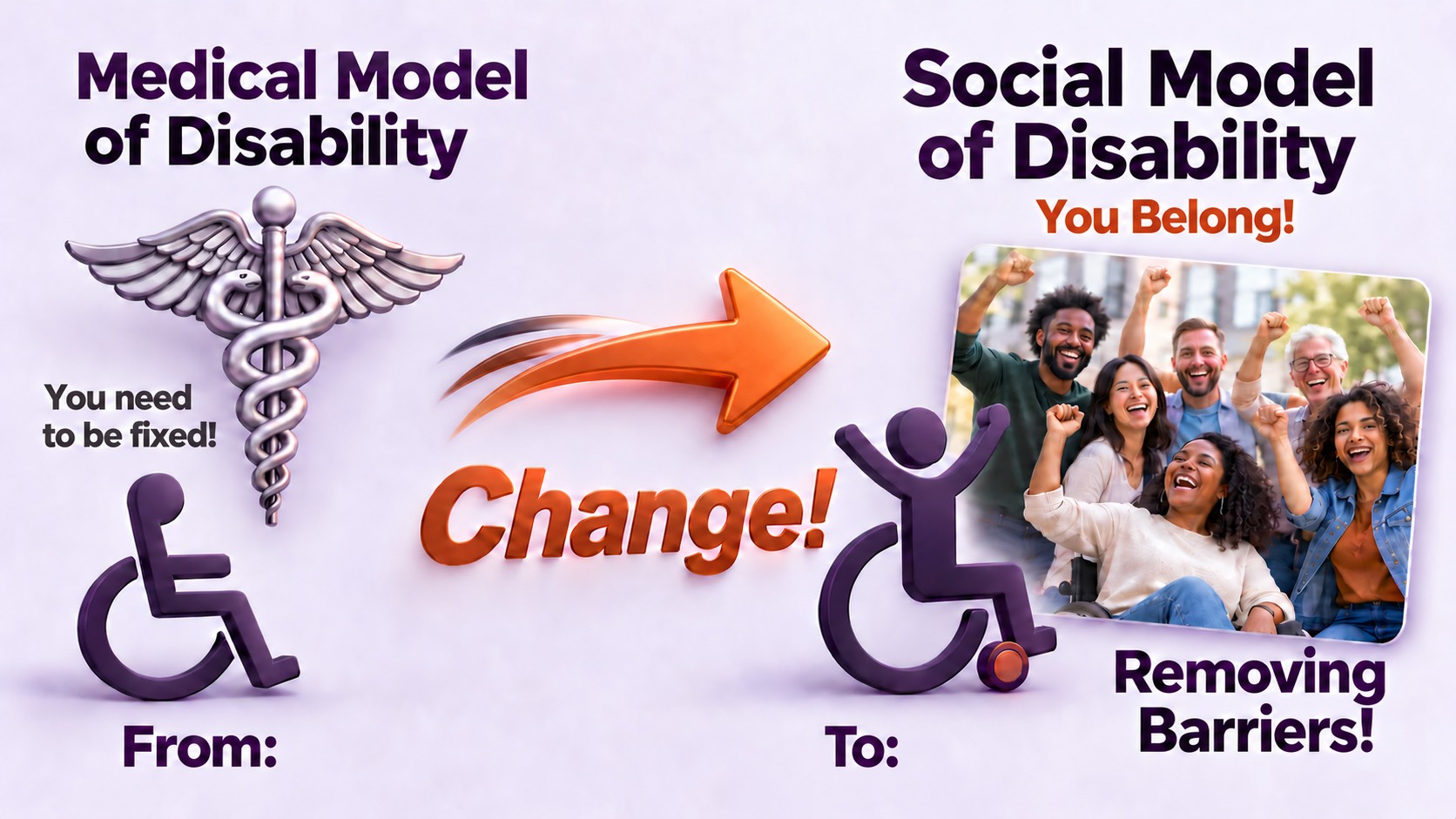
  • The Importance of Changing our Mindset from the Medical Model to the Social Model of Disability

    Updated

    Learning about the Medical and Social Models of Disability shifts our focus from “fixing” people to removing barriers that prevent their participation. The article explains how inaccessible buildings, forms, and services, alongside negative attitudes and stereotypes, create barriers that society shares responsibility for addressing. Adopting the Social Model supports the independence, dignity, and equatable participation of People with Disabilities and builds vibrant, inclusive, accessible communities.

  • Overlap Between Barriers Faced by Seniors and People with Disabilities

    Updated

    Small text, poor contrast, tiny buttons, distracting layouts, and audio buried beneath background sound can turn ordinary online tasks into barriers to participation. Older adults and People with Disabilities face many of these same obstacles, making digital accessibility a shared concern. The article explains how changes in vision, hearing, dexterity, memory, and concentration interact with inaccessible design—and how established international accessibility standards address those barriers. Following these standards when creating websites, applications, and online materials supports access to information, services, and community life for people too often excluded by design.

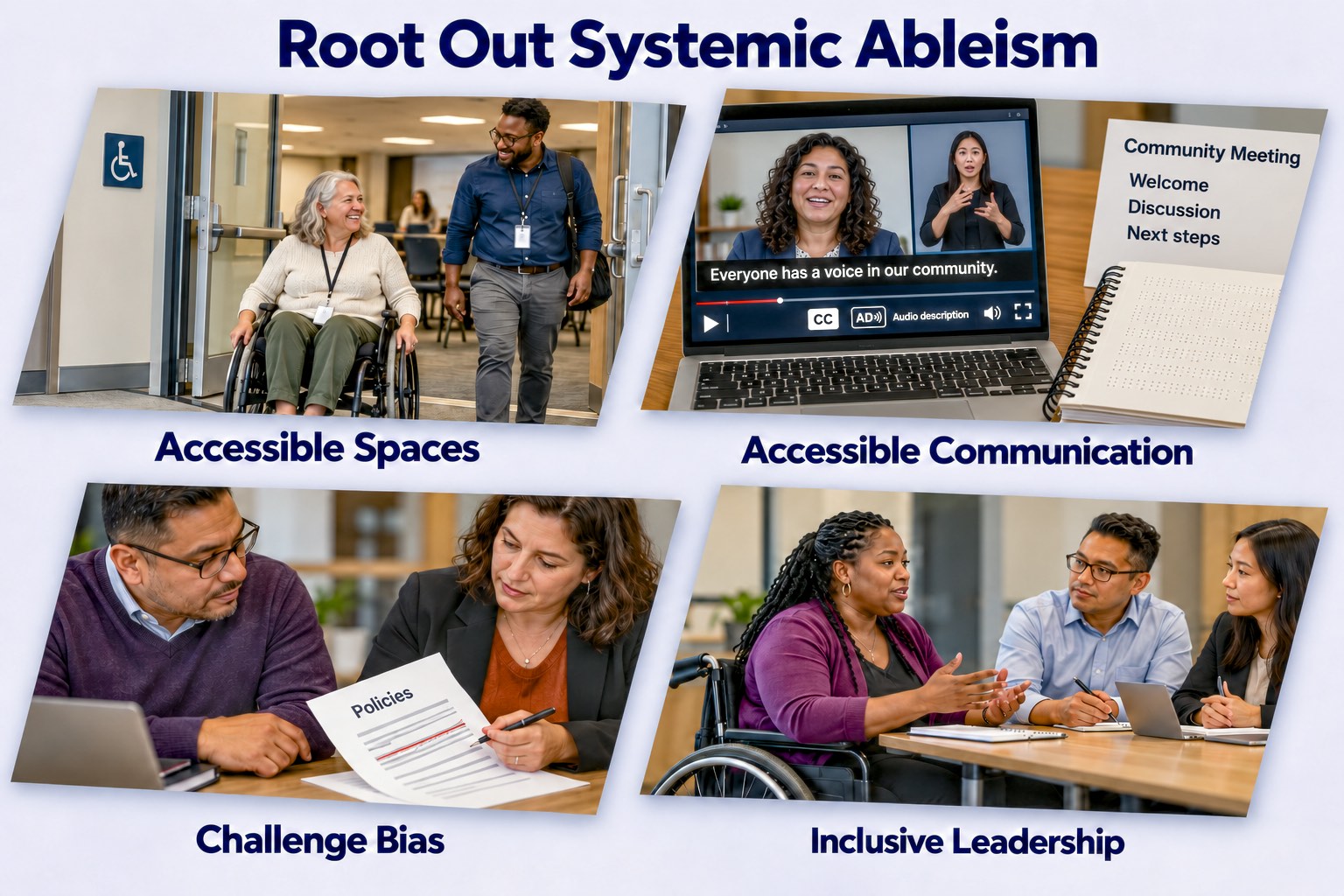
  • Building Vibrant Communities by Eliminating Systemic Ableism in Administrative Practices

    Updated

    Who gets to participate—and who gets left out—often comes down to everyday administrative decisions. A meeting held in an inaccessible space, information shared in unusable formats, or policies shaped without People with Disabilities can turn exclusion into routine practice. This article examines how systemic ableism becomes embedded in community administration through physical and communication barriers, cultural biases, and underrepresentation in leadership. It offers practical actions: plan accessible events, use International Accessibility Standards, provide accessible materials, challenge stereotypes, and involve People with Disabilities in shaping policies and decisions. Building a vibrant community means making full participation, influence, and belonging part of how it operates.

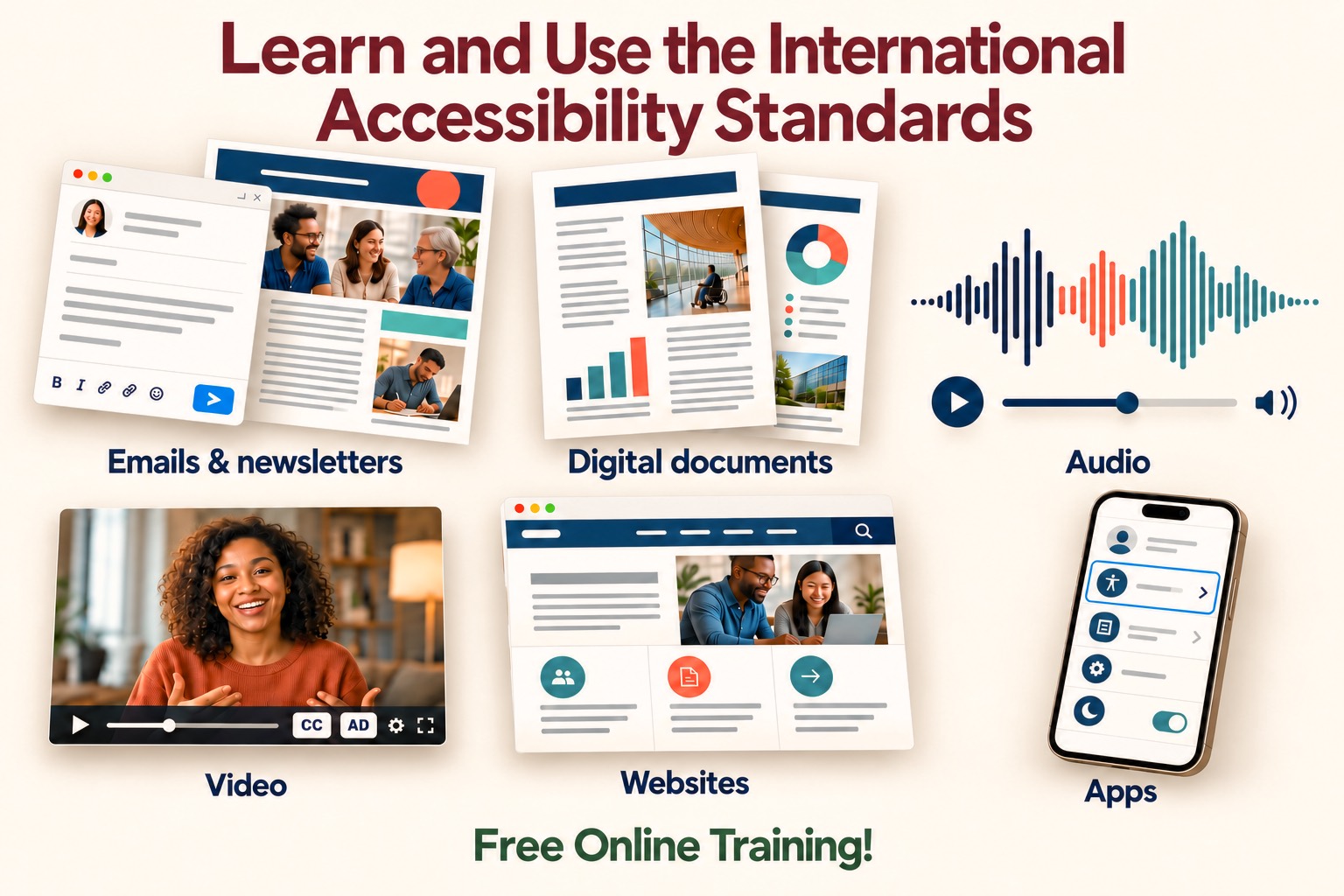
  • Where can I get Training in the Foundations of the International Accessibility Standards?

    Updated

    To ensure your communication is accessible and inclusive in emails, meetings, events, videos, newsletters, websites, apps, and other materials produced, published and used, it's vital to follow International Accessibility Standards developed using a comprehensive inclusive process. Thankfully, Accessibility Training offers free and easy-to-learn standards for you to utilize.

  • Be an Upholder and Defender of the Victims of Oppression

    Updated

    Bahá’u’lláh calls each of us to be an upholder and defender of the victim of oppression. This page offers examples of people whose lives show what that looks like, from Ed Roberts and Judy Heumann, who built independent living and won Section 504, to Louise B. Miller, whose 1952 lawsuit opened a school to Black Deaf children. Reflect on the questions, then find people by name, group, disability, or topic, and choose one whose example you will put into practice by standing beside someone who is excluded or treated unjustly.

  • About Us

    Updated

    Welcome to The Shining Lamp This space is about building community. Imagine a community that fosters a genuine sense of belonging Where a diverse membership is warmly embraced. Where people of different Races, Disabilities, Ages, Genders, and Cultures, otherwise marginalized, participate fully and inclusively in all of their community's activities and events. Where children find the encouragement to explore and grow, and older members share their wisdom and experience. Where each person is valued for who they are and have opportunities to contribute. Where the community exemplifies the…

  • How to Write Meaningful and Inclusive Descriptive ALT Text for Images

    Updated

    ALT text gives Blind People and People with Low Vision the meaning of an image that sighted readers take in at a glance. This guide applies WCAG Success Criterion 1.1.1, which calls for a text alternative that serves the equivalent purpose, to everyday publishing: why a name alone is not enough, which information belongs in the ALT text and which in the caption, how to describe people and their visible diversity with respect, and how to tailor a description to the place an image appears. Worked examples cover photographs, book covers, logos, and mastheads, and reflection questions invite Community Builders to examine their own practice.

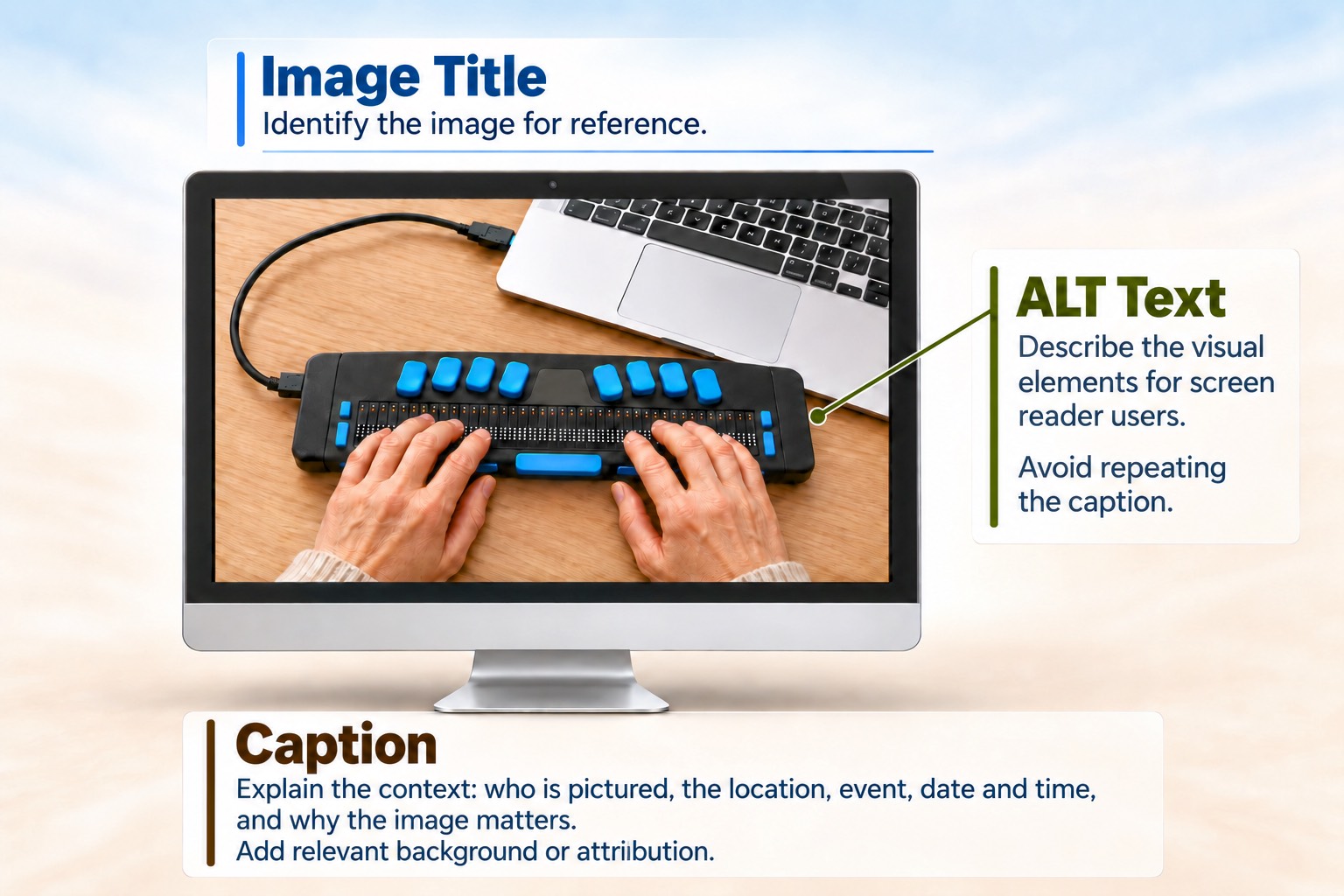
  • Accessible images give every reader the same information. A Blind Person can receive the text that comes with an image, including its ALT text and caption, on a Braille display such as this Focus 40, where small pins rise and fall to form Braille characters from the text on a computer screen. This works only when a page follows the International Accessibility Standards.

    Ensuring Inclusive and Accessible Content: Effective Use of ALT Text and Descriptive Elements in Images

    Updated

    Extending the guide to writing ALT text, this article explains how ALT text, captions, titles, and extended descriptions each carry different information, how to decide whether an image needs a description at all, and how to treat complex images, groups of images, and images of text, so Blind People and People with Low Vision receive what sighted readers see.

  • I Went To My Son’s Class To Explain How He Goes To The Bathroom. Here’s Why.

    Updated

    In this first-person piece, a parent shares why she visited her preschooler’s class to explain how he uses the bathroom, centering her son’s feelings about being understood and included by his peers. She describes preparing simple, age-appropriate explanations and showing some of the medical supplies he uses so classmates could ask questions and see that bodies can work in different ways without shame. The story emphasizes how openness at school can reduce stigma for People with Disabilities and create practical empathy among classmates, while also respecting a child’s privacy and dignity. By…

A boy with a disability laughs with his palms raised as a girl beside him smiles toward him. Sitting together in a classroom, they share a moment of connection and belonging.

Consistently ensuring equitable participation of People with Disabilities in community gatherings and events by planning ahead for Accessibility transforms exclusion and discrimination into a culture of inclusion, respect, belonging, and value.

Question: Is this example of inclusive practices the norm in your community? If not, what barriers need to be removed which prevent inclusive and welcoming participation?


"The challenge facing the friends serving at the grassroots is essentially the same in every place. They must be able to read their own reality and ask: what, in light of the possibilities and requirements at hand, would be fitting objectives to pursue in the coming cycle or series of cycles?"  -- December 30, 2021 UHJ to Conference of Counselors Introducing Nine Year Plan


Explore More Compelling Insights:

Learn about topics related to People with Disabilities, Accessibility, Anti-Ableism, Removing Barriers, and the Disability Community? Tap the Explore button to discover something new and intriguing with each tap!