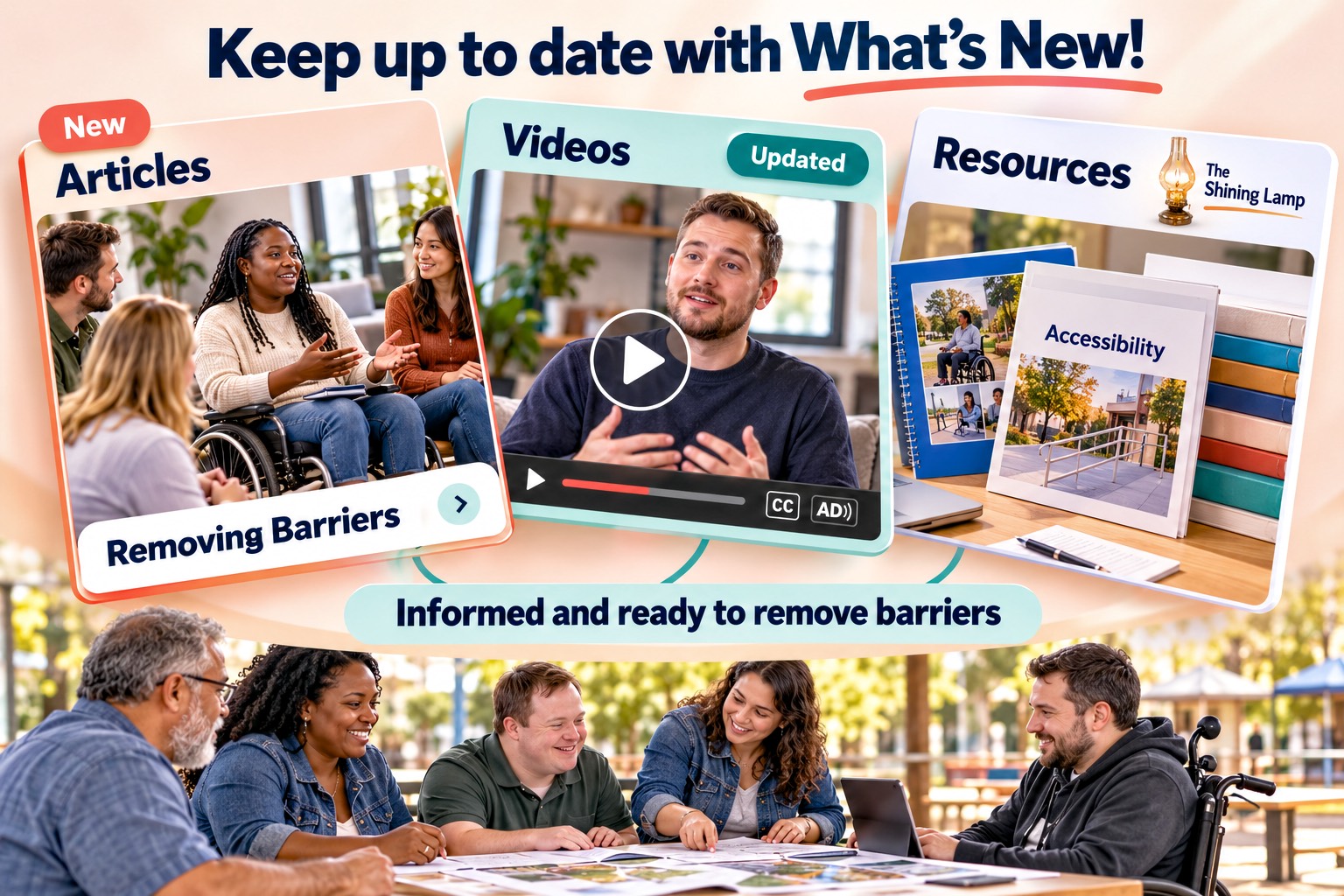
Infographic headed “Keep up to date with What’s New!” features article, video, and resource previews marked “New” and “Updated.” Below, a diverse group, including a wheelchair user, reviews materials together beneath the message “Informed and ready to remove barriers.”

What's New and Updated at The Shining Lamp?

Latest updates

  • Believe It or Not

    New

    The article "Believe It or Not" by Peggy Chong tells the remarkable story of Helen May Martin, a deafblind concert pianist who defied all odds to pursue her passion for music and achieve remarkable success. Born in 1893 in Olathe, Kansas, Helen May faced numerous barriers due to her disabilities. However, with the unwavering support of her parents, she learned to play the piano by feeling the vibrations and went on to become an accomplished musician. Despite the skepticism of many, Helen May embarked on a professional career, captivating audiences across the United States with her…

  • What Would Society Look Like If Extreme Wealth Were Impossible?

    Updated

    By Christine Emba Explore limitarianism, which challenges unlimited wealth accumulation in society by advocating for upper limits on personal wealth to promote societal equity and overall well-being. Drawing on philosopher Ingrid Robeyns's insights, it prompts a reassessment of beliefs regarding wealth and human value, envisioning a global shift away from extreme affluence. Though not explicitly referencing Baha'i Teachings, limitarianism aligns with the Baha'i principle of eliminating the extremes of poverty and wealth to ensure universal access to basic necessities and dignified living. By…

  • Want to be culturally sensitive? Start with saying my name right Ranjana Srivastava

    Updated

    By Arwa Mahdawi Columnist, Guardian US In a world brimming with diverse cultures and identities, the simple act of saying someone's name correctly can be a profound gesture of respect and inclusivity. Picture this: a child's excitement on the first day of school, proudly sharing how one teacher took the time to learn the pronunciation of their name, contrasting sharply with the indifference of others. It's a scenario that resonates deeply in a society where multiculturalism is celebrated but often misunderstood. Amar Singh poses for photos after receiving his Australian Local Hero of the Year…

  • Letters from the Universal House of Justice on Removing Barriers to building Vibrant Communities

    Updated

    Baha'i Quotes and References Related to Community Building Discover the essence of community building through a captivating collection of insightful quotes from the Bahá'í Faith, urging readers to delve into the profound wisdom that fosters unity, inclusivity, and collaboration. From fostering a sense of belonging to promoting the betterment of society, these quotes offer invaluable guidance on nurturing vibrant communities grounded in mutual respect, service, and spiritual principles. Embrace the transformative power of community as you explore this enriching compilation, inspiring a deeper…

  • Baha'i Service For The Blind

    Updated

    The Baha'i Service For The Blind offers a number or resources and services: Materials In Braille Audio Books and Talks Large Print Materials A Lending Library The American Bahá'í -- Audio Edition Take advantage of these resources! https://www.bahaiservicefortheblind.org/

  • When You Don’t Look Sick - People with invisible disabilities and chronic illnesses

    Updated

    By Lizz Schumer When You Don’t Look Sick People with invisible disabilities and chronic illnesses number in the millions, but they’re often alone with their struggles. Here’s why they deserve attention and respect—and how to give it. Invisible disabilities or non-apparent disabilities refer to a broad range of chronic illnesses and conditions that may not be immediately visible to others, such as deafness, autism, traumatic brain injury, fibromyalgia, Crohn's disease, diabetes, migraines, and dyslexia. These conditions can be challenging for people to live with, and they often struggle to get…

  • Because she made a fuss, Judy Heumann made everyone's life better

    Updated

    Judy Heumann - lifelong advocate for the rights of People with Disabilities Judy Heumann was a lifelong advocate for the rights of people with disabilities. Despite being denied access to education and being failed on her medical exam for a teaching license due to her wheelchair use, she went on to become the first wheelchair user to become a teacher in the state of New York. She has been instrumental in the development and implementation of legislation advancing the inclusion of people with disabilities in the US and around the world, and fighting discrimination against them. She co-founded…

  • A Pastor's Paradox: Embracing Marginalization to Spark Change

    New

    Posted by: Ralph Morren In a powerful display of empathy and self-reflection, a pastor undergoes a profound transformation, becoming a homeless Black man to directly experience the harsh realities of marginalization within his own congregation. As he enters the church where he is to be introduced as the new head pastor, he is met with indifference and disdain, with only a handful of individuals extending a simple greeting amidst a sea of apathy. Despite his hunger and need for assistance, his pleas are met with silence, underscoring the prevalent barriers to compassion and understanding.…

  • #Ableism

    New

    By Leah Smith Ableism, a pervasive form of discrimination, marginalizes individuals with physical, intellectual, or psychiatric disabilities, often perpetuating the belief that they need to be 'fixed.' Rooted in societal norms and attitudes, ableism manifests in various ways, from the language used to treat people with disabilities to their exclusion from decision-making tables. Leah Smith, a passionate advocate, sheds light on the intricacies of ableism, challenging readers to examine their perceptions and actions. Smith identifies the medical model of disability as a cornerstone of ableism…

  • Doctors call out ableism in cancer care - The biggest barrier is attitude

    New

    By Elizabeth Cooney In a thought-provoking piece titled "Doctors call out ableism in cancer care: 'The biggest barrier is attitude'", the article highlights the pervasive problem of ableism in cancer treatment, revealing how People with Disabilities face significant problems right from the diagnosis stage. It underscores the barriers marginalized individuals encounter due to biased assumptions and outdated practices in medical care. The narrative delves into the intricate problems faced by individuals with disabilities, particularly in navigating the complex landscape of cancer care. Through…

  • Gender Equality - United Nations

    New

    Discover the urgent call to action echoing across the globe as the pursuit of gender equality emerges as one of the paramount challenges of our era. With women and girls constituting half of humanity's potential, the quest for gender parity becomes synonymous with achieving peaceful, sustainable, and fully realized societies. UN Women underscores the imperative to eradicate gender-based violence and ensure equal access to education, health care, economic resources, and political participation for individuals of all genders. UN Secretary-General António Guterres underscores the critical…

  • A look at gender gains and gaps in the U.S.

    New

    By Katherine Schaeffer Pew Research Center Delve into the evolving landscape of women's roles in the American workforce and society, where significant gains have been made alongside persistent challenges. Over the past half-century, women have achieved higher labor force participation, greater representation in college-educated roles, and increased presence in lucrative professions. However, gender disparities endure, particularly in top leadership positions across government and business sectors. Explore the nuanced trends shaping women's experiences, from their outnumbering men in…

  • Women’s History Milestones: A Timeline

    New

    By: History.Com Editors Embark on a captivating exploration of women's history in the United States, tracing the footsteps of trailblazers who played pivotal roles in the fight for equality. The journey begins with Abigail Adams' poignant plea to her husband, Founding Father John Adams, urging him to "remember the ladies" in envisioning the nation's government. Dive into the Seneca Falls Convention of 1848, where the Declaration of Sentiments laid the foundation for women's suffrage. Witness the historic moment when Elizabeth Blackwell became the first woman to graduate from medical school in…

  • Task force encourages communities to make accessibility a priority

    Updated

    By Layli Miron Embark on a transformative journey led by the Deaf and Hard of Hearing Task Force within the Baha’i community. Their impactful work is focused on removing barriers and fostering inclusivity for People with Disabilities. Explore personal narratives, such as Naledi Raspberry's experience interpreting for her Deaf son, shedding light on the need for accessibility in Baha’i activities. The article dives into success stories, like the "Deaf in the Baha’i Community" Facebook page and WhatsApp group, connecting people and spreading invitations to accessible events. Uncover the…

  • Do We Simply Not Care About Old People?

    New

    By Judith Graham As we reflect on the demographic composition of our current communities and contemplate building Diverse, Vibrant, Inclusive, Accessible Communities, it's essential to acknowledge potential limitations in the diversity of their content or the absence of diverse perspectives. Recognizing the presence of People with Disabilities and the predominant representation of older individuals within our communities, we must confront any inadequacies in the inclusivity of our initiatives. Despite our efforts to engage representatives from various communities, there might be problems in…

  • Navigating the Clash Between Deafness, Gene Therapy, and Social Justice

    New

    Frequently, there's widespread enthusiasm for miracle cures benefiting People with Disabilities, generating significant support through platforms like GoFundMe and social media campaigns. However, this enthusiasm often neglects the crucial responsibility of removing barriers, a key element in building vibrant communities. Essential initiatives, such as providing Sign Language Interpreters, Braille Materials, and Accessible Web Pages, actively contribute to the construction of inclusive and vibrant communities. A recent article on gene therapy for deafness sheds light on this point as it…

  • Do Churches Care for the Less Privileged and Disabled

    New

    by Ellen Stumbo Delve into Ellen Stumbo's thought-provoking piece as she delves into the crucial question: "Do churches care about the less privileged and disabled?" In theory, they do. Christian and religious organizations often spearhead relief efforts globally, offering aid and resources to underprivileged communities worldwide. Yet, on a local scale, churches sometimes overlook people with disabilities, relegating them to the sidelines. Despite having funds set aside for those in need, efforts to reach out to People with Disabilities are lacking. This neglect stems from misconceptions…

  • Religious freedom is no reason to deny people with disabilities the right to equality in the workplace

    New

    By Arlene S. Kanter Religious freedom should never serve as a barrier against the rights of People with Disabilities in the workplace. As we mark the 30th anniversary of the Americans with Disabilities Act (ADA), it's crucial to reflect on the progress made and the problems that persist. Despite the ADA's pivotal role in advancing accessibility and inclusivity, recent Supreme Court rulings, like the Biel case, threaten to undermine its core principles. Arlene S. Kanter's incisive analysis sheds light on the urgent need for legislative intervention to uphold equality and justice for People…

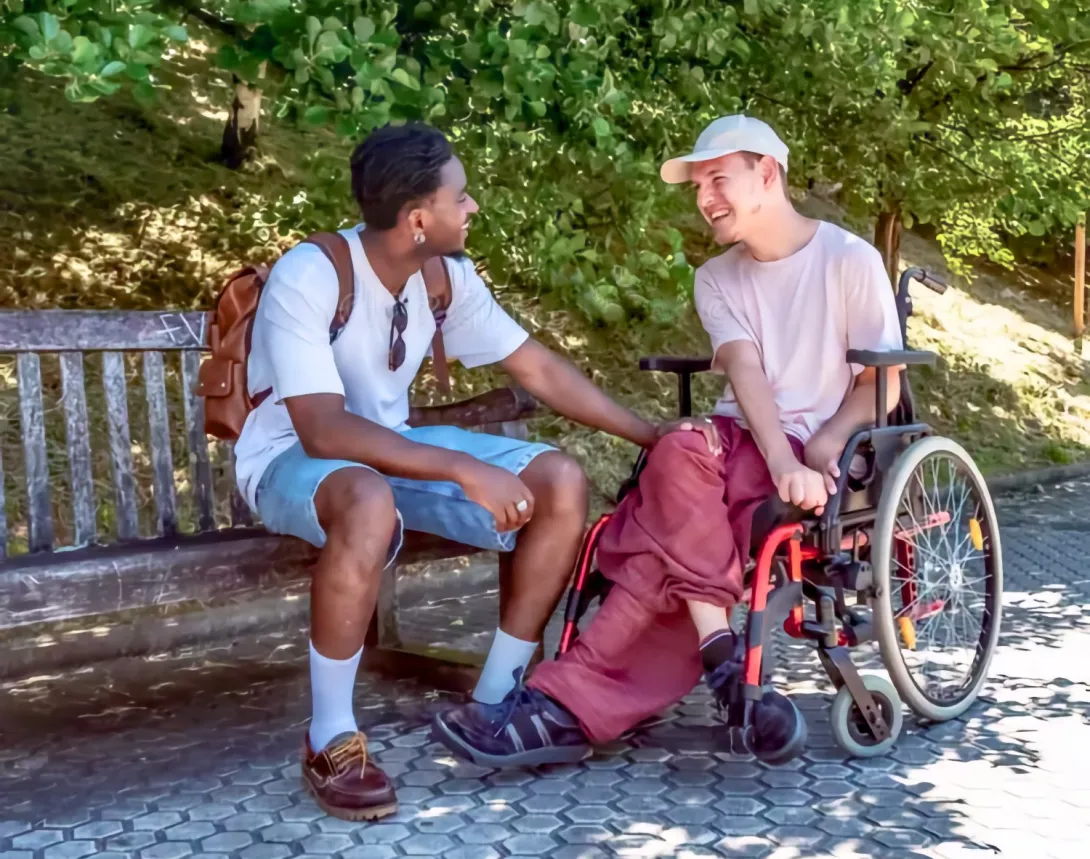
A Black man on a park bench and a white man who uses a wheelchair smile at each other as they talk on a shaded paved path.

Consistently ensuring equitable participation of People with Disabilities in community gatherings and events by planning ahead for Accessibility transforms exclusion and discrimination into a culture of inclusion, respect, belonging, and value.

Question: Is this example of inclusive practices the norm in your community? If not, what barriers need to be removed which prevent inclusive and welcoming participation?


"The challenge facing the friends serving at the grassroots is essentially the same in every place. They must be able to read their own reality and ask: what, in light of the possibilities and requirements at hand, would be fitting objectives to pursue in the coming cycle or series of cycles?"  -- December 30, 2021 UHJ to Conference of Counselors Introducing Nine Year Plan


Explore More Compelling Insights:

Learn about topics related to People with Disabilities, Accessibility, Anti-Ableism, Removing Barriers, and the Disability Community? Tap the Explore button to discover something new and intriguing with each tap!