
What's New and Updated at The Shining Lamp?
- About Us
- The Importance of Changing our Mindset from the Medical Model to the Social Model of Disability
- What Message do you Intend to be Sending?
- Overlap Between Barriers Faced by Seniors and People with Disabilities
- Dealing with Rude and Distracting Side Conversations in the Chat During On-Line Conferences
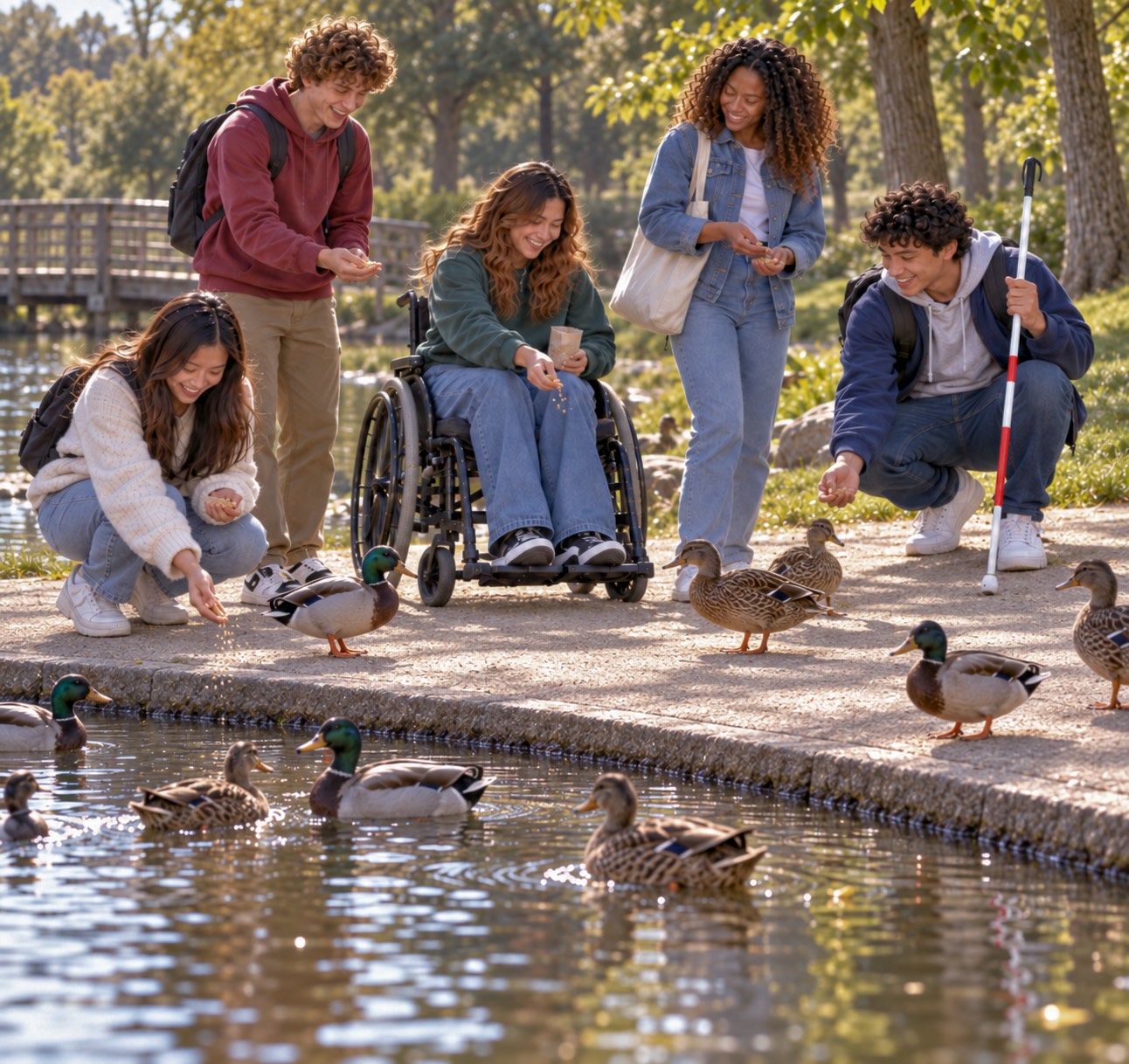
Educate the children in their infancy in such a way that they may become exceedingly kind and merciful to the animals. If an animal is sick they should endeavor to cure it; if it is hungry, they should feed it; if it is thirsty, they should satisfy its thirst; if it is tired, they should give it rest. -Abdu'l-Bahá, Bahá'í World Faith, pp. 373-374
Question: Is this example of inclusive practices the norm in your community? If not, what barriers need to be removed which prevent inclusive and welcoming participation?
"The challenge facing the friends serving at the grassroots is essentially the same in every place. They must be able to read their own reality and ask: what, in light of the possibilities and requirements at hand, would be fitting objectives to pursue in the coming cycle or series of cycles?" -- December 30, 2021 UHJ to Conference of Counselors Introducing Nine Year Plan