
Striving to remove barriers that prevent us from building Vibrant, Diverse, Inclusive, Accessible Communities!
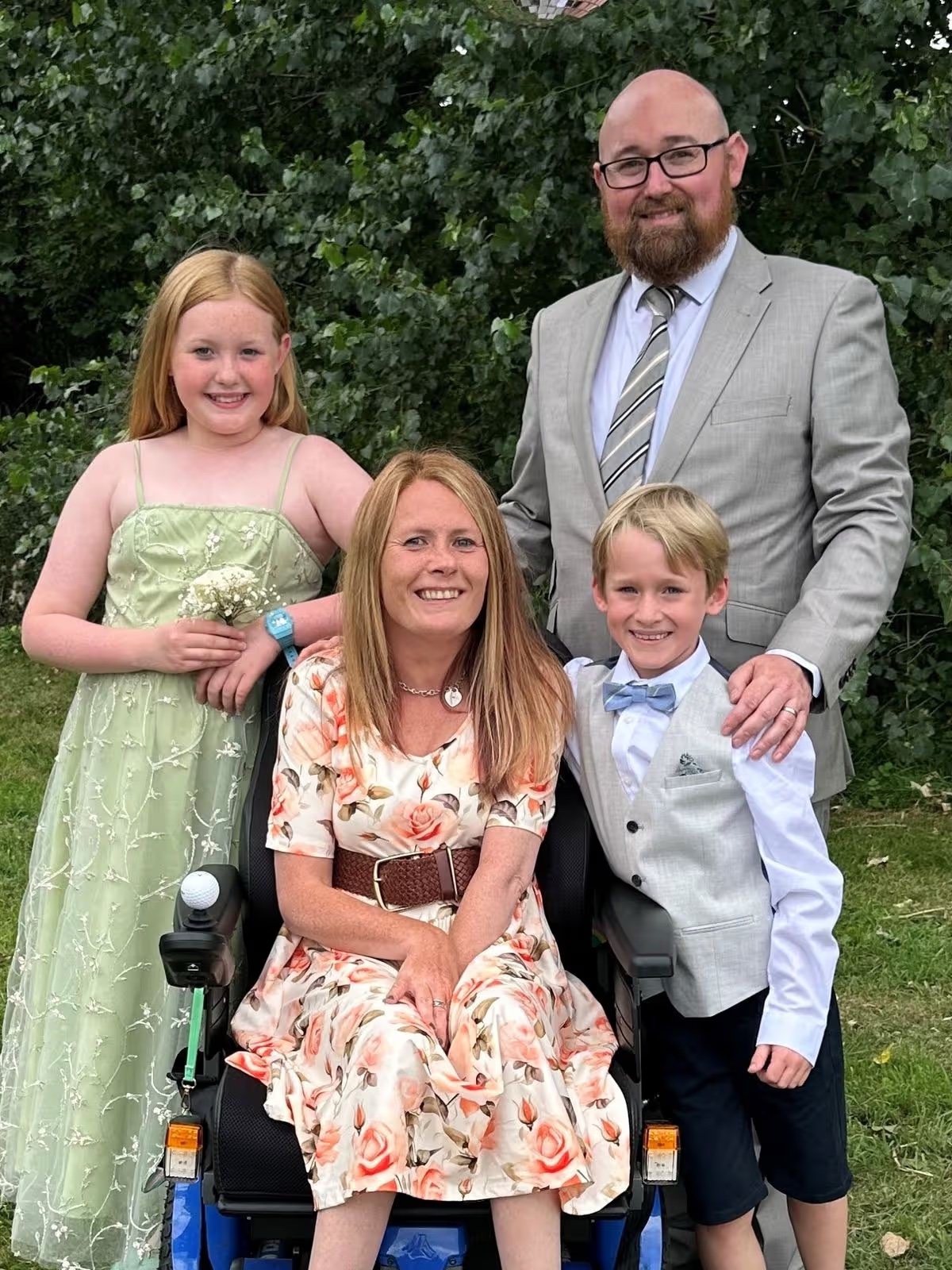
Steph Sandy has cerebral palsy, uses a wheelchair, and lives in Coventry, England, with her husband Richard. Their children are Libby, who is 11, and Bertie, who is 9. Steph studied dance at university, was among the first physically disabled people in the United Kingdom to earn that degree, and went on to build a career dancing and choreographing. Her family loves a day out cheering on Coventry City football club together, yet strangers stare and wonder how a disabled woman can be a mum. Steph says the same people ask why Richard is with her, because they assume he must be disabled too. She answers that she has looked after her children, and shared her life with Richard, for 15 years.
Her road to motherhood met doubt from the medical profession first. Before she became pregnant, Steph asked a doctor how her body would cope, and the only reply was a question about how she would look after the baby. Steph felt the doctors doubted that a wheelchair user who gets assistance at mealtimes could manage pregnancy or parenting, so her question went unanswered. Both pregnancies brought severe sickness and two caesarean births, and she managed them. At 35 weeks, while she was in hospital with the first, a staff member referred the family to a unit that decides whether parents can care for a baby. Nobody raised a concern with Steph or Richard first, and Richard learned of it by phone. The referral was dropped quickly, but it showed how fast a disabled mother can be judged unfit.
Steph has always found her own ways to do the work of parenting. A special carrier lifts Libby safely, handles fixed to a bottle let her feed her, and when Libby first ate solid food, both ended up covered in it, but it worked. Even so, others keep stepping in. When baby Bertie cried, one carer kept trying to pick him up, though comforting him was Steph's job, and pushed past her to grab him first. Steph turned that moment into a dance film titled Mother Like No Other, made as an expert in the Advisory Arts Group, part of the disability organization Sense. One scene shows two wheelchair dancers caring for a baby until two nondisabled dancers swoop in and take over. Steph says many people take it for granted that she cannot be a mum, and her dance puts that takeover on show.
A disabled mother's place is beside her children, and nobody else gets to decide otherwise. Everyday places still leave her family out. On a careers day at school, children sent to ask parents about work walked past Steph, and Libby, then about nine, burst into tears. Other parents did not become her friends until Bertie started school, and she could not go out alone with her children before Bertie and Libby reached seven or eight. Bertie's first Coventry City match brought the same gap, because the stadium seating left no expected place for a child beside a wheelchair user, so the family could not simply sit together. Steph says disabled parents are left out when families are considered, and she asks us to change that. The disability rights principle is listening first to the parents who live it and following their lead, and the carer who pushed past Steph and the plans that never pictured her children beside her did the opposite.
Because children are not usually expected to sit beside a wheelchair user, we should plan our seating so a disabled parent and her children sit together. We should hold back and let her reach her own baby first, because picking him up is her job. Seats kept beside her and a baby left in her arms would bring us nearer to Vibrant, Diverse, Inclusive, Accessible Communities for People with Disabilities.
Her place beside her children stays hers, and our plans should say so.
Read the Full Article: I'm disabled with two kids - cruel people still ask why my husband's with me.
By: Fran Bowden and Hannah Britt
Also See:
- What is ableism, and what is its impact?
- Horror movies have an ableism problem. Isn’t it time we found new ‘monsters’?
- Ableism 101: What it is, what it looks like, and what we can do to to fix it
- Intersections Between Racism and Ableism
- How to talk about disability sensitively and avoid ableist tropes
- I was nine when I learned what ableism is
- Anti-Ableism Fast Facts - Ways to Combat Ableism:
- Becoming Anti-Ableist: A Disability Justice- Informed Approach to Supporting the Disability Community
- 8 Ways Ableism Shows Up In Religious Spaces
Questions for Reflection
- When disabled parents come to our gatherings, how do we plan the seating so they and their children sit together without having to ask?
- Have we ever stepped in to do something for a disabled parent, such as picking up their child, without being asked, and what did that parent tell us about it?
- Which of our activities for families picture only nondisabled parents, and what would they look like if disabled parents planned them with us from the start?
- When doubts about a disabled person's ability to parent come up in our community, who raises them, and who answers them?
- What do the children in our community see in our programs about who can be a parent, and who chose what they see?
- Which venues we use leave no place for a child beside a wheelchair user, and what will we do about each one?
