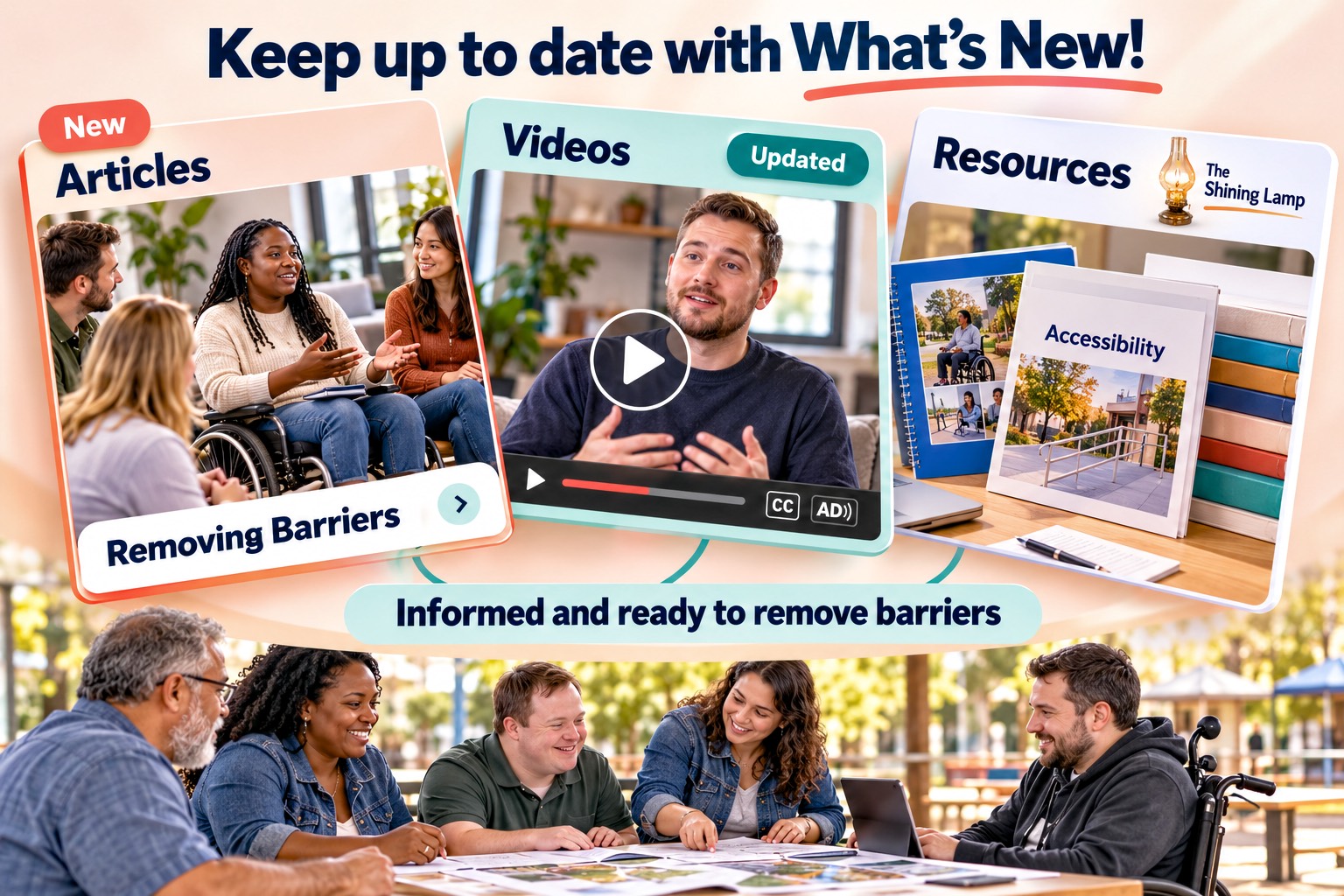


Infographic headed “Keep up to date with What’s New!” features article, video, and resource previews marked “New” and “Updated.” Below, a diverse group, including a wheelchair user, reviews materials together beneath the message “Informed and ready to remove barriers.”

What's New and Updated at The Shining Lamp?

Latest updates

  • Cover art for Jonathan Mosen’s Christmas song, now on streaming music services. The Perkins Brailler is a manual machine that writes Braille.

    A Place Beside the Fire — A Christmas Song About Blindness and Belonging

    New

    Jonathan Mosen, a Blind and hard of hearing songwriter, wrote the Christmas song “A Place Beside the Fire” himself, shaped its arrangement and melody with Suno, an artificial intelligence (AI) music generator, and, because his hearing is degenerating, used AI to produce a sample of his voice. He invites Blind listeners to be glad the song exists and other listeners to learn what some Blind People hope for in a better world. We should add the song to our holiday playlists and share it far and wide.

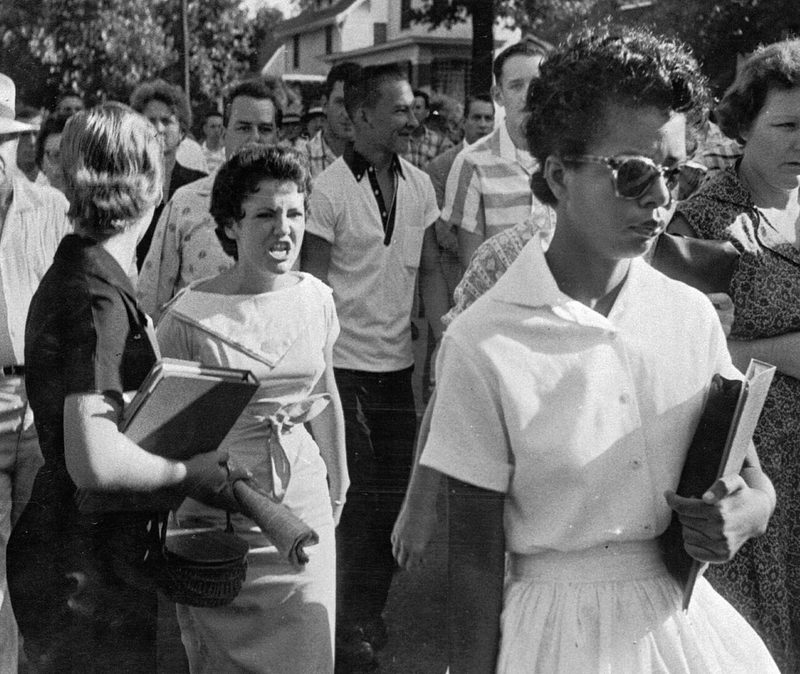
  • Elizabeth Eckford, one of nine Black students enrolled at Little Rock Central High School in Arkansas, on 4 September 1957. Leave out race and this photograph loses its civil rights story. Image: Will Counts, Associated Press, public domain.

    The case for describing race in alternative text attributes

    Updated

    Tolu Adegbite, a Black designer and accessibility advocate, argues that alt text, the written label that tells screen reader users what an image shows, should describe the race of each person pictured. A label that says only a woman walking ahead of a crowd, or a girl walking down school steps, removes the history that makes a photograph matter to Blind readers, and silence about race lets white become the default. Adegbite asks designers to take responsibility for the description of every image so that Blind readers receive the same story that sighted readers receive.

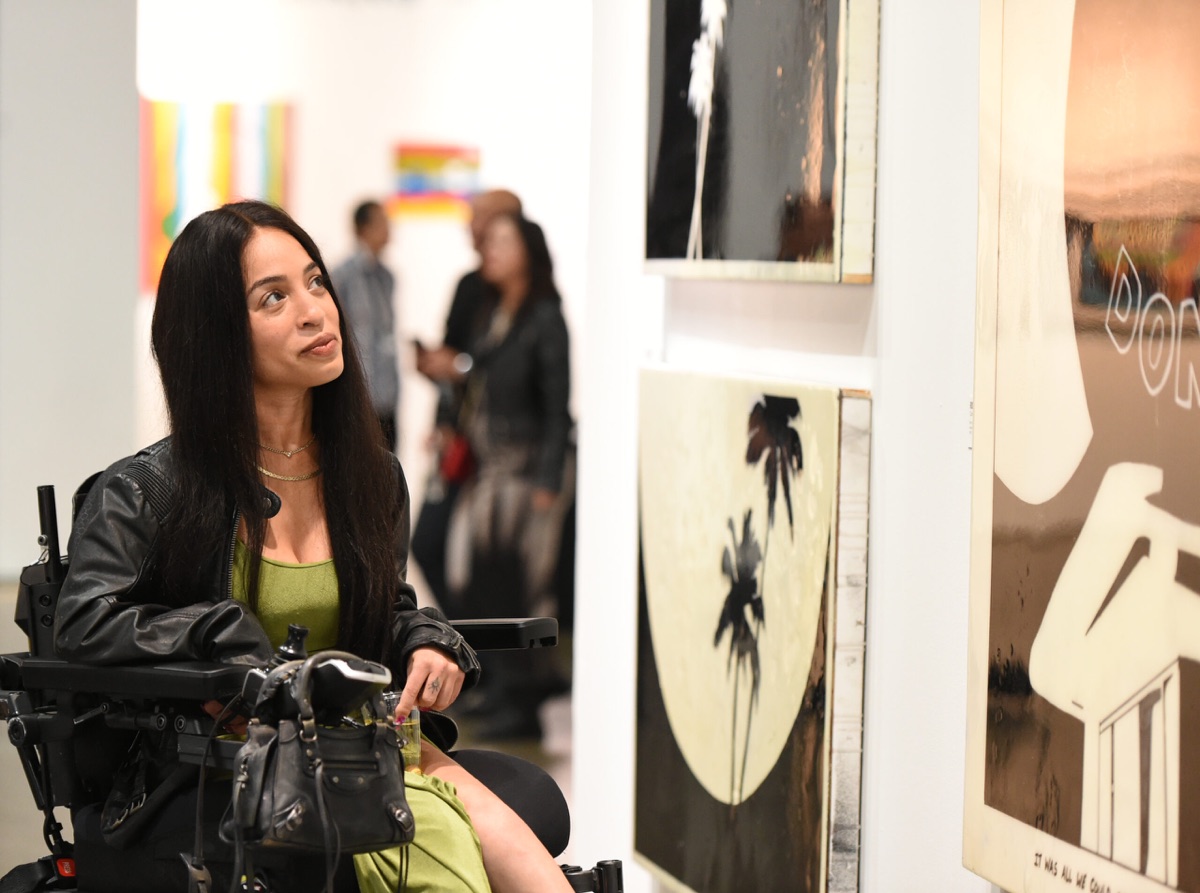
  • Jillian Mercado, a Dominican model and actress who has muscular dystrophy, presses fashion and entertainment for accurate images of People with Disabilities.

    4 Black Disability Creators and Influencers to Know

    Updated

    Four Black creators with disabilities use their platforms to remove barriers. Jillian Mercado calls for accurate images showing People with Disabilities in fashion and on the screen, Keah Brown writes about life as a Black and Disabled person in a mostly nondisabled white America, Lauren “Lolo” Spencer gives an honest view of everyday life with amyotrophic lateral sclerosis (ALS), and Stephanie Thomas teaches the fashion industry about dignity and independence in dressing. Their work shows what happens when People with Disabilities tell their own stories, and it asks us to make room for them at our events.

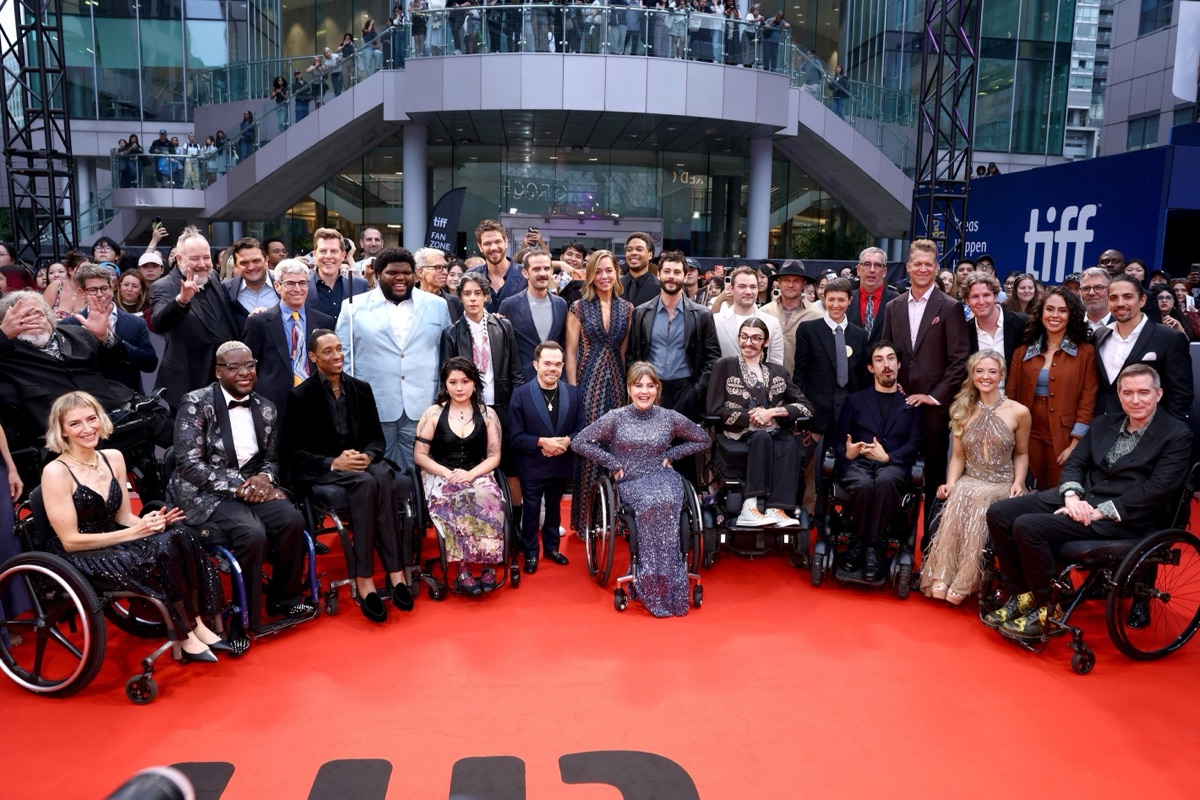
  • The premiere of Being Heumann at the Toronto International Film Festival, the film about the 1977 occupation that won Section 504 of the Rehabilitation Act. Image: Getty Images.

    Being Heumann Is The Film The Disability Rights Movement Needs Right Now

    New

    Keely Cat-Wells calls Being Heumann among the most important films on disability, because it shows how a 26 day occupation won Section 504 while the integration rules that protect life at home in the community are now taken out of the federal regulations. The Black Panther Party fed the protesters, and the film asks us to gather, organize, and keep asking for the promise to be kept.

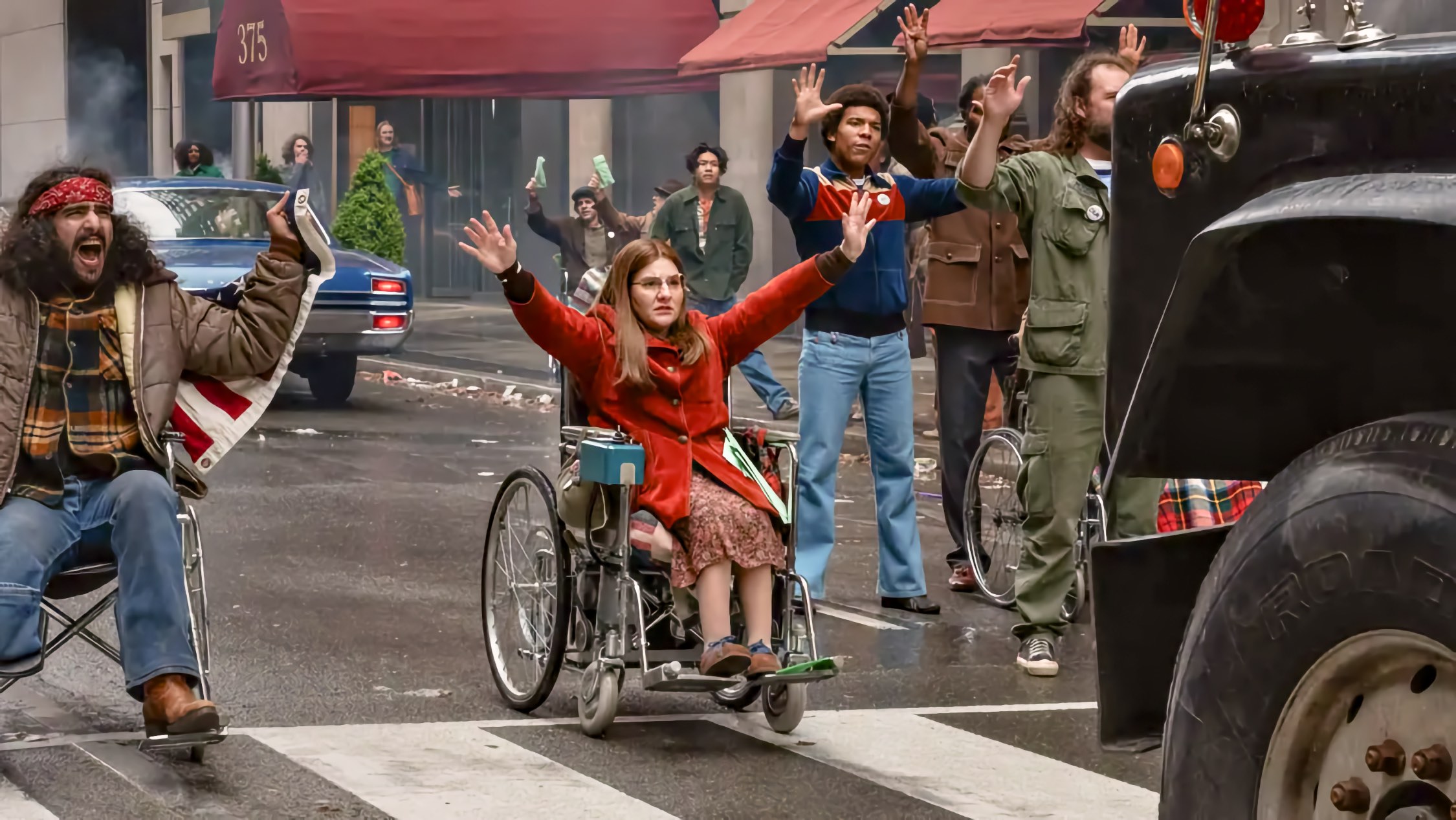
  • Ruth Madeley stars as Judy Heumann in Being Heumann, the story of the coalition of People with Disabilities who held federal offices in San Francisco for 26 days in 1977 to secure Section 504.

    Being Heumann Review: Siân Heder's Drama About the Fight for Disability Rights Strikes Familiar Notes

    Updated

    Being Heumann, directed by Siân Heder, brings the 1977 Section 504 protest to the screen, with Ruth Madeley as Judy Heumann and Actors with Disabilities playing her coalition. Four years after Section 504 was signed, the government still had not acted on it. So People who are Blind, People who are Deaf, People who use Wheelchairs, and their allies held a federal office in San Francisco for 26 days. They testified about the schooling and jobs they were denied and about people kept home and unseen. The film arrives as current federal efforts aim to weaken those protections, and it keeps the coalition itself, not its allies, at the center of the win.

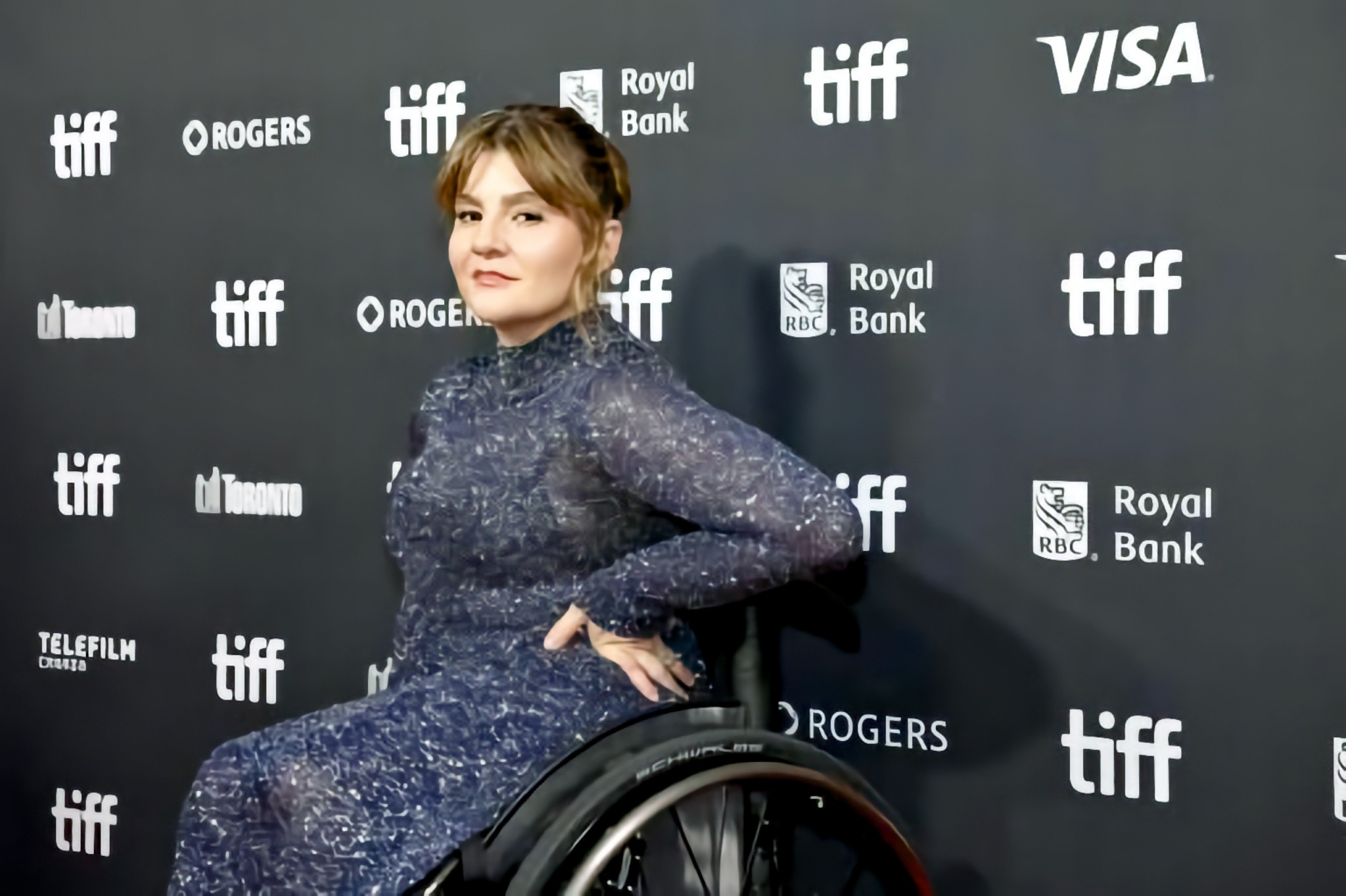
  • Ruth Madeley, the British actor who has spina bifida and plays disability rights leader Judy Heumann, at the "Being Heumann" premiere at the Toronto International Film Festival on September 10, 2026. Photo: Arturo Holmes.

    Being Heumann captures joy in fight for disability rights

    Updated

    Sian Heder's "Being Heumann," the opening film at the Toronto International Film Festival (TIFF), revisits 1977, when Judy Heumann and People with Disabilities held a California government building for weeks to demand accessibility regulations. Heder says the rights they won are being reversed, and her Apple TV film shows their protest as joyful community as well as struggle. It also shows daily barriers honestly, from rising out of bed to waiting for an attendant. Ruth Madeley, who uses a wheelchair and plays Heumann, once insisted she was fine on sets with no ramp, afraid of looking like a burden, and now tells other actors they can ask. We should have access ready before anyone has to ask.

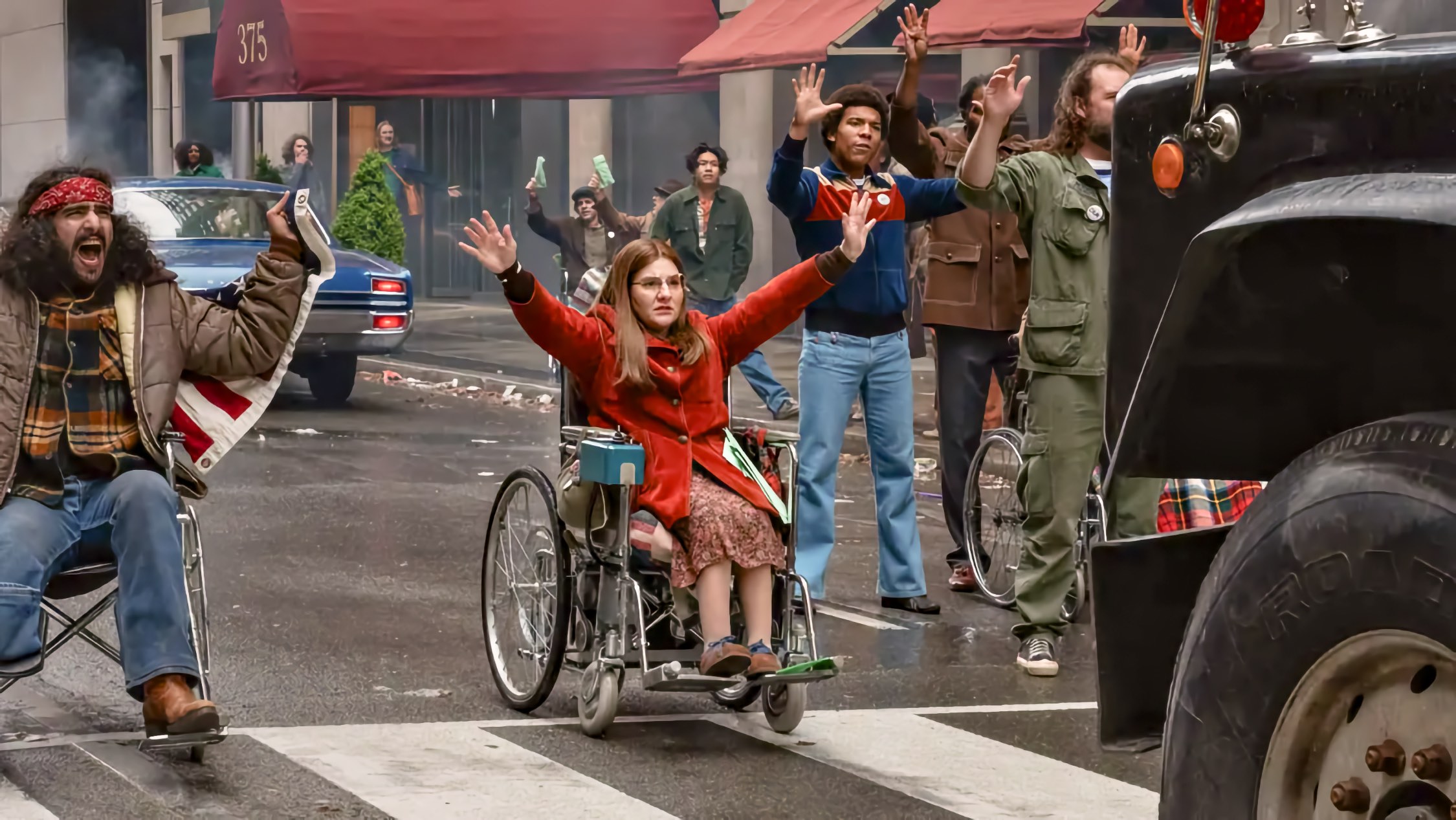
  • Ruth Madeley stars as disability rights activist Judith Heumann in Being Heumann, where Performers with Disabilities play every protester in the fight for Section 504.

    How the Being Heumann Crew Built a Set for Its Disabled Cast on the Fly
    Updated

    Siân Heder's "Being Heumann" casts dozens of Performers with Disabilities in the story of a four week occupation of federal health offices in San Francisco. That protest pressed for Section 504 of the Rehabilitation Act of 1973 and became a major step toward the Americans with Disabilities Act (ADA). On set, Actors who are Deaf, Actors who are Blind, and Actors who use Wheelchairs brought access requirements that sometimes conflicted with each other and with a tight film schedule. Many cast members found a vintage wheelchair that seemed workable became a barrier ten hours in. The people who meet a barrier know it best.

  • Ruth Madeley Is Disability Rights Activist Judith Heumann in Powerful Being Heumann Teaser Trailer

    Updated

    Apple TV has released the teaser trailer for Being Heumann, with Ruth Madeley playing the activist Judith Heumann in a film directed by Siân Heder and adapted with screenwriter Rebekah Taussig from Heumann's own 2020 memoir. Heumann contracted polio at eighteen months old in Brooklyn, New York, and no Wheelchair User had ever taught in a New York classroom before she did. In 1977, because the government had failed to pass Section 504 of the Rehabilitation Act of 1973, hundreds of people occupied a federal building in San Francisco for twenty six days, and nothing before or since has held one in this country that long. Section 504 bars any program funded by the federal government from discriminating against a Person with a Disability. Heumann went on working from inside government until 2017 and died at seventy five in 2023, and the film reaches select theaters on November 6 and Apple TV on November 13.

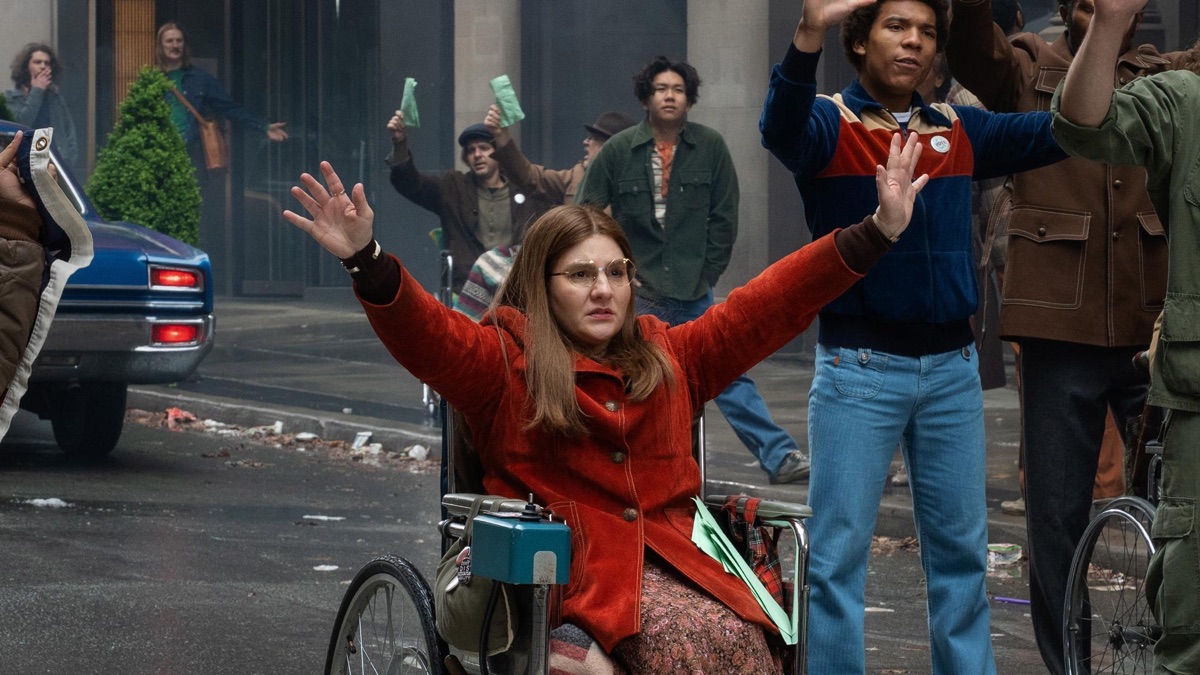
  • A scene from Being Heumann, the film about the protesters who pressed the federal government to put Section 504 of the Rehabilitation Act into force. Image: Apple.

    I've Been Disabled Since I Was a Child. Co-Writing Being Heumann Still Taught Me So Much

    New

    Rebekah Taussig wrote the film Being Heumann and learned how Judy Heumann led a nearly monthlong occupation that won the Rehabilitation Act's Section 504. Stories on screen once told her little about disability, and an airline losing her wheelchair showed that travel still shuts People with Disabilities out. Now a federal memo calls institutions an acceptable option under the ADA, short for Americans with Disabilities Act, even as a major festival chose the film to open its program. Taussig wants whole communities invested in carrying rights out.

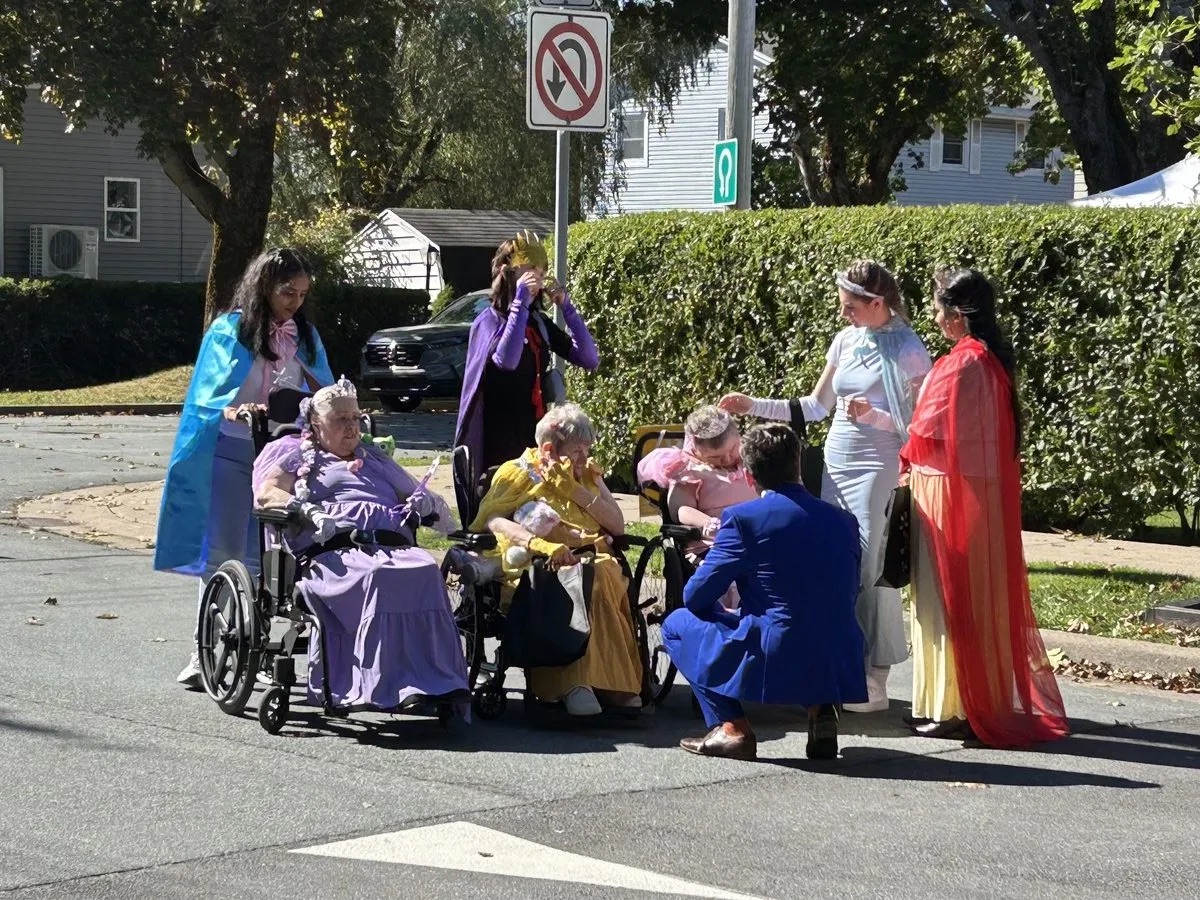
  • Costumed characters greet a guest at the Halifax Halloween Village, part of Treat Accessibly, which began with one lawn sign in 2017. Image: Treat Accessibly.

    What does an accessible Halloween look like in Nova Scotia?

    New

    Halloween leaves out Children with Disabilities when the holiday is planned without them. After his six year old daughter wondered how a boy using a wheelchair could go trick or treating at the house, Rich Padulo put a sign on his lawn, and seven other families came. That sign became Treat Accessibly, and 300,000 homes across Canada are now part of it. Steps, blocked driveways, noise, strobing lights, and jump scare displays keep children out, but a treat station at the edge of the lawn, stickers beside the candy, scarier decorations set back, and a greeting that expects no spoken reply remove those barriers. In Dartmouth, street leader Calum Sencabaugh shows neighbours how, and we can plan our own gatherings so no child is left out.

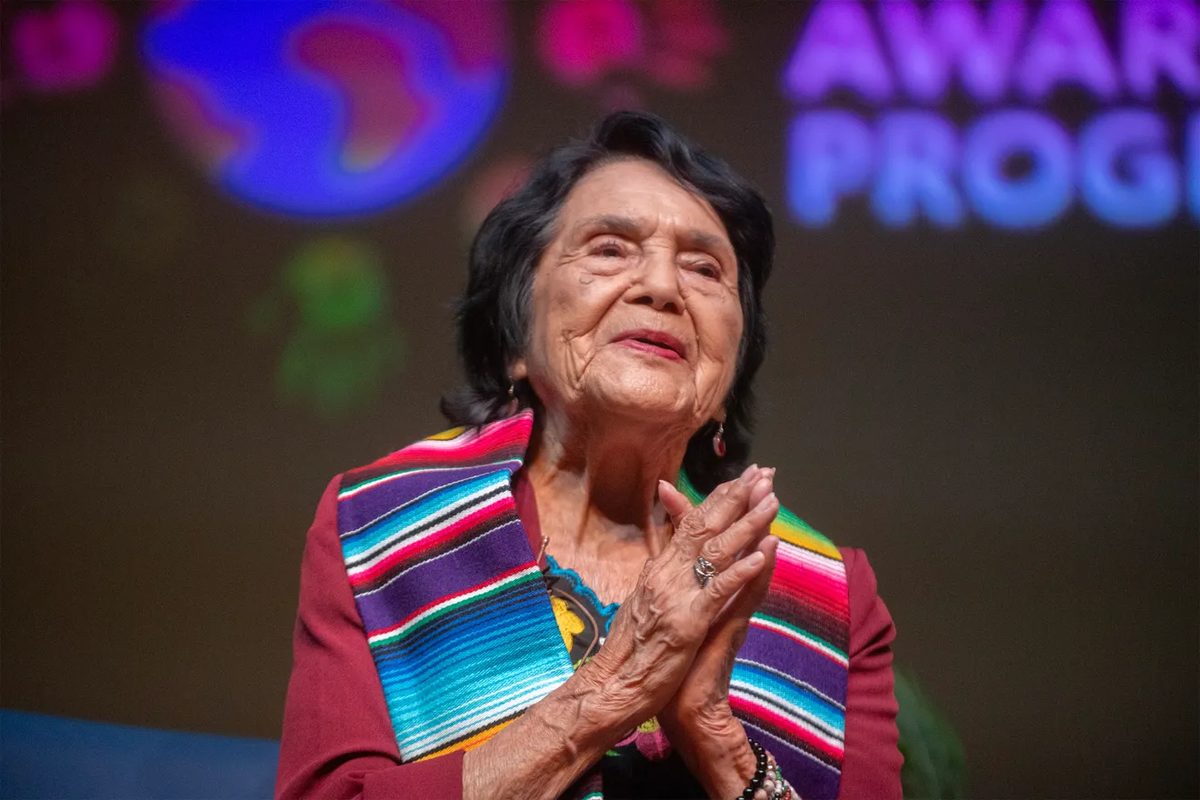
  • Dolores Huerta, who shared leadership of the farm worker struggles with César Chávez and died at 96 on Oct. 28.

    Dolores Huerta changed America. She proved 'Si se puede' right

    New

    Dolores Huerta died at 96 on Oct. 28. She shared leadership of the farm worker struggles with César Chávez, kept workers' spirits high on the picket line, drew more women into the strike, and led the table grape boycott outside California. As chief negotiator for the farm workers' union, United Farm Workers (UFW), Huerta would not be intimidated, and her tenacity won signed contracts, a first in U.S. history for agricultural workers. Later she spearheaded a foundation in her own name, the Dolores Huerta Foundation, to build a new generation of Latino community leaders. Her mantra, "Si se puede," means it can be done, and it asks us to plan so that people who face a barrier lead the work of removing it.

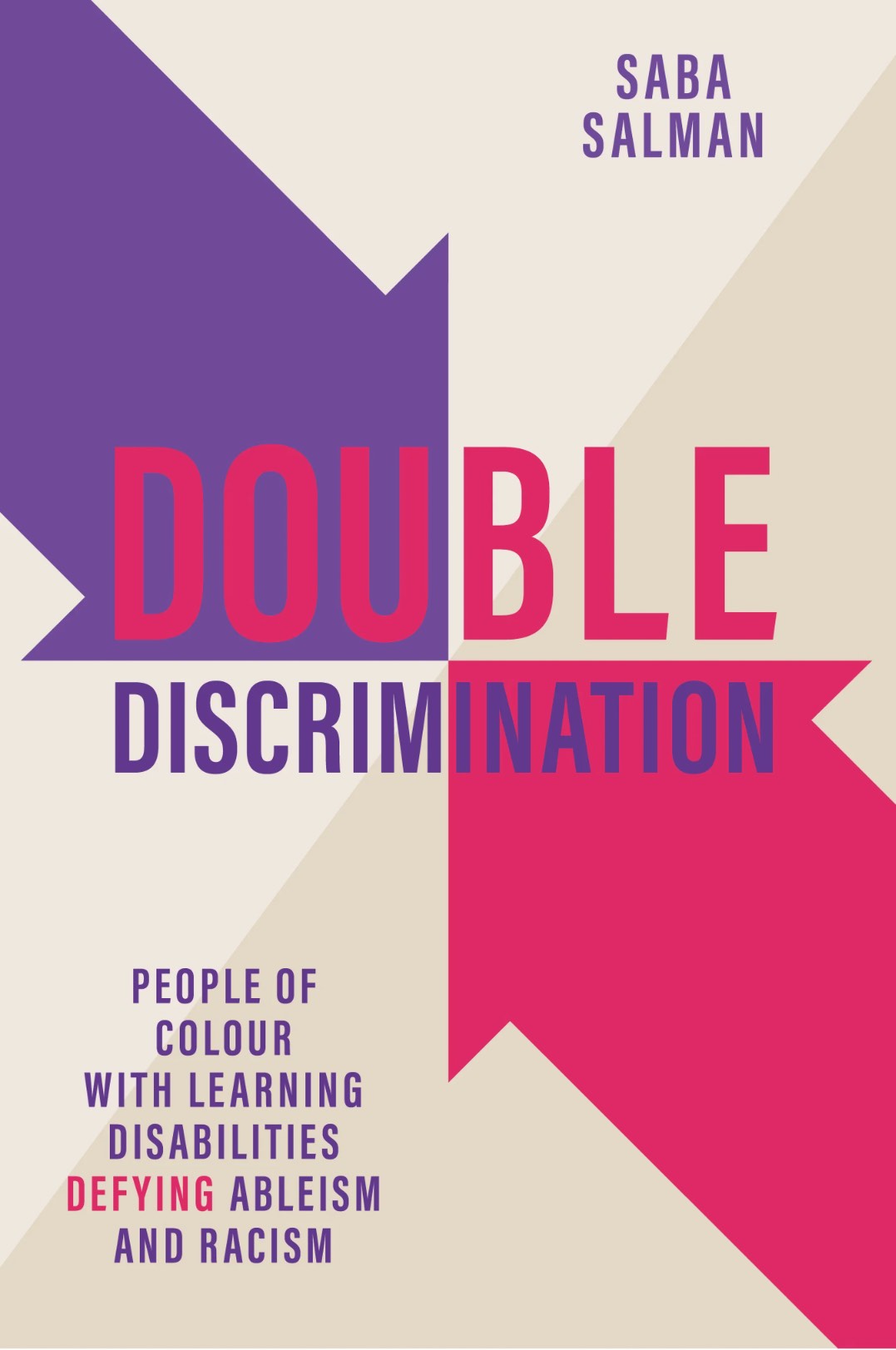
  • Journalist Saba Salman of Worthing wrote this book for her youngest sister Raana, who is British, South Asian, and has a Learning Disability. Jessica Kingsley Publishers published it, and Salman says its answers come from public sector organisations, charities, activists and families.

    Living at the intersection of race and disability

    Updated

    Journalist Saba Salman wrote Double Discrimination for her youngest sister Raana, who is British, South Asian, and has a Learning Disability, and whom people rarely picture as both disabled and a Person of Colour. Her reporting shows that people facing racism and ableism together are skipped by the social justice ideas meant to counter bias, and that inequalities in housing, work, health and schooling are shocking in scale. The book closes on the defiance and optimism found among public sector organisations, charities, activists and families. We should plan every program, service, event, and communication with someone like Raana in view.

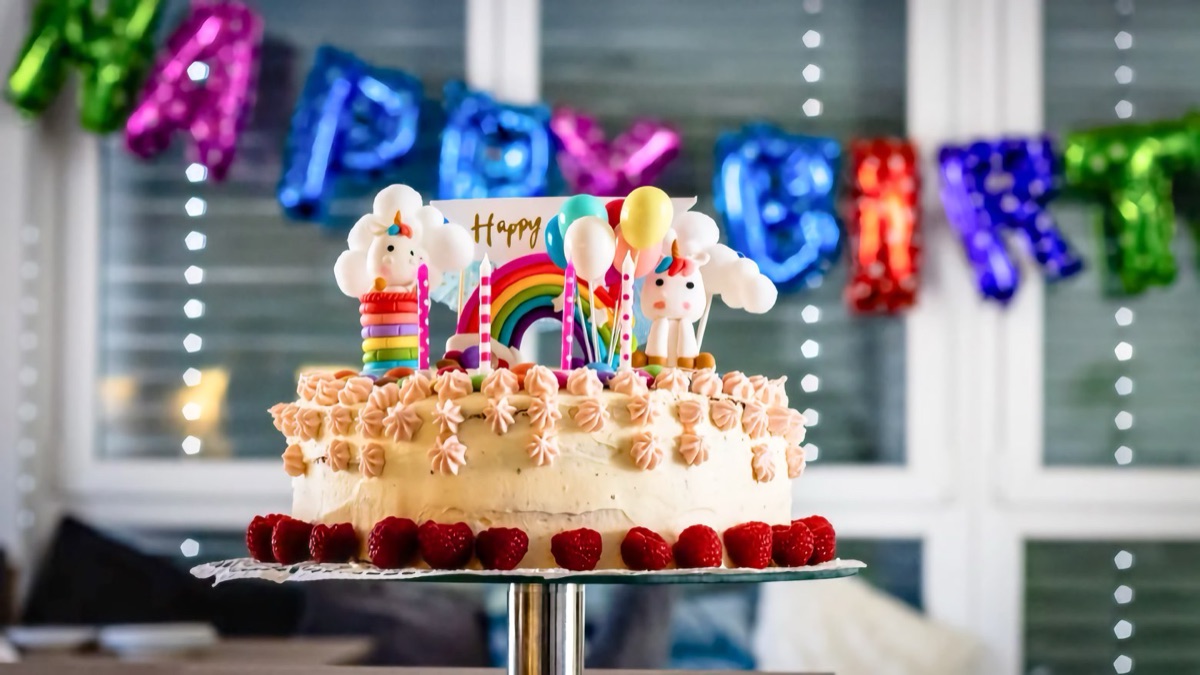
  • Stock photo, not the actual dessert. Antonia Sinibaldi’s 29th birthday plate on June 20, 2026 carried the word wheelchair where her name should have been. Image by Aiky82 on Pixabay.

    A Birthday Plate Labeled With a Wheelchair Instead of a Name

    Updated

    On her 29th birthday, Antonia Sinibaldi was served a dessert with “Happy Birthday Wheelchair!” written where her name belonged. Staff had used the word on a ticket to find her table, and the restaurant said no disrespect was meant, yet the ticket had already reduced a guest to a wheelchair. Sinibaldi writes publicly about accessibility and her own spinal cord injury, and she will not go back. We should lead with a person’s name on any notation we write, and keep a detail about a wheelchair beside the name, never in its place.

  • Ableism treats People with Disabilities as worth less than nondisabled people, and each community decides whether the barriers to taking part stay or are removed.

    What is ableism, and what is its impact?

    Updated

    Ableism rates People with Disabilities as worth less than nondisabled people, even though they are the largest marginalized group, roughly 15% of the world's people. People learn it, often without seeing it, and it works through ableism built into institutions such as medicine and health policy, between people, and inside people who turn its messages on themselves. It shows up as hostility, as rescuing, and as a mix of both, and in health care it puts care out of reach and contributes to illness and deaths that never had to happen. Countering ableism means admitting the harm, hearing People with Disabilities, passing the mic, and pushing for access and representation. We should start with the next program, service, event, or communication in planning.

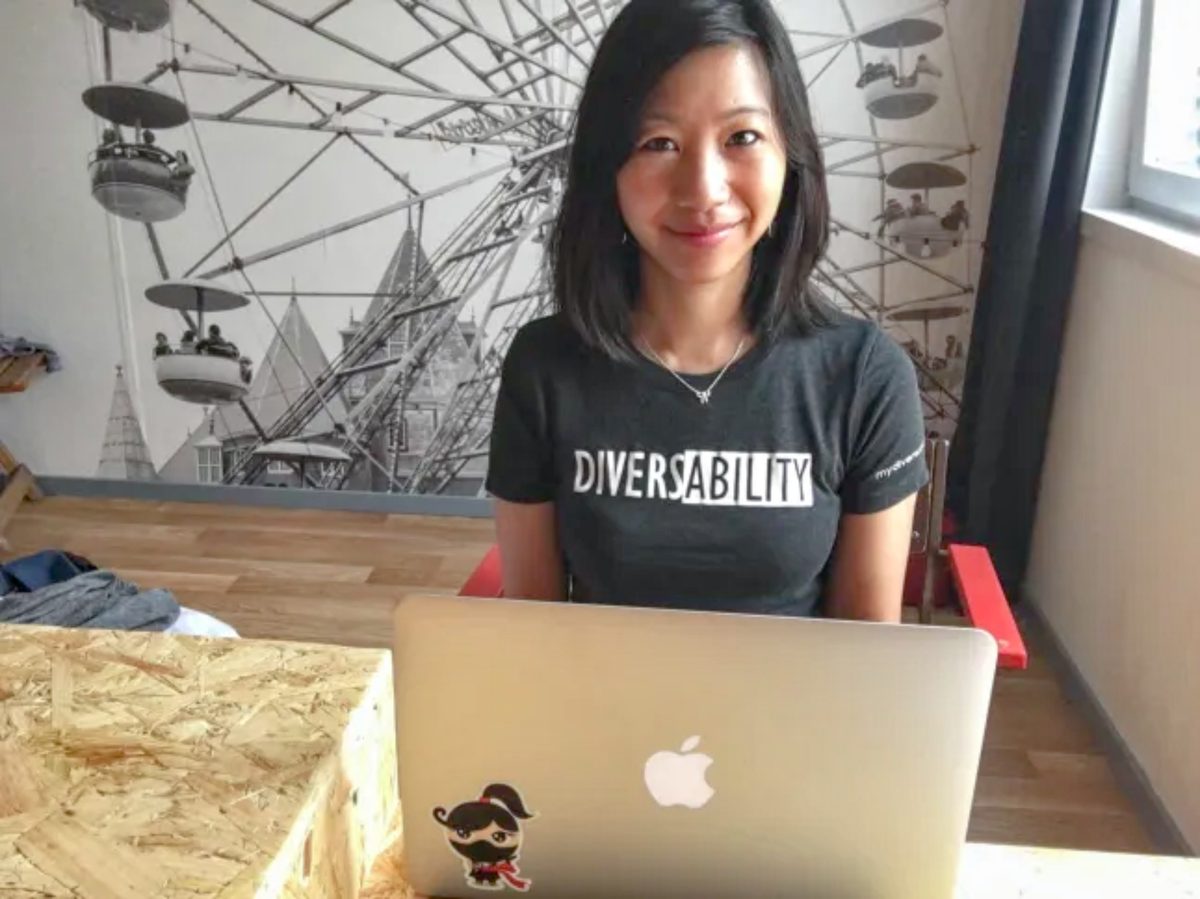
  • Tiffany Yu, founder of Diversability, wears the name of her community on her shirt. She was nine when a car crash left her with a permanently paralyzed arm, and she now leads a global disability community that began in 2009 as a student club at Georgetown University.

    I was nine when I learned what ableism is

    Updated

    Tiffany Yu was nine when a car crash took her father's life and left her with a permanently paralyzed arm. Back at school, classmates chose her last for teams, and she spent years hiding her disability. Ableism followed her into adulthood through hesitant handshakes, questions about her wrist splint, dates who were not comfortable with a disabled partner, a pottery class unsure it could fit her, and praise that treated her life as extraordinary. Screens showed disabled people only as objects of pity or villains. She chose to advocate and founded Diversability, now a global community for disability pride and storytelling. Countering ableism starts with planning rooms where nobody waits to be chosen. We should start with the next activity we plan.

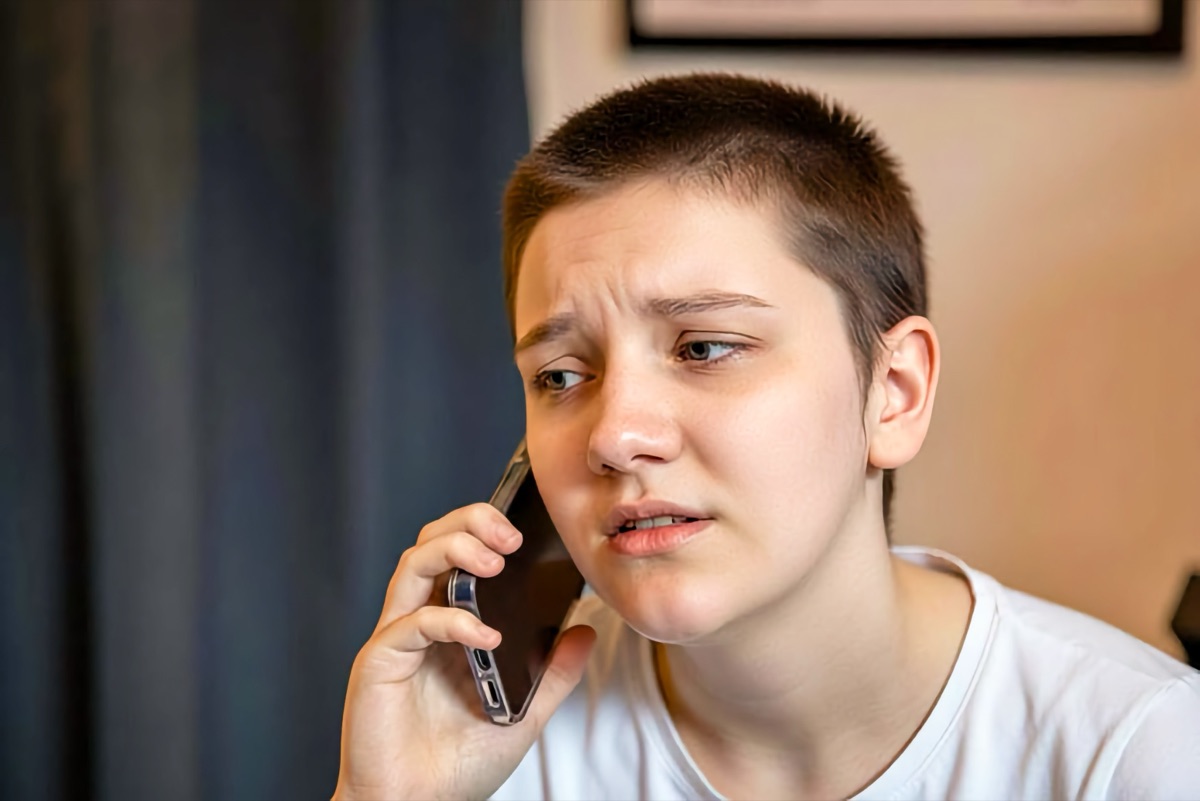
  • Stock photo, not the teen in the story. A report about blocked aisles turned into an accusation of shoplifting, with a wheelchair offered as the only evidence.

    Store Employee Accuses Wheelchair User Of Stealing, Her Ableist Logic Ends Up Costing Her The Job

    Updated

    A teenage wheelchair user emailed a store about product displays blocking the aisles and got a shoplifting accusation back, tied to a branch the teen had never visited, with a wheelchair seen that week as the only evidence. The apology was a ten dollar credit, and the employee lost her job. With about 27 percent of American adults having a disability, treating one wheelchair as a description of a person is ableist logic, not evidence. A person who reports a barrier is showing us what to remove, and the barrier is what should go. We should start with the next program, service, event, or communication in planning.

  • In this report on ableist tropes, Shruti Rajkumar draws on Rosemary McDonnell-Horita from LaVant Consulting, a communications firm focused on disability, and Cara Reedy, a Black dwarf woman who founded the Disabled Journalists Association.

    How to talk about disability sensitively and avoid ableist tropes

    Updated

    Ableism is woven into how we talk about disability. Stories that treat disabled people as props for nondisabled viewers hide the barriers, and one voice never speaks for a whole community. Infantilization shows up as raised voices, parents heard first, and conservatorships for 1.3 million adults, all resting on assumptions about what disabled people can do. Disability is both a culture and an identity, so the blame belongs on the barrier, not on the person. We should start with the next program, service, event, or communication we plan.

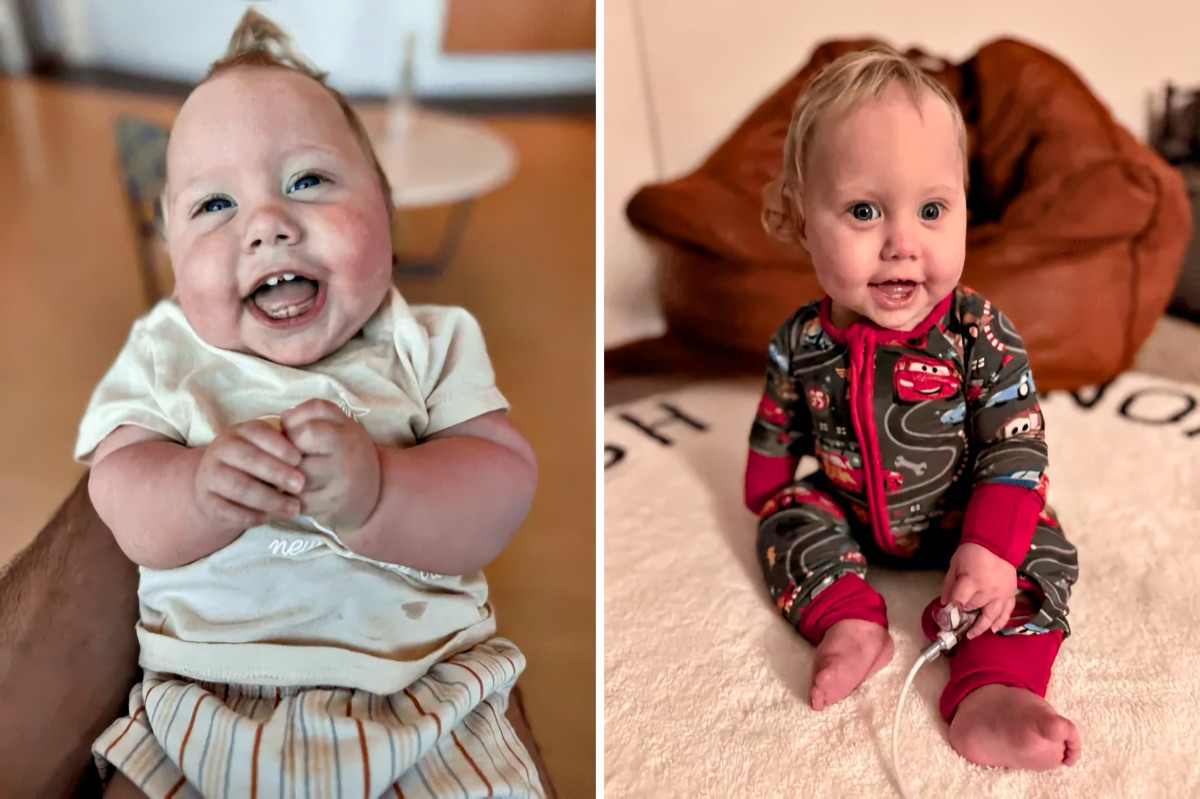
  • Oliver Herring, 16 months old, has ReNU Syndrome, which brings severe delays in development. His father, Chris, answered a boy's slur with a calm lesson about who Oliver is.

    Boy uses offensive term for disabled toddler, dad’s response says it all

    Updated

    A boy of about ten used the R word, an ableist slur, to ask about 16 month old Oliver Herring, who has ReNU Syndrome, a neurodevelopmental disability. His father, Chris, answered calmly, told the boy who Oliver is, and asked him to use another word. The slur still cut deep, and Chris asks parents to talk openly with their children about difference and to let kids ask hard questions. When adults explain disability openly to children, curiosity can grow into welcome. We should answer the next curious child with a calm reply and a better word.

  • A still from Guillermo del Toro’s Frankenstein, a film Kathryn Bromwich says casts only nondisabled performers while Victor grows more disabled as he grows more corrupt. Photograph: Associated Press

    Horror movies have an ableism problem. Isn’t it time we found new ‘monsters’?

    Updated

    Kathryn Bromwich, who loves horror and has a disability, shows how films such as Frankenstein use scarring, prosthetics, wheelchairs, and amputation as signs of a corrupt character, and how celebrated art films drop disabled actors into scenes to deepen the unease. Horror has no use for it: Bring Her Back casts Sora Wong, who has limited vision, as a funny, smart character the audience stands with. Disabled people hold just 2% of the film and television workforce, so she calls for disabled creators telling their own stories. We would start with the stories in our next program, service, event, or communication.

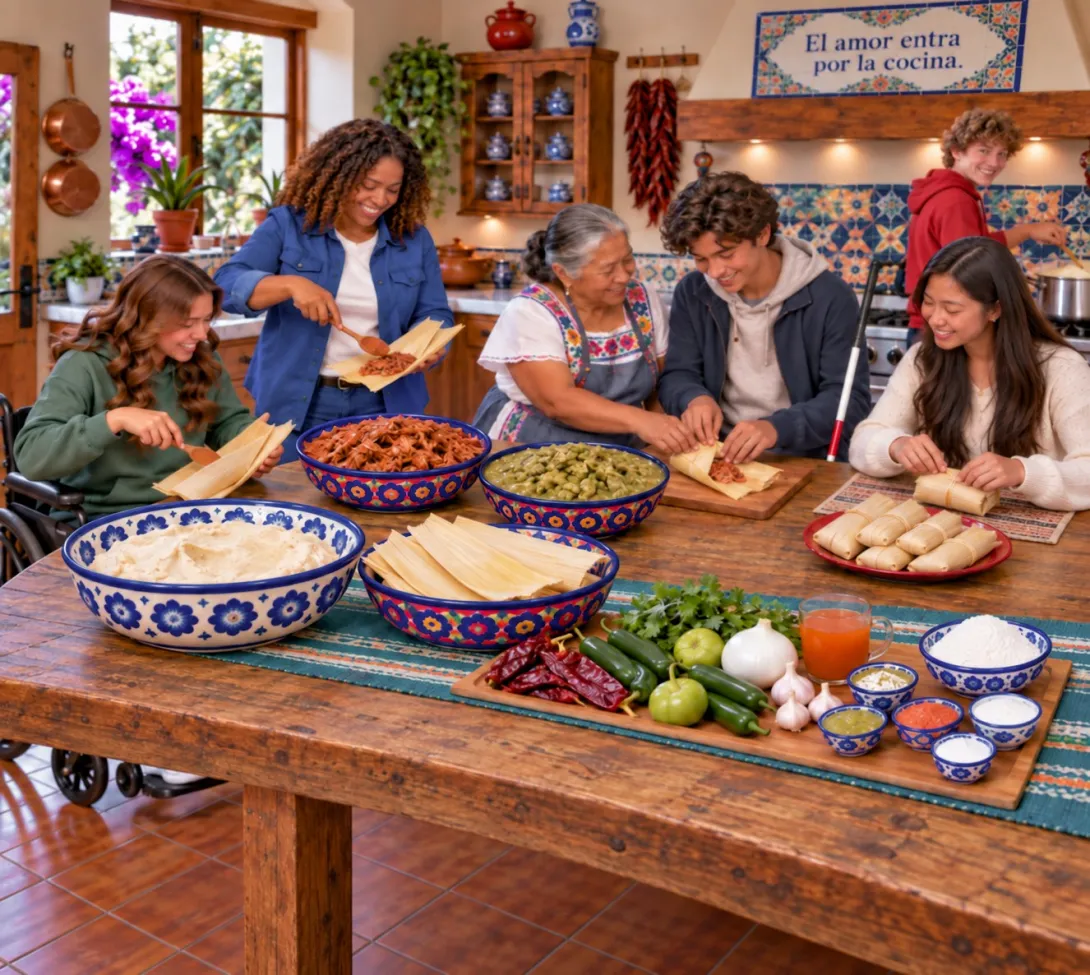
A diverse group works together in a tamale-making assembly line, preparing husks, adding masa and fillings, folding, and tying finished tamales. At the center, an elder abuela lovingly guides a blind young man as she shows him how to fold and tuck a tamale. A young woman using a wheelchair participates alongside the others, emphasizing disability inclusion, shared learning, and the passing of cultural traditions from one generation to the next.

In the close social network forged in a vibrant community, elders offer deepening, wise counsel, and distinctive example. Others step in as spiritual aunts and uncles to share affection and concern for the progress of young people and provide support that reinforces the labours and lofty aspirations of parents. -The Universal House of Justice 19 March 2025

Question: Is this example of inclusive practices the norm in your community? If not, what barriers need to be removed which prevent inclusive and welcoming participation?


"The challenge facing the friends serving at the grassroots is essentially the same in every place. They must be able to read their own reality and ask: what, in light of the possibilities and requirements at hand, would be fitting objectives to pursue in the coming cycle or series of cycles?"  -- December 30, 2021 UHJ to Conference of Counselors Introducing Nine Year Plan


Explore More Compelling Insights:

Learn about topics related to People with Disabilities, Accessibility, Anti-Ableism, Removing Barriers, and the Disability Community? Tap the Explore button to discover something new and intriguing with each tap!