
Striving to remove barriers that prevent us from building Vibrant, Diverse, Inclusive, Accessible Communities!
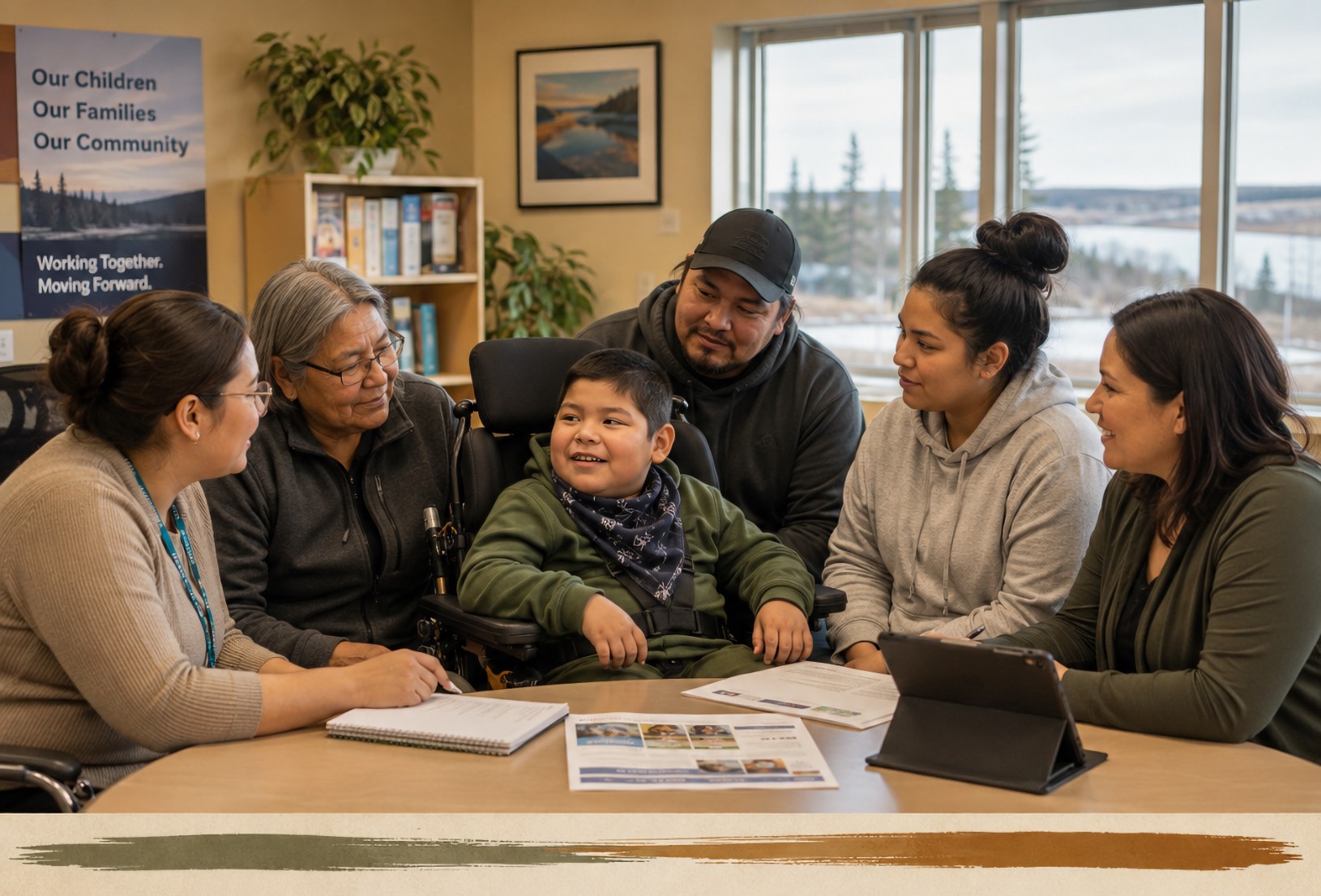
Manitoba built its disability service system around a Western clinical framework, and that framework does not recognize how First Nations communities understand and raise their young people. Indigenous children arrive at intake already unseen, and the assessments and treatments that follow generate confusion, wrong diagnoses, and services aimed at a child who does not exist. Distance, poverty, and unresolved argument over which government answers for what deepen the damage across the province. A First Nations centred study, the Cowessess Autism Report, found that many First Nations children with autism are never diagnosed at all, because diagnosis happens in places that sit far from home, resist navigation, and have earned no trust, in settings that are not culturally safe. Families are not failing to engage. They are choosing, with clear eyes, to protect their children from labels that would follow them.
For First Nations families in remote and northern communities, the province offers a choice no family should ever be handed. Stay home, where little or nothing exists for a child with a disability, or leave for a city to reach services and give up the daily presence of relatives, the teachings that carry a community's values, and the belonging that comes from growing up among your own people. Manitoba has also allowed a second and uglier route to open. First Nations families raising a child with a disability are pulled into the child welfare system far more often than other Manitoban families, and the province has let a default take hold in which signing a child into care becomes the opening that unlocks services otherwise kept out of reach. Separating a child from their people is not a service.
Culturally grounded services barely exist in Manitoba. One provincial organization runs a counselling program under Jordan's Principle for Indigenous families living on their reserve, while provincial health entities run nothing built for Indigenous families, and urban services sit outside the cultural reach of many of them. Children living on reserve reached Children's Disability Services only recently, and Community Living disABILITY Services along with adult services still stop at the reserve boundary, leaving young adults with disabilities there with nothing once childhood services end. Jordan's Principle was meant as a final safeguard rather than a substitute for provincial delivery, yet Manitoba leans on it to paper over the holes in its own health and disability systems. The federal government then tightened eligibility and added paperwork, and Indigenous children began meeting denials and delays for the services they had already been pushed toward. In 2025 the federal government acknowledged the pattern and directed provinces to carry their own share.
The province's children and youth advocate is direct about the repair. Manitoba has to abandon fragmented, reactive delivery and build a coordinated, Indigenous informed disability service framework, with funding set by what each community itself identifies, service disparities named and closed, the federal government and the province and First Nations governments actually working in step, and investment that lasts. Community Builders should recognize the order of operations, because it fails the same way everywhere: a program, a service, a gathering, or a document gets designed first, and the People with Disabilities it concerns get consulted afterward, if anyone remembers to ask at all. Where design work has never included the families furthest from services, a community has quietly sorted itself into those who receive and those who go without. The work is concrete and it can start this week. Before the next intake form is written, the next eligibility rule set, or the next program planned, seat Indigenous families raising children with disabilities at the table where those decisions actually get made, and point resources toward the communities hardest to reach rather than the ones easiest to serve. That is what building Vibrant, Diverse, Inclusive, Accessible Communities asks of the people who plan them.
Read the Full Article: Meeting the needs of disabled Indigenous children.
By: Sherry Gott
