
Striving to remove barriers that prevent us from building Vibrant, Diverse, Inclusive, Accessible Communities!
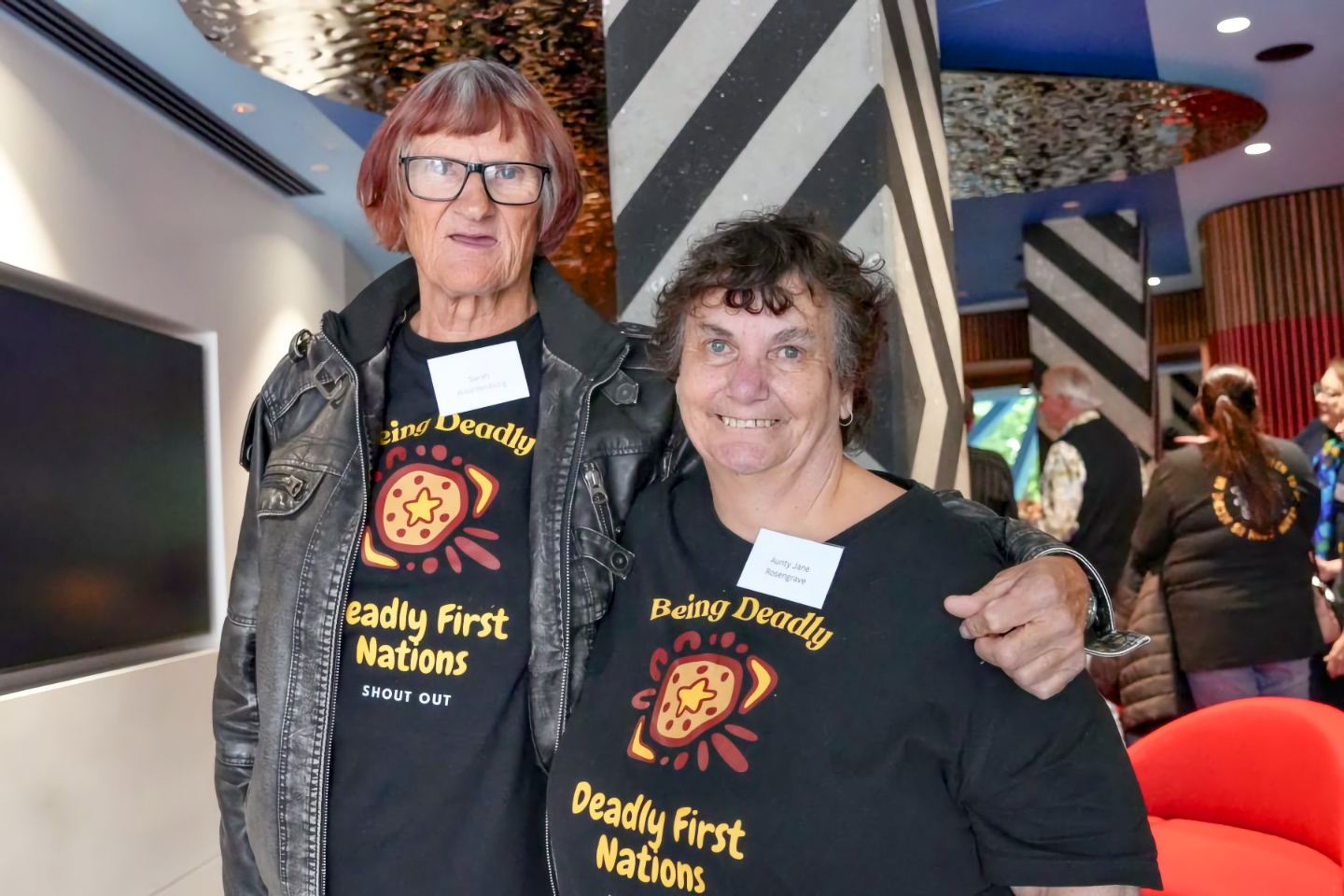
Aunty Jane Rosengrave and Sarah Waardenburg ask for a few simple things: to be seen and heard, and to “stand up and speak up for disability and culture.” They belong to the Deadly First Nations Shout Out Group, known as The Deadlys, a self advocacy group in Victoria, Australia, whose members are Indigenous adults living with intellectual disabilities or acquired brain injuries. Jarred Cross reports for National Indigenous Times that the four members have met in person and online for two years, connecting with one another, with organizations, with community and with culture, which they have often felt cut off from.
The group has built ties with the First Peoples Disability Network, joined community workshops, started a podcast and begun planning a traditional gathering in the bush. On the podcast they talk about ending racism and discrimination, about culture and art, and about teaching the public, the police and the health and justice systems about First Nations people with disabilities. Aunty Jane, a Yorta Yorta woman, was “locked up” in institutions from six months old until she was 21, a time she compares to a bird cage, and she says it still happens to young children today.
In December the group released a documentary about its work and the stories of its members, including being forced to prove their identity. It premiered with a lunch, speeches, awards and a screening at the Koorie Heritage Trust in Naarm, Melbourne. Ms Waardenburg, a Gunaikurnai woman, calls their two years together “one hell of a journey,” and she hopes the group spreads across Australia, since many First Nations people with intellectual disability feel alone and could join by Zoom.
People who know their rights and speak for themselves change the communities around them. Aunty Jane says the group wants people to know they exist, that they can speak up for themselves and that they know their rights. Being accepted as an Aunty in recent years, she says, is the best thing that has happened to her. Ms Waardenburg tells others with disabilities to be proud of who they are, and next she looks forward to working with possum skin, cultural burning and learning language. Their work shows how a community grows when it meets its members with acceptance and love.
We should listen to First Nations people with intellectual disabilities when they speak up for disability and culture. We should open cultural gatherings and traditional practices to members of the community who have disabilities instead of leaving them out. Self advocates who are seen, heard and accepted would move us toward Vibrant, Diverse, Inclusive, Accessible Communities for People with Disabilities.
Pride in who you are is a place to start.
Read the Full Article: ‘One hell of a journey’: Self-advocacy group for First Nations people with intellectual disabilities launches documentary.
By: Jarred Cross
Questions for Reflection
- Are members of our cultural and faith communities who have disabilities part of traditional gatherings, or left out?
- Who speaks for people with intellectual disabilities in our community: the people themselves, or others?
- Were people with disabilities in our area ever placed in institutions, and does it still happen?
- How could someone who feels alone join a group like The Deadlys, in person or online?
- What does acceptance look like for members of our community who have disabilities, and who decides?

Also See:
- First Peoples Disability Network launches national survey to drive reform
- Removing Barriers to Culturally Grounded Services for Indigenous Children with Disabilities
- Building Inclusive Communities: Learning from ʻAbdu'l-Bahá's Examples on Valuing Marginalized Members
- Powwow dancing isn’t always accessible. This Puyallup Tribe dad wants to change that
- What is ableism, and what is its impact?