
Striving to remove barriers that prevent us from building Vibrant, Diverse, Inclusive, Accessible Communities!
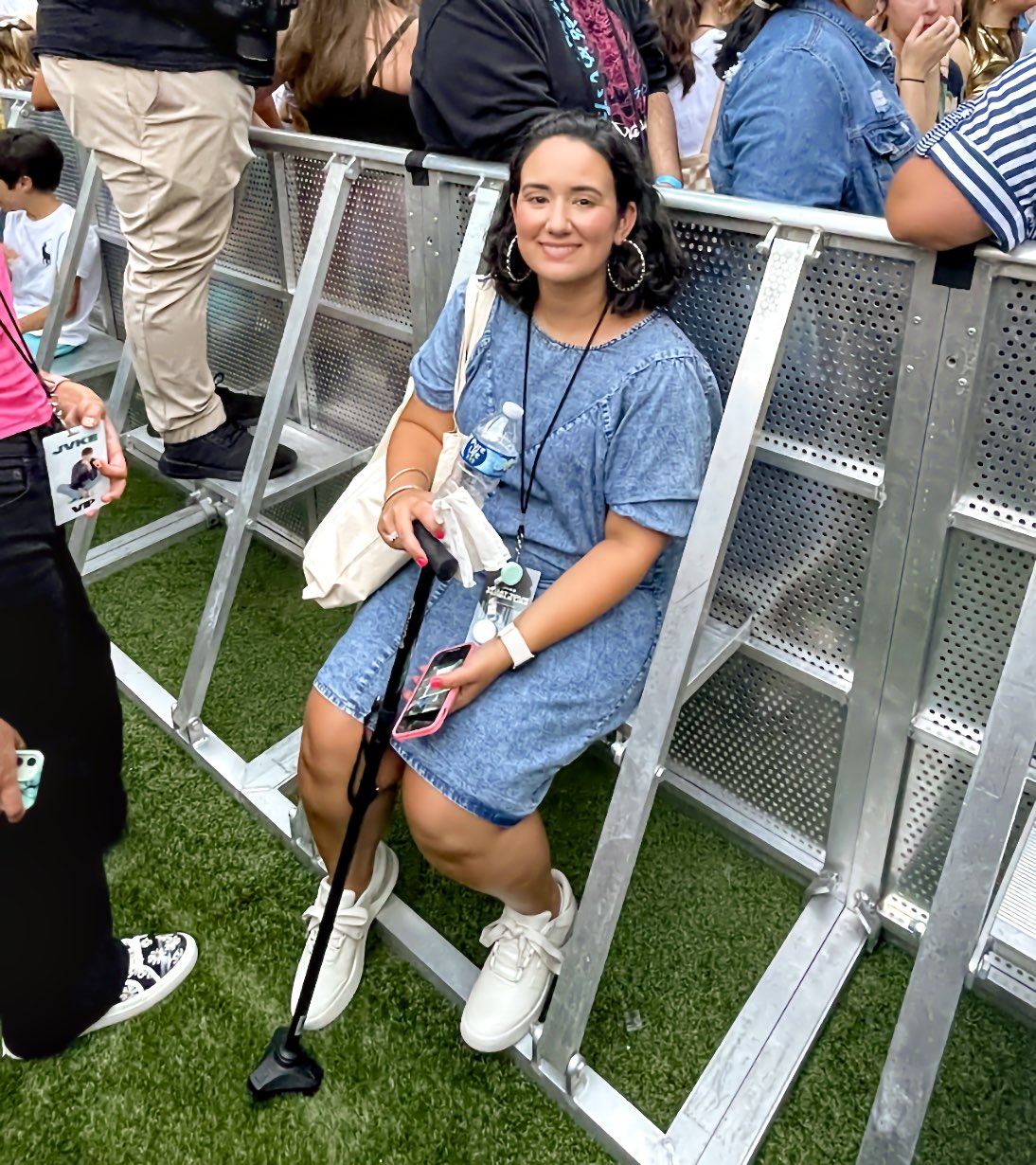
A concert bought as an eleventh birthday gift for a daughter turned into a lesson in how casually venues treat accessible seating. Repeated calls ahead of the show secured a place to sit, and what the venue produced was a metal bench on the reverse side of a barricade dividing the VIP area from the general crowd. Sitting in it meant facing away from the stage entirely, with the standing crowd packed in so tightly that their elbows were level with her head. To watch any of the show she had to stand and turn, and as the VIP side filled in, even that grew harder. Seating arranged in advance and then delivered like this is not access, and People with Disabilities are the ones who absorb the difference.
A disability that nobody can see stacks a second barrier on top of the first. No committee reviews a person and confirms that she qualifies, and no folder of options arrives to explain what is available, so every request falls to her to make and to make again. Hers moves along a spectrum and shifts with circumstance, steadier when she sleeps well and schedules breaks, and costly for a day or two after any loud gathering. For more than ten years before that concert, the people she turned to waved away what she reported, and even relatives still treat her account of her own body as open to question. Doubt aimed at People with Disabilities is a barrier that other people build, and it is other people who must remove it.
When she stood to catch some of the show, a man from the VIP side put his child up on her seat, and when she said the seat was hers he wanted to know what made her so special. Her husband stepped between them and the man gave way, but he stayed a few feet off for the rest of the night, watching. She caught herself running the arithmetic of it, whether dancing was allowed, whether smiling would count against her, whether looking miserable was the toll for keeping a bench she had arranged weeks earlier. He never took in the cane in her hand, the earplugs she wore, or the day flat on her back that would follow. People with Disabilities get policed in public by strangers who appoint themselves judges of who looks the part, and that scrutiny is as much a barrier as the bench was.
A seat you have to defend all night was never really given to you. What she carried away from that evening is that asking for what removes a barrier does not depend on anyone else's sympathy, and she asks plainly now: a low table when a high one is offered, earplugs the moment a room turns loud, rest when her body calls for it, and no when she means no. Belonging is the starting condition for People with Disabilities, not a prize awarded to whoever performs convincingly enough for an audience, and any gathering that treats it as provisional has already put the barrier in place. That is the distance between what we say we are building and an evening spent proving entitlement to a bench.
Before our next event notice goes out, let's actually sit in the seat we are planning to offer and find out what it gives someone: a view of the thing they came for, room away from a moving crowd, somewhere quiet to step aside to. Let's put those seating details straight into the invitation and the programme so nobody has to phone ahead and negotiate for them, and let's tell whoever is greeting people that anyone in that seat owes no one an explanation. That is how we build Vibrant, Diverse, Inclusive, Accessible Communities for People with Disabilities, by settling these questions in the planning instead of in the aisle.
Get the seat right and the welcome settled beforehand, and nobody has to spend the night defending either one.
Read the Full Article: A Dad Tried To Bully Me Into Giving My Seat To His Kid. Here's What Happened When I Said No..
By: Cyntianna C. Ledesma Ortega
