
Striving to remove barriers that prevent us from building Vibrant, Diverse, Inclusive, Accessible Communities!
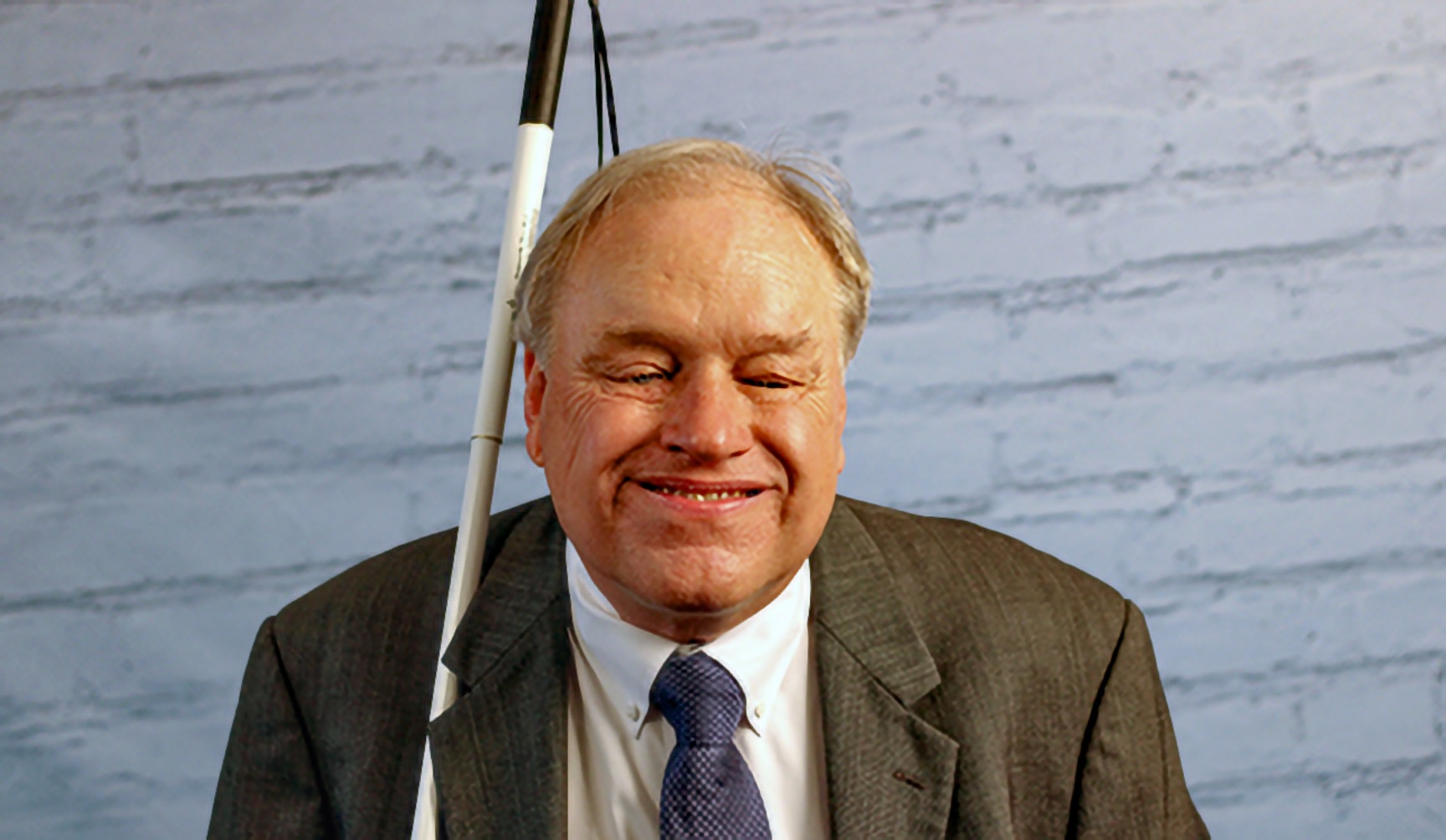
Gary Wunder opens by honoring the rule that asks each of us to act toward other people as we would wish others to act toward us, and then shows exactly where that rule runs out in the lives of Blind People. A sighted person who builds a picture of blindness inside their own imagination is working from fear rather than from anything a Blind person has said, and Wunder points out that shutting your eyes and crossing a room teaches nothing about a life lived Blind. He lists what that imagined fear produces: an arm grabbed instead of offered, a meal ordered for someone who was never asked, a person pushed into a seat instead of told where it sits, and information kept back because a sighted person decided it would not matter. Blind People, Wunder writes, are not symbols of sorrow, wonder, or pity, but human beings who work, cook, teach, raise families, travel, and lead. His opening request frames everything that follows it: let Blind People describe blindness in their own voices.
The rule Wunder sets beside it is sometimes called the Platinum Rule, and it asks a person to treat others the way those others say they wish to be treated. The first rule turns a person inward toward personal preference. The second turns a person outward and calls for curiosity, humility, and a willingness to be corrected. Wunder is emphatic that this is not a dismissal of allies, since Blind People want employers, teachers, neighbors, family members, drivers, and the people who build technology to stand alongside them and open doors. What he refuses is the moment when assistance turns into control, when friendship turns into management, and when a partner becomes a supervisor. He marks the difference with plain contrasts: offering to read a menu aloud rather than deciding the order for someone, saying where an open seat is rather than pushing a person toward it. Because no single Blind person speaks for every Blind person, the instruction Wunder leaves is to ask rather than assume.
Wunder then follows the damage into schools, workplaces, public agencies, and product design, where sighted decision makers act on assumption and call the result reasonable. A school may spare a Blind student the chores and assignments given to classmates and describe that as compassion. An employer may read blindness as incapacity, describe that reading as realism, and never let a qualified Blind candidate reach an interview. Agencies may run services that leave Blind People reliant on the agency and describe that as care. Companies may ship products no Blind person can operate and dismiss Blind People as a market too small to bother with. What arrives in each case is sympathy, protection, or charity, when what was asked for was opportunity, training, and a job. Wunder is specific about what Blind People actually ask for: an accessible copy of the assigned book rather than a shortened assignment, software that works with a screen reader rather than a shift to lighter duties, accurate directions rather than a stranger seizing a suitcase, and for a Blind child, Braille, training with a cane, high expectations, and household chores like any other child. The barrier, he concludes, is not blindness but the low expectations built around it, and Blind People want to be givers rather than permanent receivers.
Wunder's fourth point is that Blind People must be at the center of defining their own future, and that this carries obligations in both directions. He writes from the philosophy of the National Federation of the Blind, an organization of Blind People speaking for themselves rather than one speaking about them from outside. Blind People, he says, have to explain clearly and patiently and teach the public where the public gets it wrong, while the public has to listen with the head and with the heart at once, since a person can hear a Blind person state plainly that a task is within reach and still privately file it away as unrealistic. What Wunder asks for is Blind People at the table as a deciding force, not invited to comment after the decision is settled and not seated as decoration. That is precisely the obligation Community Builders carry. Inclusion and accessibility cannot be bought or handed off to someone else; they are shared responsibilities, owned personally by each of us and carried out collectively, from the first planning conversation through every later improvement, in consultation with the People with Disabilities who know where the barriers actually sit. Community Builders can begin exactly where Wunder ends, by setting the assumption down and letting Blind People say for themselves what a respectful community looks like.
Read the Full Article: The Golden Rule, the Platinum Rule, and the Right to Speak for Ourselves.
By: Gary Wunder
