
Striving to remove barriers that prevent us from building Vibrant, Diverse, Inclusive, Accessible Communities!
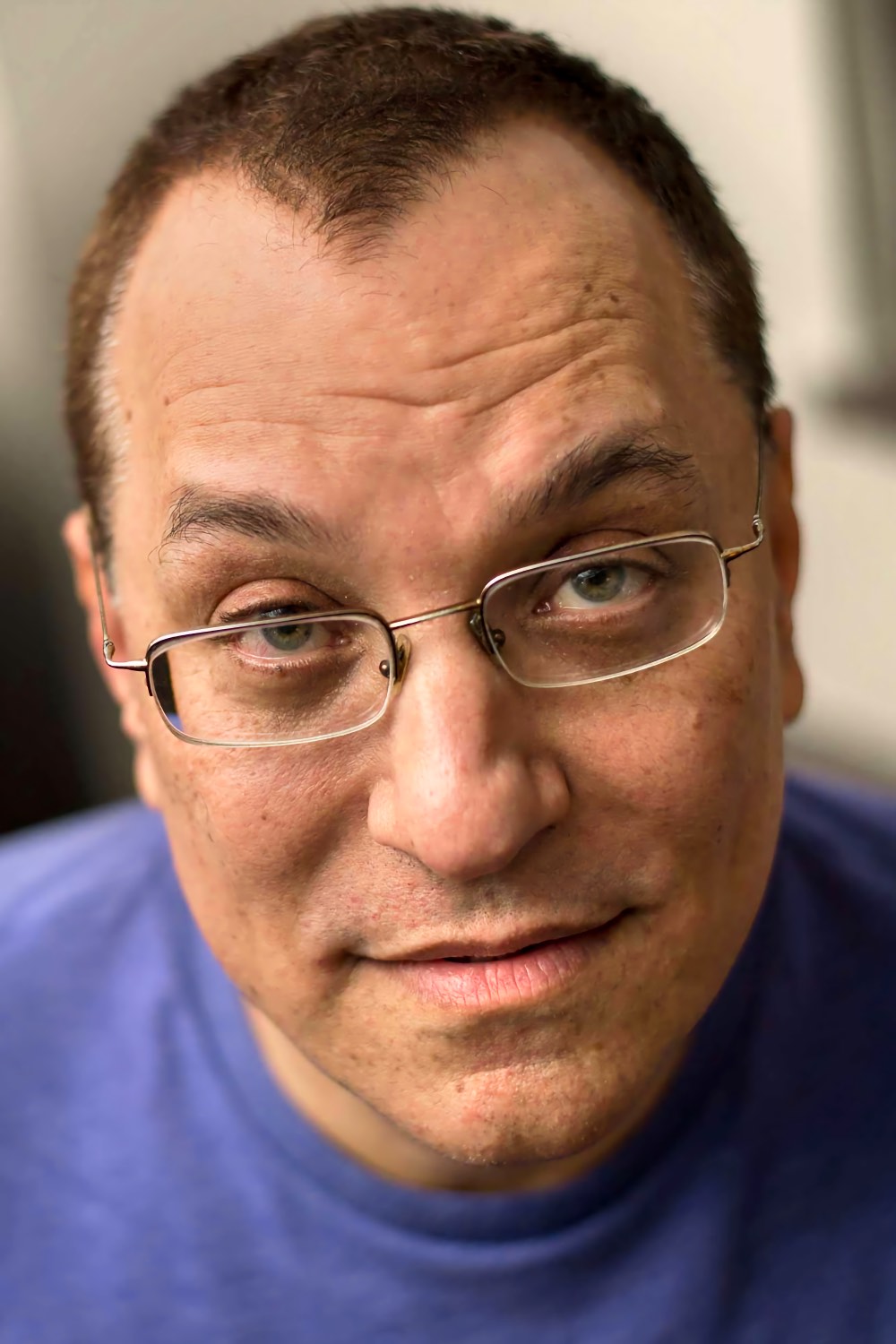
Kenny Fries opens this Disability Pride Month essay by returning to a radio interview from 1997, the year his first memoir appeared, when the person interviewing him asked why a reader who was not disabled would care about the book. His answer pointed at something plain that literature almost never admits: bodies and memory belong to every reader alike. Writing the introduction to his anthology that same year, the first commercially published collection to gather work across multiple genres by United States authors with disabilities, Fries named what separates the oppression and discrimination faced by People with Disabilities from what other historically marginalized groups endure. A slip in a bathtub or a virus can move any person into this community in a single instant, and sooner or later, briefly or for the rest of a life, every person will be disabled in some way. Literature has largely refused to hold that fact, and that refusal is what keeps readers from hearing People with Disabilities describe their own lives.
The essay then shows what gets erased when that refusal holds, because Fries turned his own experience into a way of seeing that reworks established ideas. A fellowship from the Japan United States Friendship Commission and the National Endowment for the Arts sent him to Japan in 2002 to examine disability and the lives of People with Disabilities there, and the poems he wrote about Japanese gardens looked on their surface to be about flowers, teahouses, rocks and bridges. What he was recording, he came to see by the end of that stay, was a small model of what it means to be alive in a mortal and endlessly shifting world, and he names that understanding as the greatest lesson his own disability had taught him. Studying those gardens brought him to mono no aware, described in his reading as a resonance found in nature and a poignancy carried by the beauty of things that do not last. His 2007 memoir pressed disability against one of the largest scientific frameworks available, offering a fresh reading of the theory of natural selection worked out by Charles Darwin and Alfred Russel Wallace by tying it to the variation that disability contributes and to the adaptations that follow as a route to survival. Ideas that organize the world can be remade by the disability experience, and every year that literature looks away is a year that remaking is lost.
When Coronavirus Disease 2019 arrived in 2020, people began saying the world itself had become disabled, and Fries calls that idea ludicrous for what it exposed: a stereotype picturing People with Disabilities as isolated, living confined lives with restricted movement and little capacity to be out in society among others. The record ran the opposite way. The access practices People with Disabilities had already been using as fully as they could manage before the pandemic, connecting personally and professionally at a distance, wearing masks and taking other precautions that cut the chance of contagion, and putting together safe forms of gathering, became standard for the general population. Then came word that the pandemic was over, which Fries points out is not actually so, and those practices disappeared. Workers were called back. Students and teachers were again obliged to attend in person. Some places prohibited masks. Their removal makes plain that these were choices all along, and People with Disabilities lost access that the entire population had just finished proving workable.
Fries reserves his gravest warning for what surfaced alongside that retreat: eugenics reappeared in medical triage protocols, and lives were sorted as less worthy than other lives. Those ideas did not go back into the container they escaped from, and they persist in a country where public mockery and false claims about disability issue from the highest offices, with a President elected after openly deriding a journalist with a disability and a prominent Cabinet Secretary of Health and Human Services putting untrue ideas about disability into circulation, neurodivergence above all. Against that record Fries sets Returns: Poems Selected and New, gathering four decades of poems across the desert Southwest, the lakes and beaches and islands of the northeastern United States and those Japanese gardens, and delivering a far richer and far truer account of disability than literature and society have handed down. His work is one instance of what Writers with Disabilities do, refusing the received ideas about what disability can hold and demonstrating that the disability experience is not a story of limitation but a gathering of different ways of moving through the world, carrying worth for People with Disabilities and for people without disabilities equally. Community Builders cannot leave that work to the writers alone. Inclusion and accessibility are not products to be purchased or handed off; they are shared responsibilities owned personally by each of us and enacted together through decisions made in consultation with People with Disabilities, and building Vibrant, Diverse, Inclusive, Accessible Communities begins where this essay begins, by letting People with Disabilities speak for themselves and then acting on what they say.
Read the Full Article: Why Disability Literature Matters, Now More Than Ever: ‘In One Quick Instant, Anyone Can Join Us’ (Exclusive Essay).
By: Kenny Fries
