
Striving to remove barriers that prevent us from building Vibrant, Diverse, Inclusive, Accessible Communities!
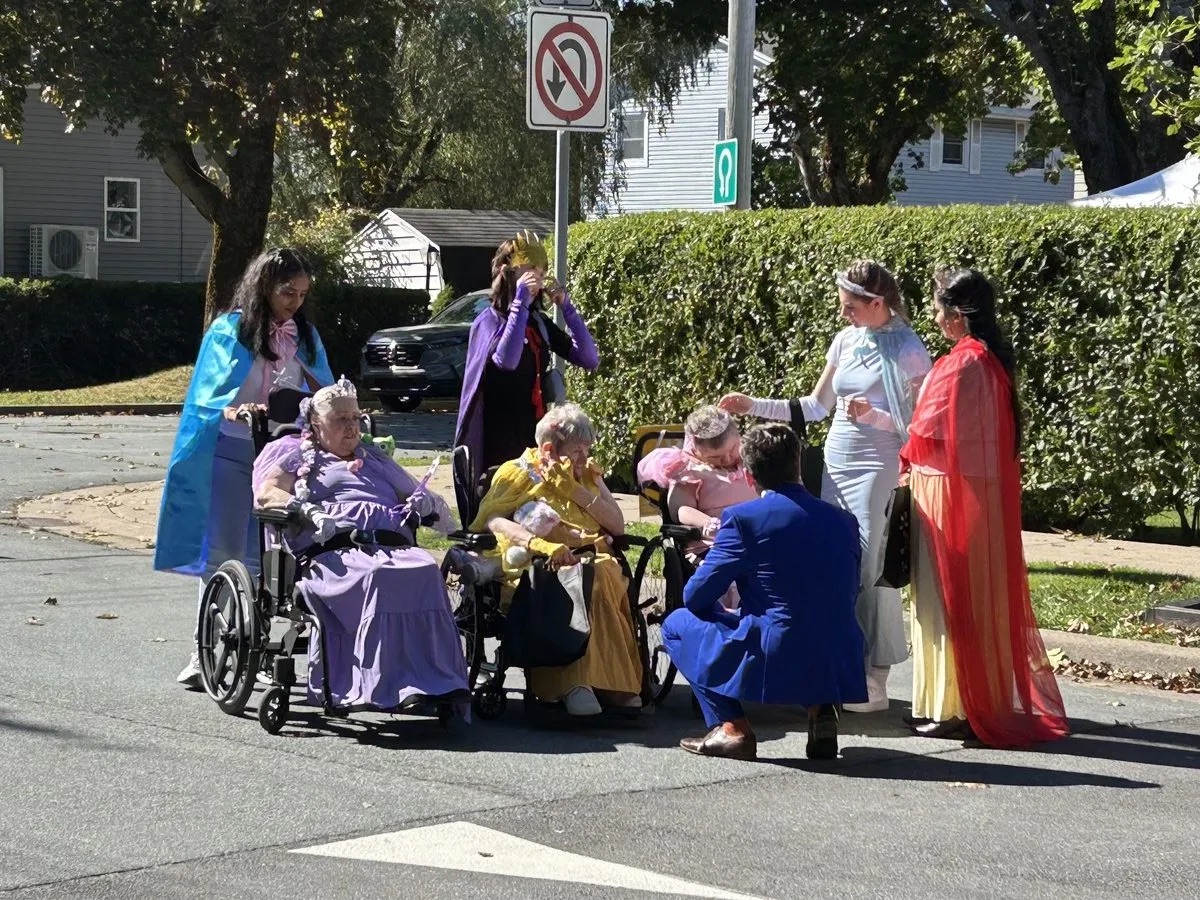
Halloween leaves out Children with Disabilities when the holiday is planned without them. Rich Padulo saw it in 2017 at his home in Ontario, when his six year old daughter noticed a boy using a wheelchair and wondered how that boy could go trick or treating at the house. Padulo made a sign that marked the house as an accessible stop and put it on the lawn. The boy did not come back that year, but seven other families did, because the sign told them they could. That one sign became Treat Accessibly, a movement with the goal of an Accessible Halloween across Canada, and 300,000 homes are now part of it, each with an orange sign out front.
Barriers on the street and at the door keep Children with Disabilities from the treats. Steps, blocked driveways, and candy bowls set out of reach shut out children with physical disabilities. Noise, strobing lights, and jump scare displays overwhelm children with sensory sensitivities, and Padulo warns that a fright like that can cause trauma and can send a small child, or a child who has a disability, running into the street. Children also communicate in different ways. Some do not speak with strangers, some look older than they are, and some have allergies that restrict which treats are safe to take.
The changes that remove these barriers are small. Padulo suggests a table at the edge of the lawn, or where the driveway meets the sidewalk, to serve as the treat station, so children never meet a stair. Calum Sencabaugh suggests stickers or other items that are not food beside the candy for children with allergies, and he points out that a dollar store has plenty. Scarier decorations can stay, as long as they sit back from the station. Not every child will give the usual greeting or thanks, so Padulo encourages greeting each child and praising a costume without expecting a spoken reply. A parent often answers, and silence does not mean a child is not enjoying the night.
A table at the edge of the lawn opens the door to a whole holiday. Treat Accessibly works street by street. In Dartmouth, Calum Sencabaugh, known as Smokestack Spiderman, is a street leader in its Halloween Village Streets program, which designates streets as Accessible. He shares with neighbours what changes would make a street Accessible and serves as their point of contact. This Halloween he will stand at his own station dressed as Spiderman, and Treat Accessibly will run an accessible Halloween Village that day at REMAX Nova Bedford, built to handle weather and to welcome children who must be out during the day. For Padulo the point goes past candy, because families of all kinds should belong in a tradition that many families never question. For us as Community Builders, that means our own gatherings, programs, and streets.
Our treat station should sit on a table at the edge of the lawn or where the driveway meets the sidewalk, so no stair stands between a child and the treats. We should pull scarier decorations back from the station and greet every child, even when no spoken reply comes. With stickers beside the candy, a child with allergies could take a treat as well, and one house would then be part of Vibrant, Diverse, Inclusive, Accessible Communities for People with Disabilities.
That is how one table at the lawn's edge opens the holiday to the children who were left out.
Read the Full Article: What does an accessible Halloween look like in Nova Scotia?.
By: Ally Bowes
Questions for Reflection
- Padulo's daughter noticed a boy using a wheelchair and wondered how he would join in. Whom in our programs might we have stopped noticing, and who could ask us that question?
- Steps, blocked driveways, and candy bowls set out of reach keep children from the treats. What is the stair at our next gathering, and who can show us where it is?
- Noise, strobing lights, and jump scare displays overwhelm some children. Which parts of our plans could we pull back from the place where people arrive?
- Not every child will give the usual greeting or thanks. How do we greet people who answer in other ways, and who can tell us when a person is enjoying the day?
- Sencabaugh serves as the point of contact for his neighbours. Who could take that role on our street, in our program, or at our next gathering?
- One sign told seven families they could come in 2017. What sign or plain notice could we put out so people know they are expected and welcome?
