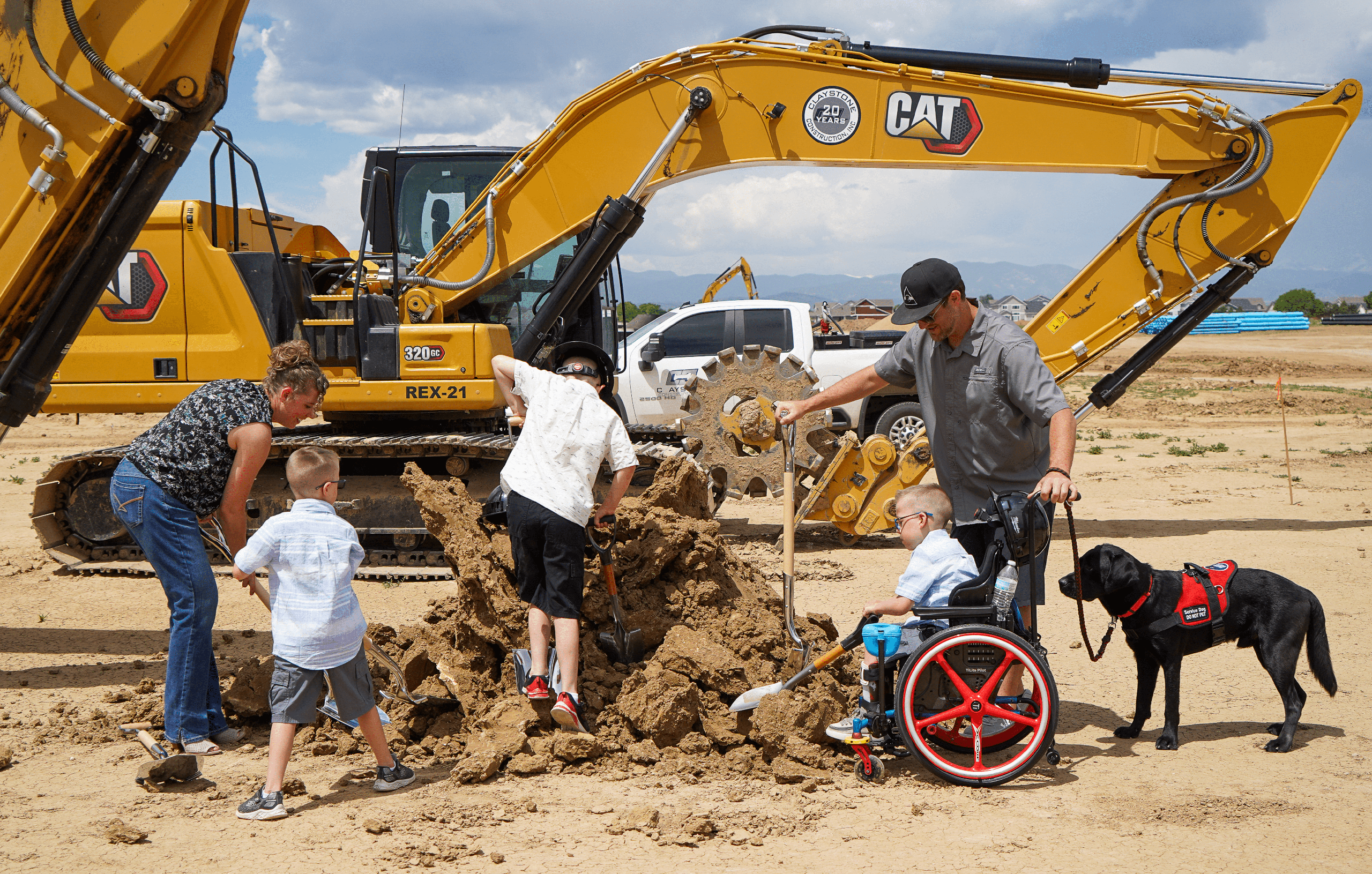
The groundbreaking ceremony for Berthoud Adaptive Park showcases community involvement, with a young boy using a wheelchair actively participating in the event. He digs into the ground with a shovel as part of the ceremony. The event marks the beginning of construction for Berthoud's first fully inclusive playground, designed to ensure children with disabilities can play together with others in a barrier-free environment. A large yellow CAT excavator in the background highlights the scale of the construction project.
In small towns across Colorado, significant progress is being made in creating playgrounds that truly include Children with Disabilities. The Berthoud Adaptive Park Project stands out as a prime example, with its groundbreaking inclusive design that promises to be a game-changer for the community. By integrating accessible surfaces and equipment like adapted swings and monkey bars, Berthoud is setting a new standard for inclusive playgrounds. This initiative reflects the power of community-driven efforts and highlights how dedicated advocacy can lead to the removal of barriers, fostering vibrant, diverse, inclusive, and accessible communities.
Understanding the difference between accessible and inclusive playgrounds is essential for effective community building. Accessible playgrounds may include features like ramps but often fall short in making the playground equipment usable for Children with Disabilities. In contrast, inclusive design ensures that playground equipment is adapted so that everyone can engage meaningfully with others. True inclusion means creating spaces where Children with Disabilities can interact and play together with others, addressing the problems of perceived but incomplete accessibility.
The success of the Berthoud Adaptive Park Project illustrates how advocacy and community involvement drive progress. Lauren Bowling's efforts, from fundraising through a lemonade stand to collaborating with Can’d Aid, showcase the impact of persistent community engagement. This project aligns with broader trends in cities like Loveland and Denver, where parks departments are increasingly dedicated to universal access and inclusivity in public spaces. These advancements reflect our collective commitment to removing barriers and ensuring that every member of the community can thrive.
However, the journey toward fully inclusive playgrounds is ongoing. Despite the strides made, some areas still face significant barriers. Sarah Spiller’s work in Colorado Springs highlights the need for continued advocacy to ensure all parks meet inclusive standards. Her efforts emphasize the importance of community engagement and the relentless pursuit of accessible and inclusive recreational spaces. To learn more about these efforts and how you can contribute to creating inclusive environments, read the full article and join us in striving to remove barriers that prevent us from building vibrant, diverse, inclusive, and accessible communities!
Read the Full Article: Small towns are getting in on the push for better Colorado playgrounds for kids with disabilities by: Dan England
Learn about topics related to People with Disabilities, Accessibility, Anti-Ableism, Removing Barriers, and the Disability Community? Tap the Explore button to discover something new and intriguing with each tap!