Striving to remove barriers that prevent us from building Vibrant, Diverse, Inclusive, Accessible Communities!
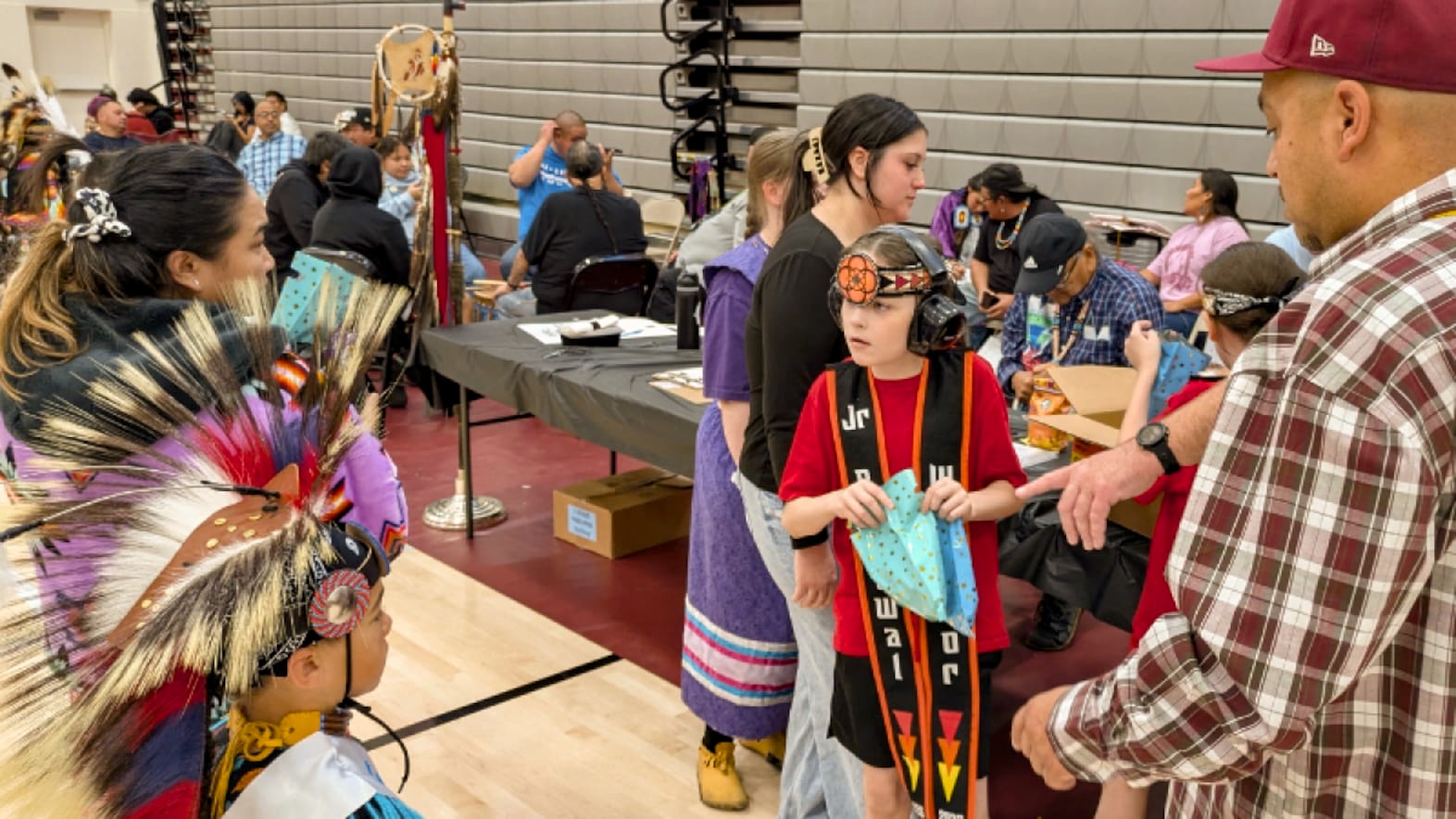
Shawn Reynolds, a member of the Puyallup Tribe, is on a mission to carry disability access into powwows across North America. Four months ago he brought the directors of the South Sound Powwow, now in its fourth year, in Graham, Washington, a plan for a special, which is a dance the sponsoring family gets to choose. His twin sons had earned royalty titles at an April powwow, and those titles gave the family the right to sponsor one. After a lifetime of powwows, Shawn sees no dance categories for people with disabilities, so he planned a special that welcomes dancers with disabilities of every age and ability, with floor time that belongs to them.
Shawn's twin sons, Nakotah and Dakotah, are eleven and have autism, and a powwow floor can be a lot for them. The drumming, bells, and stomping can overwhelm Autistic children, and full regalia adds to the weight. In the opening procession the twins walked in shirts and shorts with beaded headbands and stoles that matched, and Nakotah wore noise dampening headphones. Shawn built that same freedom into his special. Dancers could bring blankets, tablets, and headphones, come with a parent or caregiver, leave regalia at home, and move any way they liked, worm included. He wanted them to feel safe taking part in their own culture.
Dancers with disabilities are rarely included in the dances of their own culture. Grace Leatham, who teaches Native American Education at Bethel High School and directs the South Sound Powwow with Rachel Barger, says her own school district powwow never included them, and she never saw her students with disabilities in her powwow classes or on the floor itself. Opening the floor to them mattered to her. Once the special began, kids, elders, and young adults came down from the bleachers. Some held a family member's arm, some wore headphones, and many dressed in part regalia and part everyday clothes. Their sister Cheyenne, who is Autistic too, spun and stepped to the drum. She says spinning feels like making medicine and like dancing with ancestors, and that dancing there reminds her she is not the only Autistic dancer. Young Sioux Nation descendant Hadlee, who has had a heart condition since birth, moved with the circle, and Hadlee's mother, Aundrea Carmichael, said it was touching to see her follow the beat by instinct.
A door held open once teaches others how to hold it. Shawn's goal reaches past a single dance. He wants powwows across the United States and Canada to add specials and a full dance category for people with disabilities, and he hopes others follow him, since he knows he cannot be the first to try this. A disability does not keep a dancer off the floor. A floor planned for one kind of dancer does, and the barrier is the planning, not the person. Here the planning changed when a father whose three youngest children are Autistic asked for it. Every community holds activities and events, and People with Disabilities belong in each one. They know best who is missing, so we begin with them.
Every activity and event was planned around someone. Before we plan anything, we ask the People with Disabilities around us who is missing and what keeps them away, and we change that part first. A community where each person is expected before they arrive and can take part in every activity and event is where Vibrant, Diverse, Inclusive, Accessible Communities for People with Disabilities take root.
So we should hold the door open in our own activities and events, and the next organizer learns how by watching.
Read the Full Article: Powwow dancing isn’t always accessible. This Puyallup Tribe dad wants to change that.
By: Owen Henderson

