
Striving to remove barriers that prevent us from building Vibrant, Diverse, Inclusive, Accessible Communities!
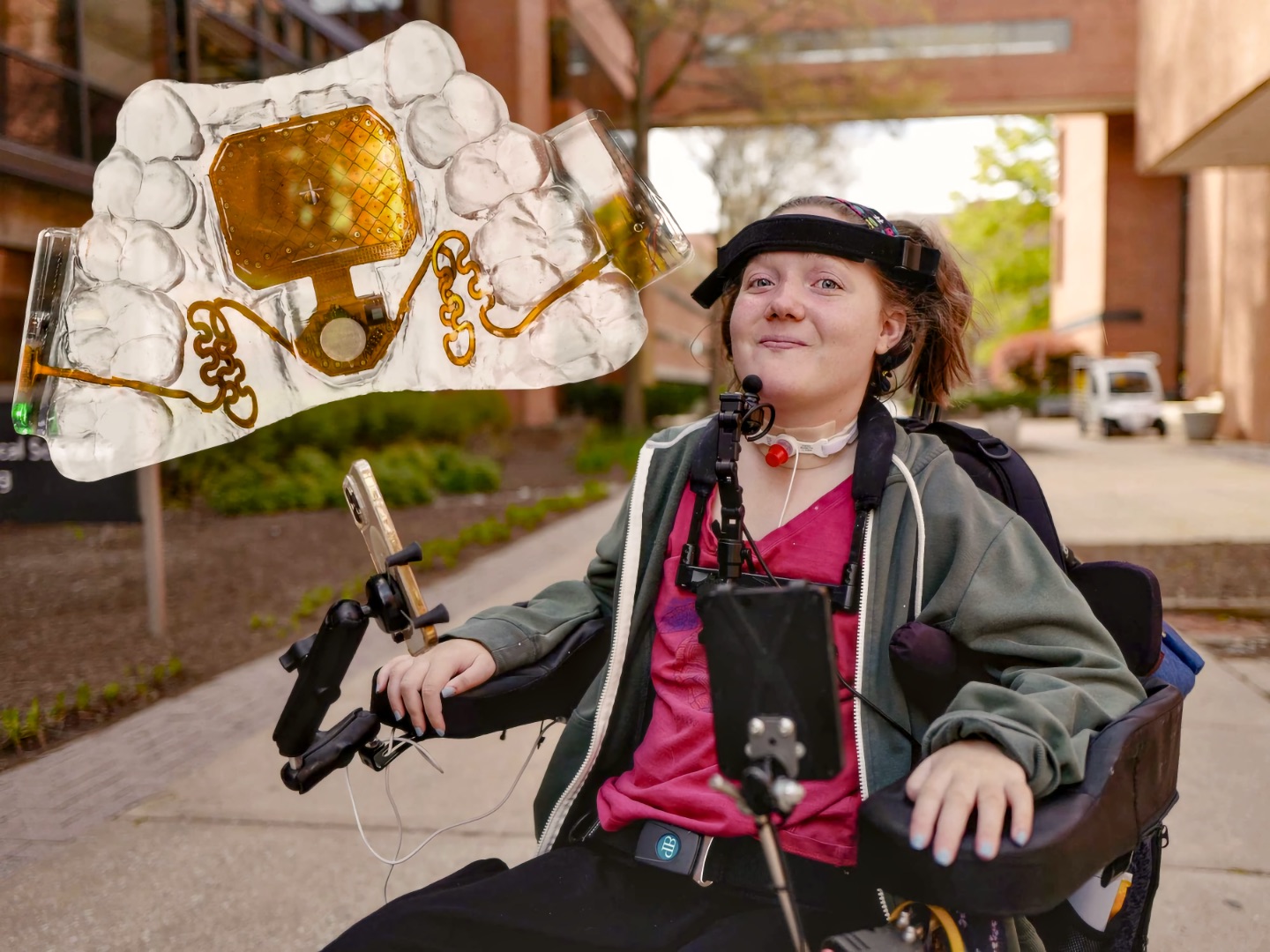
Standard computer hardware was designed without ever asking People with physical disabilities what would work, and they carry the cost of that omission in pain. A designer and disability advocate who has no hands and no shoulder sockets, and who uses a wheelchair, finds that long stretches at a traditional mouse leave his shoulder hurting, and the hours mount up because his phone and his computer are where his work and his daily life happen. Through the accessibility consultancy he founded he asks companies for test products, and in 2024 a Mouthpad prototype arrived in trade for his feedback. The team behind it built the device around what People with Disabilities told them across roughly six years of development, and a cofounder states the principle without decoration: design for the people most constrained and the interfaces that result are stronger.
This past July the Mouthpad went on public sale, and what it opens up is ordinary control of ordinary things. It is a custom fitted retainer holding a touch sensitive pad against the roof of the mouth, a barometer that reads sip gestures and tongue pressure, and motion sensors that follow the tilt of the head, all of it sending Bluetooth signals to anything that accepts a Bluetooth mouse: laptops, tablets, phones, powered wheelchairs, and sexual aids. It is thin enough that speech carries normally, so dictation and voice commands work alongside it, and it lifts out of the mouth to recharge. An engineering student at a public university uses it to interact with computers independently, and development that prioritized feedback from People with Disabilities gave hands free control to People with quadriplegia and others whom standard electronics shut out. The advocate who tested the prototype expected a steep learning period and met none, and now steers the cursor with his head, clicks with his tongue, and works from a couch rather than a desk for the first time in his life.
The price tag then decides who gets in. A single Mouthpad runs US $1,400, medical insurance covers none of it, and a dental fitting is billed on top, so People with Disabilities carry the full amount themselves. Reimbursement through vocational rehabilitation programs may be open to some buyers, which still leaves everyone else finding US $1,400 for a device that other computer users would never be asked to fund out of pocket. Access technology stays expensive because it never reaches the manufacturing volumes of mass market electronics, and the advocate who tested the prototype points out that it is far cheaper than much of the access technology he already pays for himself, which says less about this device than it does about how money, and not engineering, is what keeps working technology away from the People with Disabilities who would use it.
Open a door to technology and a door to friendship opens with it. Access to a workable device builds technical skill and career possibility for People with Disabilities, and it builds social life just as much, which carries real weight for people who can move the mouth and tongue but cannot speak aloud and who too often face social isolation and depression. That reach is exactly why the accessibility standards that already guide how community materials get built belong in our hands and not only in the hands of engineers. Our communities publish constantly: emails go out, flyers get printed, handouts get stacked on a table at the door, videos get shared. A device worn in the mouth can put a cursor anywhere on a screen, and it still cannot open a flyer saved as a flat picture or an email that no screen reader can move through.
We can take the free training in the Web Content Accessibility Guidelines (WCAG) that make up the International Accessibility Standards, and apply it to the very next email, flyer, or event handout we produce. Every heading we mark correctly, every image we describe, and every document we build in a readable format removes a barrier before anyone even arrives. That is how we build Vibrant, Diverse, Inclusive, Accessible Communities for People with Disabilities.
Get our own materials right, and the door stays open on both sides.
Read the Full Article: Augmental's Mouthpad Is a Touchpad for Your Tongue.
By: Greg Uyeno
