
Striving to remove barriers that prevent us from building Vibrant, Diverse, Inclusive, Accessible Communities!
Tolu Adegbite, a Black designer and accessibility advocate, argues that the way we describe people in pictures shapes what Blind readers believe about the world. Alternative text, called alt text, is a written label tied to an image that tells screen reader users what it shows, so Blind readers and readers with Low Vision learn what the image holds and why it appears. When that label is missing or wrong, those readers receive false information, and the person who writes it holds real power over how they understand everything around it. Designers and developers already shape what feels normal through the stories they put into the world, and alt text is one more place where that storytelling happens.
Adegbite remembers a childhood of constant reading in which most characters were described as white or written in ways that hinted at white. Not until middle school did she open a story about a Black lead, and she was stunned that such books existed. That is what a world built on white as the default does: children who never see themselves in stories learn that people like them are outsiders and strange. Stock photos of only white people, personas centered on white people, and usernames that are all traditional European names send the same message. Alt text sends it too whenever race goes unspoken, because the silence treats white as the default and erases everyone else. Author and human rights lawyer Haben Girma, who is Deafblind, says Blind People have told her they pictured her as white, and she asks describers never to skip race and never to let harmful assumptions fill the gap.
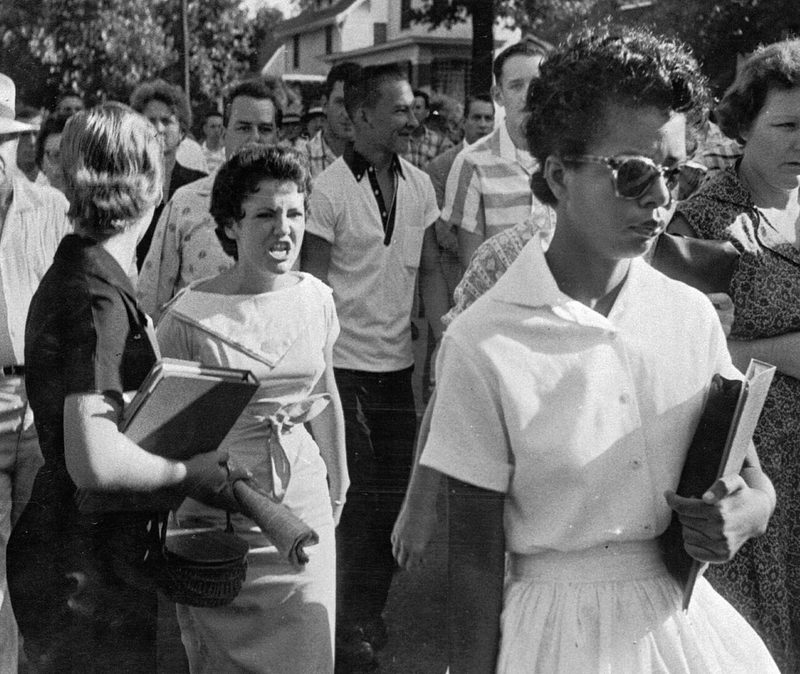
Adegbite tests the idea on three photographs. In the first, Elizabeth Eckford, among the nine Black students called the Little Rock Nine, walks toward the all white school she enrolled in at Little Rock, Arkansas, as white students and adults in a crowd heckle her. A label that mentions only a woman in front of a crowd, with another woman screaming behind her, removes the central fact of a struggle for civil rights.
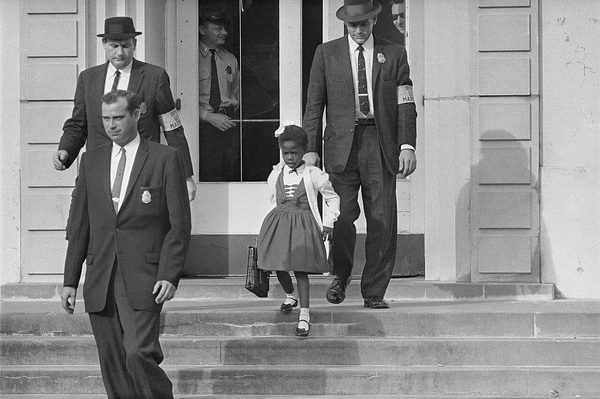
In the second, Ruby Bridges, the first Black child at an elementary school that was all white, in New Orleans, Louisiana, walks down school steps beside three white United States Marshals who were assigned to guard her against angry protesters. Describing them as three men in suits, with no mention of race, creates a misleading story.
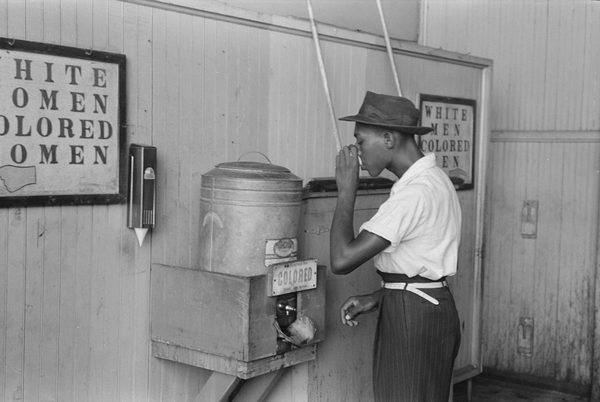
In the third, a Black man drinks from a water fountain marked Coloured, set between two signs, one for white women and colored women, the other for white men and colored men, and the race and the signs together carry the history. Leaving race out is vague at best and inaccurate at worst, and it gives Blind readers a different story than sighted readers receive.
Leave a person out of the description and the picture has been changed. Adegbite asks designers to take part in the label itself and to write good alt text and a clear caption for the setting where each image will appear, because the label and the caption shape how readers understand the content. She says being more intentional about alt text is a good place to start in limiting the harm our work does to others. That belongs to us as people who plan programs, events, and communications, and the community we picture has people of many races and disabilities taking part fully, with images that carry meaningful descriptions. Yet a photo of people that reaches a Blind reader with no mention of who is in it leaves that reader outside the picture of full participation we hold. The people who design our materials are the ones who can close that gap.
Before any picture of people goes into what we publish, we should write its alt text so it names the race of each person shown, and their gender when we can. We should also pick pictures of people of many races, so that white never becomes our default. Descriptions that leave no one invisible would give Blind readers a place in Vibrant, Diverse, Inclusive, Accessible Communities for People with Disabilities.
Then no reader would be left outside the picture, and the moral holds.
Read the Full Article: The case for describing race in alternative text attributes.
By: Tolu Adegbite
Also See:
- How to Write Meaningful and Inclusive Descriptive ALT Text for Images
- Ensuring Inclusive and Accessible Content: Effective Use of ALT Text and Descriptive Elements in Images
- How to write an image description
- Nasa Added Amazing Alt Text Image Descriptions to James Webb Space Telescope Photos
Questions for Reflection
- Tolu Adegbite did not read a book with a Black main character until middle school. Whose faces are missing from the pictures we choose for our own programs?
- Stock photos, personas, and usernames each make white the default. Which of the pictures we publish show a default, and who is missing from it?
- A label that says only a man drinking from a water fountain leaves out the signs and the race that carry the history. What does each of our pictures say that its words leave out?
- Haben Girma has heard Blind People say they pictured her as white. What might a Blind member of our community assume about the people in our photos?
- Adegbite asks designers to write good alt text and a clear caption for the setting where each image will appear. Who writes the alt text and captions for what we publish, and who checks them?
- Describing race is one step in being intentional about the impact of our work. Which of our pictures should we describe again this week, and what would we add?
