
Striving to remove barriers that prevent us from building Vibrant, Diverse, Inclusive, Accessible Communities!
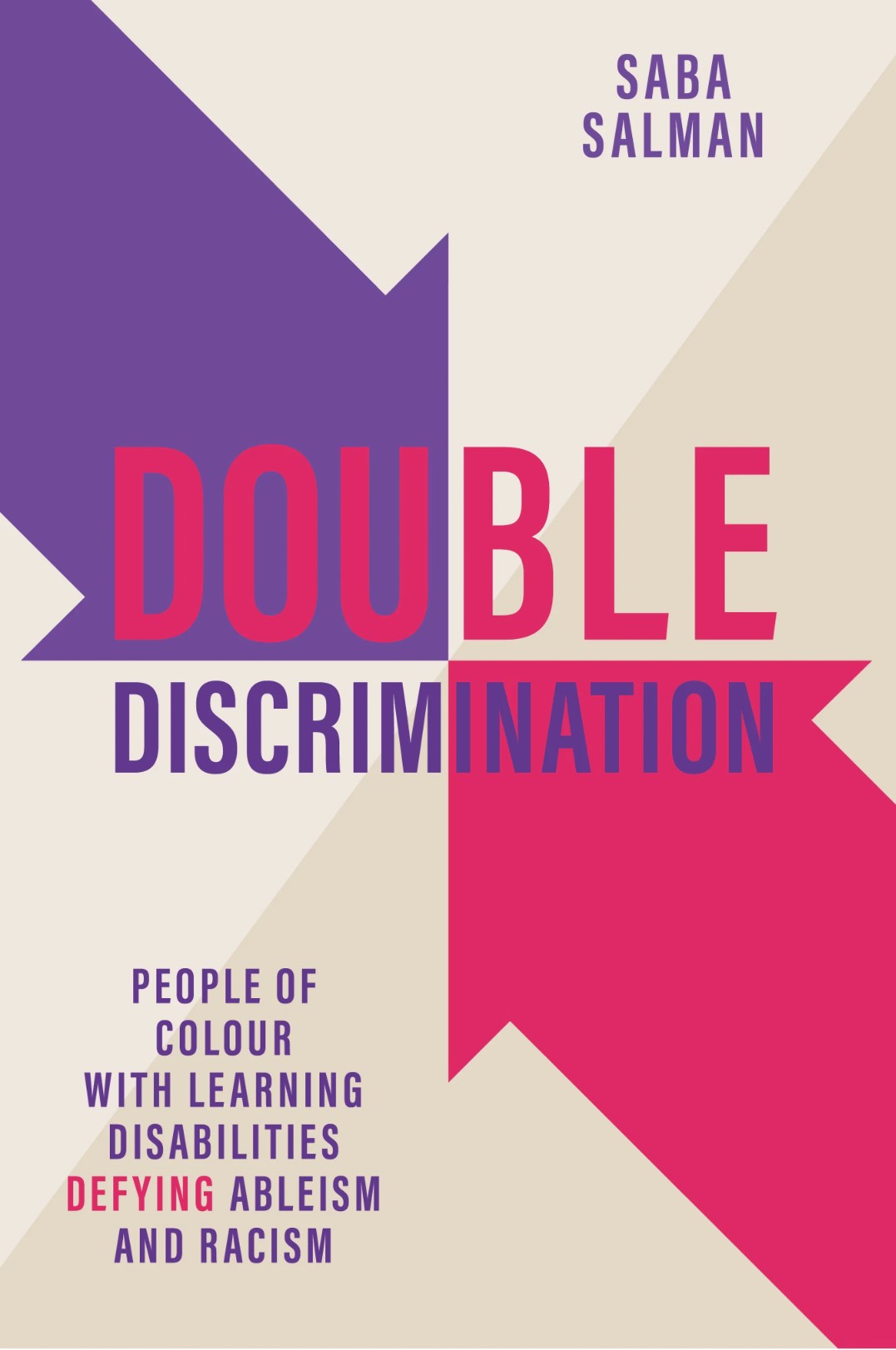
Saba Salman, who grew up in Worthing, has published Double Discrimination: People of Colour with Learning Disabilities Defying Ableism and Racism through Jessica Kingsley Publishers, priced at £14.99. Her youngest sister, Raana, was the reason she wrote this book, as she was for Salman's earlier title, Made Possible. Salman had long viewed the barriers her sister meets through a disability lens, then recognised how much greater the risks grew because of Raana's Asian heritage. She calls that compounded exposure a double whammy, and it pushed her to investigate further. What she produced is a deeply personal account of the twin forces of racism and ableism bearing down on People of Colour who have Learning Disabilities, alongside the work of individuals and professionals who are taking those barriers apart.
Salman describes a double invisibility. When most people picture a Person with a Disability, they do not picture someone like Raana, who is British, South Asian, and has a Learning Disability. When they picture a Person of Colour, a Learning Disability does not enter the frame. Both belong to Raana, and Salman argues her sister must be recognised in full, as one person whose race and disability are inseparable. The book also examines how widely accepted ideas such as institutional racism and unconscious bias still leave People of Colour with Learning Disabilities outside the conversation. People with Learning Disabilities are routinely overlooked even in ordinary circumstances, and Salman writes that this group sits at the margins of a population that is itself already marginalised.
The spark came during the Coronavirus Disease 2019 (COVID 19) pandemic, when the highest risk fell on Black and Asian communities and on People with Learning Disabilities. Over two years Salman directed her journalism toward what People of Colour with Learning Disabilities actually live through, mapping first where support fell away and where health risks climbed, then where answers were being built. Her evidence shows that inequality in health, housing, employment and education runs at a shocking scale. She wrote while the world grew more polarised and while political rhetoric turned harsh and ableist in the competition for votes. Salman, whose journalism covers social affairs and public services, argues that naming how communities are failed matters, and that pointing to what works matters every bit as much.
The closing section of the book belongs to what is working: grassroots defiance and optimism carried by families, by activists, by charities and by organisations in the public sector. Salman consulted many people with lived experience about what a useful book would contain, and their insights shaped the result. Working with her essayists meant collaborating with people who are rarely given a hearing. The book opens as an introduction, sharpens into a provocation, and closes by asking readers to act, drawing in a great many people who refuse to accept injustice. Community Builders picture a vibrant community as a mosaic of members pushed to the margins by race, by disability, by age, by gender and by culture, and Raana stands inside two of those categories at the same moment. A community that keeps its race work on one track and its disability work on another will keep missing her, which is how an entire population inside a community goes unseen while both tracks report progress. The teaching that any tolerated discrimination should fall in favour of the minority, racial or otherwise, settles the order of priority: the people carrying two forms of exclusion hold the first claim on attention, never the last. Building Vibrant, Diverse, Inclusive, Accessible Communities for People with Disabilities therefore means planning with People of Colour who have Disabilities in the room, which is exactly what Salman did when she let people with lived experience shape a book about their own lives.
Read the Full Article: Living at the intersection of race and disability.
By: Phil Hewitt
