
Striving to remove barriers that prevent us from building Vibrant, Diverse, Inclusive, Accessible Communities!
David Turner's new history of disability in Britain sets two truths side by side. Across centuries, the public and political attitudes that surround People with Disabilities have barely improved, even as nearly everything else about their lives has been transformed. The book opens in the seventeenth century, where men and women had to demonstrate a sufficient degree of disability to qualify for parish support and avoid starvation, a demand that anyone navigating modern disability assistance would find painfully familiar. Turner, a professor at Swansea University, argues that progress of this kind was never handed down by those in power but was instead secured through the organized efforts of People with Disabilities and their communities themselves.
The book's sweeping history is carried by remarkable individual lives. At the turn of the eighteenth century, Duncan Campbell, a Deaf aristocrat, became a public sensation as a psychic, drawing on the myths and rumors that surrounded his deafness to build his fame at a time when Deaf People were wrongly assumed to be childlike and incapable of learning. What links Campbell to the many others Turner profiles is that they did more than push back against the material limits placed on them. They rejected the false assumptions society attached to their disability, and the portrait that emerges is of resourceful, determined people rather than a powerless group.
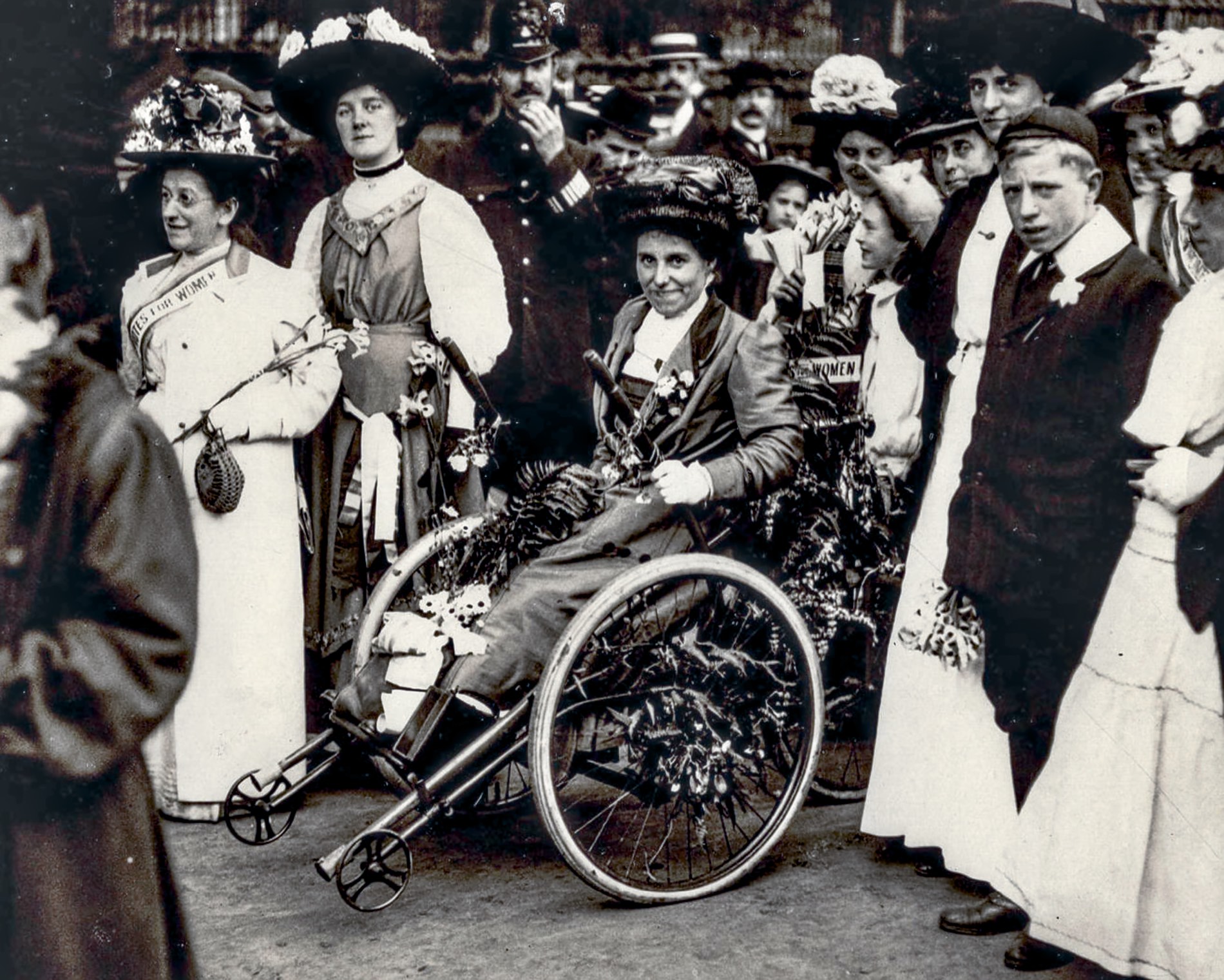
Throughout the book, People with Disabilities make their case through direct and confrontational action. May Billinghurst, a suffrage campaigner, steered her custom made hand operated tricycle directly into police lines as a deliberate act of civil disobedience during the fight for women's votes. Two centuries after Campbell, Megan du Boisson, a housewife in the 1960s, campaigned for a new kind of disability payment, the first to be granted on the basis of a person's disability alone, confronting support schemes that reached only people hurt during military service or on the job, which excluded nearly every woman with a disability. Both women acted to claim rights that society had refused to grant.
The figures Turner gathers are not household names, and that absence is itself a measure of how thoroughly disability history has been pushed aside. Billinghurst surely belongs in the same company as the most celebrated campaigners for women's votes. The book also restores Vic Finkelstein, an activist against apartheid who carried lessons from South Africa into the disability movement and first set out what became known as the social model of disability in the early 1970s, and William Hay, an eighteenth century member of parliament whom Turner identifies as the first to write about disability as a personal identity. Turner rejects the false story that casts People with Disabilities as passive figures shaped only by discrimination or charity, arguing instead that they have resisted and fought in every era to improve their own lives, and his account asks readers to let People with Disabilities speak in their own voices. That same work belongs to every community committed to removing the barriers that stand in the way of building Vibrant, Diverse, Inclusive, Accessible Communities.
Read the Full Article: Disability by David Turner review – a revelatory new history.
By: Lucy Webster
