
Striving to remove barriers that prevent us from building Vibrant, Diverse, Inclusive, Accessible Communities!
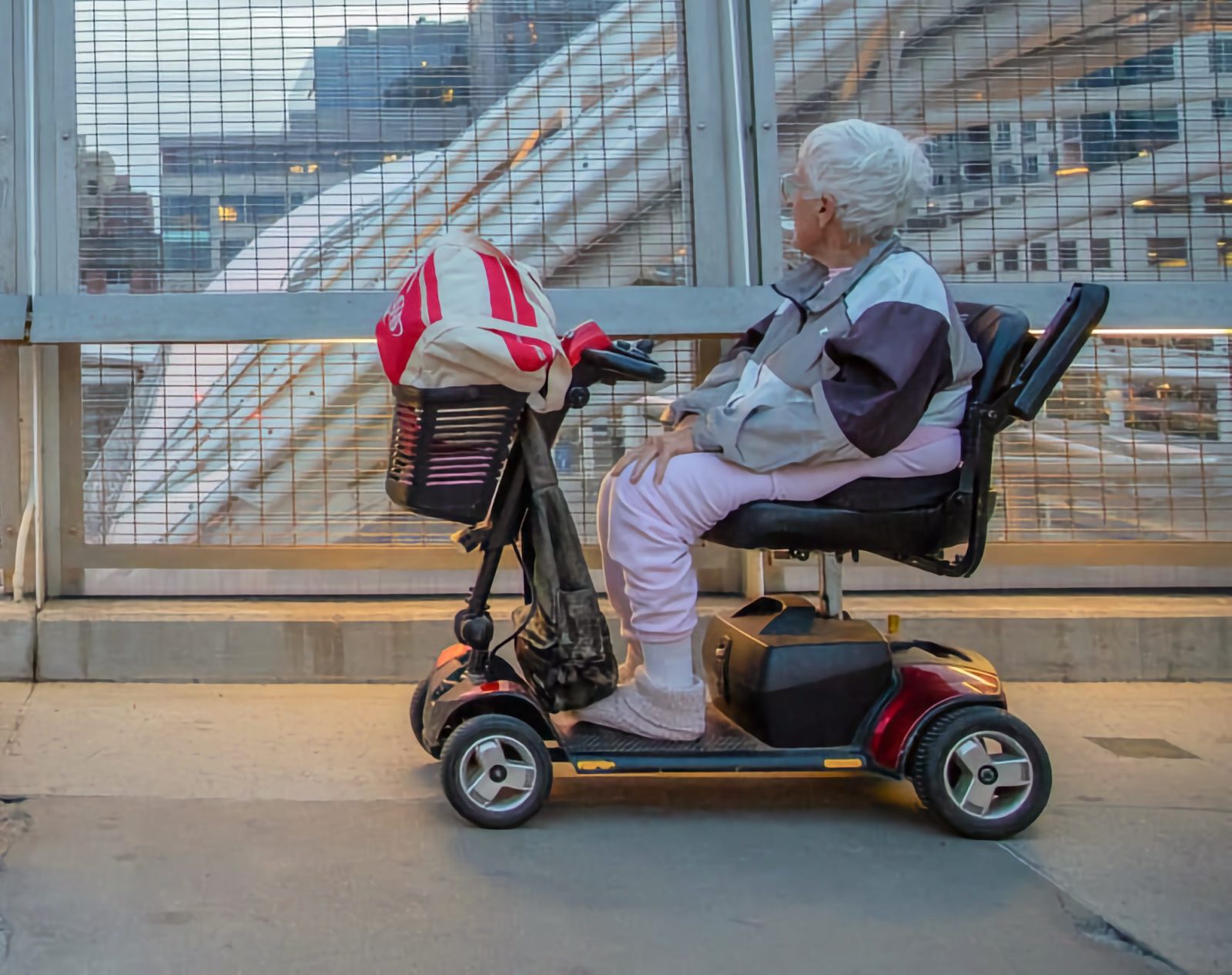
Anne Marie Jones, a 72 year old from Southern California who was born with spina bifida and uses a wheelchair, travels the world mostly on her own, Kathleen Wong reports in USA TODAY. Jones grew up in a family that loved to travel. A trip to Japan at 16 changed her life, and a year studying in England at 20 made her far more confident and taught her to enjoy talking with strangers.
When her legs weakened more than a decade ago, Jones feared her travels were over, but she found that flying still worked and began going wherever she wanted as a wheelchair user. Facebook groups of fellow Travelers with Disabilities gave her community and practical tips. On her first trip with a wheelchair, to Rome, she rented a scooter for the cobblestones and hired an accessible tour company, and she has since gone adaptive skydiving in Utah, handcycling in Taiwan and sit skiing at Breckenridge in Colorado.
Planning remains hard work. Even rooms called accessible under the Americans with Disabilities Act (ADA) must have enough bathroom space and grab bars for her to shower and use the toilet on her own. On a Camino de Santiago tour in northern Spain, missing accessible toilets meant someone had to carry her, and steps kept her out of Antoni Gaudí's La Pedrera in Barcelona. Companies such as Wheel the World now verify accessible destinations by measuring more than 200 details, from restaurants to bed heights, and Jones joined one of its group trips to Costa Rica, where she surfed.
Travel belongs to People with Disabilities of every age. Jones rejects the assumption that People with Disabilities lack the energy or the money to travel, and the article notes a survey finding that travelers with mobility disabilities travel as often as others. Her advice is to keep traveling and change the destination or the way of getting there when needed, as she has with cruises and a three week solo road trip through Yellowstone and Grand Teton National Parks. Accessible national parks, design shaped by the curb cut effect, and attention to the barriers older travelers share with People with Disabilities all remove what stands between travelers and the places they want to see.
Hotels and tour operators in our area should measure and publish the real access details of their rooms, bathrooms and sites. Every room or space called accessible should let a wheelchair user enter, shower and use the toilet on their own. Travel open to People with Disabilities at every age would move us toward Vibrant, Diverse, Inclusive, Accessible Communities for People with Disabilities.
There is no one right way to see the world.
Read the Full Article: At 72, this wheelchair user travels the world on her own.
By: Kathleen Wong
Questions for Reflection
- Do the hotels and venues in our area publish real access details, such as bathroom space and grab bars?
- When has a space called accessible turned out to shut out a wheelchair user we know?
- How could tour and travel groups near us plan trips so a wheelchair user can join on their own?
- What assumptions do we make about whether older adults or People with Disabilities travel?
- Which places in our community would a traveler like Anne Marie Jones find closed to her, and what would open them?

Also See:
- Magic has limits: Woman in wheelchair is excited about solo travel to Disney World. Then she learned her ‘accessible’ hotel needed a companion
- 5 national parks that put accessibility first
- The Curb Cut Effect
- Entitled Dad Demands Elderly Woman’s Wheelchair For His Tired Son, Gets A Brutal Reality Check
- Overlap Between Barriers Faced by Seniors and People with Disabilities