
Striving to remove barriers that prevent us from building Vibrant, Diverse, Inclusive, Accessible Communities!
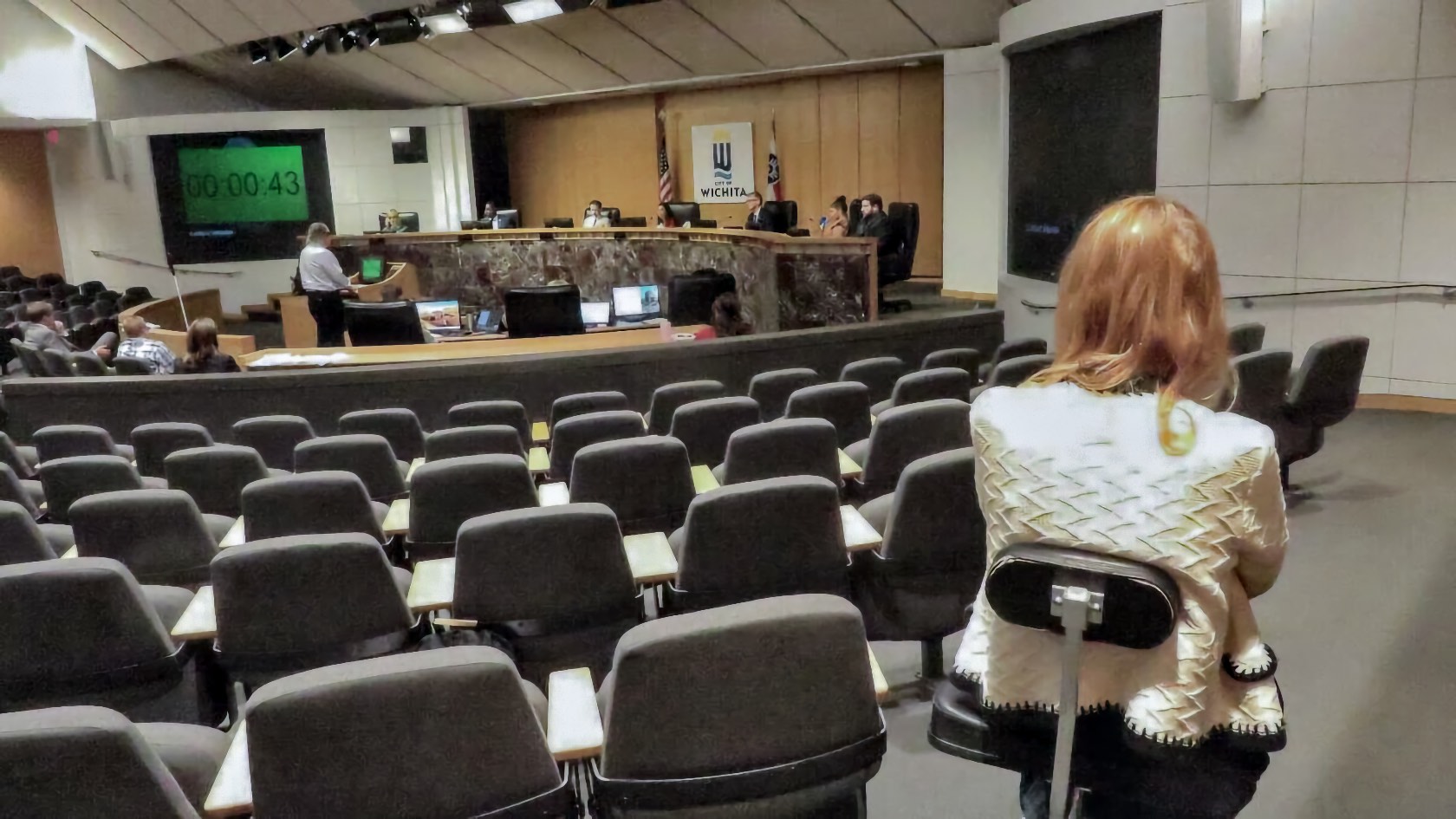
A joint city and county access advisory board in Wichita, Kansas, exists so that People with Disabilities hold a standing voice in how their community is built. A plan to cut that board from 32 members down to 7 voting members and 4 nonvoting advisors was written without a single voice from the People it claims to represent, then handed to those members on the Thursday before a Tuesday hearing, even though the paperwork carried a date three weeks older. The board learned about its own reduction the way outsiders learn about weather. Every argument for a leaner structure was assembled by nondisabled policymakers who defined efficiency and effectiveness on their own terms, and the People who would live with the result were the last to see the page.
One scheduling remark made the whole pattern visible. A proposal to hold the follow up hearing in the evening, so that People with jobs or classes could attend, sounded generous until the board chair raised a hand from the back of the room, got no notice, and rolled her power wheelchair down to the microphone to say it plainly: paratransit in Wichita does not run at night, and the vehicles that carry People who use power wheelchairs stop running before the evening begins, with lift equipped vans off the road after 7:30 p.m. Disability covers a wide span of distinct barriers, and an evening hearing that costs an older person with a car nothing, and costs a Blind Person taking a ride share nothing, silently locks out every person whose only route to that room departs before sunset.
The case for shrinking the board rested on a list of operational barriers: seats sitting empty, appointees skipping meetings, inefficient sessions, and inconsistent appointment processes. Each of those items traces back to the appointing authorities themselves. Seats went unfilled for more than two years. Members who had not attended in over a year were reappointed anyway, after the absences were raised directly. Minute taking was abandoned, leaving the board to record its own proceedings, and online access stayed unreliable until a July meeting collapsed for lack of technology support. When the services a body of People with Disabilities requires were quietly allowed to lapse, the honest response is to remove the barriers that caused the lapse, not to cite the wreckage as proof that fewer People with Disabilities should be in the room.
The people who never face a barrier are the last people who should decide whether it exists. Community Builders, this article hands us a fourth point we cannot set aside: disability is not one experience but many, and a body reduced to a handful of seats cannot possibly hold the distinct barriers that People with power wheelchairs, Blind People, Deaf People, older People with Disabilities, and People with invisible disabilities each carry into a room. We hold the position that People with Disabilities must have a governing voice in the rooms where their access is decided, not a comment period bolted onto a finished plan. Here is the friction we have to own: we do this too. We build the agenda, pick the hour, book the hall, and only then invite People with Disabilities to react, and when the hour we chose puts the room out of reach, we quietly read the empty chairs as disinterest.
So here is something we can try with whatever is already sitting on our calendar. Instead of picking the date, the place, and the start time and then sending the invitation, we bring People with Disabilities into that choice while it is still a choice, and we spend ten minutes this week finding out exactly when the last accessible van in our town heads home. That hour belongs on our planning sheet right next to the room number, because a Vibrant, Diverse, Inclusive, Accessible Community is one where nobody has to duck out early to catch the only ride they have.
Do that and we stop guessing which barriers are real, because the People who travel through them will be sitting right there with us when the decision gets made.
Read the Full Article: Here's why Wichita needs to listen to its residents with disabilities | Opinion.
By: Dion Lefler

