
Striving to remove barriers that prevent us from building Vibrant, Diverse, Inclusive, Accessible Communities!
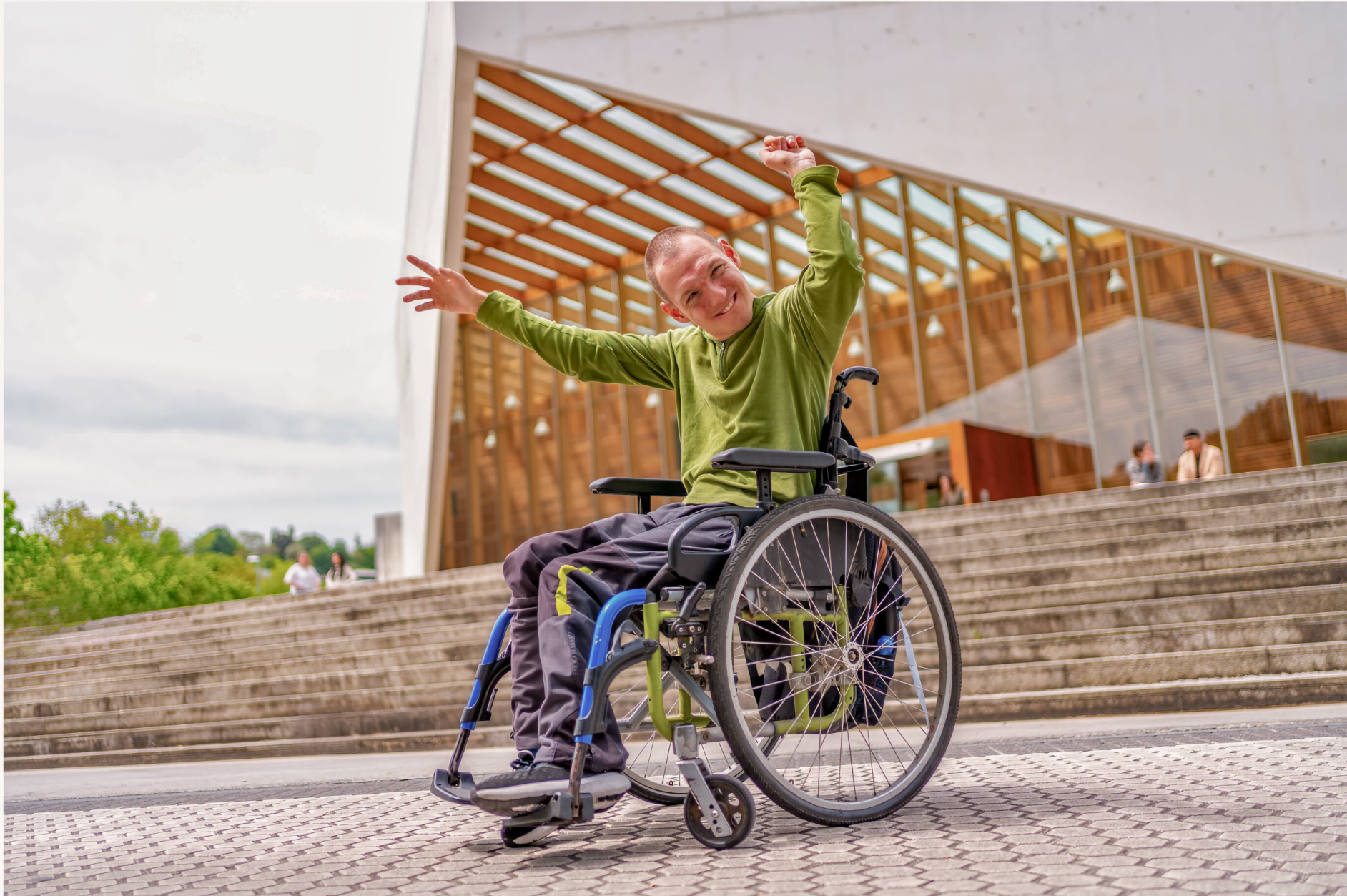
Every March, social media fills with messages recognizing National Cerebral Palsy Awareness Month. To many people, it may seem like just another awareness campaign. But for the millions living with cerebral palsy and the families who love them, it represents something much deeper: visibility, understanding and the hope for a more barrier-free and accessible future. Oklahoma is no exception. It's estimated that 691,000 people in the state have at least one disability. Based on a population of nearly 4 million and applying the national prevalence rate of about 3 cases per 1,000 people, it is estimated that roughly 12,000 Oklahomans are affected by cerebral palsy. My childhood came with barriers like extra doctor appointments, physical hurdles and a world that wasn't always built for someone like me. Still, when I went across the stage at my college graduation, diploma in hand, I felt like I had finally moved past those barriers. I believed graduating with honors proved that perseverance could carry me through anything. Soon after, though, I faced a harsh reality. Opportunity doesn't always follow achievement. And the job market wasn't always ready to see past my disability.
The physical aspects of cerebral palsy are often the first things people notice. There's no hiding the difficulty walking, the muscle stiffness, involuntary movements or the use of mobility aids. But the invisible barriers can be just as demanding: chronic fatigue, pain, sensory sensitivities and speech difficulties make daily life a constant exercise in problem-solving. Something as simple as navigating a crowded room, using public transportation or attending social events can require far more planning and energy than most people realize, or would tolerate.
These daily hurdles are often compounded by social and professional barriers. Many employers underestimate the abilities of People with Disabilities. Others assume productivity will be limited. As a result, unemployment and underemployment rates for People with cerebral palsy remain disproportionately high, even among those with college degrees and specialized skills. The problem isn't a lack of talent. It's bias, outdated perceptions and systemic barriers that prevent true inclusion. Personally, the job search for me was beyond disheartening. It shattered my self-confidence. Those closest to me could see the toll it took. I was left frustrated, agitated and at times depressed.
For many People with Disabilities, entrepreneurship becomes a path to opportunity, sometimes out of necessity. Building a business allows People with cerebral palsy to create work environments that support their full participation, set flexible schedules around fatigue or medical appointments, and focus on their strengths rather than constantly adapting to a system not built for full access. Across the country, People with cerebral palsy are launching consulting firms, marketing agencies, nonprofits, creative studios and tech startups. What was once viewed as a barrier is becoming a platform for innovation. Entrepreneurship isn't without its challenges. Access to capital, mentorship and professional networks can be more limited for People with Disabilities. Societal assumptions can also make funding and partnerships harder to secure. Yet for those who remove these barriers, self-employment often provides not only economic independence, but also a powerful sense of agency and the ability to define success on their own terms. When society begins to understand both the barriers People with cerebral palsy face and the potential they bring, doors start to open. Every step forward, whether in education, employment or entrepreneurship, moves us closer to a world where potential is never underestimated. For community builders, this is the work: inclusion and access for People with Disabilities are not products to be purchased or outsourced — they are shared responsibilities, owned personally by each of us, enacted in every decision we make, ensuring People with cerebral palsy are fully embraced as essential members of the communities we are building together.
Read the Full Article: People with cerebral palsy need society to see their potential | Opinion.
By: Tom Jenkins
