
Striving to remove barriers that prevent us from building Vibrant, Diverse, Inclusive, Accessible Communities!
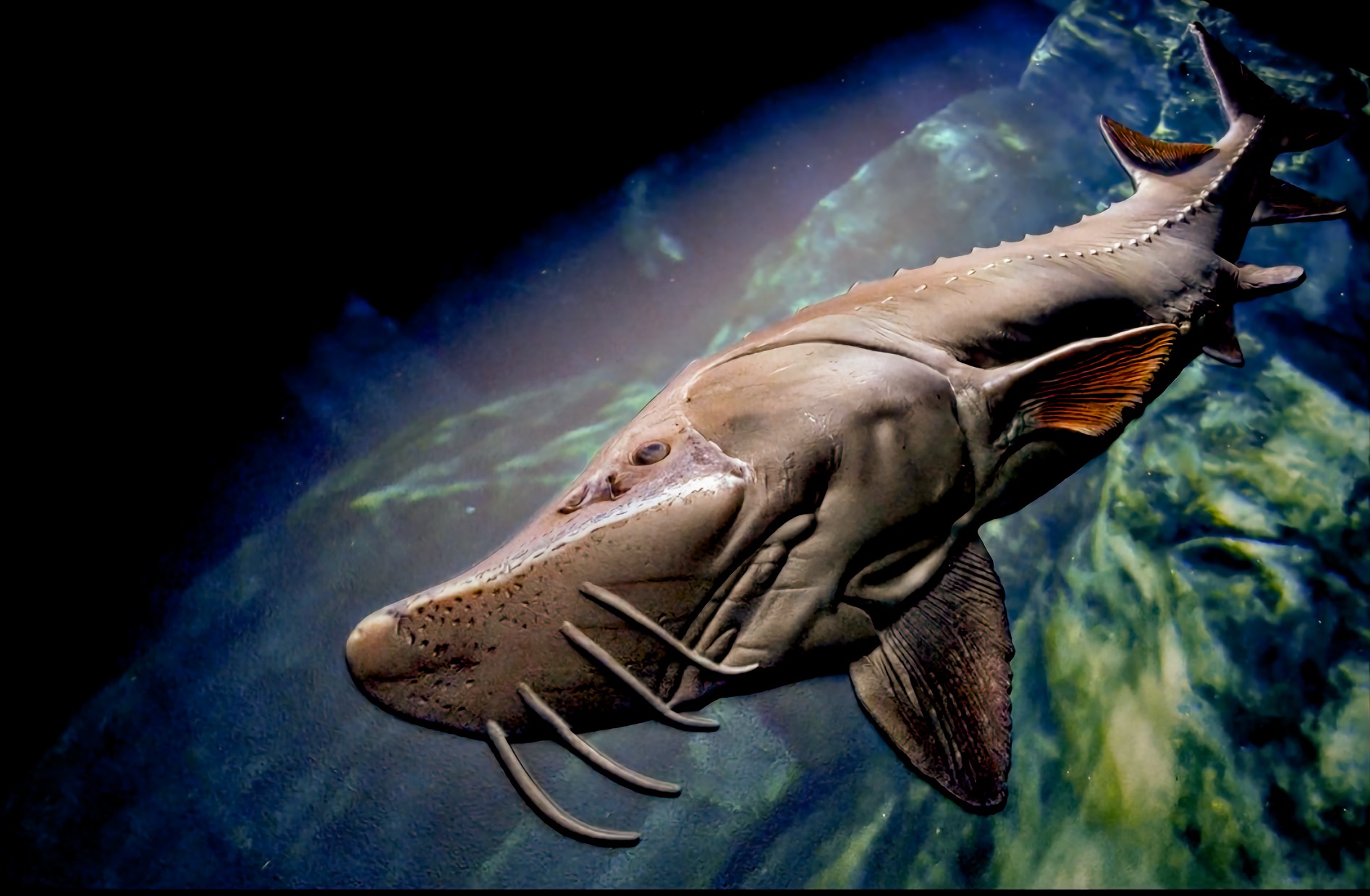
Blind People are the ones to ask what an aquarium actually gives them, and Tactile Images puts that question to institutions directly: science centers and museums have largely started setting out items a visitor who is Blind can handle, so what is waiting at the local aquarium? Glass and water. A tank is the purest form of the exhibit built for looking, since even the guests who can see it are kept back from the animal, and everything the visit offers arrives through the eye. The company's answer is to build the animal at full size and mount it where hands can reach. When an aquarium leaves a guest who is Blind standing in front of a lit tank with nothing else on offer, the barrier is the room, not the guest standing in it.
At the ECHO Leahy Center for Lake Champlain that answer takes the shape of a lake sturgeon, built at full size, 53 inches long, and raised clear of the water scene behind it so a hand can travel the whole animal the way an eye would. The flattened snout runs out to a blunt tip, four barbels trail underneath, and the mouth opens downward. Hard bony plates sit in rows along the ridge of the back and the flanks. The pectoral fins spread wide, the dorsal fin stands tall toward the rear, and the tail forks with the upper lobe running longer than the lower. None of that shape, texture or detail crosses the glass of a tank. All of it crosses through objects a visitor can examine by hand, which is what an exhibit becomes once an institution accepts that its collection is meant for more than looking.
The touchable object is only half of the work. On the company's tactile displays the raised artwork sits in a frame carrying braille text and labeled buttons, and each button opens a subject. Beside a mural by Sante Graziani the buttons cover the mural itself, the competition that chose it, the artist who painted it, and the technique he used. Beside a relief panel on atoms, one button explains where the atoms in a person's body have already been, another covers the building blocks nature works with, and another explains how atoms move from one thing to the next. A visitor who is Blind takes those subjects in any order and stays with any of them as long as they want, which is what other visitors do with wall labels. That is the difference between an exhibit described to someone and an exhibit set down in braille a Blind reader takes in directly, and the company's traveling exhibitions reel shows the second one: a person who is Blind crossing a gallery with a white cane, framed work on the walls, tactile pieces waiting in their own enclosures.
The size of what is still missing sits on the company's own website: more than 285 million Blind People and People with Low Vision, 80 percent of human learning routed through sight, and seven in ten Blind People and People with Low Vision coming away from an art museum with no sense of autonomy. Against that, the work already exists and already moves, since a partnership between the Nebraska state commission serving Blind People and People with Low Vision and that state's museums has produced a pattern that other state bodies, commissions and cultural institutions can follow so that exhibitions are accessible to Blind People and People with Low Vision, ready made traveling exhibitions circulate worldwide, and custom pieces can be built for a particular hall. That question about the aquarium belongs to Community Builders too, because Community Builders design and present things: the slide deck, the display board, the map, the chart, the diagram, the object passed around a gathering, the handout on the table. Every one of them is a tank if looking is the only way in. Community Builders carry the work of removing barriers as a shared responsibility, owned personally by each of us and enacted collectively through decisions made in consultation with People with Disabilities, woven through planning, presentation and every revision after, never bolted on at the end. So put the question to the next thing you are building before you build it, and put it first to the Blind People in your community, who will tell you in their own words what belongs on that table.
Read the Full Article: What happens when aquarium exhibits become tactile?.
By: John Olson
