
Striving to remove barriers that prevent us from building Vibrant, Diverse, Inclusive, Accessible Communities!
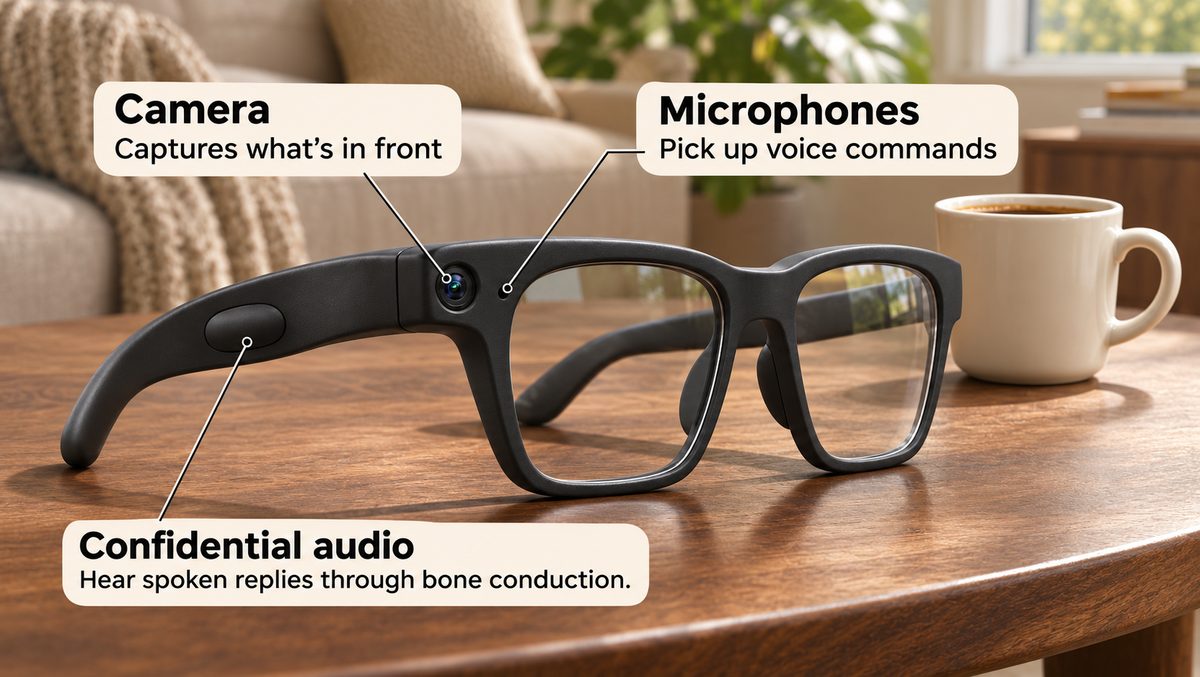
Blind People now use artificial intelligence (AI) tools to have photographs described, text read aloud, and surroundings explained, and to create tactile images, and smart glasses give them a way to gather that information hands free. Questions about who can see the images those glasses capture, what is kept, and how AI is trained deserve serious answers. Yet the public conversation has settled on distrust of the glasses and of everyone who wears them, and Blind People are either missing from the room or portrayed as people a technology company is using. Both pictures erase the fact that Blind People decide, act, and speak for themselves. Blind People are discerning consumers who try tools out, test the claims behind them, and keep or reject each one on their own judgment. Acting together, Blind People have bargained with large companies, influenced laws and policies, and pressed government agencies to answer for their actions, and a Blind person may decide on smart glasses or decide against them. Both choices are agency.
No tool makes Blind People independent, and the message that one will is not new. Artificial intelligence, smart glasses, screen readers, Braille displays, text recognition, and even the white cane are valuable tools, yet none has ever delivered independence. Each is worth less to a Blind person who has been given no reason to believe in their own judgment. Independence lives in the person: in the capacity to learn, the confidence to decide, the methods Blind People work out for getting things done without sight, and the willingness to try, fail, and try again, all strengthened by what Blind People share with one another. The wider public now uses text to speech, wayfinding tools, and digital books that grew out of Blind People’s lived experience. Smart glasses work best with quality training, so the movement refuses to market and distribute them for makers who openly deny funding that training. It calls that kind of marketing irresponsible, because it tells the public that products hold the power and people do not.
Real misconduct fuels the backlash against smart glasses: people have been recorded in secret, harassed, identified without consent, and turned into content, and that conduct deserves meaningful consequences. But conduct and devices are different things. The fix for harassment is a rule against harassment, and the fix for covert recording is a rule against covert recording. A ban on an entire kind of device, or shaming everyone who wears one, also lands on a Blind person checking a menu, choosing a product from a store shelf, or confirming that a bus has arrived. It puts that person in danger too, because a confrontation that approaches unseen leaves no chance to say what the glasses are for. A sighted person gets the same information from a glance at a package, a sign, a menu, or a room full of friends, so Blind People deserve equal access to the information in their surroundings, and privacy rules should protect privacy without taking that access away. A school, business, or venue that restricts these devices should include a clear way for a Blind person to ask for access, so no one is forced to give up access or admission.
The best tool is only as strong as the person who chooses it. The fourth point is about who leads. While artificial intelligence systems take shape, while privacy standards for new technology are debated, and while companies and venues write rules for cameras, biometric information, and wearable technology, Blind People should take part in shaping every one of them through their own movement. A company that puts Blind People in its advertising to show off its virtue is treating them as props while its business practices go unquestioned, and a rule written without Blind People claims to protect them by deciding for them. The message to makers is to build with Blind People, never merely for them, and the message to venues is to address harmful conduct, keep access open, and stop treating every wearer as a suspect. We know from our own work that People with Disabilities, who know where the barriers sit, should guide our plans from the start, and this article shows how often that step is skipped when technology rules are being made.
When we write the rules for a venue of our own, we should aim them at covert recording and harassment, never at smart glasses themselves. Beside each of those rules, we should state a clear way for a Blind person to ask for access, so that admission never costs a person their access. Rules that name the harm and leave the door open to Blind wearers would put us on the road to Vibrant, Diverse, Inclusive, Accessible Communities for People with Disabilities.
Rules that leave the choice of tool to each Blind person keep the strength where the moral places it.
Read the Full Article: The Independence Comes from Us—There is Nothing Artificial About Our Intelligence.
By: Mark Riccobono
Questions for Reflection
- The article says a Blind person may choose smart glasses or decide against them, and both choices are agency. When we plan, which tool do we quietly assume a Blind person will use?
- Independence is described as living in the person, not in any tool. Where do our plans lean on a product to do what training, opportunity, and high expectations should do?
- A confrontation over smart glasses can reach a Blind wearer unseen, with no chance to explain. When we write a rule about cameras, who do we ask first how it would land on a Blind person?
- A sighted person takes in a sign, a menu, or a room with a glance. Which information at our own events reaches people only through sight?
- The article says Blind People are not props for a company’s virtue. When we show Blind People in our own materials, who chose the picture, and who was asked?
- Makers are told to build with Blind People, never merely for them. Whose voice belongs in the room before our next plan is final, and who will we ask this week?
