
Striving to remove barriers that prevent us from building Vibrant, Diverse, Inclusive, Accessible Communities!
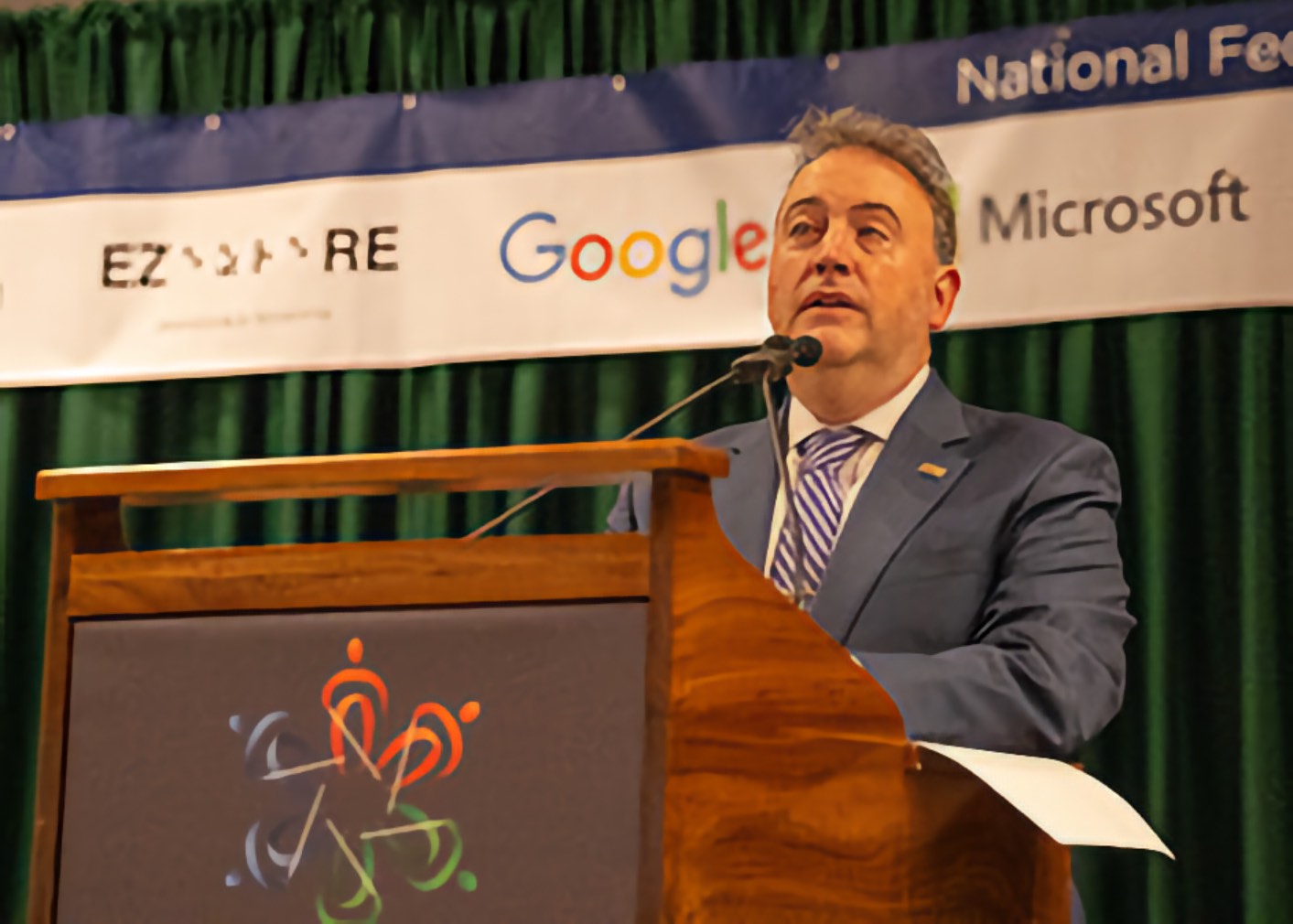
At the 2026 convention of the National Federation of the Blind (NFB) in Austin, Texas, President Mark A. Riccobono set out a year of work by Blind People and the bonds that carry it. Two days earlier the country had marked 250 years, and the equality declared at its founding still has not reached Blind Americans. School is where that gap opens first, and Students who are Blind are still turned away from what their schooling demands. Silas is eleven, reads Braille, and lives with a mother and father who are both Blind. His district ruled that he had too much sight to keep receiving services, moved to stop producing his Braille, large print, and electronic text, and cut his service time in half. His parents' requests were dismissed as unreasonable until the NFB stood with the family, and Silas will now receive everything his education requires. Natalie Charbonneau, a graduate student who is Blind, watched her scientific career stall while advanced course materials reached her late or in formats she could not read. She is back at her university today, working toward a doctorate in marine mammal science.
Blind People keep proving what they can do, and employers keep deciding in advance that they cannot. A physical therapist with over fifteen years behind him was hired, then lost the offer one day after telling the employer he is Blind and asking for reasonable workplace access. Doug Langley was hired at a fulfillment center where other Blind People already did that very job, yet managers sent him home on his first morning. Months passed with no pay before he was handed a light duty task giving out safety shoes. Federal officials have since confirmed what Blind People already knew: since at least 2020, that employer has denied Workers with Disabilities nationwide the rights the Americans with Disabilities Act (ADA) affirms. Jaclyne Atoigue, a licensed clinical social worker who is Blind, won a competitive placement in child protective services (CPS), only for a hiring manager to write, in so many words, that Blind People should not bother applying because she does not drive. Driving is no measure of the skills social work actually demands.
The pressure now comes from government itself. Blind Americans waited sixteen years for federal rules that would finally open public websites and mobile apps to them. Days before those rules were due to take effect in spring 2026, federal agencies postponed them without letting the public comment, and they have signaled they may weaken them further. Every day of delay shuts Blind People out of voting, medical appointments, educational programs, government jobs, professional licenses, and public benefits. Equal access deferred is equal access refused. At the same time, nine states renewed an attack on Section 504 of the Rehabilitation Act of 1973, aiming at the right of People with Disabilities to receive services where they actually live. Those states raise no objection to sheltered workshops or nursing homes. What they object to is People with Disabilities living among them. Federation members answered by calling those states directly, and one affiliate president pressed until a deputy official sat down with him and heard that Blind residents build up their state. That state stepped away, and six remain.
The people who live a story are the ones who should tell it. Blind People are taking that role for themselves. Blind professionals will design and lead the NFB Youth Slam, set for July 25 to 31, 2027, at Loyola University Maryland, and to anyone who says Blind People cannot become chefs, electricians, carpenters, or executives, the answer is "Slam that!" Through Blind Unbound, the NFB is gathering oral histories and cataloguing its archives, and legislation now before Congress would make its headquarters a national museum honoring the Blind People's movement. Blind People expect a place at the first stage of new technology as well, not access added after the design is finished. Removing barriers in our own work should begin the same way, with our events, materials, and websites built to the accessibility standards used worldwide and shaped alongside the People with Disabilities who meet those barriers. Blind People are still asked to wait while others speak for them and while access arrives last.
Ask the Blind People joining a program we run which format they read, and have Braille, large print, or electronic text ready before it opens. A boy of eleven lost his Braille the moment a school ruled that his remaining sight was enough, and his parents' request to keep it was brushed aside as unreasonable. Braille that arrives without an argument is a real step toward Vibrant, Diverse, Inclusive, Accessible Communities for People with Disabilities.
When Blind People shape a plan from its first day, the story it tells is theirs.
Read the Full Article: The 2026 Presidential Report.
By: Mark A. Riccobono
