
Striving to remove barriers that prevent us from building Vibrant, Diverse, Inclusive, Accessible Communities!
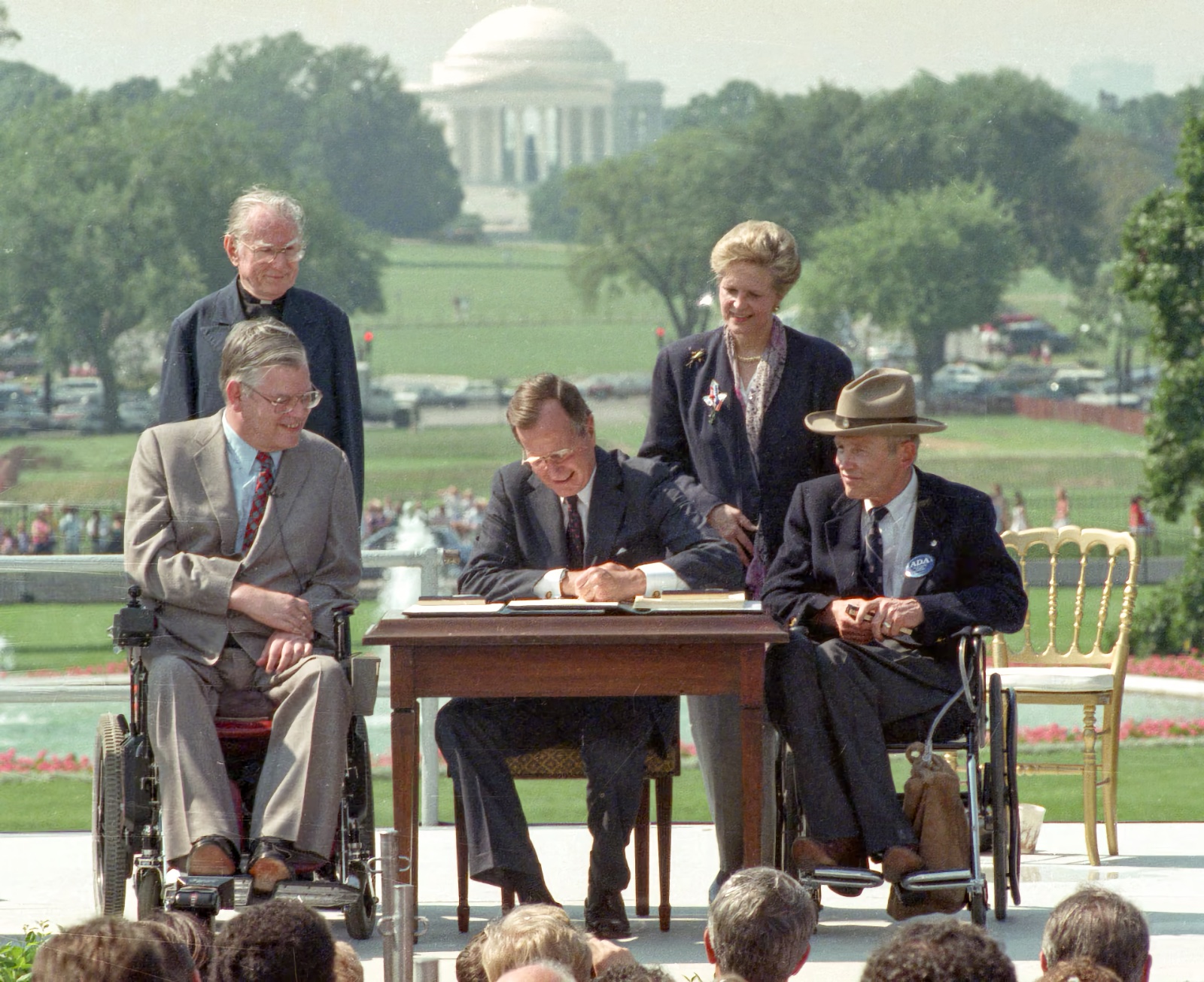
The Americans with Disabilities Act (ADA) has existed nearly as long as the Internet. Since the 1990s, governments — specifically state and local government entities — have moved online. Applying for benefits, getting an education, paying taxes, accessing public records, and participating in civic life increasingly happens through websites and mobile apps. For People with Disabilities, the ADA promises that those digital doors should be open to them. Yet now, after decades of delay, some state and local governments are asking to keep those doors closed longer. Title II of the ADA requires state and local governments to ensure their communications with People with Disabilities are "as effective as" communications with nondisabled individuals — and this obligation includes the internet and mobile applications. Thirty-four years after the ADA's passage, the Department of Justice (DOJ) issued a final regulation governing accessibility of web information and services, representing long-overdue progress for Blind People and other People with Disabilities who have waited decades for reliable access to government services online.
In 2024, state and local governments got exactly what they had been asking for. The Department first announced its intention to promulgate regulations in this area in 2010, issuing an advance notice of proposed rulemaking (ANPRM) and receiving approximately 400 comments. A supplemental ANPRM in 2016 received more than 200 comments, and a notice of proposed rulemaking (NPRM) in 2023 received nearly 350 more. After 14 years of public process and consideration, and nearly 1000 comments from stakeholders, the DOJ published the final rule on April 24, 2024. Yet, some of those same entities are now asking for more time. Even more troubling, the federal government is entertaining this notion by pursuing an interim final rule — a move that would take effect without public input. After decades of discussion and two years of implementation time, the argument that state and local governments still need more time rings hollow, to say the least.
For a Blind college student who cannot submit an assignment because a university website is inaccessible, delay is not an abstraction. Will the university grant her the same indefinite deadline it seeks for itself? For a resident with a disability trying to apply for benefits, pay taxes, or access public records, inaccessible websites mean exclusion from essential services. The ADA promises that those digital doors should be open to People with Disabilities — yet some state and local governments are asking to keep those inaccessible websites closed longer.
The legal obligation is not new. The ADA's requirement for equally effective communication has existed for more than 30 years. The new rule simply clarifies how that obligation applies to the modern digital world. Reopening the rule now would undermine years of public process and postpone equal access yet again. A Blind child who was in diapers when the advance notice of proposed rulemaking was published in 2010 would have been finishing their freshman year of high school when the final rule was published in 2024, and will be preparing to graduate by the full compliance date in 2027. It is outrageous that our nation cannot get this done. For Community Builders striving to remove barriers that prevent us from building Vibrant, Diverse, Inclusive, Accessible Communities: for millions of Blind People and other People with Disabilities, it is past time to fulfill the promise of the ADA in the online world.
Read the Full Article: Thirty-four years is long enough to make government websites accessible | Opinion.
By: Mark A. Riccobono
