
Striving to remove barriers that prevent us from building Vibrant, Diverse, Inclusive, Accessible Communities!
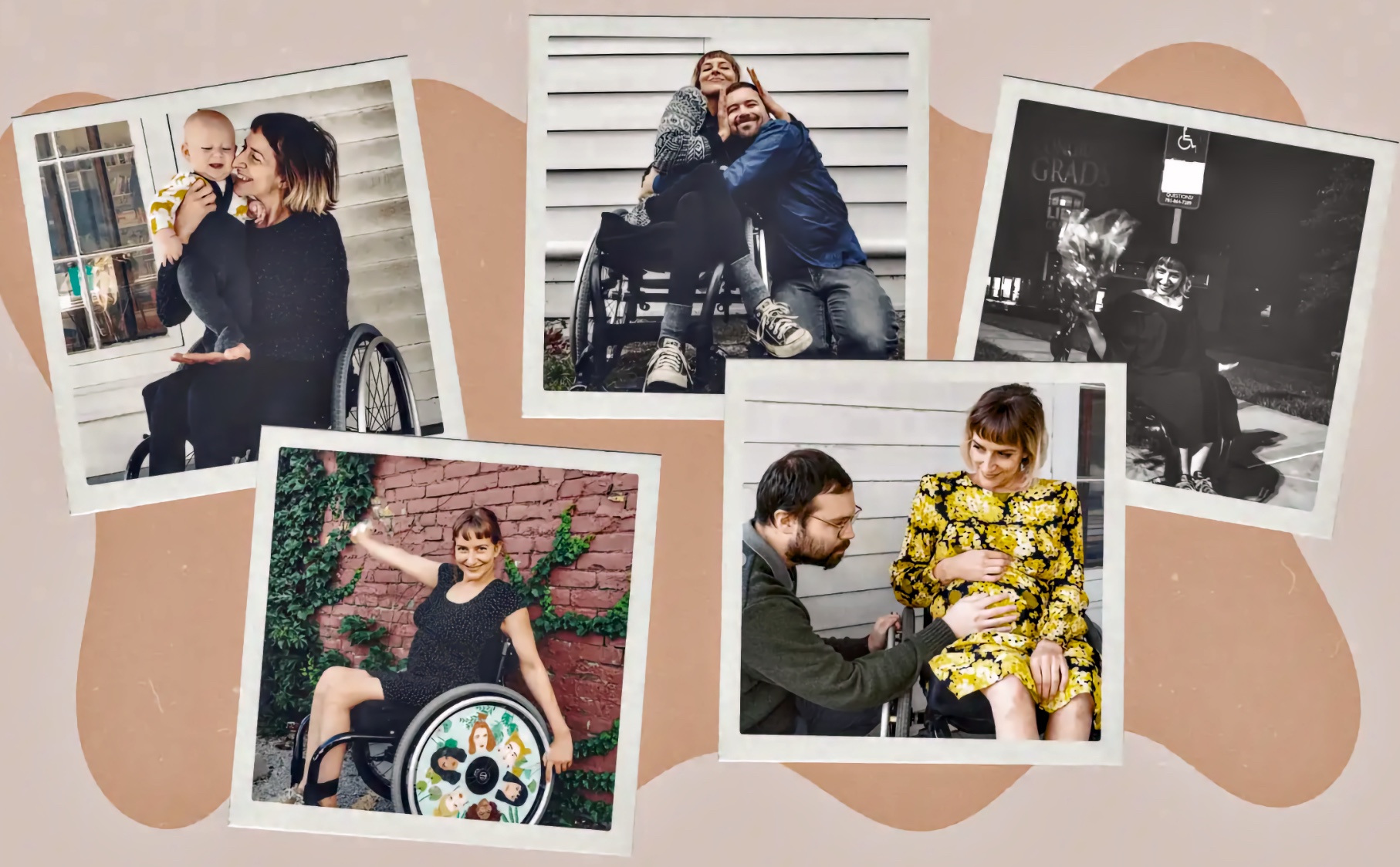
Taussig started using a wheelchair when she was 6 years old, and when she discovered disability studies in her late 20s during graduate school, she understood, for the first time in her life, disability as an identity — and this changed everything. She started creating what she called "mini-memoirs" on social media that brought readers into her firsthand experience of disability: the feeling of being stared at as she grips the side of her car, of being prayed over by strangers for her healing, of realizing as a little girl that none of the princesses looked like her. She started to understand the wheelchair as part of her brand — the image people recognize as they scroll — and over time rarely deviated from posts directly tied to disability; even if it wasn't at the center of the story, she made sure to connect the dots with a bold line for readers. She claims the titles disabled mother and disabled writer joyfully, yet reflects that brands aren't meant to capture every layer — they're curated — and as a collection, her posts inevitably drew a portrait missing some dimension.
Taussig learned her job early: when her family moved to Kansas City in the middle of the school year, she showed up to a new second-grade class in her hot-pink wheelchair while her mother filled in the details of her childhood cancer and subsequent paralysis, concluding, "She just wants to be treated like everyone else — now, does anyone have any questions?" — and the hands shot up; it is only 30 years later that she notices the irony of insisting one person "wants to be treated like everyone else" when that person is the only one with a designated time for Q&A. Her body inspired a response in those who saw her — fear, heartbreak, confusion, dismissal, curiosity — and she was there to help them understand, answer their questions, shift their thinking, make them feel better; when you live in a disabled body, your care, your survival often depends on your ability to know what the people in the room — doctors, teachers, caregivers, peers — want from you, and by the time she was 9 or 10, she started giving talks to auditoriums and sanctuaries full of people, providing them with a narrative of disability that could smooth out the wrinkles in their furrowed brows. What happens when that body intersects with social media — algorithms, likes and shares, podcast analytics, downloads per episode? With this kind of data, the mandate is made even more precise: explain, educate, alleviate, illuminate, and crush experience into little gems of wisdom thrown out like candy over an audience.
Do disabled people have the luxury of being seen with dimension when so many people still don't even know what ableism means — when interabled couples are still looked at with skepticism, when disabled people are still fighting for inclusion in schools, housing, and workplaces, when physicians across the country still perceive disability as a direct diminishment to quality of life, when 67 people die in a plane crash and the President of the United States baselessly suggests the tragedy is a result of the FAA's willingness to hire disabled employees? The federal government is cutting DEIA programs; Texas v. Becerra, a lawsuit filed by 17 states, seeks to make Section 504 of the Rehabilitation Act unconstitutional — a law that has protected disabled people in schools, workplaces, hospitals, and out in their communities for over 50 years — and the swift toppling of these programs is not about getting better at creating a more inclusive world: the goal is to end the project. Taussig has a microphone, a platform that so many people don't have, and the angst presses deeper than branding or career building: we can't belong in a world where our inclusion is up for debate.
This school was the third childcare setting they had taken their son to and the first that asked what barriers to access Taussig faces as a parent who uses a wheelchair; they recognized the barriers to her access would differ from the other parents', they wanted her to experience the ease of inclusion, and they knew it was important to ask: What can we do to make you feel at home here? In the end, she visited her son's class as a reading buddy — one parent among many — and when two kids asked why she uses a wheelchair, she answered, "This is how I move through the world — how do you move through the world?"; as they read together, one girl leaned in close, her side against the wheel, her elbow on the tire, a comfort and intimacy with a wheelchair that mirrored her own son's — one wheelchair present, included, and integral within a larger scene unfolding in a larger context. This is a glimpse at the long-term goal she dreams of: disability as a living part of a greater whole, neither hidden in the shadows nor forced into the spotlight, but integrated into a community, accepted as one valuable part of our shared humanity — looking for windows of space, in a classroom, a podcast conversation, her own creative interiority, to just be, to just exist as fully, absurdly human, disabled and everything else.
Read the Full Article: I'm a Disabled Woman. Is That My Brand?.
By: Rebekah Taussig
