
Striving to remove barriers that prevent us from building Vibrant, Diverse, Inclusive, Accessible Communities!
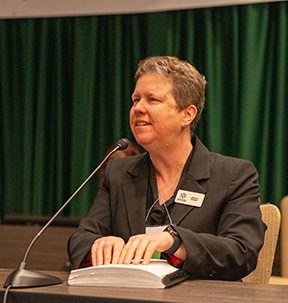
Braille opens reading, writing, independence, and a full place in community life for a school child, a senior who recently became blind, and a blind adult managing work and family. Blind People have long defended the right to learn Braille at every age, and a worldwide campaign launched this year, More Braille: More Empowerment, adds a global voice to that work. The World Blind Union (WBU) and the International Council for Education of People with Visual Impairment (ICEVI) created it so that Blind People, People with Low Vision, and People who are deafblind, wherever they live, can learn Braille and use it in school, at work, and in community life. The campaign names what keeps Braille out of reach: too few trained teachers, learning materials that are outdated or unavailable, and uneven investment in producing Braille and the technology that carries it. To remove those barriers, it calls on teachers, organizations led by Blind People, families, governments, and businesses, and it assigns its work to three working groups: one for advocacy and media, one for information resources, and one for research.
The first result is the Global Declaration on Braille Literacy in Education, launched in June 2026 at the 19th Session of the United Nations Conference of States Parties to the Convention on the Rights of Persons with Disabilities. It calls Braille literacy a human right and a core part of inclusive education, and it calls for quality Braille instruction, trained teachers, accessible learning materials, and access technology. The National Federation of the Blind endorsed its principles through Resolution 2026-15 at its 2026 National Convention. The Declaration also answers the claim that technology has made Braille unnecessary. Text to speech and audiobooks have a place, it says, yet they sit beside Braille and never replace it, because listening does not build the same language, thinking, and school skills. The digital age has raised the value of Braille, not lowered it.
The evidence behind the Declaration is plain. Research it cites shows that Blind People who read Braille reach higher levels of education, hold jobs at higher rates, and earn more than Blind People who do not read it. Braille gives readers direct contact with spelling, punctuation, grammar, math, science symbols, and music notation, and audio cannot match that depth or precision. A blind child kept from Braille is kept from the basic tools of literacy. Technology does not replace this skill either. People with strong access technology skills tend to read Braille better, and Braille note takers and practice apps have been shown to improve Braille reading results.
A tool kept out of reach opens nothing. That is why the article closes on the Global Survey on Braille, a research effort to learn how people study, teach, and use Braille, and which factors make it available or keep it out of reach. Blind adults, adults with low vision, and deafblind adults are asked to take part, along with parents and guardians whatever their child's age, teachers and others who work in Braille instruction, and the transcribers who produce Braille. Displays that show several lines at once and a new dynamic file format for Braille are on the horizon, yet no device can teach a child to read, and the article documents too few teachers and outdated materials today. A Blind reader chooses the format that works, so a Braille handout should reach its reader before the meeting starts.
Braille serves a school child, a senior who recently became blind, and a blind adult managing work and family, so we should check with each Blind person who will join us whether Braille is how they read and have it ready ahead of time. If we are parents, teachers, or Braille transcribers, or if we are blind adults ourselves, we should add our voices to the Global Survey on Braille, because every experience adds to the evidence. Braille learned and used at every age would build Vibrant, Diverse, Inclusive, Accessible Communities for People with Disabilities.
Braille that is taught, produced, and handed over in time is a tool within reach.
Read the Full Article: Building the Future for Braille Literacy: A Global Approach.
By: Jennifer Dunnam
Questions for Reflection
- The article names a school child, a senior who recently became blind, and a blind adult managing work and family as Braille readers. Which of those readers do our own programs expect to find among us?
- The campaign lists too few trained teachers as a barrier that keeps Braille out of reach. Who in our own community could teach or sustain Braille reading for a child or adult who wants it?
- Outdated or unavailable learning materials are another barrier the campaign names. When we prepare materials, who decides whether a Braille copy exists, and when is that decision made?
- The Declaration says audio sits beside Braille and never replaces it. Where do our plans treat a recording as a full substitute for a Braille copy?
- The Global Survey on Braille asks Blind adults, parents, teachers, and transcribers for their experience. Which of those voices do we hear from regularly, and which have we never asked?
- The survey says every experience adds to the evidence. How do we record what Blind readers tell us about the formats they read, and where do those answers go?
