
Striving to remove barriers that prevent us from building Vibrant, Diverse, Inclusive, Accessible Communities!
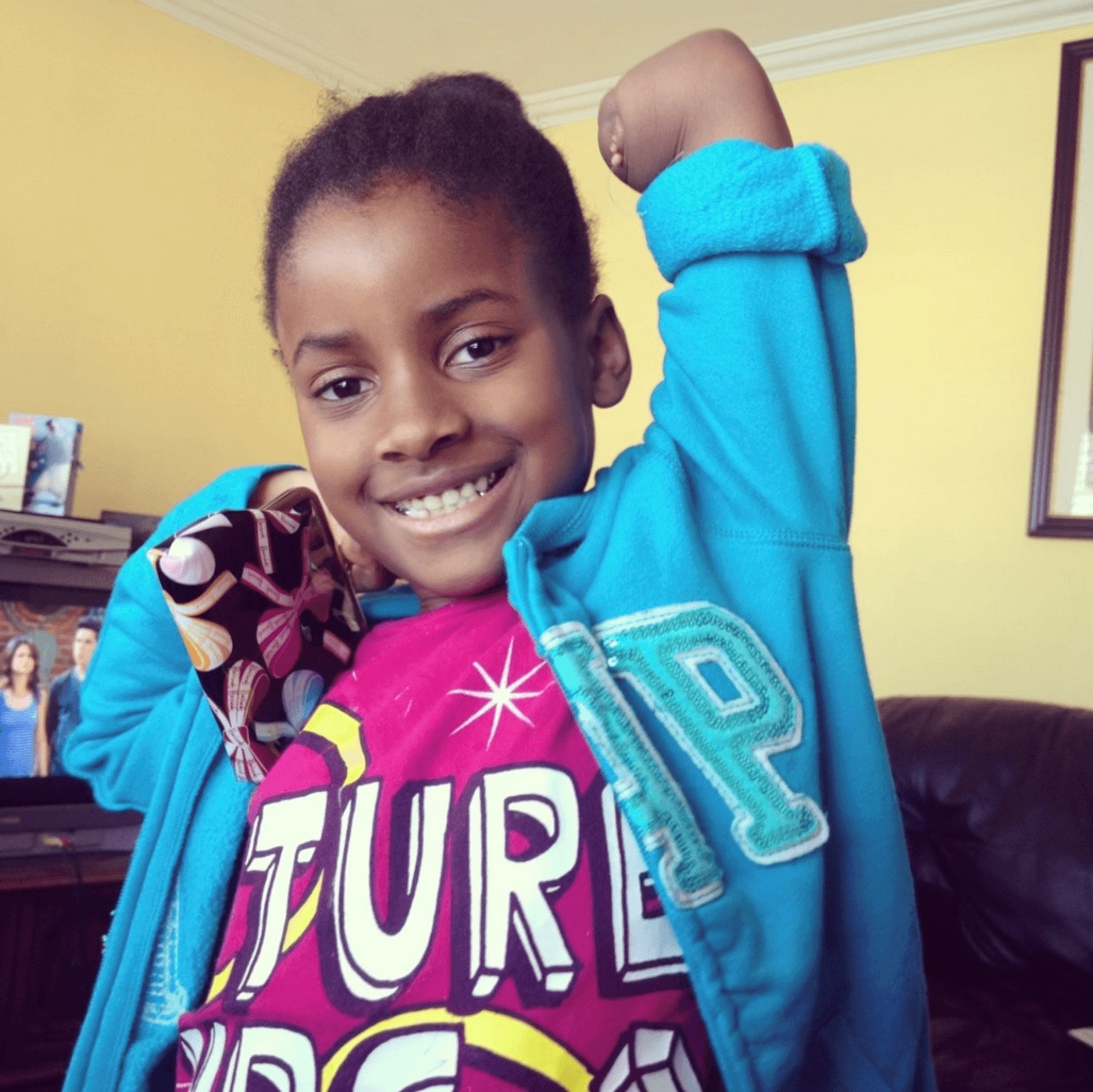
Sheriauna Haase was born with a limb difference: her left arm ends just below the elbow. She learned to walk and to dance at almost the same time, and dance became her first language. At 18 months old she began care at Holland Bloorview Kids Rehabilitation Hospital, the Canadian hospital devoted to Children with Disabilities. There, she writes, difference was not something to hide or fix but a place to start from. Now she is an honorary chair of the hospital’s Together We Dare campaign, and she puts a dare to every reader: stop looking away from People with Disabilities.
One of her first prosthetics was a myoelectric arm made at Holland Bloorview, where the first commercially available myoelectric hands and arms for children were developed. Sensors read the signals from her upper arm muscles so she could open and close the hand by flexing. Later her prosthetist added a wrist insert for her sprinting blocks. Dr. Andrysek of the Bloorview Research Institute says 3D printing lets the team scan a child’s body and design a device that fits it exactly, with fewer appointments and a faster turnaround. Prosthetics, Haase writes, become part of a person’s story.
Her favourite is a tumbler arm, an attachment for push ups and handstands. Others let her bike, ski, swim and play guitar. At 16, sport and the people who believed in her took her to her first international race in Switzerland and on to the Paralympics. At 18 she still runs and dances and has begun acting. She values a model in which researchers and clinicians work side by side, so new ideas reach children quickly. She wants every Child with a Disability to have accessibility, inclusion and belonging.
Looking away does not make difference disappear. Haase knows how it feels to be a child wondering whether the world will make room for her. She dares readers to stop looking away, not because she wants attention, but because avoiding difference changes nothing. Daring, she writes, means saying yes to possibilities that may frighten you, and when people stop looking away they begin to see what is possible. It is a call to imagine what People with Disabilities can do.
We should look at People with Disabilities, not away from them, and meet difference with respect. We should make room in our activities for Children with Disabilities, including those who use prosthetics and orthotics. Believing in Children with Disabilities before they believe in themselves would move us toward Vibrant, Diverse, Inclusive, Accessible Communities for People with Disabilities.
When we stop looking away, we start seeing what is possible.
Read the Full Article: I Dare You To Stop Looking Away From People With Disabilities.
By: Sheriauna Haase
Learn More
Questions for Reflection
- When have we looked away from a Person with a Disability instead of meeting their eyes?
- Sheriauna Haase says avoiding difference does not make it disappear. What differences does our community avoid talking about?
- Which of our activities would a child who uses a prosthetic or orthotic be left out of today?
- Who believed in a Child with a Disability in our community before that child believed in themselves?
- What would it look like for us to say yes to a possibility that frightens us?

Also See:
- I Worked Quite Well With My Disability. That Never Stopped Customers From Saying Wild Things To Me.
- What NPR readers want you to know about living with a disability
- Disability inclusion is Jewish inclusion — and we’re not done yet
- Accessibility is critical for the world's disability community
- Unity in Diversity
- Imagine how disabled people can, rather than assuming we can’t
- New Springfield Art Exhibit "The Life I Choose" Centers People with Disabilities